This is just sad
These kids would’ve been so much happier if they played with Claude Code Max Mode Opus 4.5 operating semi supervised Ralph Wiggum loops generating agentic B2B SaaS in preparation for YC W2038
AI makes senior architects more productive and reduces the need for junior engineers. The architect needs to understand the requirements as well as the technology stack well, to be able to guide the AI and fine tune its output.
But if we don't have junior engineers, we don't get to train the next generation of architects - after all how does someone become a software architect without being a junior engineer first?
I am still thinking through how this gets resolved.
Don't think of LLMs as entities but as simulators. For example, when exploring a topic, don't ask:
"What do you think about xyz"?
There is no "you". Next time try:
"What would be a good group of people to explore xyz? What would they say?"
The LLM can channel/simulate many perspectives but it hasn't "thought about" xyz for a while and over time and formed its own opinions in the way we're used to. If you force it via the use of "you", it will give you something by adopting a personality embedding vector implied by the statistics of its finetuning data and then simulate that. It's fine to do, but there is a lot less mystique to it than I find people naively attribute to "asking an AI".
We are thinking of robots all wrong.
Why a $1,500 robot is far more important to buy than a $20,000 one. And why it will pay for itself within a year.
First of all, for the last eight years I've been a Silicon Valley housewife. Picking the kids up from school. Doing a variety of tasks taking care of them from feeding them to laundry.
And I've already bought a $20,000 Neo from @1x_tech and have built the most complete list on X of the robotics industry.
Just to set the tone for this conversation.
We must ask ourselves "what is the goal of a robot?" before we go into why typical American homeowners might want one, and shell out quite a bit of money for one, like the Neo.
I grew up in Silicon Valley back when it was all orchards and the farmers taught me "pick the low hanging fruit first."
What is the low hanging fruit in the American home?
Laundry?
Cleaning the toilets or your home?
Watering the plants?
Bringing you a beer?
Nope.
It is the preparation of food.
Yesterday I got a new @eatwithposha robot, and the attached video with founder @ragsgups gets into depth about what the $1,500 robot does. Cooks meals.
Far more time in the home is spent cooking meals than the other tasks and is far more complex than, say, folding laundry.
But there is something I think everyone is missing in the discussion of robots: "what is the goal?"
I've been doing consumer research talking with many around the world about these things. People tend to have a few goals:
1. Improve their lives.
2. Save them time.
3. Save them money.
4. Enable a new business.
What is the best way to improve your life?
Upgrade your food.
This is very hard to do when both parents in a family are working their butts off to try to improve their careers. It gets worse when a single parent is trying to keep everything going.
How many times have you decided to go out to eat rather than spend an hour cooking food? Doing that for a family of four in Silicon Valley costs $100+. And guarantees your family will overeat. I've done that many times while raising my kids, and often I can't say no when desert comes around.
It gets worse if you take the easy route out at home. Put a pre-processed meal into the microwave, or heat up a frozen pizza. Horrible for everyone's health.
But what if you could have a robot at home that cooks your meals?
Then costs go down to less than $20 and ingredients get way way better.
It gets worse when you consider a $20,000 humanoid. They aren't safe enough to trust around stoves yet. And their hands aren't yet dexterous enough to do that. I doubt my Neo will be allowed to cook meals over an open flame, and if so I will have to watch it to make sure it doesn't do anything wrong. (The Neo that arrives next year will be teleoperated by a human remotely and the risks that person does something, or misses oil catching on fire is just way too high).
While neither robot will be able to do all food preparation (cutting chicken up into cubes, or cutting carrots or other fruits, for instance) this robot dramatically reduces the time needed for a human to make a meal and dramatically reduces the costs to do so.
And, as we discuss in the video, when the Neo does arrive the Neo will be able to use this machine too, reducing time even more (and will be able to set the table and wash the dishes, saving even more time so you can answer more emails or learn more AI programs or, even, pay attention to your kids and give them a few more minutes of quality time).
The robot industry should focus on the low hanging fruit first. Cooking meals is the biggest one to improve your life, save you time, and make your family healthier.
It's why I bought one.
And they actually make two: https://t.co/s7RYIqhq7b
Your money is way better spent getting one of these than buying a humanoid.
And if you do get a humanoid, like I am, they go together like peanut butter and jelly.
@sierracatalina has been saying this for years that our focus on humanoids is overblown and that specialized robots (you see my @maticrobots in the background to prove this point) are way better for most families.
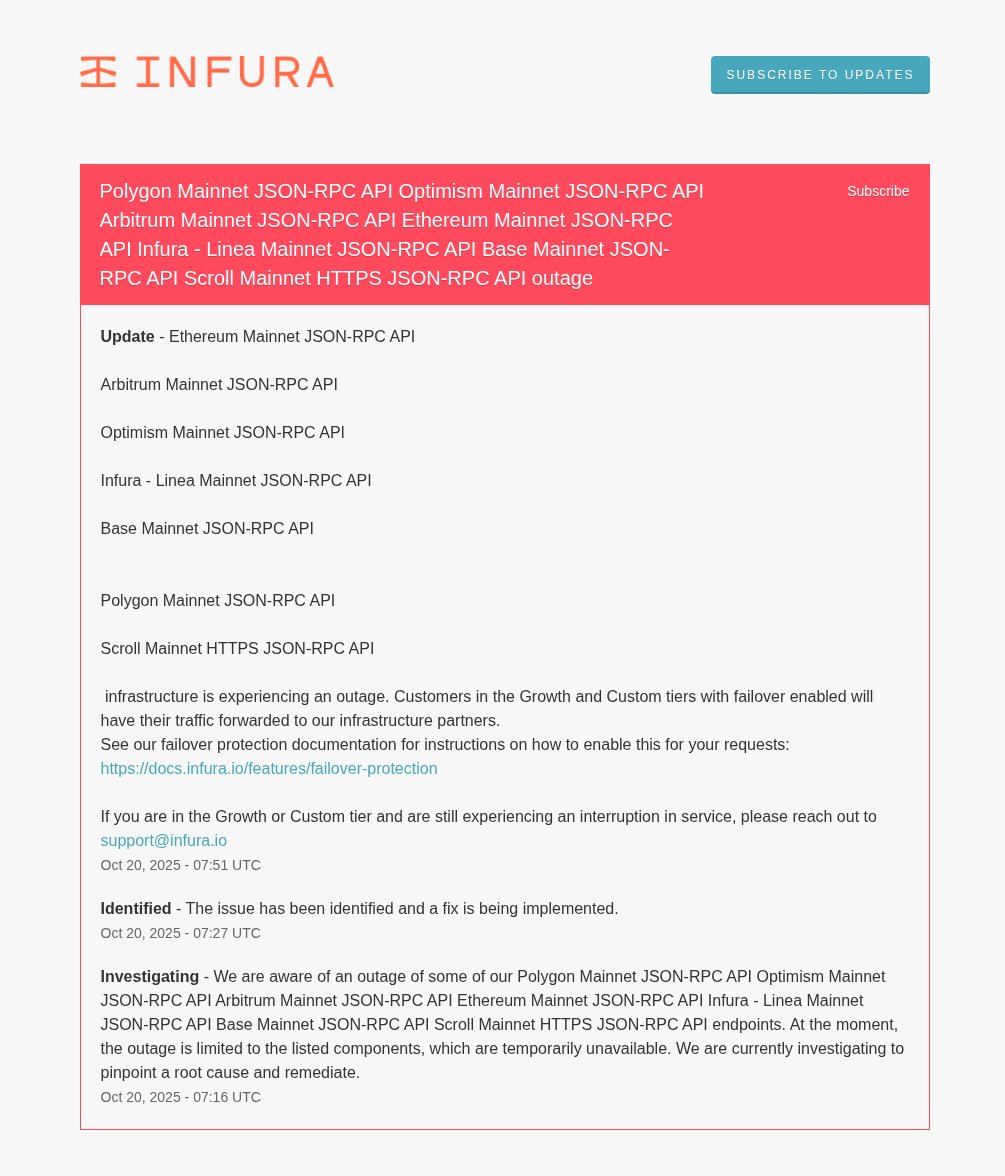
Not frequent to get this error message on half the webpages I try to visit
The internet's key dependencies include not just AWS, but also Cloudflare, clearly (we knew this, but nothing brings it home like an outage!)
AWS is down and then the internet stops working.
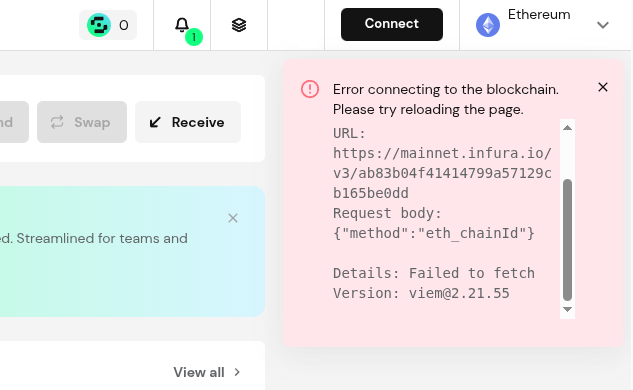
But the blockchain, it never goe ... wait a minute. Scratch that.
This sector is a joke.
Everyone preaching decentralization and censorship resistance but in reality ... it's all 100% reliant on the cloud.
An exciting milestone for AI in science: Our C2S-Scale 27B foundation model, built with @Yale and based on Gemma, generated a novel hypothesis about cancer cellular behavior, which scientists experimentally validated in living cells.
With more preclinical and clinical tests, this discovery may reveal a promising new pathway for developing therapies to fight cancer.
US Health Insurance companies are now charging for 2 visits if you take your child in for their regular checkup and ask a question not covered during a routine checkup
This isn’t a conspiracy. This happened to this woman not once but twice, and 2 of her friends
“So I call, and they're like, oh, yeah, you technically were billed for two visits. And I was like, excuse me? She's like, yeah, it says on here that there was a question asked that didn't involve the physical”
“I was blown away. I was so perturbed. I was like, that's absolutely ridiculous. So yesterday when I took my son, my other son, the guy's going through all the, sign here, sign there, then gets to the last one, and then it says, you know, do you give permission to be billed if services aren't covered today. And I said, I don't want to sign this, because how do I know what will be covered, what won't? He's like, oh, that will be determined by your insurance.
— So another lady comes over and she goes, well, if they ask you if you have any concerns, you have to say no. And I go, okay, but if I have concerns for my son, that's technically a second visit because it's not covered under his yearly checkup. She goes, yeah, I mind blown.
Like, I don't know what this world has come to, but I am just insanely crazy about this kind of stuff. And just recently, I've had two friends post about the same exact situation.”
US Health Insurance companies just keep getting worse and worse and nobody in power cares