For 250 years, Japan maintained an extraordinary peace by forcing the entire warrior class to live in the capital Edo, a city that was essentially a giant consumption machine that produced nothing.
Half its population were samurai pensioners doing busywork, while the daimyo (the ruling elite) were burning money on mandatory mansions and endless processions between their estates. The whole city ran on agricultural surplus extracted from the rest of Japan.
Some surprising facts:
1) The city functioned as a hostage system. The daimyo (regional lords) were required to leave their families permanently in Edo as de facto hostages. Most noblewomen never once visited the lands their husbands governed. Instead, they spent their entire lives in the capital as insurance against rebellion.
2) Half the city were warriors with nothing to fight. At any given time, nearly half of Edo's population were samurai, which were living as state pensioners in a country at total peace. Most did little beyond civil administration and calligraphy lessons, since most work was considered beneath them.
3) It was probably the world's largest city, centuries before Tokyo's modern fame. Edo likely exceeded a million people by 1700. London didn't hit that mark until 1800, New York did not until 1880.
4) It had very high population density, almost entirely in single-storey buildings. Some commoner districts hit twice Manhattan's current density.
5) The poor were taxed at up to 70% of their harvest. The agricultural surplus flowed up through public taxation rather than rent, making the state the direct intermediary between peasants and the elite.
The scary thing about that expose being brushed off (not without legit reason) is that it makes him a victim and then his “exploits” getting shoved to the back.
Brazilian beer Brahma have just dropped their World Cup advert featuring Ronaldo and it's NEXT LEVEL advertising. 🇧🇷👏🍻
Easily one of the best we'll see.
There’s a post going around social media right now.
What supposedly is Meralco wiring vs Solar Panels.
Meralco lines are much higher and, actually, look clean.
The ones that look like entangled pansit are for cable tv, internet, and probably old phone lines.
Only one chance in this lifetime…
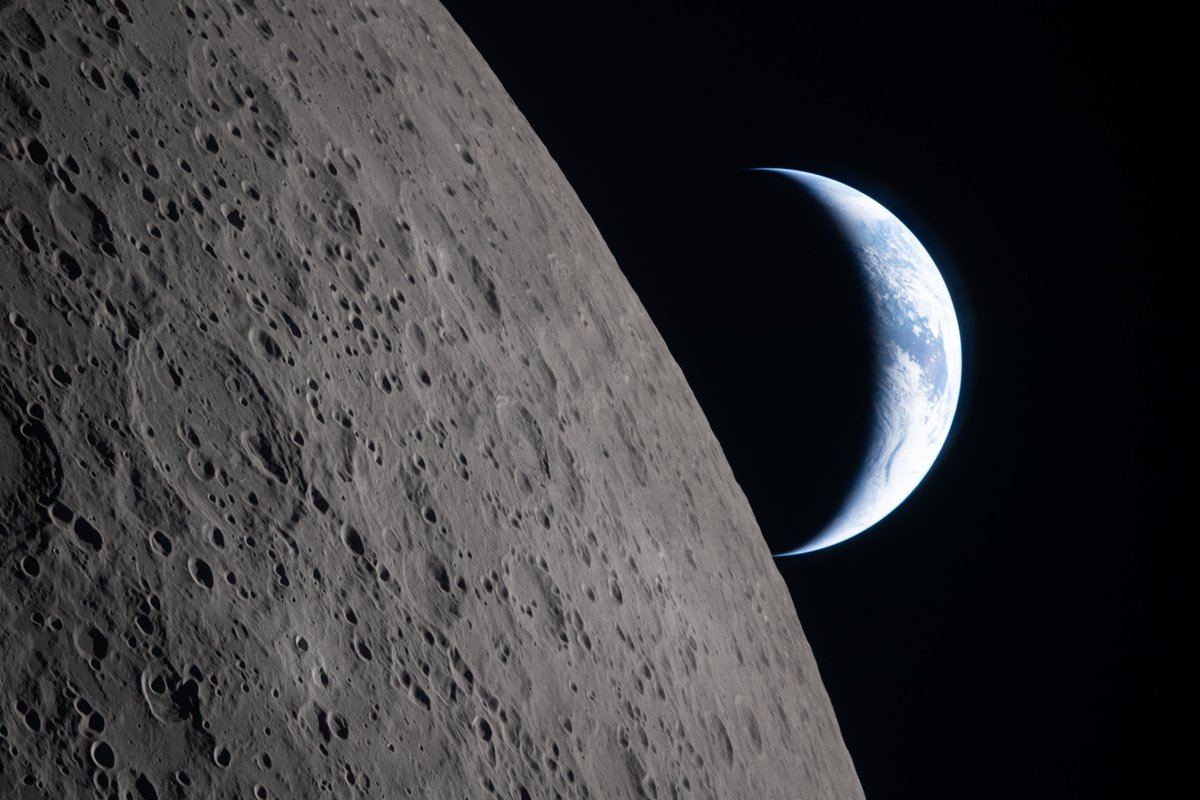
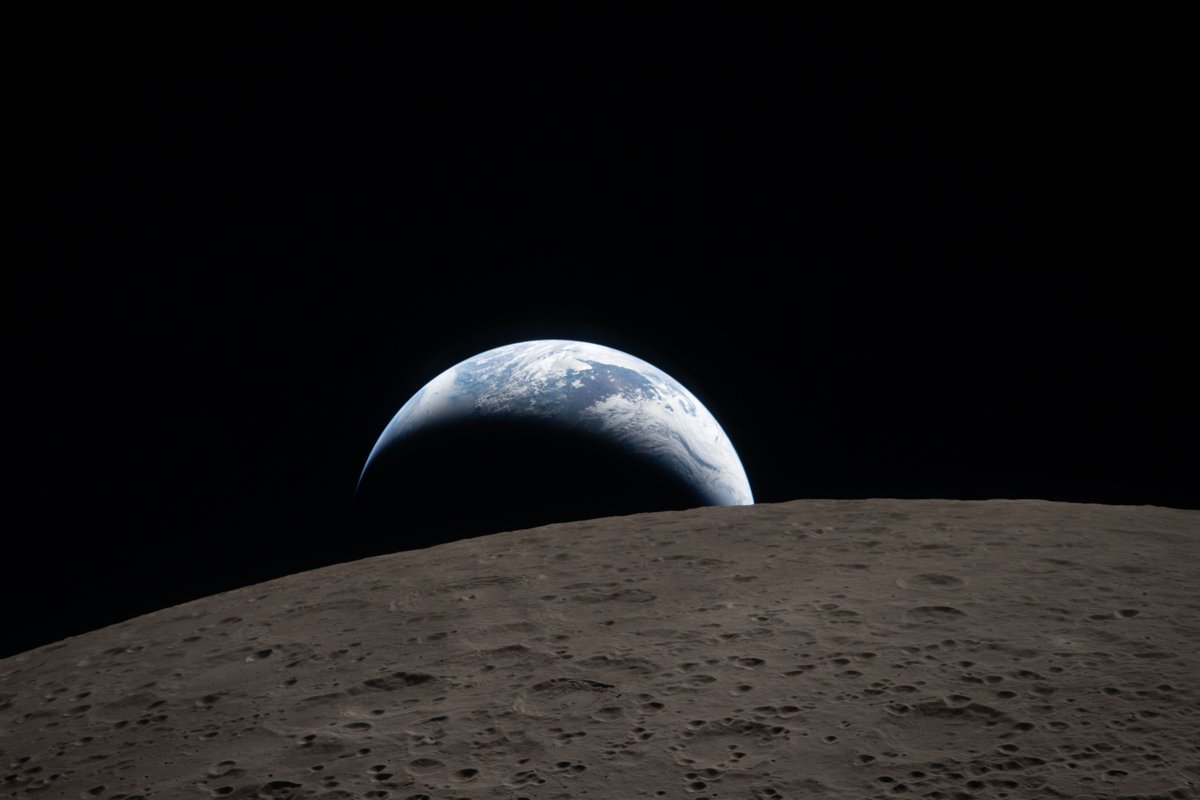
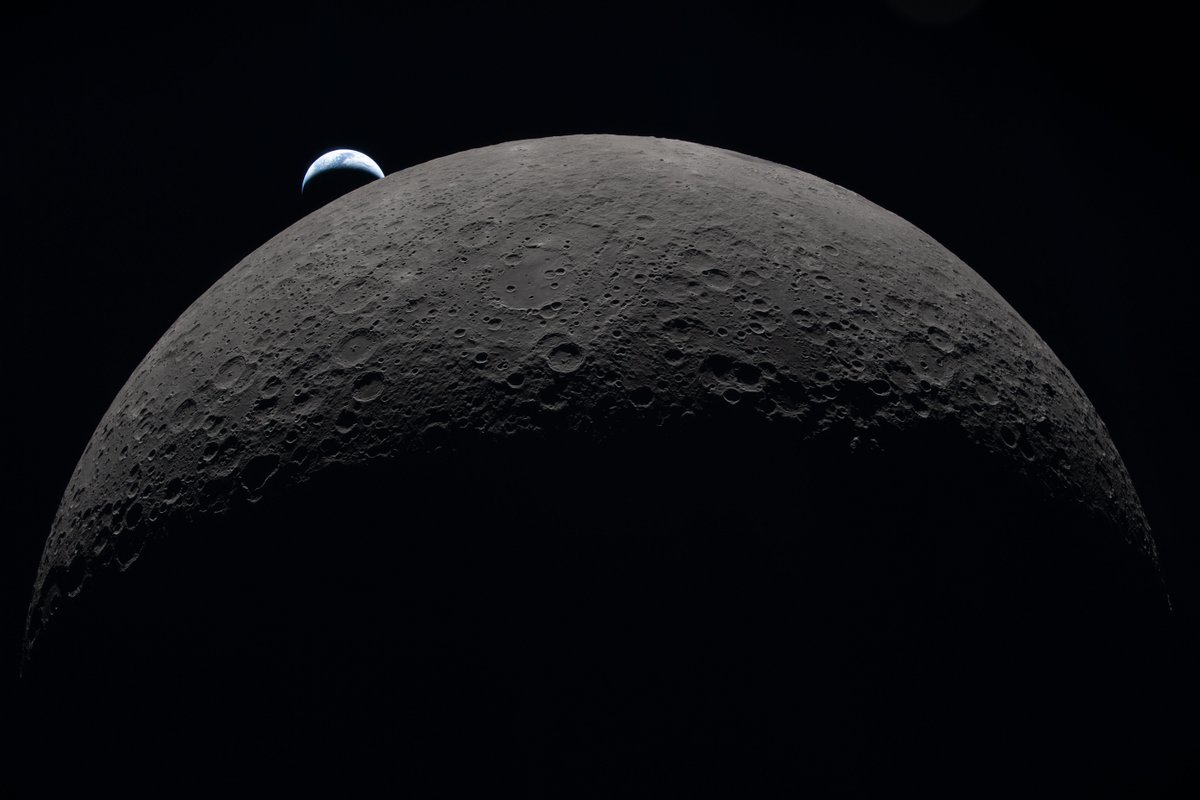
Like watching sunset at the beach from the most foreign seat in the cosmos, I couldn’t resist a cell phone video of Earthset. You can hear the shutter on the Nikon as @Astro_Christina is hammering away on 3-shot brackets and capturing those exceptional Earthset photos through the 400mm lens. @AstroVicGlover was in window 3 watching with @Astro_Jeremy next to him.
I could barely see the Moon through the docking hatch window but the iPhone was the perfect size to catch the view…this is uncropped, uncut with 8x zoom which is quite comparable to the view of the human eye. Enjoy.
Jesse, Steve, Laddy, and Vlad….such an incredible feeling to welcome you aboard Integrity after a nearly 700,000 mile journey. Forever thankful for your service to our crew and the nation.
Artemis crew will go slightly faster than 25,000 mph / 40,200 kph during reentry - over 11 km per second!
Apollo 10 reached a top speed of 24,791 mph / 39,897 kph in 1969.
But wait, there's more!
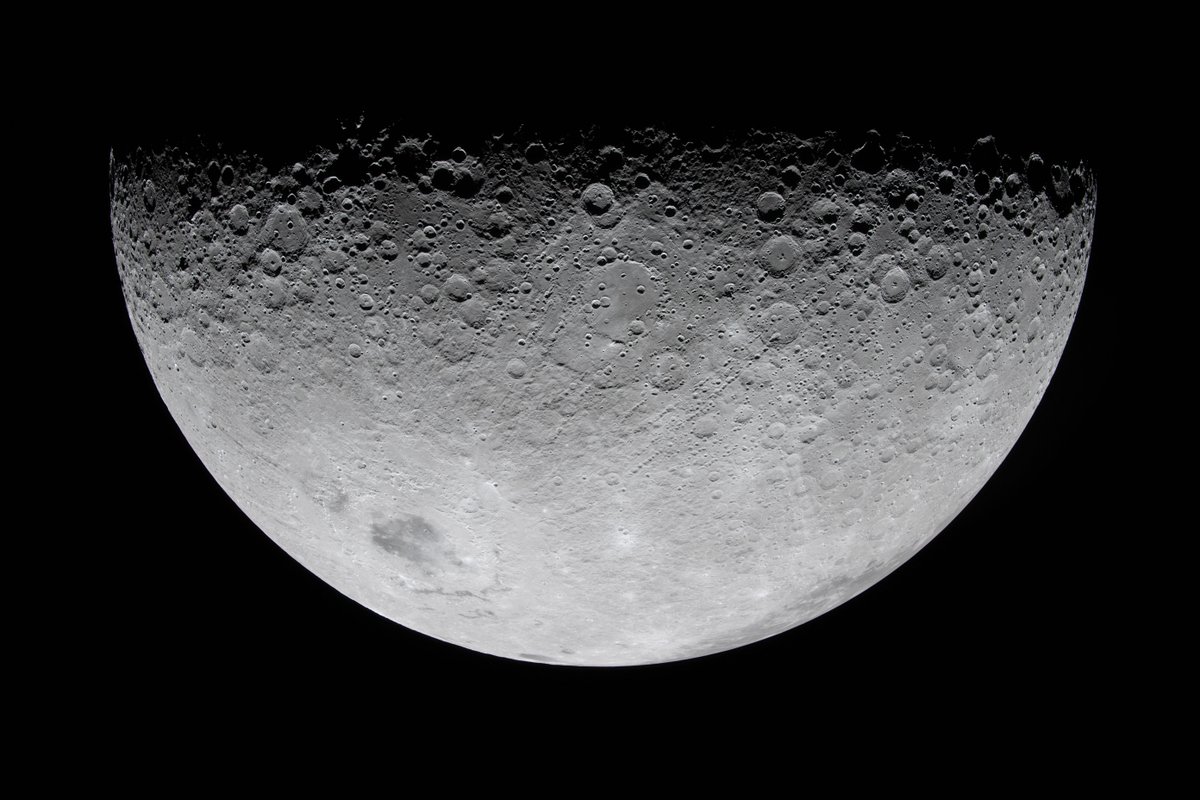
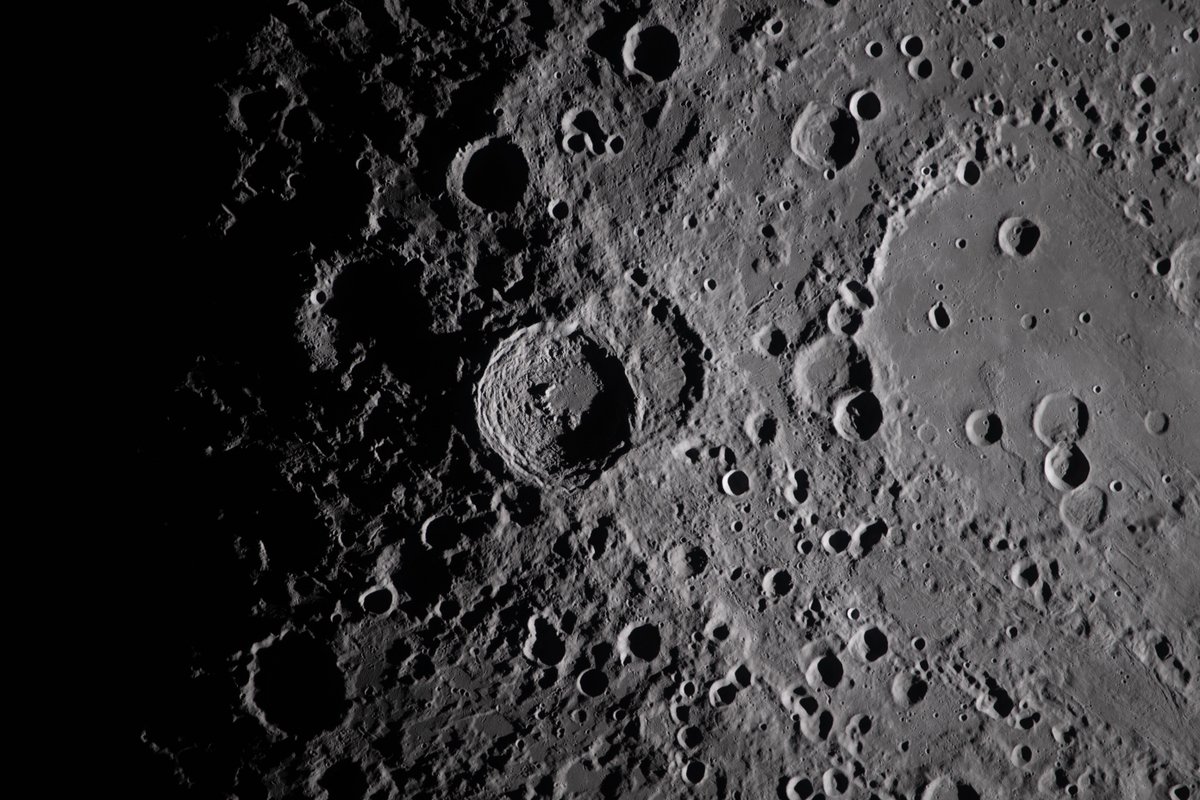
These newly released photos show off striking details on the far side of the Moon, like craters of various sizes and basins. See new photos here: https://t.co/yBzg59O7yp
Experience the magic of our Moon mission wherever you go! ✨
Download free, mobile wallpapers and bring your device into the new era of exploration: https://t.co/494ZyUBtve
Hello, Moon. It’s great to be back.
Here’s a taste of what the Artemis II astronauts photographed during their flight around the Moon. Check out more photos from the mission: https://t.co/rzM1P0QbOl
It's not just a phase 🌕
Artemis II astronauts captured these views of the Moon as the Orion spacecraft flew around the far side of the Moon on April 6, 2026.
The Math is beyond impressive.
Launching to travel where no man has gone before with faith in those numbers.
To arrive at a predicted point of interception believing the calculations to be precise, to swing back home.
Wow.
🚨SHOCKING: Artemis II mission isn’t “going to the Moon.”
It’s aiming for a precise point in space where the Moon will be.
252,706 miles away .
The human brain cannot process what this actually means.
Every space mission you’ve ever seen depicted gets this fundamentally wrong. Movies show rockets flying toward a destination like an airplane flying toward an airport. Point at target, fire engines, arrive.
Reality operates under completely different physics.
When NASA launched Artemis II on April 1, 2026 , the Moon was somewhere entirely different than where the spacecraft will intercept it on April 6 . The rocket launched toward empty space, betting everything on a mathematical prediction of where a target traveling 67,000 miles per hour would position itself five days  in the future.
Space travel is not transportation. It’s temporal ballistics.
The Moon orbits Earth every 27.3 days, covering roughly 1.5 million miles of distance. During the ten day journey of Artemis II  , the Moon moves approximately 370,000 miles along its orbital path. The spacecraft launched in a direction that looks completely wrong to every human instinct, following a free-return trajectory that intercepts the Moon’s future position  , not its current one.
This requires predicting exactly where an object the size of a continent will be located, down to mile precision, five days before the meeting happens. Any error in orbital calculation, any miscalculation in the Moon’s gravitational influences from Earth and Sun, any slight deviation in spacecraft velocity, and the crew of Reid Wiseman, Victor Glover, Christina Koch, and Jeremy Hansen  sails past their target into the infinite void of space.
NASA engineers call this a “free return trajectory,”   but the name obscures the cognitive breakthrough required to make it work. You cannot think about space travel the way you think about any form of transportation that exists on Earth.
Destinations don’t exist in space. Only intercepts exist. You’re never going somewhere. You’re always going somewhen.
The mathematics behind orbital rendezvous calculations treats time and space as completely integrated variables. The spacecraft’s translunar injection burn on April 2  lasted exactly six minutes. Miss that window by even minutes, and the geometric relationship between Earth’s rotation, the Moon’s orbital position, and the spacecraft’s trajectory becomes unsolvable. The destination literally disappears from the realm of possibility until celestial mechanics realign.
The Artemis II crew spent five days flying through vacuum toward coordinates   that would contain nothing but empty space if they had launched 24 hours earlier or later.
They bet their lives on humanity’s ability to predict the future position of celestial objects with mathematical precision that exceeds anything we do on Earth.
Today, April 6, they’ll pass within 4,070 miles of the lunar surface , reaching their maximum distance from Earth. But they launched toward empty space and intercepted a moving target with pinpoint accuracy across a quarter million mile void.
Space doesn’t contain destinations. It contains equations.
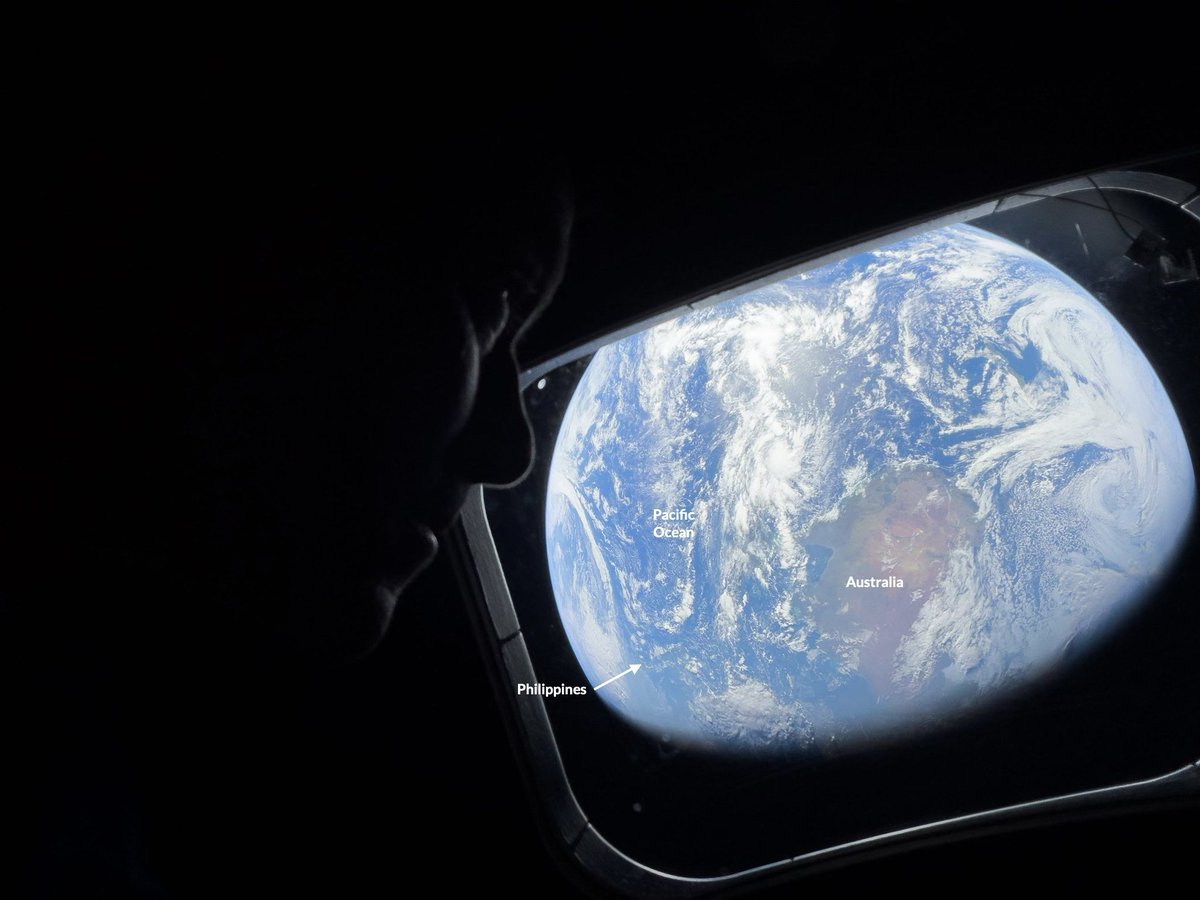
𝗛𝗘𝗟𝗟𝗢 𝗙𝗥𝗢𝗠 𝗧𝗛𝗘 𝗣𝗛𝗜𝗟𝗜𝗣𝗣𝗜𝗡𝗘𝗦 𝗔𝗡𝗗 𝗣𝗔𝗖𝗜𝗙𝗜𝗖! 🌏
Reid Wiseman, commander of the Artemis II mission, gazes back at Earth through one of the main cabin windows of the Orion spacecraft as the crew journeys toward the Moon.
The image captures the vast waters of the Pacific Ocean, together with Australia, and parts of South-East Asia, including the Philippines. We annotated some features to better see where we're at. #ArtemisII #NASA #Moon
📸 NASA
Been listening to NCT Dream/127/U for a few years now. Have their songs in playlists along with other Kpop groups I listen to.
Thanks to my eldest for introducing me to their stuff.
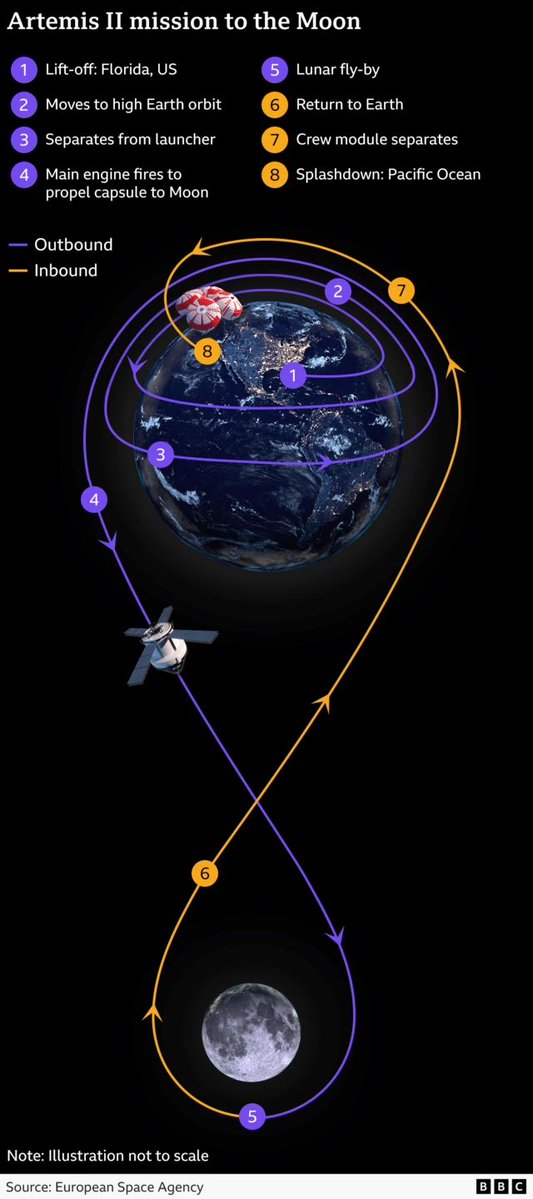
It’s not a straight shot to the far side of the Moon! 🌕
Over approximately 10 days, the Artemis II astronauts will orbit Earth twice before looping around the far side of the Moon in a figure eight and returning home.
ARTEMIS II🚨: In the mission, the 4 astronauts will travel 400,000 km from Earth, which would be the farthest any human has ever gone in all of humanity.
🚨: After 48 years of travel, NASA 's Voyager 1 is nearing one light-day from Earth, almost 16 billion miles away.
A proud milestone for humanity, and a humbling reminder of how small we are in an infinite universe.