Staring down the actual Declaration of Independence before stepping into the octagon as an underdog to beat the piss out of an undefeated fighter in front of the world is an extraordinary level of legendary
Forget everything you think you know about the American Revolution at sea.
The Continental Navy was a punchline. Across eight years of war, it commissioned around 65 ships total. Most got captured, blockaded, burned, or simply rotted at the wharf. Meanwhile, the British Royal Navy was the most powerful military machine on Earth, with over 270 ships of the line, more than 100,000 trained sailors, the best gunnery in the world, and a long tradition of obliterating every navy it had ever faced.
So how did a brand new country with no real navy actually fight the war on the ocean?
It legalized piracy.
In March of 1776, the Continental Congress passed a resolution authorizing private citizens to attack British shipping. The mechanism was called a Letter of Marque. It was, in practice, a permission slip signed by Congress or a state governor that turned any merchant captain into a legal raider. Capture a British ship, drag it back to an American or French port, sell the ship and the cargo in a prize court, split the silver among the crew. By the end of the war, around 1,700 American vessels were sailing under these letters, crewed by somewhere between 55,000 and 70,000 men. That is more sailors than George Washington ever had soldiers in the field at any single point in the entire Revolution.
And these were not Navy crews. They were Marblehead fishermen, Nantucket whalers, runaway apprentices, free Black sailors, escaped slaves, Irish smugglers, French volunteers, dockside brawlers, Quaker farm boys, and Spanish renegades. Powder boys as young as nine were taken on as crew. The deal, written into every privateer's "Articles of Agreement," was brutally simple: no prize, no pay. Come home with empty holds and you came home with empty pockets. Come home with a fat British East Indiaman packed with sugar, silk, mahogany, gunpowder, and silver dollars and you came home a wealthy man for life.
They came home wealthy a lot.
American privateers captured roughly 2,000 British vessels during the Revolution. They snatched prizes in the Caribbean, off the Grand Banks, in the Bay of Biscay, along the coast of West Africa, in the Mediterranean, and inside the English Channel itself, sometimes within musket shot of British villages. They burned shipping in the Irish Sea. They seized British troop transports headed for America before they ever reached the fighting. They captured the personal correspondence of British generals. They intercepted recruitment ships full of Hessian mercenaries.
London marine insurance rates tripled, then quadrupled on some routes. Lloyd's of London nearly buckled. West Indian sugar planters flooded Parliament with petitions begging for peace before they went bankrupt. One member of the House of Commons stood up and complained, on the record, that the rebel privateers were costing the empire more in lost shipping than the entire land war was costing in soldiers. The Royal Navy, stretched thin fighting France, Spain, and the Dutch on top of the Americans, simply could not be everywhere at once.
Then there were the legends.
Jonathan Haraden of Salem sailed a converted merchant brig called the General Pickering, mounting only sixteen small guns and crewed by men he had personally recruited off the wharves. In June of 1780, off the Spanish coast, he ran straight into three British privateers cruising in company. He attacked all three at once. He won. A few weeks later, while taking on cargo near Bilbao, he was challenged by a heavily armed British raider called the Achilles, a 42 gun monster crewed by 140 men. Haraden had 45. He weighed anchor and sailed out to meet her anyway. The two ships dueled for hours in clear summer weather while thousands of Spanish villagers crowded the cliffs above the bay, watching the entire battle unfold below them like a colosseum match. When the smoke finally drifted off the water, Achilles was a splintered wreck limping for the horizon. Spanish fishing boats rowed out and towed the General Pickering back into port. Haraden walked ashore to a hero's reception from people who were not even his countrymen.
Joshua Barney, a Baltimore boy who had first gone to sea at twelve and commanded his own ship at fifteen, was captured by the British and locked inside the notorious Mill Prison in Plymouth, England. He talked a sympathetic British officer's wife into smuggling him a complete British uniform, walked out the front gate of the prison saluting the guards as if he owned the place, hiked overland to the coast, paid a fisherman to row him across the English Channel to France, returned to America, and went straight back to sea. In April of 1782 he commanded a small Pennsylvania privateer called the Hyder Ally and faced down a heavier British warship, HMS General Monk, in Delaware Bay. At the climax of the battle Barney shouted a deliberately wrong order to his helmsman, loud enough that the British captain could hear it across the water. The British ship reacted to the fake command, swung into the wrong position, got raked from bow to stern by Barney's full broadside, and surrendered in twenty six minutes. It is still studied at the Naval Academy as one of the most brilliant single ship actions ever fought under an American flag.
Gustavus Conyngham, nicknamed "the Dunkirk Pirate" by furious London newspapers, captured or burned close to 60 British ships in European waters in less than two years. The British declared him an outlaw, posted bounties on his head, hunted him across the continent, eventually caught him, and threw him in irons inside a stone fortress prison. He tunneled out with a spoon. He was recaptured at sea. He escaped a second time. By the end of the war the British had imprisoned him three separate times and he had broken out of every one of them.
Lambert Wickes, sailing the Continental cutter Reprisal, became the first American warship to take prizes in European waters and personally carried Benjamin Franklin to France in 1776 through stormy seas, dodging British frigates the entire way. He then spent 1777 raiding the British coast so aggressively that London diverted an entire squadron of warships to chase him through the Irish Sea. Wickes ran them ragged for months and finally turned for home. He never made it. The Reprisal went down in an Atlantic gale off Newfoundland in October of 1777 with all hands. Only the cook survived to tell the story.
Luke Ryan, an Irish smuggler who switched sides and signed on as an American privateersman, took command of two of the most successful raiders of the entire war, the Black Prince and the Black Princess, operating out of the French port of Dunkirk. In a single year his crews captured 114 British ships, many of them in sight of the British home coast. When Ryan was finally caught, he was tried for piracy in London, convicted, and sentenced to hang. At the last possible moment he produced documents claiming American citizenship, was reclassified as a prisoner of war instead of a pirate, escaped the rope, and walked out of England a free man at the end of the war.
James Forten, a fourteen year old free Black boy from Philadelphia, signed onto the privateer Royal Louis as a powder boy in 1781. After two cruises he was captured by HMS Amphyon. The British captain's young son took a liking to Forten and his father offered to bring the boy back to England, educate him alongside his own children, and treat him as part of the family. Forten refused, saying he could never betray his country. The captain, moved but unable to take a defiant rebel into his household, spared him from being sold into West Indian slavery and instead transferred him to the prison hulk Jersey, moored in Wallabout Bay off the Brooklyn shore. The Jersey was a floating tomb. More American sailors died inside the British prison hulks in New York harbor than were killed in every single land battle of the Revolution put together. The most accepted estimate is around 11,500 dead, their bones still washing up on the Brooklyn waterfront for decades after the war ended. Forten survived seven months aboard that ship, came home walking on shoes made of rags, learned the sailmaking trade, invented a new device for handling sails that made him rich, became one of the wealthiest Black men in early America, and poured much of his fortune into bankrolling the abolitionist movement that would eventually help end slavery itself.
The money the privateers brought home, top to bottom, was almost impossible to believe.
A single successful voyage could turn a fourteen year old powder boy into a wealthier person than his own father. A captain's share from a fully loaded British East Indiaman could buy a mansion outright with money left over for a fleet of carriages. Elias Hasket Derby of Salem, who financed and at times personally captained privateers throughout the war, ended the Revolution as quite possibly the richest man in the United States, and his wife Elizabeth Derby ran the business end of the family fleet with a precision that would have impressed any modern hedge fund manager. Salem itself, a quiet fishing village in 1775, exploded into one of the wealthiest cities per capita in the entire world by the early 1780s. The mansions paid for with looted British sugar, rum, silver, and gunpowder still stand on Chestnut Street today, two and a half centuries later, monuments built out of the cargo holds of a stolen empire.
Behind the captains stood a strange new financial machine. Shares in privateer voyages were bought and sold in coffee houses up and down the seaboard like modern stocks. Widows invested their late husbands' savings. Quaker merchants who refused to bear arms quietly bankrolled the raiders. Robert Morris, the financier of the Revolution, owned stakes in dozens of privateers and made and lost personal fortunes on their voyages. Prize courts in every state worked night and day adjudicating captured cargoes. An entire shadow economy bloomed around the war, complete with insurance, speculation, futures trading, and outright fraud.
It also got men killed in horrifying ways. Naval combat in the age of sail was pure butchery. Cannonballs sent oak splinters as long as a man's forearm scything across decks, killing and maiming more crewmen than the shot itself. Boarding actions were fought at point blank range with pistols, axes, pikes, and cutlasses in choking gunsmoke. Fire was the constant terror, because a single spark in the powder magazine could turn a ship into a fireball that lit the horizon for thirty miles. Surrendered prisoners were not always taken alive, and those who were often ended up in floating graves like the Jersey, where dysentery, smallpox, and slow starvation killed faster than any broadside ever could.
But the survivors changed the war.
By 1781, British merchants in London, Liverpool, Bristol, and Glasgow were openly demanding peace. Insurance on a single Atlantic crossing had become almost unaffordable. Sugar from the West Indies was rotting in Caribbean warehouses because no captain would risk the run home. The Royal Navy, stretched across half the planet fighting France, Spain, and the Dutch as well as the rebels, simply could not protect every convoy on every ocean. Privateering had done what no Continental Army victory could ever quite manage on its own. It had made the war unprofitable to keep fighting.
History remembers the Minutemen at Lexington Green.
It remembers Washington crossing the Delaware on Christmas night.
It remembers Yorktown, and the world turned upside down.
It forgot the 1,700 ships full of teenagers, ex convicts, freed slaves, Irish smugglers, Salem fishermen, Quaker investors, Philadelphia powder boys, and runaway apprentices who sailed straight into the teeth of the most powerful navy on Earth carrying nothing but cannons, cutlasses, courage, and a piece of paper from Congress that turned them, legally, into pirates.
They did not just help win the Revolution.
They bled the British Empire white.
Elon Musk avait dit un truc qui m'avait marqué sur l'allocation de ressources. En substance : passé un certain niveau de richesse, l'argent n'est plus de la consommation, c'est de l'allocation de capital.
Cette phrase change tout.
L'économie, dans le fond, c'est juste un problème d'allocation. Tu as des ressources finies et des usages infinis. Qui décide où va quoi ?
Imagine une cour de récré. 100 enfants, des paquets de cartes Pokémon distribués au hasard. Tu laisses faire. Très vite, un ordre émerge. Les bons joueurs accumulent les cartes rares, les collectionneurs trient, les négociateurs trouvent des deals. Personne n'a planifié. Et pourtant chaque carte finit dans les mains de celui qui en tire le plus de valeur. Le système maximise le bonheur total de la cour. C'est ça, la main invisible.
Maintenant fais entrer la maîtresse. Elle trouve ça injuste. Léo a 50 cartes, Tom en a 3. Elle confisque, redistribue, impose l'égalité. Trois effets immédiats. Les bons joueurs arrêtent de jouer, à quoi bon. Les mauvais n'ont plus de raison de progresser, ils auront leur part. Les échanges s'effondrent. La cour est égale, et morte. Elle a maximisé l'égalité, elle a détruit le bonheur.
Le problème de la maîtresse, c'est qu'elle ne peut pas avoir l'information que la cour avait collectivement. C'est le problème du calcul économique de Mises, formulé en 1920. L'URSS a essayé de le résoudre pendant 70 ans avec le Gosplan. Résultat : pénuries, queues, effondrement. Pas parce que les Soviétiques étaient bêtes, parce que le problème est mathématiquement insoluble en mode centralisé.
Quand Musk a 200 milliards, il ne les consomme pas, il les alloue. SpaceX, Starlink, Neuralink, xAI. Chaque dollar est un pari sur le futur. Et lui a un track record. PayPal, Tesla, SpaceX. Il a démontré qu'il sait identifier des problèmes immenses et y allouer des ressources avec un rendement spectaculaire.
L'État aussi a un track record. Hôpitaux qui s'effondrent, éducation qui décline, dette qui explose, services publics qui se dégradent malgré des budgets en hausse constante. Le marché identifie les bons allocateurs, la politique identifie les bons communicants.
Le profit n'est pas une finalité, c'est un signal. Il dit : tu as alloué des ressources rares vers un usage que les gens valorisent suffisamment pour payer. Plus le profit est gros, plus la création de valeur est grande. Quand Starlink est rentable, ça veut dire que des millions de gens dans des zones rurales ont enfin internet. Quand un ministère est en déficit, ça veut dire qu'il consomme plus qu'il ne produit. L'un crée, l'autre détruit, et on appelle ça redistribution.
Dans nos sociétés il y a deux catégories d'acteurs. Les entrepreneurs et les bureaucrates. L'entrepreneur prend un risque personnel pour identifier un problème, mobiliser des ressources, créer une solution. S'il se trompe il perd. S'il a raison, ses clients gagnent, ses employés gagnent, ses fournisseurs gagnent, l'État collecte des impôts. Il est la cellule de base du progrès humain.
Le bureaucrate ne prend aucun risque personnel. Son salaire est garanti. Au mieux il maintient une rente existante. Au pire il la détruit par excès de réglementation, mauvaise allocation forcée, incitations perverses qui découragent ceux qui produisent. Mais dans aucun cas il ne crée.
Regarde les 50 dernières années. iPhone, internet civil, SpaceX, Tesla, Google, Amazon, Stripe, mRNA, ChatGPT. Toutes des inventions privées, portées par des entrepreneurs, financées par du capital risque. Pas un seul ministère n'a inventé quoi que ce soit qui ait changé ta vie au quotidien.
La France est devenue le laboratoire mondial de la dérive bureaucratique. 57% du PIB en dépenses publiques, record absolu. Une administration tentaculaire, une fiscalité qui pénalise la création de richesse. Résultat : décrochage face aux États-Unis, à l'Allemagne, à la Suisse. Fuite des cerveaux. Désindustrialisation. Dette qui explose.
Et le pire c'est que la mauvaise allocation s'auto-renforce. Plus l'État prélève, moins les entrepreneurs créent. Moins ils créent, moins il y a de base fiscale. Plus l'État s'endette et taxe. Boucle de rétroaction négative parfaite. La maîtresse pense qu'elle aide, et chaque année la cour produit moins.
Dans nos sociétés, ce sont les entrepreneurs, toujours, qui font avancer la civilisation. Les bureaucrates au mieux maintiennent une rente, au pire la détruisent. Aucune société n'a jamais progressé en taxant ses créateurs pour subventionner ses gestionnaires.
La question n'est jamais qui a combien. C'est qui alloue le mieux la prochaine unité de ressource pour maximiser le futur de l'humanité. La réponse depuis 200 ans n'a jamais changé. Ce ne sont pas les fonctionnaires.
From Martin Iles, reposted:
Having lived in the USA for nearly two years, I've realised something.
The USA and the remainder of the Western world are no longer aligned.
We all laugh and mock when the Americans say, "Freedom!" because we truly think we're as free as they are.
Wrong. We're not. Not even close. The laws, the mindset, and the behaviour, is totally different in this regard.
Most of all, the governments are totally different. The USA's convictions around core freedoms are on a scale we do not share.
Meanwhile, Donald Trump wins the popular vote, the electoral college, the House, and the Senate... a man who, in every other Western country, is held in open derision, if not contempt.
For these and other reasons, we are not the same.
Yet the West, including Australia, fully expect to rely on the USA for our very survival.
If the world turns bad (which will happen - only a question of time), then the whole West, without America, is toast.
So, you may ask - if we're not very aligned ideologically, then it must be that we bring something to the party militarily?
Well, no... actually... we don't matter that much militarily.
The USA has about 470 ships in its navy, including 11 aircraft carriers, 69 submarines, 75 destroyers... plus 110 new ships in the pipeline.
Australia has about 30, including 3 destroyers, 7 frigates and 7 outdated submarines. The UK does a little better, with about 60.
Meanwhile, the US has over 14,000 military aircraft. A staggering number.
Australia has 252 military aircraft. The UK has 556.
The US army has just shy of 1,000,000 uniformed personnel in its military. Australia has about 45,000.
The USA spends 3.4% ($968 billion) of its GDP on defence. Australia spends 2% ($36.4 billion). The US spends as much as the next 15 largest military-spending countries (including China) combined.
The USA has a fighting culture. The men shoot things (a lot) and hunt things, the veterans get favoured in everything from parking spots to boarding planes. A uniformed young man is thanked in the street a dozen times a day.
"Oh, the Americans and their guns!" we say, in our smug way. Yes, they have a warrior culture. We do not. We don't have to, because we're a leech on theirs.
How many young British men are willing to fight for their country? Now ask the same regarding young American men. The difference is about as wide as it could be.
Militarily, we don't offer squat.
Meanwhile, look at the way Australia works against America's interests by loving on China. China made us rich and we stay close. This is a Marxist regime with expansionist aims.
Again, you have to spend time in the USA to realise just how vast a gulf there is between us on China.
Europe, too. They let China have their way everywhere from Germany to Greenland, all the while importing Islam and sending their own people to court for saying hurty words.
Somehow, we have landed the deal of a lifetime with the USA that says, "when the baddies come, you'll save us ok?" Because we can't save ourselves.
And we live in peace. But we keep gnawing away at freedoms, keep enabling China, and get flabby and disinterested about our military because Uncle Sam's got it.
And, let's be honest, Americans are widely looked down on. To add insult to injury, we don't think that highly of our protectors.
So, the USA is finally saying "enough." I am here, I can tell you what the vibe is, and that's it. Trump is doing what people want in this regard. They're over it.
And we come across all shocked and hard done by. We behave like people with no self-insight at all.
Yes, the global alliance system is all over the place now. From America's perspective, it's about time.
And I must say, though I be a proud Australian, I am forced to agree. Something has to change.
@esidery This is a terrible trade for the Bulls. I don’t want Davis the player let alone his contract and giving picks. Only way I take Davis is if they send the Bulls multiple 1sts.
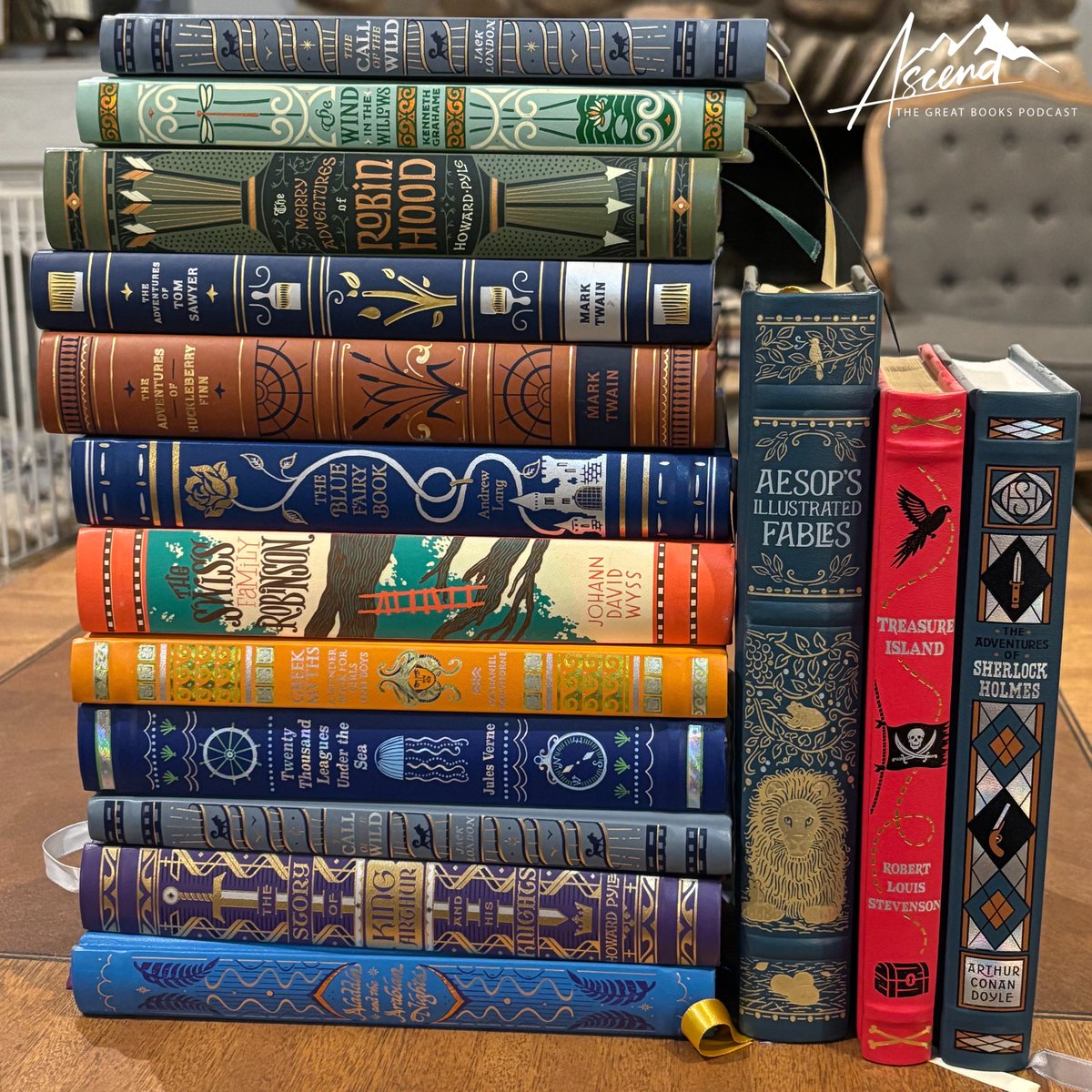
40 ADVENTURE BOOKS FOR KIDS
1. Treasure Island
2. 20,000 Leagues Under the Sea
3. The Wind in the Willows
4. Journey to the Center of the Earth
5. King Arthur (Pyle)
6. Around the World in 80 Days
7. The Hobbit
8. Robinson Crusoe
9. Call of the Wild
10. The Hardy Boys Series
11. The Martian Tales (ER Burroughs)
12. Ivanhoe
13. The Adventures of Tom Sawyer
14. White Fang
15. The Red Badge of Courage
16. The Chronicles of Narnia
17. The Lord of the Rings
18. Hatchet (Paulsen)
19. Robin Hood (Pyle)
20. Horatio Hornblower
21. My Side of the Mountain
22. On the Far Side of the Mountain
23. King Arthur (Roger Lancelyn Green)
24. Captains Courageous
25. The Black Stallion (Farley)
26. King Solomon's Mines
27. Tarzan Series (ER Burroughs)
28. The Redwall Series
29. The Adventures of Sherlock Holmes
30. The Greek Myths (Hawthorne)
31. The Jungle Book
32. The Swiss Family Robinson
33. Aladdin and Arabian Tales
34. Fairy Tales (Blue Book)
35. The Log of a Cowboy
36. Conan the Barbarian (Howard)
37. Louis L'Amour Westerns
38. Dinotopia
39. The Adventures of Huckleberry Finn
40. Kidnapped (RL Stevenson)
Here's an interesting side bar. After the Japanese decimated our fleet in Pearl Harbor Dec 7, 1941, they could have sent their troop ships and carriers directly to California to finish what they started. The prediction from our Chief of Staff was we would not be able to stop a massive invasion until they reached the Mississippi River. Remember, we had a 2 million man army and war ships in other localities, so why did they not invade?
After the war, the remaining Japanese generals and admirals were asked that question. Their answer....they know that almost every home had guns and the Americans knew how to use them.
1. The world's largest army ... America 's hunters! I had never thought about this....
2. A blogger added up the deer license sales in just a handful of states and arrived at a striking conclusion:
3. There were over 600,000 hunters this season in the state of Wisconsin .
4. Allow me to restate that number.
5. Over the last several months, Wisconsin ’s hunters became the eighth largest army in the world.
6. More men under arms than in Iran .
7. More than in France and Germany combined.
8. These men deployed to the woods of a single American state to hunt with firearms, and no one was killed.
9. That number pales in comparison to the 750,000 who hunted the woods of Pennsylvania and Michigan 's 700,000 hunters,
10. All of whom have now returned home.
11. Toss in a quarter million hunters in West Virginia and it literally establishes the fact that
12. The hunters of those four states alone would comprise the largest army in the world. The number of Hunters in the state of Texas would be the largest standing army in the world by it's self.
13. The point?
14. America
15. Hunting -- it's not just a way to fill the freezer. It's a matter of national security.
16. That's why all enemies, foreign and domestic, want to see us disarmed.
17. Food for thought when next we consider gun control.
For those liberals who say that Charlie Kirk was hateful to transgender people, explain yourselves. Most of you have literally never heard him, and are just parroting what main stream media talking heads have told you about him.
THIS is how Charlie debated and interacted with folks struggling with confusion and dysphoria concerning their biology.👇🏼
A lot of people are getting lost in the details of the SEAL raid into North Korea story, but the central fact is being ignored, which is that this is a monumentally bad leak carried out with deeply destructive intent. Everyone understands there are special operations around the world that the public never hears about. We did not need the New York Times to tell us that. The only real question is why this particular operation was leaked at this particular moment. The answer is that deep state operatives are once again trying to sabotage Trump’s peace initiatives.
What makes it even worse is that the SEALs covered their tracks so the dead bodies would sink, which means the North Koreans probably did not know what happened, until they found out about it this morning. Now, instead of thinking their fishermen were lost at sea, they know they were killed by U.S. troops. There isn’t a single way this leak serves the United States, but it massively sabotages Trump, just as the horrific leaks did throughout his first term.
This time has to be different. There must be an all-out effort to find the leakers and put them in prison for 25 years so it never happens again. The New York Times claims it spoke to two dozen people, but that’s misdirection. It doesn’t say all 24 told them about the mission. It was probably one or two, very likely from Biden’s circle. Find them.
Big Balls was our youngest engineer @DOGE, is a genuine genius, and now has demonstrated extraordinary bravery in the face of violent crime. What a patriot.
We didn’t disappear we just read old books because the entire book publishing industry has basically stopped bothering to publish books by men (who aren’t already established authors) or aimed at men in any way
Sorry we don’t want to read your endless books about a strong independent woman who’s trying to balance life and love in the big city
If Massie gets his way and Republicans are unable to pass a reconciliation bill then all the individual tax cuts expire + every single thing in Biden's IRA becomes completely permanent + Medicaid continues to stupidly pay kickbacks to blue states and illegals continue to flood the program + House Republicans very clearly lose the majority. Deficits and debts soar ever higher and government grows ever larger.
He does not know how government works. He doesn't even know how the House works, let alone Congress, let alone government.
And neither do these guys.
After watching the Fox interview with the DOGE team, it’s clear to me that the domestic terrorism against Tesla isn’t bottoms-up vandalism. It’s an organized effort to pressure Elon to walk away from DOGE.
Why?
There are monied interests that have benefited for decades from the organized “leakage” from the government. It’s clear that DOGE is finding and stopping it.
The incentive, then, to hire rent-a-protesters and pay for organized terrorism is clear. What they don’t understand is the Elon will double and triple down.
Separately, the DOJ can uncover all of this by arresting the protestors, making them roll and following the money.
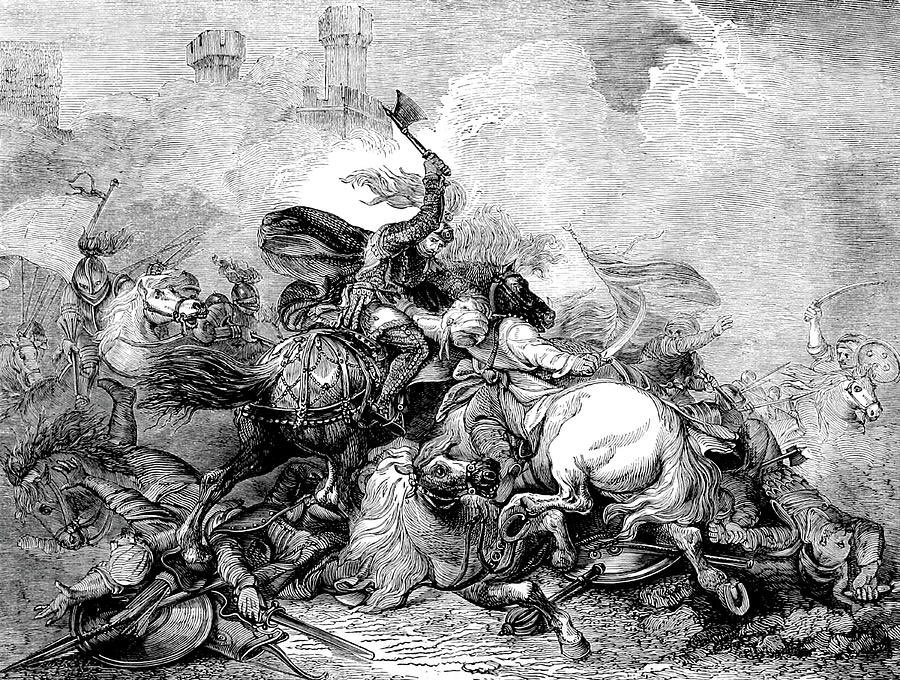
It should be a crime that hollywood has not given us an epic movie about Richard featuring one of the most insane battles of all time.
Jaffa.
Here I will recount for you the battle with excerpts from an eyewitness (there are other corroborating accounts).
🧵🧵
Does any US citizen vote on elections in Japan? Or France? Or Spain? Of course not. You should have to be a US citizen to vote in US elections. To allow non citizens to vote is a threat to this country and any govt official allowing that should be prosecuted for treason.