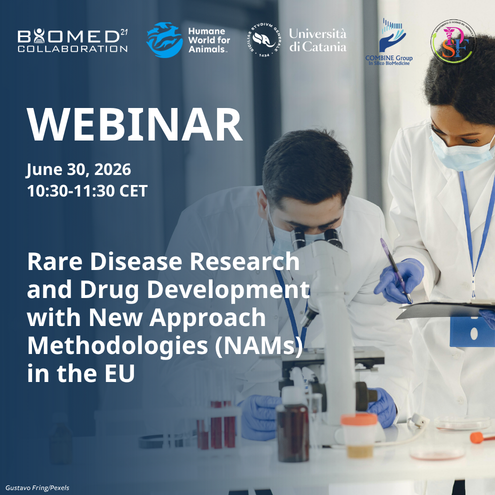
Join our webinar on Rare Disease Research & Drug Development with NAMs in the EU.
We'll explore how human-relevant NAMs, incl. advanced 𝘪𝘯 𝘷𝘪𝘵𝘳𝘰 systems & 𝘪𝘯 𝘴𝘪𝘭𝘪𝘤𝘰 models, can help transform rare disease modelling & accelerate drug dev.
🔗https://t.co/3aEDbBId1l
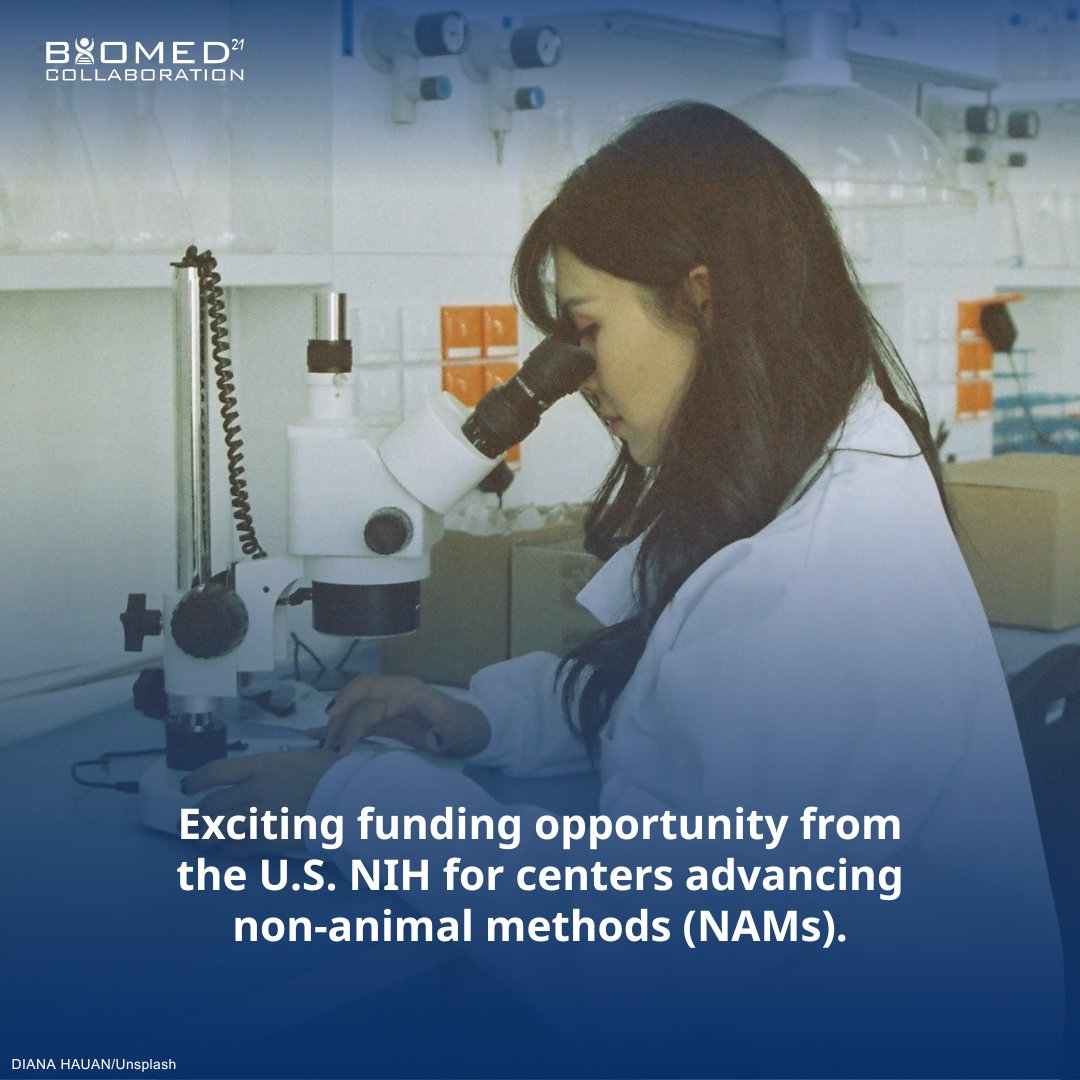
New funding opportunity from the US @NIH supporting centers advancing non-animal methods (NAMs) and human-based research technologies. Facilities focused primarily on animal research are not among the priorities of this announcement.
💡Learn more & apply: https://t.co/tZJH8WZx5a
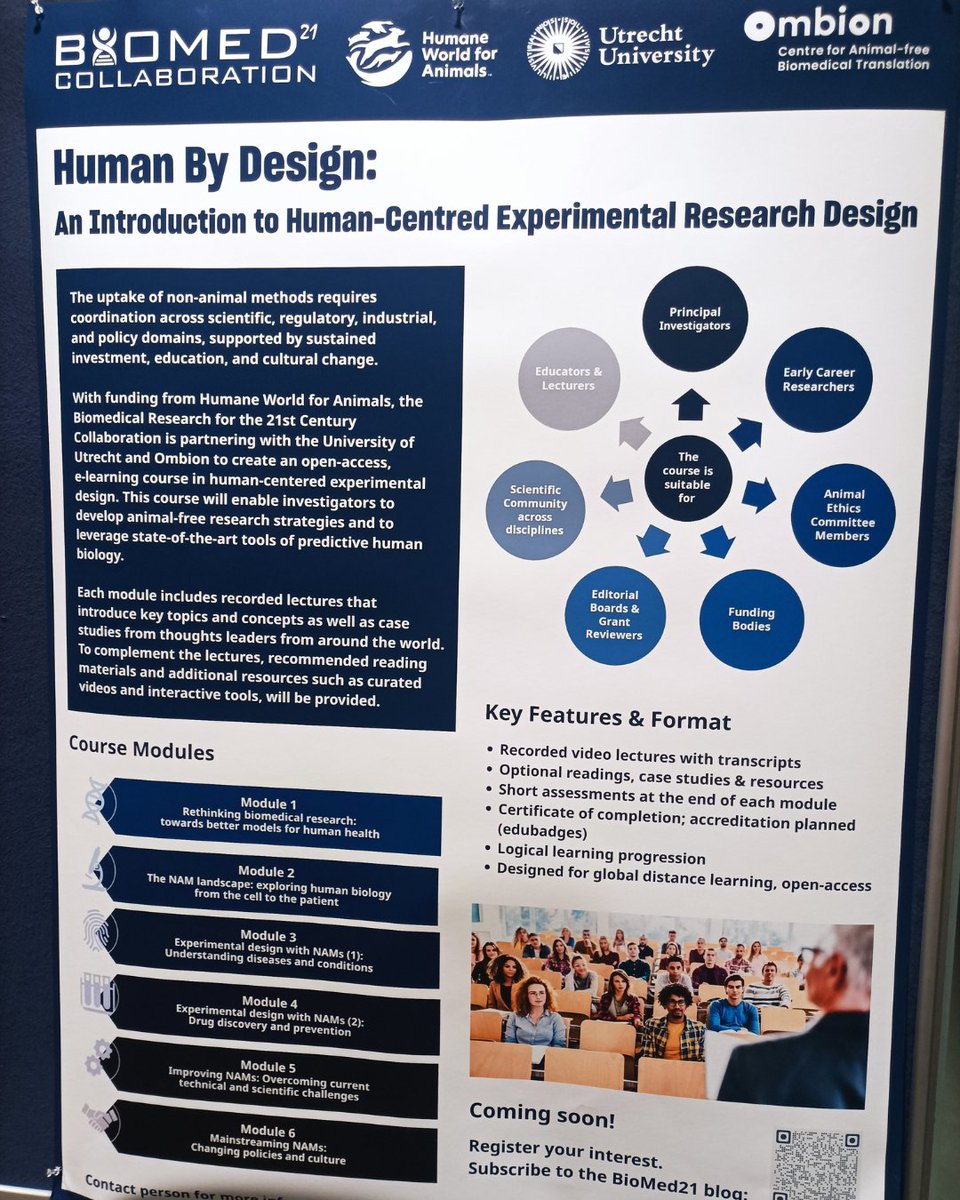
We were pleased to attend Ombion Centre for Animal-free Biomedical Translation’s scientific conference, where they shared news of our "Human by Design" course. Thanks Valentin Salamone & Ombion for introducing the course & congrats on a successful event! https://t.co/pJPh1iE80j
📡 BIG NEWS! 📡 We’re excited to announce that, together with @humaneworldorg & @UniUtrecht, we're developing a course that will train the next generation of researchers in animal-free science!
Learn more & register your interest in our latest blog post: https://t.co/pJPh1iE80j
📢 Something exciting is on the horizon for those who want to move beyond animal research.
We’re joining forces with international partners to launch a bold project to accelerate the growing shift toward more human-relevant science.
More details coming tomorrow!
On #WorldCancerDay, it’s time to rethink how we study this disease. Over 90% of cancer drugs that pass animals tests fail in human trials—a sign we need a change. The future of cancer research is human-centric, data-driven & interdisciplinary—we’re working to make that a reality.
🚀 ICYMI: The @BioMed_21 Collaboration has launched a bold new moonshot policy paper calling for a transformative shift in biomedical research—toward human-specific, non-animal methods.
Read the full paper here: https://t.co/rNQ3SM8BxN
ICYMI: Our new “moonshot” policy paper with @BioMed_21 calls for a bold shift from outdated animal tests to human-relevant, animal-free methods that better predict how diseases & treatments affect people.
Read more in our latest @POLITICOEurope article: https://t.co/wtjJKglheR
Our work to progress human-centric, non-animal methods has never been more important, and we look forward to continuing our work in 2026 and beyond to make this global vision a reality. 🎉
Happy holidays to our partners, members and supporters. Thank you for your continued commitment to advancing human-centric nonanimal science. We look forward to building on our shared progress in the new year as we work together to better protect people, animals and our planet.
We are proud to announce our new moonshot policy paper, calling for a transformative "moonshot" in biomedical research: accelerating the shift to human-relevant, non-animal technologies to tackle major public health challenges. 🚀🧪🧬
🔗https://t.co/rNQ3SM83If
📢 BREAKING: @EU_Commission’s newly introduced Biotech Act formally recognizes non-animal methods (NAMs) as “critical research & technology infrastructure”, showing that our, & @humaneworldorg's recommendations were taken into account! This is great news for animal-free science!
Our roundtable brought together global partners & experts to share progress & next steps to advance human-centered, non-animal methods.
Thank you to all participants for the inspiring discussions & shared commitment to transform biomedical research for the 21st century. 🧪🚀
We celebrate the @US_FDA's latest draft guidance that will allow for reduction—& in some cases elimination—of certain non-human primate toxicity tests for drug development.
This update reflects growing trust in non-animal, human-relevant methods.
🔗 https://t.co/SWxKPT17TW
We welcome the U.S. @CDCgov's reported decision to end its in-house primate research program—this would be a landmark step supporting the application of human-centric biomedical innovation to enhance public health. https://t.co/LQyB1fDi6y
We welcome the publication of UK Government's plan for replacing animal in science. Animal-free methods provide better safety for humans, environment & prevent animal suffering. We look forward to contributing our experience & expertise to ensure implementation of this strategy.
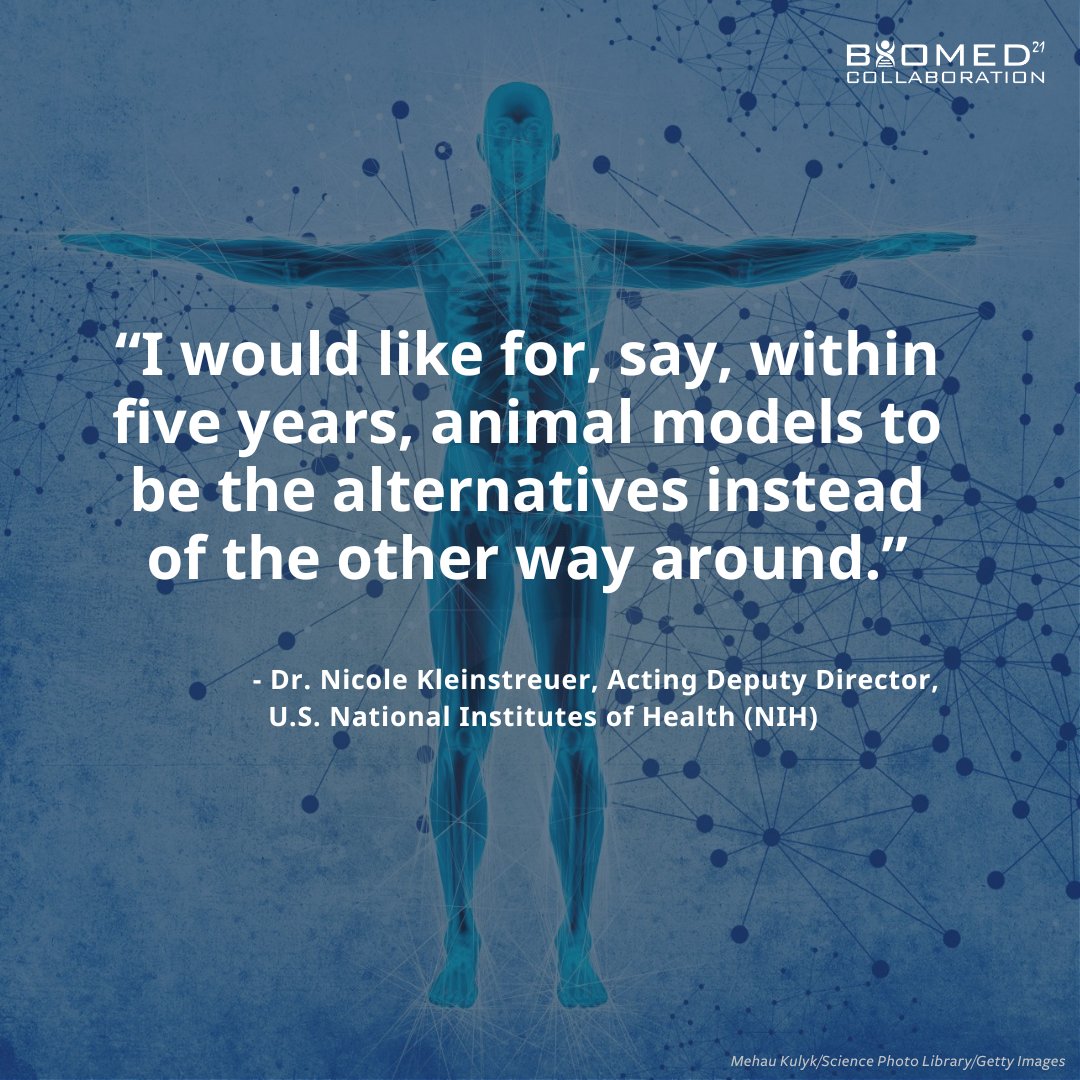
We're encouraged to see @NIH embrace human-based non-animal methods in biomedical research, with NIH's Dr. Nicole Kleinstreuer at the forefront.
Learn more about Kleinstreuer, winner of #BioMed21 member, @humaneworldorg's, Humane Science Innovator Award! https://t.co/hBTpvN9eU1
🎬 Here’s a sneak peek of our inaugural science policy workshop video! This event brought together leading experts in Brussels, Belgium to explore how human-centric, non-animal research strategies can transform biomedical research & public health.
Stay tuned for the full video!
The increasingly-recognized failure of animal models to reliably predict human biology is driving a shift in medical research toward human-based approaches.
This @CBC article on “organ chip” cancer research exemplifies this transition in Canada: https://t.co/TcXIwAdSbJ
Our findings highlight the systemic pressure to use animal methods & how they are viewed as the default gold standard, despite evidence that human-relevant tech can better mimic & predict human responses.
Read full report: https://t.co/3ZDsj6Ezai
Part of the @TheCOLAAB project.
Our survey on animal methods bias, conducted w/ @humaneworldind, @IndiaBioscience, @cphms_aic & @PCRM, revealed concerning trends:
🚨 56% of respondents were asked to add animal tests to studies w/out them.
🚨 30% of respondents included animal data just to satisfy reviewers.