@bryan_johnson What an incredible personal effort. That’s a real paradigm shift. If this can be connected to shape the microbiome through specific nutrients, this could improve immune responses naturally.
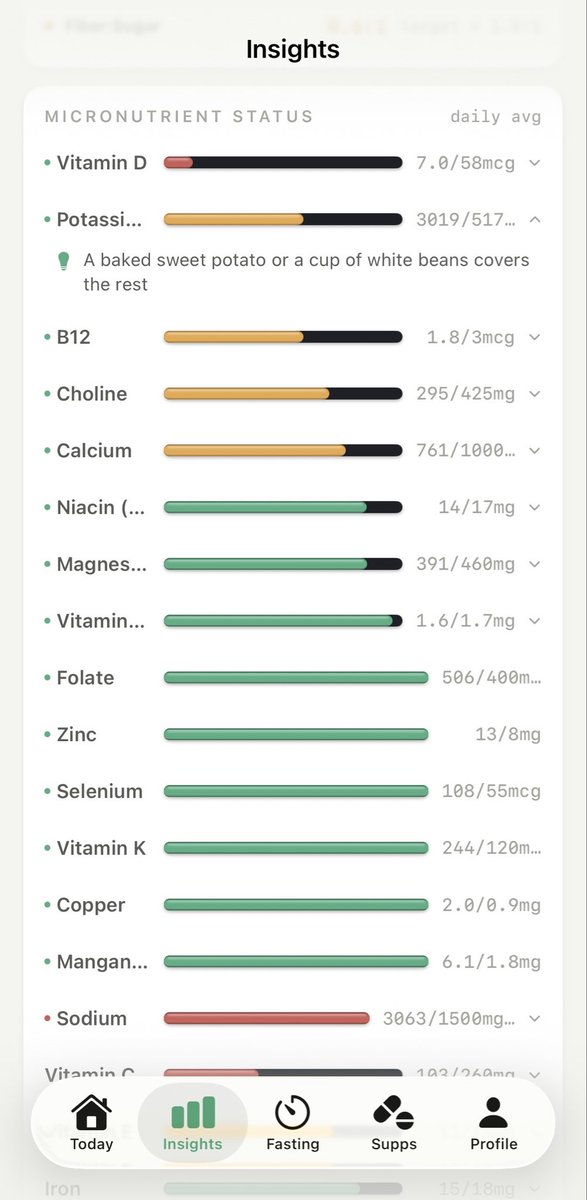
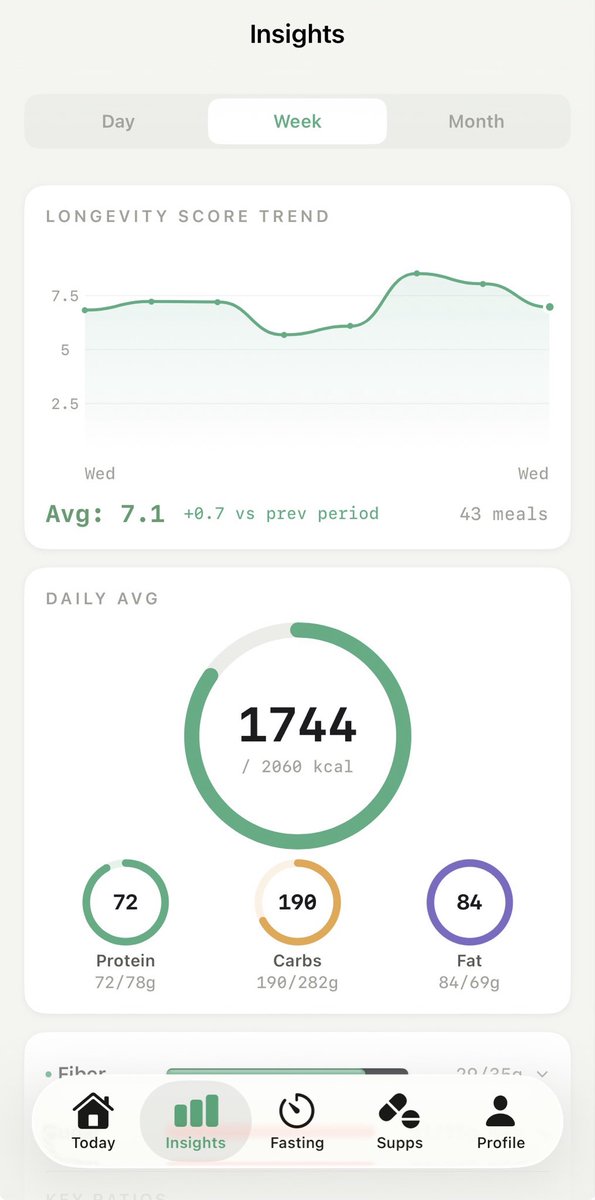
Most nutrient gaps stay invisible - you don’t know what to look for until it’s already a problem. Biohack tracks 23 micronutrients from what you actually eat, day after day, and surfaces the ones you never thought to check. Not just a snapshot - the trend behind it.
You can eat “healthy” every day and still miss the same nutrients.
113 meals logged. Vitamin D still missing.
Not a bad diet. Just a blind spot that stays invisible without data.
Most people get bloodwork once a year and call it optimized.
One snapshot. No context. No trend.
Track your nutrition first - the gaps that repeat tell you what’s actually worth testing.
Pre-screen with Biohack. Link in bio.
#biohack#longevity#nutrition#HealthyFoods #supplements
Blood tests are only as good as what you order. Most people miss half their deficiencies because they never thought to check for them. Two weeks of dietary micronutrient tracking tells you exactly what to put on the requisition form.
The ‘over-supplementing’ problem comes down to this: most people supplement based on trends or generic advice, not their actual gaps. Blood panels only show what you thought to order and paid for - but the deficiencies that actually matter are often the ones nobody thought to test. Food intake tracking surfaces those blind spots first, before any lab order. Then bloodwork becomes a targeted confirmation, not a fishing expedition.
The grocery list is right. What most people skip: actually tracking whether those 7 foods are closing their specific nutrient gaps - or just checking a box. That’s exactly what Biohack was built for.
Your food is killing you.
Or it can keep you young.
The choice is yours.
A naturopathic doctor ran a randomized controlled trial on 43 men aged 50 to 72.
Published in the peer reviewed journal Aging.
No drugs. No hard workouts. 8 weeks. Just 7 foods eaten consistently.
Biological age dropped 3.2 years compared to the control group.
The foods work by talking directly to your DNA. They flip aging genes off.
Berries. Dark leafy greens. Broccoli. Herbs and spices. Green tea. Wild caught fish. Nuts and seeds.
This is not new information, but people keep dismissing it.
You can live longer.
All you need is a grocery list.
Dose and timing are doing most of the work here - at 3-5 cups before noon, caffeine activates AMPK and Nrf2 pathways, supports autophagy, and correlates with reduced neurodegenerative risk in the epidemiological data. The cortisol and sleep disruption is real, but that’s excessive intake and late timing, not coffee itself.
Five servings a day and still falling short on flavanols - because ‘eat more fruits and vegetables’ was never specific enough. Quantity without tracking what’s actually in it is still guesswork.
A new study found that even people who ate five servings of fruits and vegetables per day still fell short of the flavanol intake associated with cardiovascular benefits. https://t.co/OD2ZMH9Xva
Most people eat ‘healthy’ and still have no idea what their body is actually missing. Biohack scores every meal across 23 micronutrients, shows your personal gaps in real time, and tells you exactly what to fix - based on your diet, not the average person’s. Eat to live longer.
https://t.co/Uk7cs2M8qE
Olive oil scores this well for raw or low-heat use - oleocanthal and polyphenols do real work here. Worth keeping a separate oil for high-heat cooking, since those compounds degrade well before the smoke point. No more guessing which oil does what.
Sauerkraut, a fermented cabbage dish, is naturally low in carbohydrates and packed with vitamins, minerals, and antioxidants.
One cup of sauerkraut provides a substantial amount of vitamin C, which supports collagen production, bone strength, immune defense, and cardiovascular health.
As a cruciferous food, cabbage also provides sulfur-containing compounds that help protect cells and assist natural detoxification processes.
Sauerkraut’s fermentation process also produces high concentrations of beneficial bacteria that promote microbial gut balance linked to digestive comfort and overall health and well-being.
Dr. Eric Berg, DC, not MD; information only
@dr_ericberg Curious if you’ve looked into how pasteurized vs. raw sauerkraut compares here - a lot of store-bought versions are heat-treated, which would kill off the live cultures this is built on.
Most people are low on vitamin D and don’t know it.
Low energy, frequent colds, low mood - all can trace back to one nutrient most diets and indoor lifestyles fail to cover.
We built a tracker that shows exactly where you stand.
Spent years supplementing based on what’s trending, not what I actually needed.
Logged 52 meals. The real gaps weren’t even close to what I assumed.
Guessing isn’t #biohacking.
@DominikaMroz44@dr_ericberg D3 and zinc work well together too - zinc supports the vitamin D receptor’s function, so low zinc can blunt how effectively D3 gets used even with good blood levels. Different mechanism than the K2 pairing, but similarly easy to miss.
@dr_ericberg Worth adding a third piece: magnesium is required to actually convert D3 into its active form in the first place. People supplement D3+K2 correctly and still see flat bloodwork because magnesium status was never checked - the conversion step gets skipped entirely.
Just scored it on Biohack: 7.7/10.
Not for the caffeine - for the chlorogenic acids and AMPK activation that support autophagy and may lower mortality risk.
Your coffee might be doing more than waking you up.