Imho, this uncertainty may still be there for a couple of years which means biopharma companies are going to do their FIH and also phase 2a studies abroad (Canada, Australia, China) before bringing those programs into the US unless there is a major need for trial sites and patients in the US. Naturally, before starting Phase 2b and beyond, there will be a need for regulatory harmonization from pov of what the FDA also wants so that companies can use the phase 3 data for approval in multiple regions without having to do country specific large trials (other than small trials involving patients from China/Japan). So, basically the industry will evolve and find a way to minimize the impact or uncertainty atleast for the next 2-3 years. Fingers crossed!
These are excellent recommendations, Bob. I would add as no. 5, permit individuals investing in start-ups using a promissory note or SAFE (or something like Advanced Subscription Agreement, ASA, in the UK), to tax deduct the investment at the time of their investment (or every year from the date of investment between 30-50% depending on caps as in ASA) and not after conversion to stock or when the investment is lost, which may take many years! This is because, as you know, many start-ups take initial angel funding as convertible debt for many right reasons, including speed of transaction, saving on legal fees, etc. ASAs convert into shares at a future funding round, a longstop date, or a liquidity event (e.g., IPO or acquisition).
FYI/PSA for everyone, in the UK, as you may already know, they have An ASA is a financing instrument commonly used in UK startups as an alternative to convertible notes. It allows investors to provide funds upfront in exchange for shares that will be issued later, typically during a future funding round or upon a predetermined trigger event. Unlike convertible notes, ASAs are structured as equity agreements rather than debt instruments, making them compatible with SEIS/EIS tax relief schemes.
Not financial advice, as always. https://t.co/xJ1dOzDUcz
@BiotechCH We are currently in cram down rounds period because mid-late preferred biotech rounds done at crazy valuations, too much concentration on one MOA/Tx area or AI-itis, and generalists have left the building.
This One Could Literally Save Lives🛟
The first episode of DeSci Pilled drops tomorrow, and it is more than just a launch.
It exposes Ethan Perlstein’s mission to revolutionize rare disease research.
The more people we reach, the more lives we can save.
Here is how you can help 🧵
@SaraNayeem@Sara, these are incredibly useful thoughts. Any way to put all these (incl. historical ones) in one place like @substack? :-) ps missed your panel session at BioCEO & Investor conference in NYC due to a super delayed SFO-EWR flight!
When pitching, CFOs (or CEOs if there’s not a CFO in the meeting) should be ready to address a few key topics: 1) post-money valuation on your last round; 2) current quarterly burn and how that ramps; 3) how much you’re raising, and what that implies for cash out date on...1/7
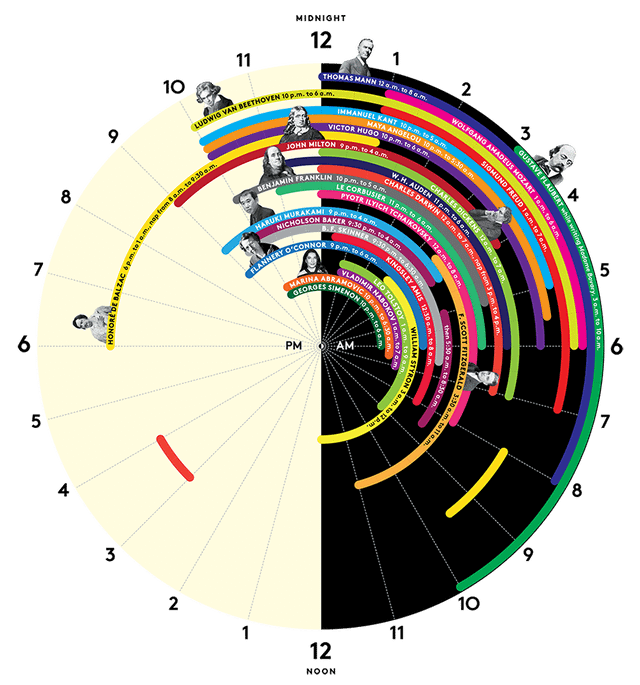
This may be right! Personalized sleep patterns. One size fits all strategy is a myth here. FYI, see 2 figs on sleep patterns of history's prominent people. Key msg is, if a pattern works for you, don't force that on others!!! #sleep
The "8 hours of sleep" rule is based on ZERO evidence.
Ancient humans slept in two distinct phases, not one long stretch.
Here's the shocking truth about how you should really be sleeping:
@drrichjlaw@adamfeuerstein 25 years or more on, anything changed with that strategy? Many are still trying to do the same expecting different results! Madness....
With so much investment going into GLP-1 space and many of which are now public with huge cash on their balance sheet, is going to be the next big "zombie company" wave even if folks think GLP-1 space will evolve into broader anti-obesity space, the equivalent of lipid lowering drugs space which started with statins as many of us know. Great time to be a CRO/CDMO!
With so much investment going into GLP-1 space and many of which are now public with huge cash on their balance sheet, is going to be the next big "zombie company" wave even if folks think GLP-1 space will evolve into broader anti-obesity space, the equivalent of lipid lowering drugs space which started with statins as many of us know. Great time to be a CRO/CDMO!
Very good points or insights! Many of us have always believed that animal model is only a model where you study the relationship between one's drug candidate and a very limited set of variables/end points under controlled lab conditions (incl. genetic makeup) which are not likely to reflect real-world environment. So data from these studies need to be interpreted in that context. Need to get to man asap after making sure safety is covered (this is where extensive animal studies are useful) especially if dealing with a whole new class of molecules and/or moa.
Having been in biotech over 25 years, co-founded+co-funded a number of biotechs, taken projects from bench to Phase 2 or 3, tried and tested all kinds of biotech bizmodels, take it from me #DeSci is NOT a fantasy. This is the only way to find therapies for >100,000 diseases of all prevalent sizes! #DeSci is at General Magic stage if comparing its evolution to smartphones or even Napster if comparing it to audio/music.
Having been in biotech over 25 years, co-founded+co-funded a number of biotechs, taken projects from bench to Phase 2 or 3, tried and tested all kinds of biotech bizmodels, take it from me #DeSci is NOT a fantasy. This is the only way to find therapies for >100,000 diseases of all prevalent sizes! #DeSci is at General Magic stage if comparing its evolution to smartphones or even Napster if comparing it to audio/music.
Does this also authorize for interchangeability? i.e a pharmacist can change from brand to biosimilar without the prescriber's authorization. Bioequivalence is one thing but a pharmacist's ability to switch unless the physician says not to change, was where biosimilars were stuck for a long time.