Google DeepMind CEO Demis Hassabis on why young people should make themselves "superpowered" with AI tools:
When Hassabis gives talks at universities and schools, his core piece of advice is simple:
Lean all the way into where technology is heading.
"You've got to just go with the flow of the direction," he says. "I would immerse myself in every tool available and just become almost like superpowered with those tools and those capabilities."
His reasoning comes from what he sees inside the frontier labs themselves.
So much effort goes into simply building the next versions of these models that even the people making them can't keep up with everything those models could do.
"Even at the frontier labs, there's so much work that has to go into just making the next versions of these frontier models and then all the adjacent models. So for us, like Veo and Nano Banana and Gemini, even we can only explore a fraction of the applied things you could do with it, the applications you could make with it."
And that gap, @demishassabis explains, is widening:
"I think that gap's getting bigger and bigger, in terms of the overhang of the capabilities, all the cool stuff on the latest models. And the release schedules are getting faster and faster."
This is where Hassabis sees the opportunity.
The people positioned to win aren't necessarily the ones building the models, they're the ones who master the tools and point them at something new.
"The opportunity space is getting huge for people who are really expert at using those tools and then apply it to some new domain."
He puts it in stark terms:
"A kid these days could probably start a multi-billion dollar business in some ways, using these tools in some new way that no one had thought about."
The best reading lists don't just recommend books. They help connect the dots.
Recently, Ashish Kumar Jain shared five AI books worth reading, including Build a Large Language Model (From Scratch) by @rasbt.
One takeaway: understanding LLM fundamentals can help you build better AI systems. And know when not to reach for a model in the first place.
Ashish's full list: https://t.co/gW6ecv0Dvm
Book: https://t.co/bdTMCA0Cl2
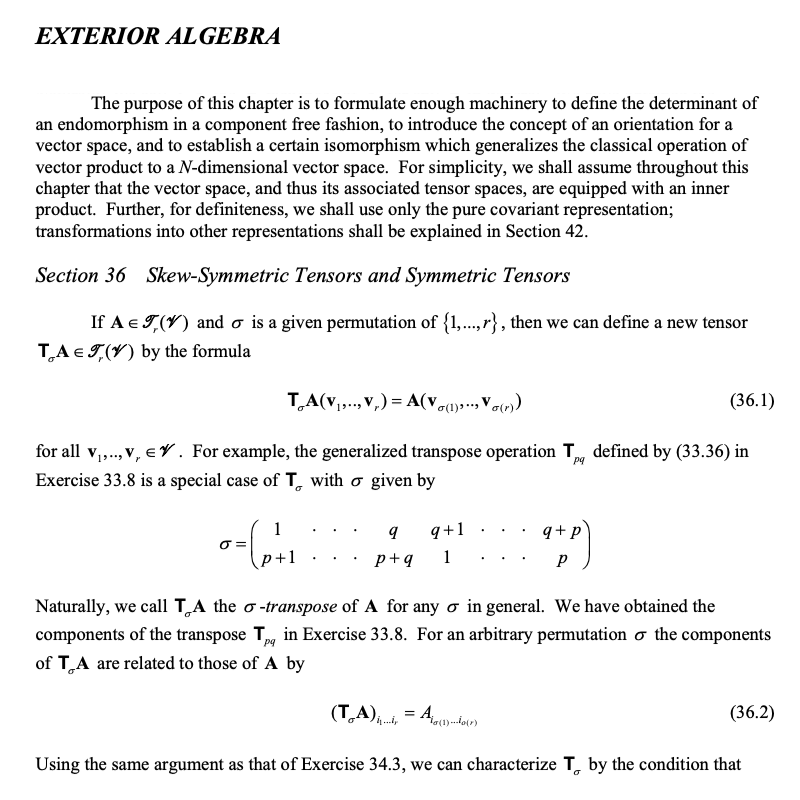
"Introduction to Vectors and Tensors" is a rigorous and well-structured introduction to vector and tensor theory. Volume I develops algebraic structures, vectors, and tensors. Volume II introduces vector and tensor fields, Euclidean manifolds, and their analytical and geometrical aspects, with strong connections to engineering and the physical sciences.
I think it is an excellent resource for advanced undergraduates, graduate students, engineers, and applied mathematicians. It is also relevant today to anyone interested in the mathematical foundations of modern AI systems, in which linear algebra, vector spaces, transformations, and high-dimensional representations play a central role.
https://t.co/HacpoINCVA
For years aging looked like a thousand things going wrong at once, with no single dial to read.
A new Nature study went looking for the dial. The team read gene activity in over 11,000 samples across mice, rats, monkeys, and people, and asked which signals drift the same way in all of them.
Three genes did. GPNMB, CDKN1A, LGALS3, moving in the same direction as every one of those species got older.
In humans that signature tracks how much time is left. And it shifts when you eat less.
A shared clock, written in gene activity, ticking across the whole mammal family.
Most people quit because they don't know what to learn next.
Here's the complete Data Science Roadmap 👇
📍 Python Basics
📍 Statistics & Probability
📍 SQL & Databases
📍 Pandas & NumPy
📍 Data Visualization
📍 Machine Learning
📍 Deep Learning
📍 MLOps & Deployment
Follow this path and stay consistent. 💯
#DataScientist #Roadmap #Programming
We finally know why bigger models are smarter. It's not the data.
More training data was supposed to fix small models.
A new paper shows why it cannot.
Researchers proved some tasks need model scaling, not data scaling.
A small model fails them even with infinite data.
The cause is competition over neurons.
Frequent tasks grab capacity first and keep it.
Rare task updates get overwritten before the next example arrives.
The model learns, then forgets, in an endless loop.
Scaling breaks the loop in three steps:
1. Common tasks get fully learned
2. Their gradients fade to nothing
3. Rare features accumulate safely
The team pretrained OLMo models from 4M to 4B parameters.
They injected novel tasks at controlled frequencies during training.
Only the largest models learned the rare ones.
Interference between their gradients nearly disappeared.
How many tasks is your model silently skipping?
Clinical AI is moving from pattern matching toward something more important: knowledge grounding.
A new paper in npj Digital Medicine looks at how clinical code embeddings can anchor models in the structured medical concepts clinicians actually use.
That matters because trustworthy clinical AI needs more than benchmark performance. It needs outputs that stay closer to clinical logic.
The harder question is what gets baked into that structure, including coding bias, missing context, and outdated pathways.
Worth reading:
https://t.co/fYGou8SIys
MDForge: Agentic Molecular Dynamics Pipeline Design under Sparse Simulator Feedback
1 MDForge is an LLM agent that autonomously designs full molecular dynamics (MD) pipelines as open-ended executable code, then improves them online from sparse, expensive simulator feedback (each trial can cost GPU-hours).
2 The key technical idea is PRISM (Process-Reward Interpretation via Subsystem Mediation): it turns a single terminal reward into dense, actionable signals by (a) extracting structured per-stage diagnostics across the MD pipeline (Prep, Equilibration, Production, Analysis) and (b) converting those diagnostics into typed critiques.
3 Instead of a fixed tool-calling “MD toolbox”, MDForge’s action space is program synthesis: the agent can compose whatever workflow the system demands (force-field setup, restraints, sampling protocol, estimators, guards, etc.), closer to what human experts actually do.
4 PRISM’s critique is produced by a multi-agent panel of physics specialists with non-overlapping jurisdictions: Force Field, Sampling, and Analysis. They debate in two rounds with cross-visibility, then an aggregator outputs a single typed critique that names the failing subsystem and the concrete edit to apply.
5 A reputation-weighting loop adjusts how much each specialist influences the final critique, based on whether their pre-execution predictions match post-execution evidence. This aims to downweight consistently miscalibrated “experts” within a task.
6 On SAMPL host–guest binding free-energy benchmarks (CB[7], OAH, CBClip), MDForge produced runnable pipelines reliably (5/5 successful trials per host) and improved held-out ranking performance versus verbal-RL baselines without PRISM. Example held-out Kendall tau: CB[7] 0.56 and CBClip 0.47, compared to 0.24 and 0.20 for a trial-level feedback baseline.
7 Ablations suggest both components matter: removing stage diagnostics caused unstable learning (the agent can’t localize what broke and may discard good pipelines), while removing multi-expert debate reduced transfer of ranking signal to held-out guests.
8 Mechanistically, PRISM encourages localized edits instead of “shotgun rewrites”: e.g., an Analysis-stage diagnostic flagging insufficient MBAR overlap triggers a typed critique to add an explicit overlap/convergence guard, implemented as a small targeted code change.
9 MDForge’s resulting CB[7] pipeline largely stayed in the methodological family of expert reference workflows (GAFF2 + AM1-BCC charges, APR umbrella sampling, MBAR analysis), differing mainly in reliability-oriented engineering choices (guards, logging, automation).
10 In a prospective test, the best MDForge-designed CB[7] pipeline screened unseen candidate guests and selected Bromantane as top-1; competition 1H NMR against a picomolar reference (FMTA) measured Ka ≈ 8 × 10^12 M−1 (ΔGexp ≈ −17.6 kcal/mol), demonstrating end-to-end translation from autonomous pipeline design to wet-lab-confirmed high-affinity binding.
💻Code: https://t.co/tR29xNugzb
📜Paper: https://t.co/X46AerjLUO
#MolecularDynamics #LLM #AgenticAI #ComputationalChemistry #FreeEnergyCalculations #SAMPL #ProgramSynthesis #VerbalRL #AI4Science
This “workflow,” besides not actually being a way to “read a complete book” as advertised, is a nice example of the summary fallacy: the belief that reading a summary of a book or long work delivers all the value of actually attending to the entire work. A gist, a main point, a central argument, or a key lesson is not a substitute for a whole work, but something that experiencing the whole work is meant to leave us with.
At the start of the year @tiffany_s_ma and I made three clinical trial predictions for 2026
1. Daraxonrasib becomes the first pan-RAS inhibitor in pancreatic cancer ✅
2. Ziltivekimab becomes the first targeted anti-inflammatory to prevent cardiovascular disease
3. Pelacarsen becomes the first targeted lipoprotein(a) therapy to prevent cardiovascular disease
One down, two to go!
Full episode here: https://t.co/7wpw4VTAmn
Synthetic super-enhancers enable precision viral immunotherapy
Thank you for choosing Twist oligo pool to support this work!
Nature https://t.co/XKr8YgGmAA







![BiologyAIDaily's tweet photo. MDForge: Agentic Molecular Dynamics Pipeline Design under Sparse Simulator Feedback
1 MDForge is an LLM agent that autonomously designs full molecular dynamics (MD) pipelines as open-ended executable code, then improves them online from sparse, expensive simulator feedback (each trial can cost GPU-hours).
2 The key technical idea is PRISM (Process-Reward Interpretation via Subsystem Mediation): it turns a single terminal reward into dense, actionable signals by (a) extracting structured per-stage diagnostics across the MD pipeline (Prep, Equilibration, Production, Analysis) and (b) converting those diagnostics into typed critiques.
3 Instead of a fixed tool-calling “MD toolbox”, MDForge’s action space is program synthesis: the agent can compose whatever workflow the system demands (force-field setup, restraints, sampling protocol, estimators, guards, etc.), closer to what human experts actually do.
4 PRISM’s critique is produced by a multi-agent panel of physics specialists with non-overlapping jurisdictions: Force Field, Sampling, and Analysis. They debate in two rounds with cross-visibility, then an aggregator outputs a single typed critique that names the failing subsystem and the concrete edit to apply.
5 A reputation-weighting loop adjusts how much each specialist influences the final critique, based on whether their pre-execution predictions match post-execution evidence. This aims to downweight consistently miscalibrated “experts” within a task.
6 On SAMPL host–guest binding free-energy benchmarks (CB[7], OAH, CBClip), MDForge produced runnable pipelines reliably (5/5 successful trials per host) and improved held-out ranking performance versus verbal-RL baselines without PRISM. Example held-out Kendall tau: CB[7] 0.56 and CBClip 0.47, compared to 0.24 and 0.20 for a trial-level feedback baseline.
7 Ablations suggest both components matter: removing stage diagnostics caused unstable learning (the agent can’t localize what broke and may discard good pipelines), while removing multi-expert debate reduced transfer of ranking signal to held-out guests.
8 Mechanistically, PRISM encourages localized edits instead of “shotgun rewrites”: e.g., an Analysis-stage diagnostic flagging insufficient MBAR overlap triggers a typed critique to add an explicit overlap/convergence guard, implemented as a small targeted code change.
9 MDForge’s resulting CB[7] pipeline largely stayed in the methodological family of expert reference workflows (GAFF2 + AM1-BCC charges, APR umbrella sampling, MBAR analysis), differing mainly in reliability-oriented engineering choices (guards, logging, automation).
10 In a prospective test, the best MDForge-designed CB[7] pipeline screened unseen candidate guests and selected Bromantane as top-1; competition 1H NMR against a picomolar reference (FMTA) measured Ka ≈ 8 × 10^12 M−1 (ΔGexp ≈ −17.6 kcal/mol), demonstrating end-to-end translation from autonomous pipeline design to wet-lab-confirmed high-affinity binding.
💻Code: https://t.co/tR29xNugzb
📜Paper: https://t.co/X46AerjLUO
#MolecularDynamics #LLM #AgenticAI #ComputationalChemistry #FreeEnergyCalculations #SAMPL #ProgramSynthesis #VerbalRL #AI4Science](https://pbs.twimg.com/media/HKqpZ7cagAAPHnV.png)


