Feels like the bro community is going through the five stages of grief… we have seen denial and anger; bargaining should start in earnest soon, with depression and acceptance in time for the Anthropic IPO.
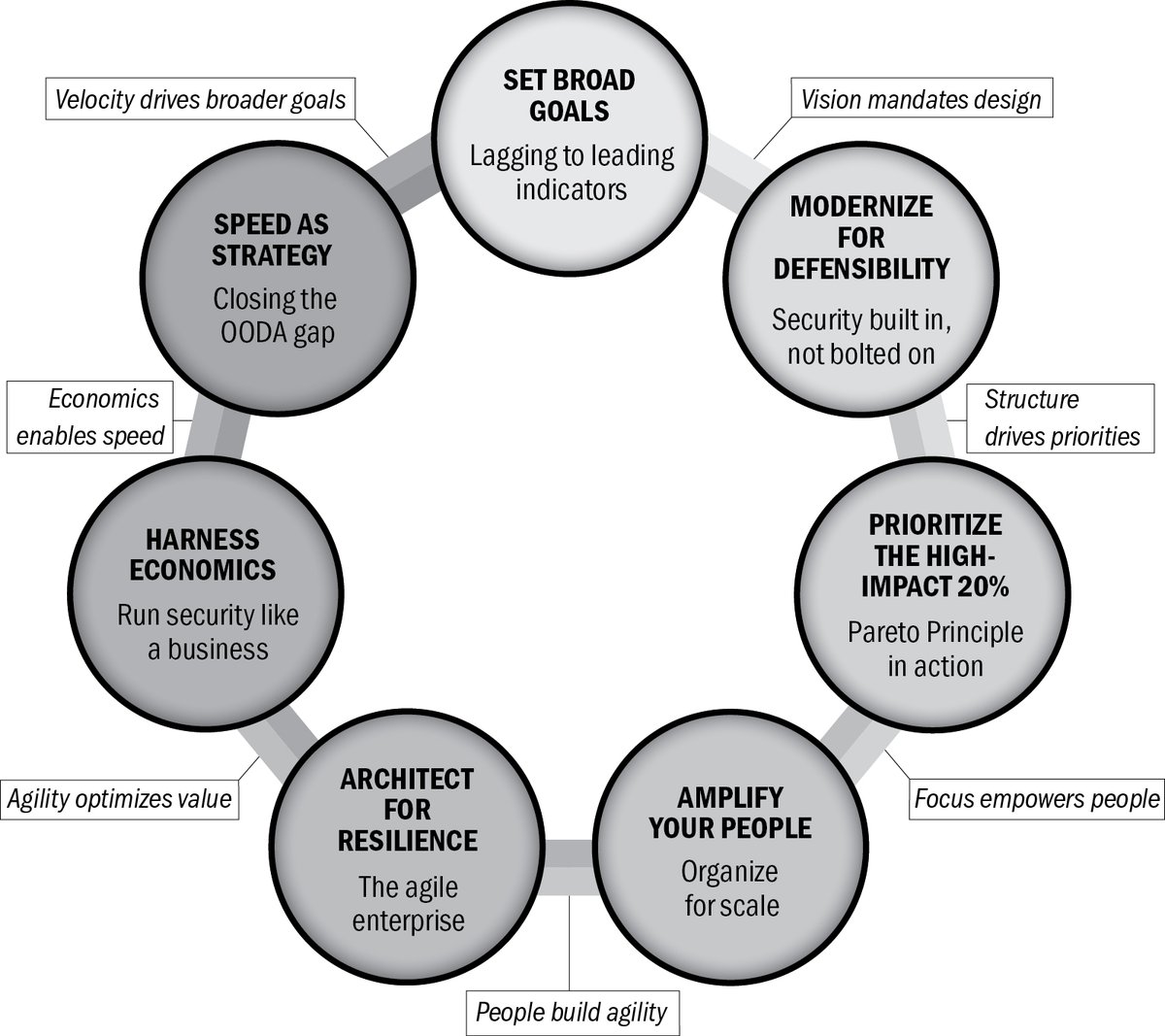
Scaling Security: The 7 Pillars of Elite Cybersecurity teams is a management “operating system” for established CISOs, rising executives, CIOs, CEOs and Board members.
https://t.co/76pSZgLmgs
I am very happy for the thousands of @AnthropicAI employees who will soon become decamillionairesand centamillionaires. May you find much joy in your new-found wealth. I trust that in the fullness of time you will make the most of those life-changing sums, using that money for good, to change and lift up the lives of those around you.
As for the investors who are willing buy that stock - not the index and other funds that the law will mandate them to buy - welcome to the economics of the greater fool: you are in good company along with buyers of cryptocurrencies.
Congrats to the California Science Center on opening the Samuel Oschin Air and Space Center 🚀
In the Kent Kresa Space Gallery, see our legacy of Mars exploration – and try driving a rover yourself!
We’re proud to share JPL and Caltech's work with our neighbors right here in Southern California.
I will anchor a special two hour @CNN Newsroom this morning from 10AM-12noon. We will have live coverage of the air traffic meltdown and the news conference coming up with the Transportation Secretary and the FAA Administrator.
“Marsalis and the Masters” is OUT TODAY! This latest album by the @jazzdotorg with Wynton Marsalis features some of the 20th century’s greatest music. Every track is my arrangement of compositions by the likes of John Coltrane, Thelonious Monk, Chick Corea, and more. Check out more on
https://t.co/XHyOpB06vo
This is absolutely brilliant, by legendary Australian investor John Hempton, who explains the core financial paradox at the heart of the AI story (and which also, to some extent, may explain the Jensen Huang story).
The numbers say that about $7 trillion in AI compute is set to be built by 2030. For the industry to earn that back, given those chips have a roughly 5-year lifespan and cost a lot to run, they need to generate about $2 trillion of AI revenue a year.
Hempton says the only way you can get to these sorts of numbers is by selling AI as a productivity tool to businesses, meaning replacing workers.
And since, for reasons he explains in the video, no company fires people to save just 10% in costs, the savings have to be about double what businesses pay for the AI: roughly $4 trillion in savings on wages a year.
What does firing $4 trillion worth of workers mean concretely? Hempton calculated this equates to roughly 10% of the OECD’s total wage bill of about $40 trillion: one in every ten dollars paid to workers across the OECD’s 38 member countries.
Which, naturally, when you suddenly take that much income out of people’s pockets, would trigger a massive global recession.
And here's the paradox: in a massive global recession, there's no way businesses will pay $2 trillion a year for AI, so the return disappears anyway.
In other words, AI's only possible path to success given the numbers requires destroying the very economy that is supposed to pay for it.
HOWEVER - and here's where the Nvidia/Jensen Huang story might come into play (and, to be clear, this is now me speaking and not Hempton given this interview is prior to the whole Nvidia saga) - this all rests on a core assumption: that compute stays super expensive. Which in practice means Nvidia keeping its pricing power, with a 75% gross margin on its chips.
Break Nvidia's pricing power, and the $7 trillion bill, the $2 trillion in revenue and the 10% of jobs all shrink with it.
This would also put the whole China story in a different light. Maybe it's not so much a "we don't want the Chinese to be competitive with similar chips to us" story as it is a "we don't want Chinese demand to drive up chip prices" one. Or probably both.
And, as such, you could actually think about the US export controls not as a national security measure but as a good old subsidy for US AI players (together with a handicap for their Chinese competitors), a way to limit the price of chips.
This holds even with China itself blocking Nvidia imports, since Chinese firms simply rent the chips abroad instead, in places like Southeast Asia, which is precisely what this whole Alice Huang/Megaspeed story is about.
The main obstacle for all this was, of course... Jensen. Obviously, the guy wanted the exact opposite: as many buyers as possible, Chinese players included, to keep chip prices and Nvidia’s margins sky-high. He was also the one man with the clout to make that happen.
All hard to prove, of course, but I can imagine that quite a few corks popped this week in Anthropic's offices: nothing like the news that the man keeping your biggest cost sky-high is out when you're a week away from a $1.2 trillion IPO.
We’re not going to win by lobbying, plotting, or manipulating. We’re going to win by building, in the open, with the whole community!
Today, with @ggerganov we’re super excited to announce the release of llama.cpp v1, the first major fully stable version of the most used library to run AI models locally, meaning on your phone, your laptop, and your workstation.
It means you can own your intelligence for free, not send your data to anyone and be 100% in control, wherever you are in the world. It shows our commitment to support every hardware, platform and model type out there and makes AI distributed rather than concentrated in a few Silicon Valley orgs.
Huge thanks to the team, the long-time maintainers and every contributor who helped make this happen. Let’s build! 💛🧡💚
CEO of the Year has a nice ring to it.
Congratulations to AMD Chair and CEO @LisaSu on this well-deserved recognition from @YahooFinance! 👏
https://t.co/t8dQGksoxp
2026 has been absolutely wild but TL cleanse Christmas in Palm Springs is 42 days away and already getting the family puzzle and board game inventory stacked
This whole thing sucks, and I wish none of it had happened. It’s a really sad day!
But I want to make one thing clear: we’ll keep fighting for open-source AI, harder than ever. This is too important to slow down now. Let’s go!
Microsoft's outage reports on November 12 reached 74 countries and territories in about an hour on Downdetector.
Microsoft says its Exchange Online incident began at 16:17 UTC. Reports to Downdetector about Outlook began climbing at about 17:25 UTC, 12:25 in New York. By 18:25, reports about five Microsoft services combined reached 19,650 a minute, against <15 a minute on an average Thursday.
Outlook reports alone peaked at more than 2,000 times their normal level.
Reports did not stay in the Americas. They jumped tenfold in the UK at 17:43, in India at 23:21 local time and in New Zealand at 06:55 local time. Between 17:00 and 18:55 UTC, nearly 3 in 10 reports came from outside the US. We count a country here once its reports reach ten times normal and at least 20 in five minutes.
Reports about Microsoft 365, Copilot, Teams and OneDrive each rose more than a hundredfold, and Azure about a hundredfold. Xbox, GitHub and LinkedIn, also Microsoft's, rose far less.
Microsoft said a portion of its infrastructure was experiencing elevated load across multiple regions. At 19:38 UTC, reports were still running at more than 11,000 a minute.
Marathon runners don’t give up. They set big goals and work hard—on the course and in the office.
It was great to celebrate some of our @Bloomberg and @BloombergDotOrg@nycmarathon runners, including many who ran in support of organizations like @teamforkids, and @FredsTeam. And congratulations to the many members of Bloomberg 1,000, who raised more than $600,000 for @MSKCancerCenter!