Jio's plan to build a 1600-satellite constellation first emerged in June 2026. It became a talking point this month after Elon Musk accused Ambani of blocking Starlink. This triggered a bit of jingoism in India, and a debate on how and when a private constellation could actually happen.
Let us explore how practical that ambition is.
Globally, only two companies currently build broadband satellites at scale, and neither sells them to anyone else: SpaceX (~2500 a year) and Amazon (~1800 a year). Airbus with a capacity to build 2/day is a notable mention having built hundreds of satellites for OneWeb. Both have taken years of trials, errors, dollars and iterations to build up this capacity.
Additionally, building a broadband satellite is not the same as assembling a conventional communications satellite. These are sophisticated machines carrying phased-array antennas, RF payloads, onboard processing, power systems, propulsion and increasingly complex software. All of these systems have to be integrated into a compact, reliable and economically viable platform.
A LEO constellation also needs to be continuously replenished. Starlink's broadband satellites have an estimated useful life of approximately five years. Assuming a similar replacement cycle, maintaining a 1,600-satellite constellation would require around 300 new satellites to be manufactured and launched every year.
This effectively means running a satellite manufacturing factory and a launch programme in perpetuity.
Satellites alone don't deliver broadband. You also need ground stations to connect them to the internet backbone, user terminals with antennas to track satellites as they move across the sky (at 25000km/hr+ in LEO), and software to seamlessly hand over connections from one satellite to another. This also requires spectrum coordination and a sophisticated network operations capability.
Jio’s proposal reportedly needs 20+ ground stations and that's a substantial telecommunications network in its own right. Jio has an advantage here with its experience in building terrestrial telecom infrastructure, managing millions of connections and deploying network infrastructure at scale, could translate well into this part of the business. But Space is a different engineering challenge altogether.
Now, assuming the manufacturing challenge can be addressed with the Jio might, there is still no way to put these satellites into Low Earth Orbit at anything close to the required rate.
2010 - 2026, ISRO has averaged < 6 launches/year. The only Indian rocket currently capable of lifting a meaningful batch of satellites into orbit is the LVM3. ISRO currently builds about three a year and is now looking to outsource LVM3 production to industry to double that capacity.
When LVM3 flew OneWeb's constellation, it carried 36 satellites per launch. At that deployment density, putting 1600 satellites into orbit would require approximately 45 LVM3 launches. That's more than seven years of India's entire planned LVM3 production capacity, focused only on this project. SpaceX’s Falcon 9 (with 16ton+ to LEO capacity) missions are booked a few years out. Early versions of Starlink satellites weighed roughly 250 kg each. The attached photograph of 60 Starlink satellites packed within the Falcon 9 fairing, gives a sense of the scale of the deployment challenge.
Today, Indian private launch companies are still working towards demonstrating orbital launch capabilities. Skyroot, which made India proud delivering India's first successful private launch recently, carries a <500kg payload, which would not immediately suit constellation launches. Bluehill portfolio Ethereal Exploration Guild is developing a medium-lift, fully reusable launch vehicle targeting 25 tons to LEO. And they are working towards commercial launches by 2028. But even that involves hard iterations and testing before achieving a launch cadence that a constellation of this scale would demand.
Building a sovereign satellite constellation is fantastic strategic ambition for India. But it requires an industrial manufacturing ecosystem spanning semicon, RF, satellite manufacturing, ground infras, launch vehicles and operations, at a scale that we are not close to achieving today.
This requires vision and planning from both the government and private players at a level that we aren't thinking about yet. Having said that, it would be an amazing problem statement to be tackled by one of our top industrial houses, and that would provide a massive impetus to an already high-flying space startup market in India.
If geopolitics has taught us anything it's that sovereign capabilities are no more optional. Here's to building them!
@BluehillVC
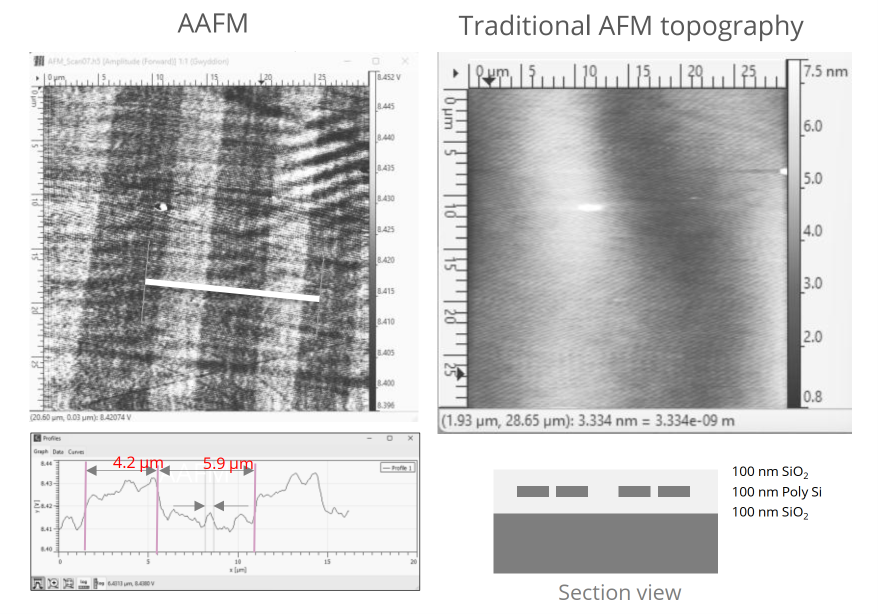
A wafer goes through 1,000+ steps inside a fab, and more than half of them exist just to measure what was built. And as chips go 3D, the most critical structures are buried where today's inline tools can't see them.
We recently announced our ₹9.2 Cr investment in Makr Microsystems, which is building an Acoustic AFM that uses ultrasound to see beneath the surface. It's exactly the kind of deep IP India's semiconductor ecosystem needs.
Read my thesis below:
https://t.co/wx2gv59Aqc
@BluehillVC IN/AIF1/24-25/1513
Your CCTV camera was designed in China. So was the flight controller inside most Indian drones.
@DeepTechManu of @BluehillVC just closed a ₹400 crore fund to back the engineers changing that across chips, rockets, and defence.
Full episode link in comments👇
Big positive tailwind for Defence Tech startups. Defence ministry has increased the financial procurement powers for the rank of army commanders and above quite significantly. The cap for army commanders is now Rs.100cr from the earlier Rs.30cr. The primary drivers here are to improve indigenization and speed to deploy the latest technologies. @BluehillVC
We had done 2 fabless semiconductor investments from the fund and both have managed to tapeout in record time. Both have taped out with TSMC. Here below is a summary of what both companies are building. Exciting times for investors in semiconductors!
@BluehillVC@SanketPanda10
Data centres are massive drains on power and water and are increasingly constrained by geography. And the pace of new compute demand is outstripping visible terrestrial power build-outs. Local regulations and environmental considerations are additional constraints that need to be managed.
The next logical step? Move them to space.
In orbit, data centres can be modular, powered independently by solar panel arrays, and cooled via radiative heat dissipation into the cold vacuum of space (which is at -270 C). The @nytimes article below explores this idea which is now being pursued by multiple companies.
We at @BluehillVC are exploring multiple ideas along this value chain of space including power, compute & communication.
India Semiconductor Mission (ISM) 1.0 had approved 10 projects. Of that Micron's ATMP plant in Sanand was the first to go operational last month. This month, Kaynes' OSAT plant in Sanand will go live. By end of the year CG Power+Renesas OSAT facility is also expected to go live.
The big one - Tata Electronics+PSMC Fab targeting 50K wafer starts per month is expected to start production at 28nm node in the first quarter of 2027. Tata Electronics is also setting up their own OSAT expected to go live in Assam by end of the year.
Multiple smaller projects are in various stages of execution and the rollout of ISM 2.0 is also expected to bring more momentum to the sector.
Exciting times ahead for Semiconductors in India!
@BluehillVC
Advanced packaging is one of the most important developments in modern semiconductors. As the effect of Moore's law becomes more pronounced and traditional transistor scaling slows, the next domain to improve performance is by stacking chips vertically and integrating them more tightly through advanced packaging.
3D-packaging provides for multiple benefits including shorter signal paths, lower latency, higher bandwidth and better energy efficiency.
"Everything is going 3D. This increases the importance of material science". - Applied Materials President.
At @BluehillVC, we are investing across the semiconductor value chain, including in the material science part of the value chain.
India’s space-tech moment is accelerating 🚀.
In 2025 alone: $276M was invested across 33 venture deals, which is more than the previous two years combined!
Capital is quickly following ambition.
Rogue drones are used to drop arms, drugs, counterfeit money, etc across the India-Pak border. This has been escalating recently as you can see below. The usual recourse from our armed forces is to shoot these down but we lose forensic information on the drone like the take-off coordinates, target coordinates, photography captured, make of the flight controller, etc. Our portfolio company at @BluehillVC, Zebu Intelligent Systems has a relevant "Drone-capture" solution, to capture these rogue drones "alive" to enable forensics by our armed forces.
There's outsize focus in bringing Electronics Production "inhouse" in India. Electronics Components Manufacturing Scheme is supporting manufacturing in Multilayer PCBs, Lithium Ion Cells, Optical Transceivers, Sub-assemblies, etc. Investment is coming in from various groups including Tatas, Samsung, Wipro.
First podcast in the books! 🎤
Chatted frontier tech, real builder traits, and why funding hard science/tech in India is different on @bestplace2build hosted by @AmrutashM (recorded @ CFI IIT Madras).
Watch here: https://t.co/Uf4GcDGH95
@BluehillVC
Drop a like if you're into India's next-decade innovation!
The Indian Government has been urging corporates to start engaging with startups on multiple fronts - the lowest hanging of which is for business via early PoCs. More importantly Indian industry has to engage on acquisitions and investments with startups to deepen capital formation especially around deep-tech.
Union Budget 2026 is a "watershed moment" for Indian deep tech. Manu Iyer of @BluehillVC highlights the significance of connecting the dots between raw minerals and finished chips.
The synergy between ISM 2.0 (semiconductors) and the new rare earth corridors is critical. Iyer notes that this "not only deepens the foundation for high-tech growth but also enhances supply-chain resilience."
By controlling the entire value chain—from mining critical minerals to designing advanced chips—India is insulating itself from global shocks. This integrated approach promises to drive high-skilled employment and secure India’s role in "resilient global value chains."
Article link - https://t.co/XTzmisM6xA
#UnionBudget2026 #SemiconductorMission #TechSelfReliance #CriticalMineralsIndia #MarksmenDaily
One Fab to rule them all! Tata is doing that one fab in India. We however need to ramp up capabilities to build in Fab. Whoever controls the Fab controls the future of compute!
https://t.co/ClZkbkt3QS