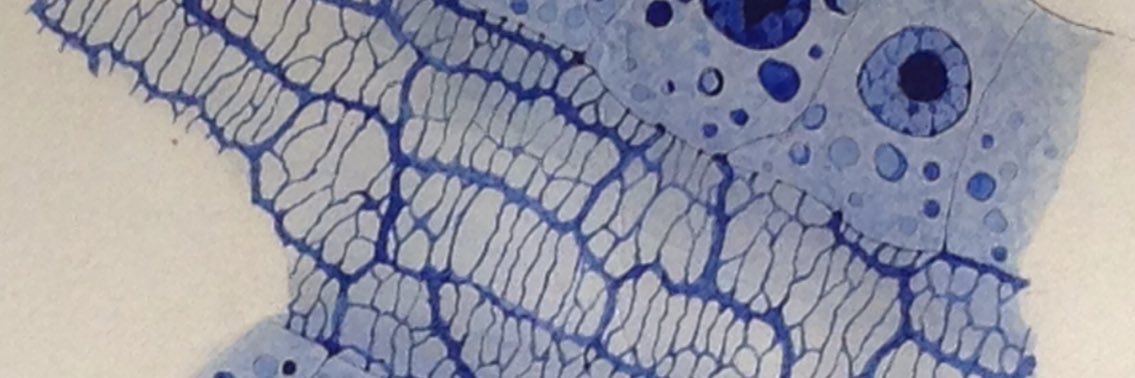
Extracellular vesicle budding is a vital cellular process that allows cells to communicate with each other and the microenvironment.
Release of vesicles to the extracellular space can occur through an internal pathway, whereby vesiclecontaining compartments fuse with the plasma membrane to release vesicles called exosomes, or by vesicle budding directly from the cell surface.
The latter occurs even at the surface of a primary cilium, a tiny antenna-like organelle that projects from the surface of most vertebrate cells. Although it makes up less than a thousandth of the plasma membrane, the cilium is a major signaling hub.
In a new Science study, researchers report that cilial budding does not rely on a complex machinery generally harnessed for extracellular vesicle formation but on the condensation of a single component of this machinery that drives the concentration of cargo and the release of vesicles from this structure.
Learn more in this #SciencePerspective: https://t.co/7X6JgTOEfi
🎉 BIG NEWS!
#TranSylia has been selected for funding by @ERDERA!
💗 March 8: #CILIA2027 Patients' Day
🔬 March 9: Translational Symposium
Connecting patients, clinicians & scientists to advance ciliopathy research!
Thank you, ERDERA! 💚
#RareDiseases
🎉 Thrilled that our project #TranSylia has been selected for funding by @ERDERA!
This will support the #CILIA2027 Patients' Day (March 8) & Translational Symposium (March 9).
Bridging patients, basic science & clinical research! 🧬💚
Thank you, ERDERA! 🙌
⏰ Only 2 days left for early bird registration!
Travel grant fellowships are available!
If you are based in Chile, India, Singapore, or Taiwan, we particularly encourage you to apply.
📅 Deadline: Full abstract general submission Dec 15th
https://t.co/UAqS5EIvxL
Excited to share the most recent work from our lab! If you are a pkd researcher, check out our website to investigate expression of your gene in different cell types/models!
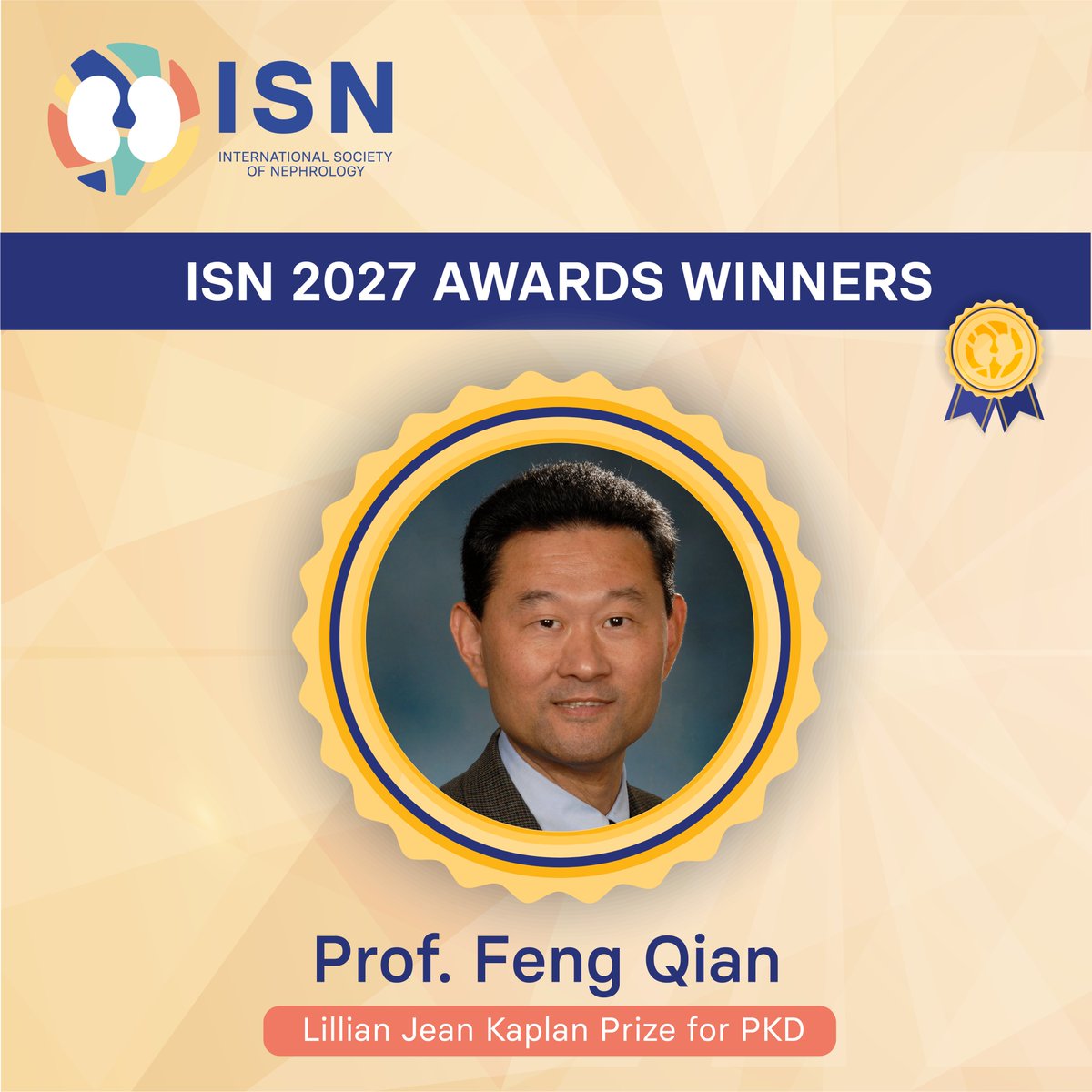
🏆 Lillian Jean Kaplan Prize for PKD: Feng Qian. Learn more: https://t.co/L1QmcUMCc7
“I am deeply honored and humbled to receive the Lillian Jean Kaplan International Prize. This recognition reflects the collective efforts of many outstanding colleagues, trainees, collaborators, and patients whose contributions have advanced our understanding of polycystic kidney disease. While significant progress has been made, important challenges remain. I look forward to continuing the pursuit of discoveries that deepen our understanding of PKD and ultimately improve the lives of patients and families affected by this disease.” Prof. Qian
Today is PKD Awareness Day. Awareness doesn't happen on its own. It happens because people are willing to share their stories, invite others to events, and start conversations.
Learn how to get involved
➡️ https://t.co/eSnhNnGs5L
📣 Abstract submission and early registration are now OPEN for the 7th European Cilia Conference—an official EMBO workshop!
📅 8–12 March 2027
📍 Stresa, Italy
Submit and register:
https://t.co/UAqS5EIvxL
https://t.co/BS7vsa62br
#EMBOCilia#Cilia2027
Congratulations, Dr. Feng Qian, professor of medicine at the University of Maryland School of Medicine in Baltimore, Maryland, on receiving the 2027 Lillian Jean Kaplan International Prize for Advancement in the Understanding of polycystic kidney disease!
Congratulations, Dr. Feng Qian, professor of medicine at the University of Maryland School of Medicine in Baltimore, Maryland, on receiving the 2027 Lillian Jean Kaplan International Prize for Advancement in the Understanding of polycystic kidney disease!
So grateful for this funding from KidneyCure 🙏
For those of us who got good, fundable scores at NIDDK but didn’t get funded (because of the various shenanigans 🙄), this is a lifeline to keep these projects alive.
Thrilled to congratulate Dr. Virginie Hamel (@UNIGEnews) being elected an @EMBO Member! 🧬✨
We are incredibly honored to have her as a speaker for #EMBOCilia2027.
Don't miss the chance to hear about her group’s groundbreaking work on centriole and cilia assembly mechanisms! 👋
🎉 Excited to receive an #ERCPoC grant!
QrCiliopathies will test the hypothesis that glutamine sensing is critical in renal ciliopathies, and an actionable node for therapeutics development. In PKD and beyond.
#cilia#metabolism#mitochondria#PKD
This is truly sad news. I have dear memories of Jim when I was starting my lab and I felt him as a kind, thoughtful supporter. He inspired many to pay it forward. R.I.P 🙏
The PKD Foundation is deeply saddened by the passing of Dr. James Calvet, a pioneering researcher whose work helped shape our understanding of PKD and inspired generations of scientists.
🥉 Third Prize Winner! 🥉
Congrats to PhD student @AnthonyRabate (Université Lyon 1) for this stunning shot, "A tulip field in the drosophila testis"! 🌷
These are young elongating spermatids captured via expansion microscopy. 🔬✨
#FluorescenceFriday#Cilia2027
We are very proud of our @Saar_Uni https://t.co/7vwDuySly4. student Smilla Koy for winning the Euro #Cilia2027 image competition. A well-deserved recognition of her amazing work. We're lucky to have such talent in the lab!
🏆 Second Prize Winner! Congrats to PhD student @chandrama_ghosh (Kodjabachian Lab,IBDM,France) for "Cells in Bloom"! 🌸 These "flowers" in the image are actually cells on a live frog embryo's skin. 🐸Magenta: Cell membranes & cilia;Green: Basal bodies #cilia#FluorescenceFriday