Sprinting at or near maximum speed produces greater ground reaction force and shorter contact times than common plyometric exercises and can be regarded as a time-efficient alternative.
https://t.co/Nq7KSULLOX
We often think coaching is all about the workouts, game plans, and the technical stuff.
It's not. That stuff matters. But it misses the stuff that actually make a difference.
Here's 23 coaching principles I've collected over two decades of coaching everyone from high school kids to some of the world's best:
1. Coach from dependence to independence.
Coaching is about making your own job kind of obsolete. Works towards having our athlete be more self-sufficient, with a coaches role moving towards a kind of mentor and partnership.
2. Coaching comes from conversation.
And most of that is observing and listening. The athlete tells you everything you need to know…if you're paying attention.
3. Caring comes first.
If they know you don’t care, the perfect plan won’t matter. The old saying “They don’t care how much you know until they know how much you care,” is still true.
4. Standards without warmth makes them fragile.
Warmth without standards leaves them lost. You need both. In parenting research they call this authoritative instead of authoritarian.
5. The story they tell themselves runs the show.
Coach the story. Knowledge doesn’t change behavior. Story does. “It’s hard to outperform your self-concept.”
6. You can't want it more than they do.
The day you start trying to is the day you've lost the room. Your job is to set the conditions and pull the lever, not push the cart.
7. Effort is contagious.
So is dread. Pay attention to which one you're spreading. You are the thermostat not the thermometer. You're changing the room temp.
8. Challenged, not threatened.
We do our best when we're stretched, not when our worth is on the line. Hard things land different when failing doesn't mean you're worthless. Stretch the challenge. Keep the worth out of it.
9. People perform best when they feel valued as a person and not just an athlete, that they belong, and when they’re performing out of joy instead of fear. Joy is a performance enhancer.
10. Reward what you preach.
If you say process and only celebrate outcomes, the brain hears the second message.What is honored will be cultivated. Watch what you praise.
11. Action is the antidote to anxiety.
One purposeful step convinces the brain the situation is manageable. Don't wrestle the monster. Point at the work and start moving.
12. Confidence is quiet. Insecurity is loud.
Arrogance sits on insecurity. Confidence sits on experience. The brashest voice in any room is usually the one most afraid of being found out. Real confidence comes from earned experience. Do the work.
13. Ego kills sync.
It crowds out the signals that lead to connection.
Always stay in learning mode. Be curious. “Once you stop learning about your athletes, you've stopped coaching.” Brother Colm O’Connell
14. Skills come from struggle.
Don’t over coach or step in too early. Rescue them too soon and they don’t keep what they almost figured out. Productive failure beats premature help.
15. Plant seeds constantly. And water them.
Any coach, teacher, or parent will tell you of the kid who told them years later they finally get it. We can’t force understanding. Just keep cultivating the space for it to grow.
16. Define success yourself.
Don't import a definition that gets in the way of the person you're trying to help become. The borrowed definition almost always fails the person who's actually in front of you.
17. Lower the bar, raise the floor.
Too often we focus on those rare days when everything aligns. You can’t control when those show up. Focus on raising your floor, making the average days better.
18. If they can only succeed with you, you’ve failed.
The goal is to give people autonomy and agency. To teach them how to do the thing, and then ultimately let them go.
19. Teach, don’t just train.
Too often, we get stuck in prescriptive mode. Remember, you are fundamentally changing the person in front of you.
20. Coaching is pattern recognition.
We pick up patterns when we pay attention. Build a database deep enough that you can see what an athlete is showing you. Then trust it.
21. Be in love with an idea, just don't marry it.
Don't become the person who swears by a single diet for everyone. Every system eventually fails, and if you've tied your identity to it, you go down with the ship.
22. The car ride home is the practice.
After a hard race or a bad workout, the brain is wide open. What you say in those minutes lasts longer than anything you said in practice all season.
23. Get out of your own way.
Most of coaching is helping people stop self-sabotaging. Under-preparation is a coping strategy. The athlete who skips the work is protecting his ego.
The best thing colleges can do for student-athletes mental and physical health?
Hire good coaches who care about the overall person.
It's not hard. Coaches in the business know who does it well/who to avoid.
All the student welfare programs are meaningless without good leaders.
This is a true story: Last week I was at the FIFA Congress in Vancouver. I was standing with the other reporters and introduced myself to someone. And then another reporter said, "Are you the Chris Jones who pissed on a guy on a boat?" I've made some mistakes, is the point.
Parents: Be careful chasing scholarships in sport.
They are far fewer than you think.
Examples:
I was #1 in the nation and received way more partial offers than full.
As a college coach: we had conference champs on next to nothing. And all-Americans on less than 50%
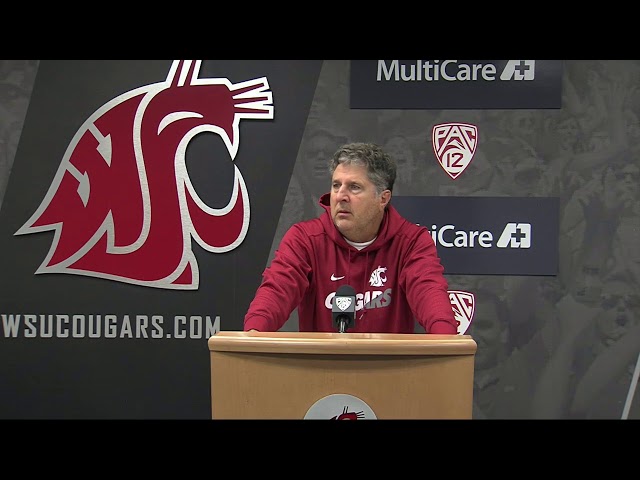
Every training camp I had at Washington State University, Coach Leach would share the same story.
The story of two kids. The rich kid and the poor kid.
The rich kid has two choices. He can become spoiled, entitled, lazy, and expect everything to be handed to him because he has been given more. Or he can take every advantage of what he has been given—resources, coaching, opportunities—and use it to become even better.
The poor kid has two choices too. He can say, “I never had a chance. Nobody gave me anything. The world is against me.” He can feel sorry for himself and use it as an excuse. Or he can say, “I may not have what they have, but I am going to outwork everybody.” He can become tougher, more driven, and more relentless than everybody else.
It was a powerful message in a locker room full of people from different backgrounds, different families, and different life experiences. Some guys came from wealth. Some came from almost nothing. Some had every opportunity. Others had to fight for every inch.
But despite all of those differences, everybody still had the same choice.
You can take ownership and use what you have as fuel.
Or you can become victim-minded. You can look for excuses, blame your circumstances, become entitled, and convince yourself that because of what you have—or because of what you do not have—you cannot become what you want to be.
It is not about how you start. It is about what you choose to do with how you start.
The rich kid can waste what he has been given or use it to build something greater. The poor kid can use his circumstances as an excuse or as fuel.
In the end, greatness does not come from starting with more or less. It comes from which person inside of you that you choose to feed.
If you like these Mind Strength Messages, click below to join our free newsletter and get a new Mind Strength Message every Monday to start your week on the right foot.
https://t.co/g0MfutOHjG
#MindStrength
Dusty May just won a national championship at Michigan.
Before each season, he runs "Mental Conditioning" where the team names every problem that could derail them.
It builds the ultimate team resilience.
Here's how it works:
(📌Bookmark this)
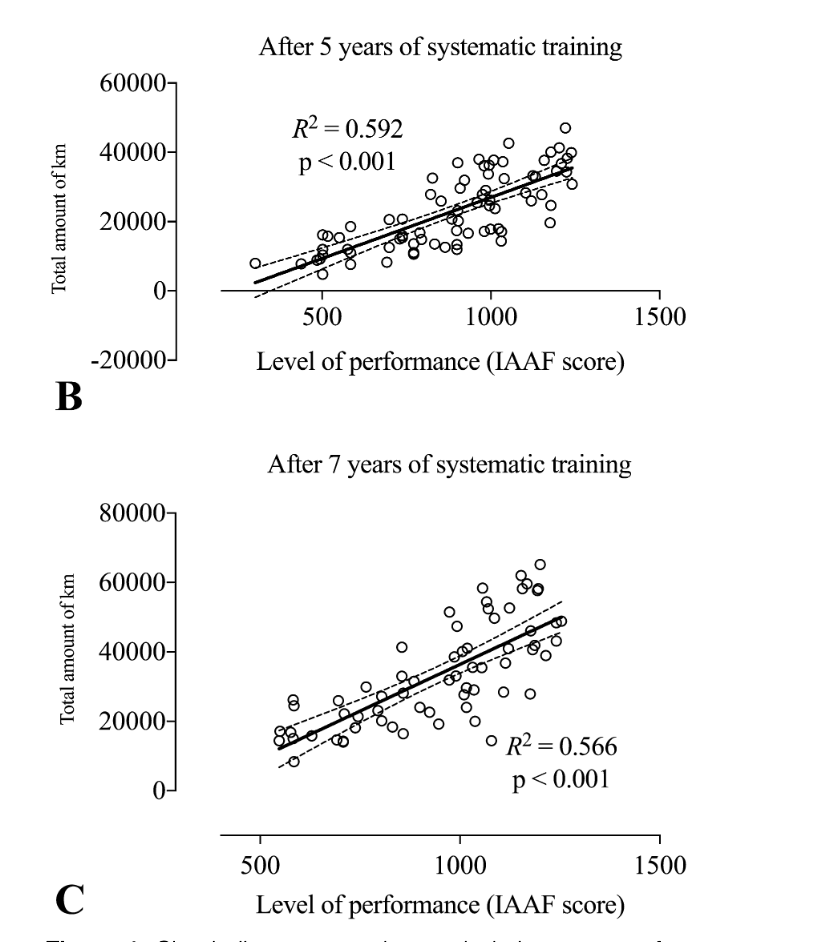
What's the best predictor of world-class performance in runners?
Volume of Training.
You've got to spend a lot of time doing the thing if you want to get good at just about anything.
The best thing you'll listen to today is Utah Jazz Head Coach Will Hardy talking about the tax of being a leader:
🏋 Leadership is not a position you hold—it’s a responsibility you carry. The weight isn’t in the title, it’s in the people who trust you with their time, energy, and belief.
📊 Before metrics, before outcomes, before strategy—there are humans. Leadership is a human-to-human commitment to see, serve, and develop the people in front of you.
✊ There is a tax on leadership. And it's paid in consistency, in hard conversations, in choosing standards over comfort. You don’t get to clock out from being the example!
The cost is of being the head coach is real... but so is the impact on every life you’re responsible for. 🌱⏩🌳
You can't take the trophy with you.
But the person you became chasing it?
That's yours forever.
"We always say...banners collect in gyms and rings collect dust, but who you become and who you impact in these 4 years you get to keep forever."
Cori Close Gold 🥇
“Banners hang in gyms and rings collect dust. But who you become and who you impact you get to keep forever,” Cori Close
Your character defines winning.
Final Four-bound Tommy Lloyd discussing mentor Mark Few’s Hall of Fame induction. Few was walking barefoot in #Gonzaga’s weight room 5 yrs. ago when Lloyd told him he was taking the #Arizona job.
Few to Lloyd: “Who would’ve thought when we started this deal we would’ve lost two national championship games and Arizona would be hiring Gonzaga’s assistant.”
Arizona's was Down 7 to Purdue at halftime of the Elite Eight. Their first Final Four in 25 years slipping away.
Coach Tommy Lloyd walks to the front of the locker room and says: "Guys, the coaching staff and I are going to leave right now. You guys figure this deal out."
There wasn't some huge speech. He walked out.
Every instinct in a coaches body says to give the movie style inspirational speech. Light a fire, demand more, sound like Al Pacino in Any Given Sunday...
Lloyd did the opposite. He left 5 minutes on the clock and sent a key message to the players: This is your team. I trust you to lead it.
The veteran players took charge. They'd been through the tournament losses before, helped with emotional regulation, and reiterated that they still had a shot.
Freshman Koa Peat said afterward: "They told us to keep going. Can't get too high or too low. Just stay even-keeled."
Arizona outscored Purdue 48-26 in the second half. They had zero turnovers and shot 51.6% from the field.
Second half: Arizona outscored Purdue One.
They put on a clinic.
When asked why he did it, Lloyd said after the game:
"The most powerful thing in a team sport is a player-led program. The coach, you have to help them navigate it, but when you can get the players to own these moments, you are just so much better."
He said he'd done it four or five times this year and it worked every time.
There's a mountain of science behind Lloyd's approach
In 2003, researchers Mageau and Vallerand found autonomy-supportive coaching, giving athletes choice, acknowledging their perspective, and avoiding overt control, consistently produced more motivated, more resilient athletes.
Controlling coaching did the reverse: higher burnout and lower resilience.
This is at the heart of one of the most theories in psychology, Self-Determination Theory
When people feel autonomy, competence, and relatedness, you get the highest quality motivation.
When a coach trusts his team to figure it out and right the ship, he's handing them all three at once. It's the ultimate signal of trust when his team needed it the most.
Lloyd built a culture where the players internalized the stuff that matters.
A 2025 meta-analysis by Clare and colleagues looked at 50 studies and over 17,000 athletes.
They found that team captains had nearly twice the effect on performance as coaches did.
Coaches help set the culture and expectations. They guide good leaders, but the players look to who else is in the arena with them.
We need peer pressure in the positive direction.
Lloyd understood this. Too often, as coaches we think we need to "do something." That instinct pushes us to over control, to grip the wheel harder.
When so often, what we need to do is trust that we've guided them the best we can, and show them the trust they deserve.
Steve Kerr once did something similar with the Warriors, telling his team that he was sitting out and they were coaching the team for a game.
Build the culture. Coach the team up, giving them the skills and ability.
And then sometimes, you've just got to step back, tell them you believe in them, that it's there team.
That ownership and self-belief is the fuel of the purest motivation.
Sometimes, when we're struggling, we don't need all the answers. We just need to hear that we've already got the inside of us. And to give us that belief to go get it done...together.
-Steve
Research:
Mageau & Vallerand (2003)
"The coach–athlete relationship: a motivational model." Journal of Sports Sciences, 21(11), 883-904.
-Clare, Hardy, Roberts, Tod, & Benson (2025)
"Do Leaders Actually Influence Sports Performance? An Integrated Systematic Review and Meta-Analyses." Journal of Sport & Exercise Psychology, 47(4), 205-222.
From Stephen Curry to Simone Biles… here are the 12 key mindsets of the world’s top athletes:
1) They never get bored with the basics. They work towards mastery of the fundamentals… during the Unseen Hours… every single day.
2) They earn their confidence through repetition. They know that repetition is not punishment but rather the most proven form of learning and skill acquisition of all time.
3) They remain humble. No matter good they are… they can always get better. This allows them to stay open to coaching and willing to accept feedback.
4) They have a clear vision of what they want to achieve. However, despite being goal driven, they focus heavily on the process. They spend minimal time wishing, wanting, and hoping. Instead, they work to develop the daily habits, behaviors, routines, and micro-skills needed to progressively inch toward their goal.
5) They make their preparation their separation. They maximize the Unseen Hours – the time behind the curtain when the lights are off and the arenas are empty. They understand that ‘To have it when you need it most you must practice it when you need it least.’
6) They don’t fear mistakes – they embrace them! They understand that mistakes are part of the growth process. They acknowledge that ‘Success comes from good decisions. Good decisions come from experience. Experience comes from bad decisions.’
7) They control the controllables. They put their focus, energy, and attention into their own effort and attitude – and they let everything else go. They don’t allow the environment or circumstances to dictate how they show up.
8) They quickly move to the Next Play. When things don’t go their way, when they make a mistake, or when life is less than preferred… they quickly wipe the slate clean and move on!
9) They make those around them better. They lead by example, hold those they care about accountable, and live by the mantra that a candle loses nothing by lighting another candle.
10) They are relentlessly consistent and consistently relentless. They uphold a high standard of excellence even when they don’t feel like, when they don’t want to, or when it’s not convenient.
11) They have an attitude of extreme ownership. They take full responsibility for everything in their life. They don’t blame, complain, or make excuses.
12) They embrace pressure. They feel stress and pressure just like everyone else, they simply manage it more effectively be viewing it as a privilege.
Well, there it is. A blueprint for performing at your best. And you don’t need to be Stephen Curry or Simone Biles to live these 12 mindsets – they are readily available and accessible to you right now.
But don’t be tricked by their simplicity. Each of these mindsets is basic in premise, but very challenging to execute consistently. Remember, just because something is basic… it doesn’t mean that it’s easy!
Your entire life will change the day you realize real confidence is less about knowing you’ll win and more about knowing you’ll bounce back even if you don’t. Real confidence is resilience. Adaptability. Tolerance for uncertainty. Fear loses when you know failure is never final.