We'll be spending a lot more time trying to understand the outputs of language models. A few thoughts, tips & tricks:
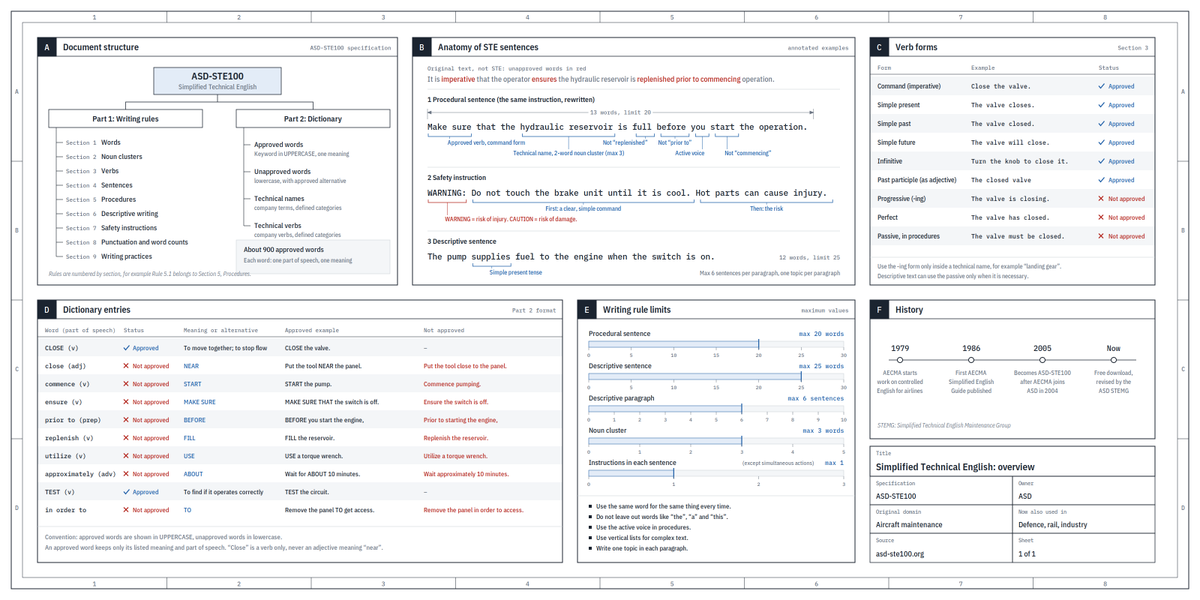
Writing. Something I've had success with: Ask your LLM to explain something in ASD-STE100, it's a controlled language specification originally developed for aerospace maintenance documentation. LLMs well-versed in this language and it comes with heavy constraints on clean writing style that I often find a lot more readable. Sometimes I've tried to soften it a bit e.g. ask for "80% of the way to ASD-STE100" because the spec is quite stringent. But even better:
Diagrams / images. Instead of writing, ask your LLM to create a diagram. These can be a lot easier to process, parse, and understand. But even better:
Web pages. Ask for output "in HTML" to get a beautiful, interactive webpage. LLMs are getting really good at frontend and can create beautiful experiences, animations, etc. But even better:
Explainer videos. The output format I am most bullish on is fully custom / bespoke explainer videos generated on any arbitrary topic. Experiment with things like "Create a 3b1b style video explainer on X. Use my ElevenLabs API key for audio narration". (you'd need an API key for the latter or you can ask your LLM to find you decent free alternatives that use your local compute). This is actually starting to work!
In summary:
- As LLMs get better, they will do more and more of the legwork autonomously, and a lot more of our work will rise up the abstractions into oversight and understanding.
- Luckily, LLMs can help here too because as intelligence and code are increasingly abundant, you can ask for large, custom, discardable software artifacts (e.g. web apps, video explainers) that would have never made sense to create before. Push the boundaries here and you'll be surprised.
Tesla May Not Need China Anymore
Key Points👇
00:00 - China Merger
6:33 - Merger Timing
8:00 - AI Costs
12:00 - Market Winners
20:36 - AI Hardware
24:03 - Physical Premium
Stablecoins are increasingly being spent by card swipe.
Crypto payment cards have gone from a novelty to more than $750 million in monthly spend. These cards let people pay with crypto anywhere traditional card networks are accepted. Behind the scenes, the crypto — stablecoins, overwhelmingly — gets converted to local currency at the point of sale, so the payments look like any other card transactions to merchants.
Crypto cardholders don’t require a traditional bank account. Depending on the program, users either deposit stablecoins with a card issuer, or hold them directly onchain through self-custody. Crypto cards expand people’s access to U.S. dollar accounts globally, and they offer a convenient way for stablecoin holders to transact.
Qwen3.8-Max by @Alibaba_Qwen has reshaped the cost-performance Pareto frontier in Frontend Code Arena, with pricing of $2 per input MToken and $6 per output MToken.
Top models on the Pareto frontier:
- Claude-Opus-5
- Kimi-K3
- Qwen3.8-Max
- GLM-5.2
- DeepSeek-V4-Flash
Congrats to @Alibaba_Qwen on another major milestone!
Big news: Kimi-K3 by @Kimi_Moonshot is now #1 in the Frontend Code Arena with 1679 pts, surpassing Claude Fable 5.
This is a 17-place jump from Kimi-k2.6 (#18 -> #1).
In Frontend, Kimi-K3 ranked #1 in 6 of 7 domains: Brand & Marketing, Reference-Based Design, Data & Analytics, Consumer Product, Simulations, and Content Creation Tools, landing #2 only in Gaming behind Fable 5.
The full model weights will be released by July 27.
Congrats to the @Kimi_Moonshot team on this major milestone!
All right chat, crowdsourcing your #1 highest conviction (10x only) stock long for the Power Semi trade.
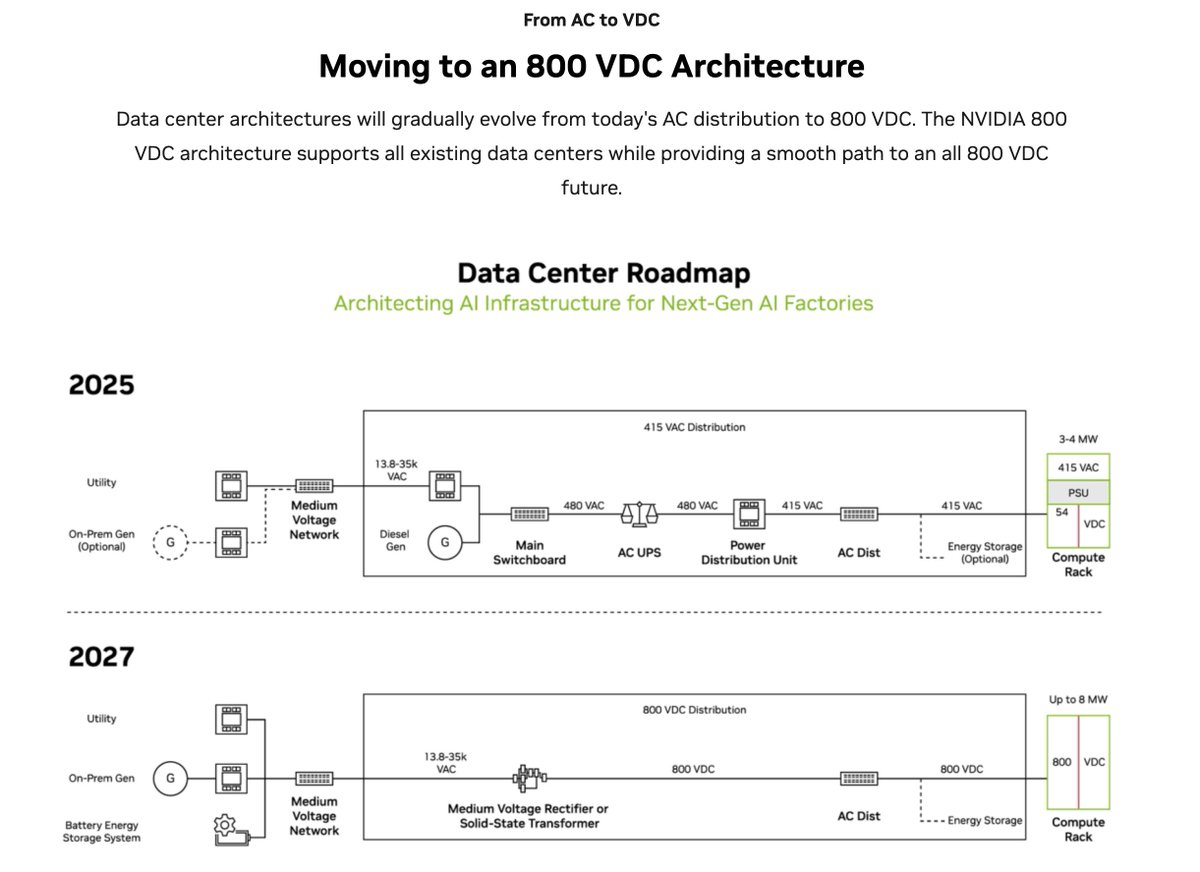
Especially given $NVDA pushing shift to 800 VDC.
Stuff like $NVTS or $WOLF, but high-beta, 10x potential only. Anywhere around the world.
What's your pick?