Should Canada raise the TFSA limit? 🇨🇦
Since 2009 it's only gone from $5,000 → $7,000.
Just $2,000 in 17 years while the cost of everything else has skyrocketed.
The TFSA is one of the most powerful wealth building tools for Canadians.
The limit should actually reflect that.
Should they raise it?
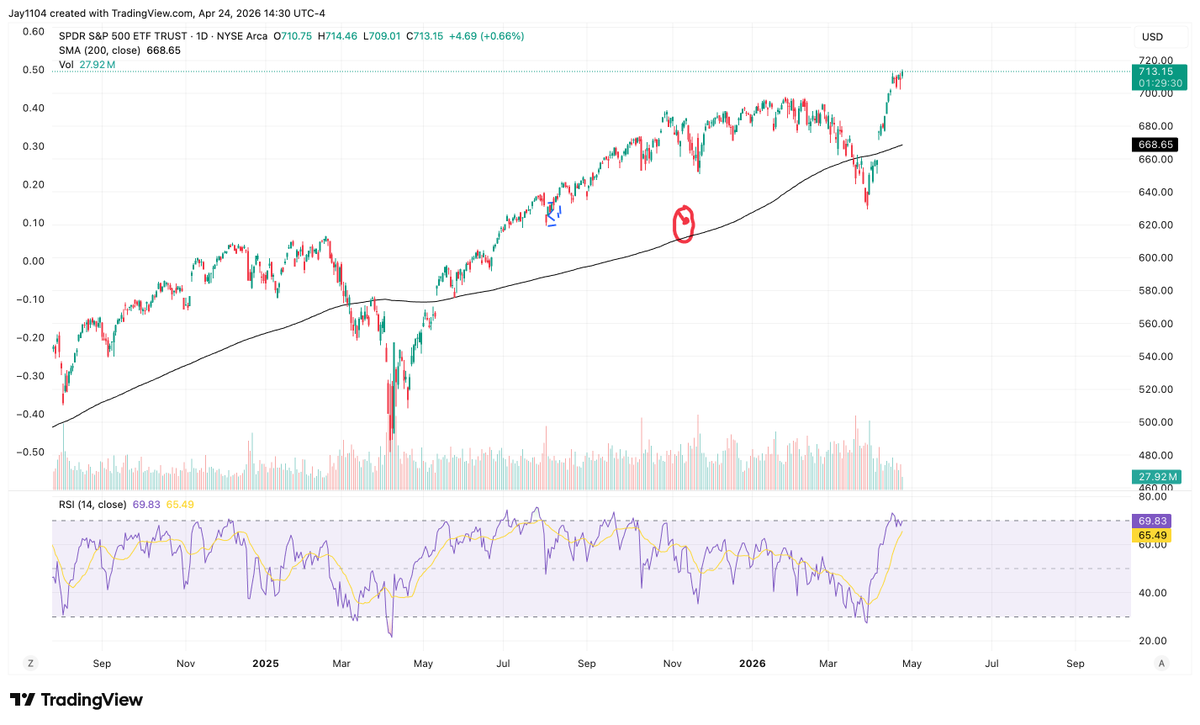
Calls have made up 70% of all options traded today.
Below is a visual breakdown of the call chase & put hate. One of the largest divergences ever!
Just prepare for mean reversion, especially once we move beyond the largest IPOs in history being launched in June.
Have a great weekend!
@BrandonWealth It’s a really interesting play. $MDA.TO invested in them, and they also just recently got a contract with the Canadian Dept of National Defence for future lease of a pad.
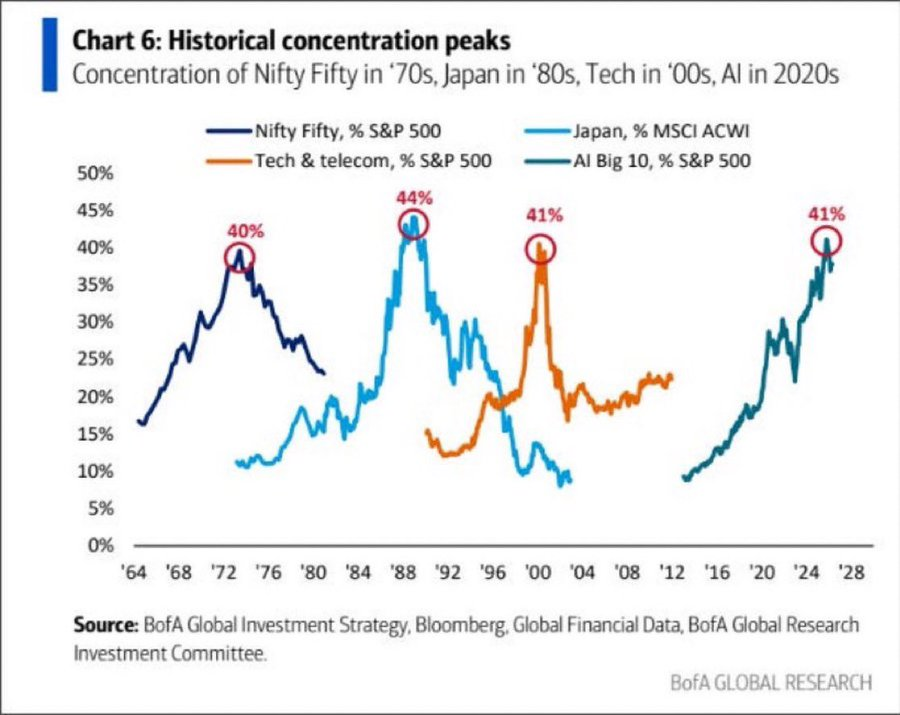
Each time concentration levels hit 40 percent, a crash followed.
We are at 41 percent.
But I’m sure this time is different.
If only there was a catalyst for the AI bubble unwind.
🔴The Strait of Hormuz OIL SHOCK is unlike anything the world has seen before:
Total oil exports through the Strait of Hormuz have collapsed -95% from a normal pace of ~20 million barrels per day.
Prior to the war, the Strait carried as much as 23.3 million barrels per day at its historical peak in June 2018, making the current collapse even more staggering in context.
Gulf crude production is now down ~14.5 million barrels per day, or -57% versus pre-war levels, according to Goldman Sachs, with the recovery timeline dependent on pipeline capacity, available tankers, and well flow rates.
Moreover, available empty tanker capacity in the Gulf has fallen by ~50%, or ~130 million barrels, since the start of the war, creating a significant logistical bottleneck even once the Strait safely reopens.
Goldman warns that the longer the Strait remains closed, the slower the production recovery will be, as extended shut-ins create reservoir complications requiring costly intervention before wells can be reopened.
Even under an optimistic scenario, Goldman estimates only 70% of lost production would recover within 3 months of reopening and 88% within 6 months, with a full recovery potentially taking several quarters.
ven if the Strait reopens tomorrow, the oil market may not recover for months.
With flows from Hormuz still restricted, we are entering the red zone of supply losses. You can forget about your summer holidays; the IEA's chief already mentioned Europe is about 6 weeks away from running out of jet fuel. @kpler, we see the jet fuel market is structurally short, with around 700 kb/d of Middle Eastern and Chinese supply removed and refinery runs now declining, tightening balances further.
It's official:
We are now witnessing the largest energy supply disruption in modern history.
Since the start of the Iran War on February 28th, more than 500 million barrels of crude and condensate have been removed form the global market.
In other words, global supply has now lost ~$50 billion worth of crude oil production since the Iran war began nearly 50 days ago.
This is the same amount of fuel it takes to run the world's international shipping industry for 4 months.
The world has never seen anything like this before.
HSBC CEO “The highest I’ve seen, and I’m hoping we don’t see more of that, but the highest I’ve seen is $286 for a barrel of oil that reached Sri Lanka”
That’s a delivered barrel so includes shipping, insurance, etc.
But it’s still an eye-watering price to pay.
FT full quote:
@ronrule Checkout Opendoor. They’re building something like this with an impressive team that might get it done. That industry is looong overdue for disruption.
$OSCR CEO: “Our stock should be between $45-$55 a share by the end of 2026.”
Yesterday, he disclosed his purchase of almost $12 million worth of shares.
An insider putting a large sum of his own money where his mouth is.
That’s all you need to know.