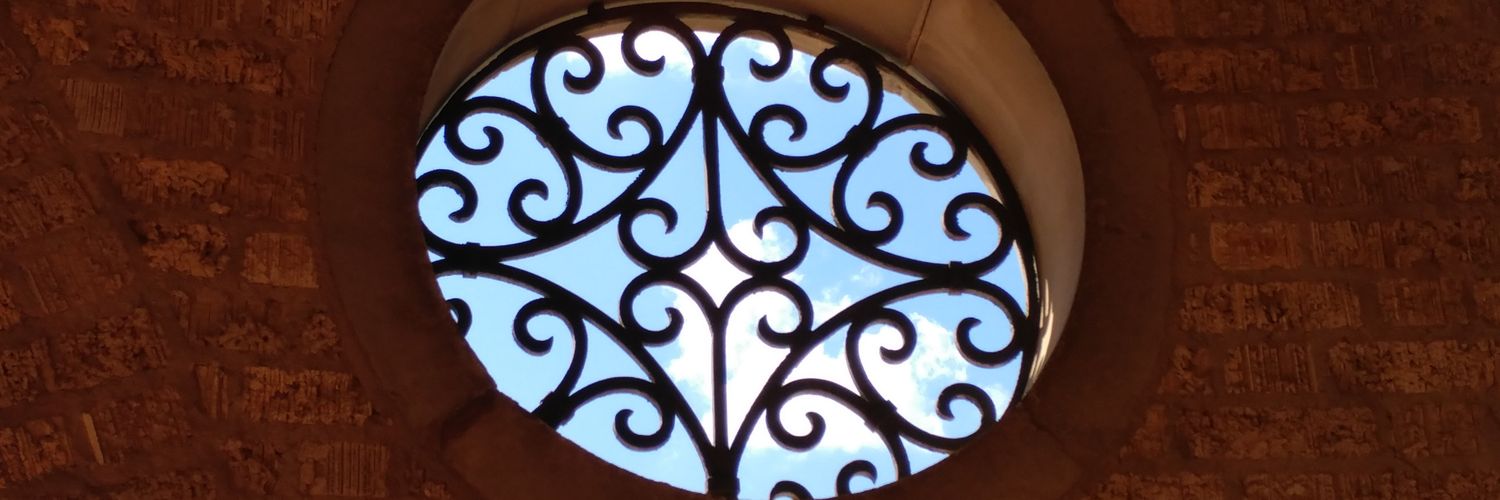
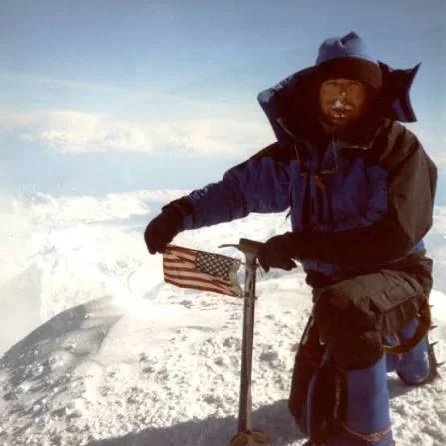
The stained glass window in the church of St Mere Eglise, France showing the arrival of the 82nd Airborne Division as they were dropped over the town On D-Day 🪂
Nathan is unfamiliar with the 16 & 17-year olds who lied about their age to enlist. He's also ignorant of all the men who had flat feet or required glasses, but found ways to get to frontline combat units. Lastly, he pays no heed to those who committed suicide due to 4-F status.
Republican candidates in CA: hey, things have been going pretty poorly ever since this became a one-party Dem state. Maybe give us a chance to run the state or even just a major city for a term?
CA voters:
Scene on board USS Yorktown (CV 5), during the Battle of Midway, 4 June 1942, shortly after she was hit by three Japanese bombs on the same day, what would cause the sinking of the aircraft carrier on 7 June 1942, in which 141 men were killed. The Battle of Midway, however, was a decisive naval and air battle for the US Navy and widely considered a turning point in the Pacific War. Dense smoke is from fires in her uptakes, caused by a bomb that punctured them and knocked out her boilers. The engineer with the hammer at the right side is most likely covering a bomb entry hole in the forward elevator. Note arresting gear cables and forward palisade elements on the flight deck; CXAM radar antenna, large national ensign and YE homing beacon antenna atop the foremast; 5"/38, .50 caliber and 1.1" guns manned and ready at left. This picture was taken by Photographer 2nd Class William G. Roy from the starboard side of the flight deck, just in front of the forward 5"/38-gun gallery.
Far right of the frame is Sergeant Major James Nelson Sudderth. 1st SFOD D operator. Known inside the community by the nickname “Conan the Barbarian.”  His team is photographed during a deployment to South America, hunting drug cartel kingpins in the kind of low profile, long dwell direct action work the Unit ran across Colombia, Peru, and the broader counter narcotics campaign for two decades before the GWOT made the Middle East the focus.
Sudderth is also one of the two operators that George Hand IV credits with bringing him into Delta Force, along with Matthew Loren Rierson. Both men are now departed. Hand has written that Matt asked him “when he was coming,” and James told him with a knife hand to the chest to come.  The kind of mentor whose recruitment pitch wasn’t a pitch at all. It was an instruction.
A career spent at the top of the force, hunting men most of the world will never know existed, mentoring the next generation of operators on the way. The South America rotation is the part that doesn’t make the books. It happened anyway.
What about places that don’t have a census? Are those people not human beings?
A LOT of women have funerals or memorial services after a miscarriage. It’s more common than you think.
They’re still saying they have 3 children, just that one hasn’t yet been born.
I made my college kid a big IFAK.
TQ , gloves, marker, shears, bandages, splints, alcohol wipes, ponchos, emerg blankets, sharp knife, duct tape, life straw, flash light, seatbelt cutter.
82 years ago today, paratroopers of Easy Company (plus a few men from the 4th Infantry Division) pose for a picture in the town square of Sainte-Marie-Du-Mont the day after surviving their first combat jump into Normandy 🪂
June 7, 1944. D-Day plus 1.
4,414 Allied soldiers lay dead after the longest day in history. 2,501 of them American. Bodies still washing in with the tide at Omaha.
And yet in the French town of Bayeux, 10 miles from those cliffs, British soldiers were being handed wine and flowers in the street.
The SS had fled Bayeux in the night. The French Resistance sent word to the Allies: do not bomb this town, the Germans are gone. So they weren't. At 4am, a lone British tank crept in to verify. By 1pm it was official. Bayeux was the first French city liberated from Nazi occupation. Citizens who hadn't seen a free soldier in four years ran into the streets weeping, kissing strangers, pressing bottles into soldiers' hands.
The historical irony is almost impossible to believe.
Inside Bayeux sits a 900-year-old tapestry depicting William the Conqueror, a Norman, crossing the English Channel to invade England in 1066. Now, 878 years later, the English had crossed back. And the French were screaming with joy to see them.
Here is what was simultaneously happening across Normandy:
156,000 Allied troops had crossed the Channel in a single day. The French Resistance had cut the railway network in over 500 places overnight and destroyed 52 locomotives. German reinforcements were stranded, unable to move.
Germany's most brilliant defensive commander, Erwin Rommel, was not in France. He had driven home to Germany to celebrate his wife's birthday. He had bought her a pair of shoes in Paris as a gift. He was handing them to her as the first landing craft hit the sand.
Hitler was asleep.
Not metaphorically. Literally. The Fuhrer had taken barbiturate sedatives before bed. When the invasion began at 4am, his staff received the call and stood outside his bedroom door. No one dared wake him. His two elite Panzer reserve divisions, the 12th SS Hitlerjugend and Panzer Lehr, some of the most powerful armored formations in the German army, sat completely idle waiting for a release order that could not come because the man who had to give it was unconscious.
Hitler woke at noon. Eight hours after the first boots touched the sand.
He released the Panzers at 4pm. But Allied fighter-bombers owned the sky by then. The armored columns could not move in daylight without being destroyed from above. They waited for dark, burning eight more hours.
The only serious German armored counterattack on June 6 came from the 21st Panzer Division, which drove all the way to the coast, splitting the gap between Sword and Juno beaches, almost cutting the entire Allied beachhead in two. Then they looked up. 248 British gliders were passing overhead, landing troops directly behind German lines. They turned around and withdrew.
By nightfall on June 7, the beachhead was 50 miles wide and the Allies were not going anywhere.
In Bayeux, the wine was still flowing.
The most consequential military operation in human history nearly collapsed because one general forgot to buy flowers in time, and the other one could not be woken up.