@it_unprofession Go ahead an cancel your subscriptions. You aren't missing anything. If it's good, you'll eventually hear about it and see it on your own schedule and time frame.
In the meantime, I recommend, "Good Luck, Have Fun, Don't Die." It's decent and worth watching.
@Bukowskiquot Morality is subjective. The idea of having "no morals" is a form of guided conduct, thus a moral.
Nietzsche was speaking of the broad idea of moralism favored by the religion of his time.
Bukowski was talking of an internal compass guided by conscience and empathy.
you need to be delusionally optimistic
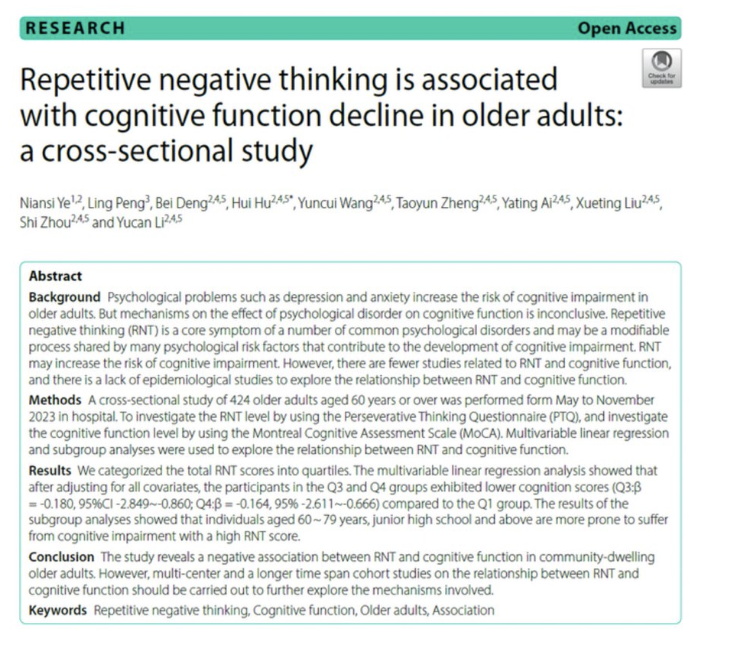
negative thinking poisons your brain and leads to congitive decline
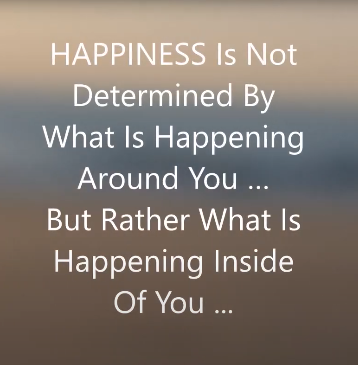
whereas positive thinking, and gaslighting yourself into thinking everything is amazing, ACTUALLY makes your life amazing too.
you must be a silly goose
Dostoevsky was 28 when they stood him in front of a firing squad. Blindfolded. Hands tied. He could hear the rifles being loaded.
At the last second a messenger on horseback arrived. The Tsar had commuted the sentence. The entire execution was staged. Psychological torture designed to break him.
It worked. He had a seizure on the spot.
They sent him to a labour camp in Siberia. 4 years. Freezing. Starving. Sleeping on wooden planks next to murderers. His epilepsy got worse. He had no paper. No pen. Nothing.
When he got out he was broke. His first wife died. His brother died. He inherited his brothers debts. He was so desperate for money he signed a contract with a publisher that would have given away the rights to everything hed ever write if he missed the deadline.
He wrote The Gambler in 26 days to make it. Dictated it to a 20 year old stenographer named Anna. Married her three months later.
Then the real work started. Crime and Punishment. The Idiot. Demons. The Brothers Karamazov. The greatest novels in the history of the Russian language. Maybe any language.
The man who stood blindfolded before the firing squad, who convulsed on the ground while soldiers watched, who slept next to killers in Siberia for 4 years, who was buried in debt and grief.
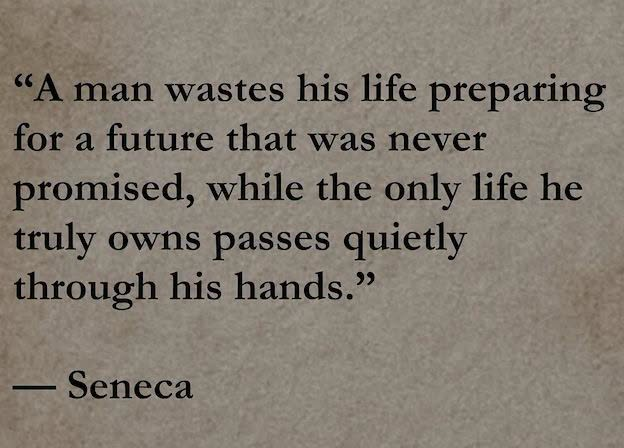
That man wrote: "every minute can be an eternity of happiness."
He earned the right to say it.
its never over. never give up fren.
1. When one door closes and another door opens, you are probably in prison.
2. To me, "drink responsibly" means don't spill it.
3. Age 60 might be the new 40, but 9:00 pm is the new midnight.
4. It's the start of a brand new day, and I'm off like a herd of turtles.
5. The older I get, the earlier it gets late.
6. When I say, "The other day," I could be referring to any time between yesterday and 15 years ago.
7. I remember being able to get up without making sound effects.
8. I had my patience tested. I'm negative.
9. Remember, if you lose a sock in the dryer, it comes back as a Tupperware lid that doesn't fit any of your containers.
10. If you're sitting in public and a stranger takes the seat next to you, just stare straight ahead and say, "Did you bring the money?"
11. When you ask me what I am doing today, and I say "nothing," it does not mean I am free. It means I am doing nothing.
12. I finally got eight hours of sleep. It took me three days, but whatever.
13. I run like the winded.
14. I hate when a couple argues in public, and I missed the beginning and don't know whose side I'm on.
15. When someone asks what I did over the weekend, I squint and ask, "Why, what did you hear?"
16. When you do squats, are your knees supposed to sound like a goat chewing on an aluminum can stuffed with celery?
17. I don't mean to interrupt people. I just randomly remember things and get really excited.
18. When I ask for directions, please don't use words like "east."
19. Don't bother walking a mile in my shoes. That would be boring. Spend 30 seconds in my head. That'll freak you right out.
20. Sometimes, someone unexpected comes into your life out of nowhere, makes your heart race, and changes you forever. We call those people cops.
21. My luck is like a bald guy who just won a comb!
🤣🤣🤣
🚨BREAKING: 8 weeks of gratitude practice physically rebuilds the neural pathways between your memory and reward centers.
Your brain physically rewires itself every time you feel grateful.
Eight weeks of intentional gratitude practice creates measurable structural changes in the neural pathways connecting your hippocampus to your ventral tegmental area. The memory center starts talking to the reward center in a fundamentally different way. New synaptic connections form. Existing ones strengthen. The physical architecture of how you process positive experiences rebuilds itself.
Most people approach gratitude like a mood they can choose to feel. A psychological vitamin they remember to take when life gets difficult. The neuroscience reveals something far more profound.
Gratitude is a biological intervention that sculpts brain tissue.
Researchers tracked participants practicing gratitude exercises for two months using brain scans. They watched new neural highways construct themselves in real time. The anterior cingulate cortex developed stronger connections to the medial prefrontal cortex. The brain learned to route positive emotional experiences through higher order thinking centers instead of storing them as fleeting feelings.
Every positive experience you’ve ever had exists as a neural trace in your memory network. Most sit dormant, accessible only when something external triggers the specific sensory combination that originally encoded them. You smell coffee, suddenly remember a conversation from years ago. Random. Unreliable. Outside your control.
Gratitude practice systematically rewires that retrieval system.
After two months, participants could voluntarily access positive memories with increasing ease. Their brains had built stronger pathways between memory storage areas and emotional processing centers. They experienced deeper emotional resonance during memory retrieval. The quality of remembering itself had improved.
The participants also started noticing positive details in their present environment they had previously filtered out. Their attention systems recalibrated. The same neural pathways pulling positive memories forward were scanning current experiences more thoroughly for elements worth encoding as positive memories.
Their brains became biased toward collecting evidence that life contains meaningful moments.
Most cognitive interventions try to change how you interpret negative experiences. Gratitude practice changes how thoroughly you notice positive ones. It teaches your visual and emotional processing systems to detect opportunities and pleasures that were always present but neurologically invisible.
The timeline reveals something crucial about neural plasticity.
Weeks one through three showed minimal structural changes.
Participants felt slightly more positive, but brain scans looked identical to baseline. Weeks four through six showed the first measurable increases in gray matter density. Weeks seven and eight revealed entirely new neural network formation.
Two months. Your nervous system can physically restructure itself with consistent practice.
The method was almost embarrassingly simple. Participants wrote down three specific things they felt grateful for every evening, explaining why each mattered. No meditation apps. No guided visualizations. Just pen, paper, and the requirement to identify gratitude targets with enough detail that their brains had to actively search for positive elements.
Specificity drives the neural development.
General statements like “I’m grateful for my family” generate different brain activity than precise observations like “I’m grateful my daughter laughed at my terrible joke during dinner because it showed me she still finds me funny despite growing more independent.”
The brain needs detailed targets to practice connecting memory specifics to emotional rewards.
After eight weeks, participants developed a fundamentally different relationship with their attention and memory systems. Someone whose brain automatically scans for and emotionally amplifies aspects of experience that make existence feel worthwhile.
The neural pathways remain permanent after practice ends.
Gratitude carves lasting roads through consciousness.