Our latest Oxford Biology Primer by Sanjay Manohar @braininthemind is a concise introduction to best practices for coding that everyone who uses code in scientific research should know about.
Find out more: https://t.co/rdMvIVeLNH
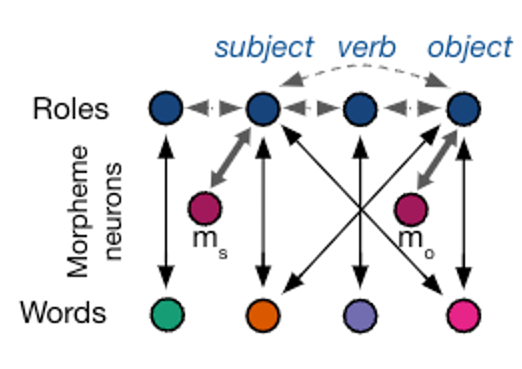
It also simulates human ERP responses to grammar. Overall, our rapid plasticity rules capture the structure-content duality of thought, unlike other neural networks. 6/6
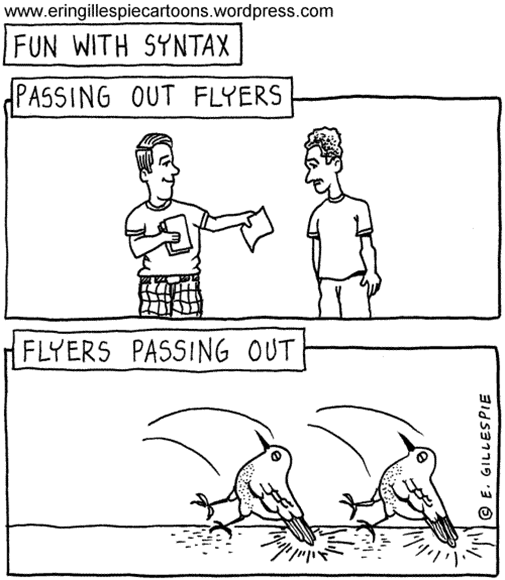
Human thought follows structural rules, independent of what we are thinking about. We separate form & content. E.g, a sentence follows a given syntax, independently of its topic. How can the brain separate content from structure? 🧵on our preprint https://t.co/pt0JgdtQDE 1/6
The model runs in continuous time, and can encode words presented at variable speed. The synaptic rules predict lexical and syntactic priming seen in humans. It can learn syntax by very slow plasticity at the same synapses. Both order and morpheme-based grammars work. 5/6
We're looking for a graduate research assistant for 2 years! Come work in my lab - cognitive neuroscience / computational neurology (🧠https://t.co/pztK6qRoAl), in Oxford, on motivation in Parkinson's disease. Patient-facing role. Apply now: https://t.co/xFlxB3ImPP
Learn to code smarter, not harder!
Join Dr Sanjay Manohar (Oxford) @BrainInTheMind for an online training session:
📅 27 Nov 2025 | 🕑 2–5 pm, Online
Clean, reusable, efficient code in Python, MATLAB & R.
https://t.co/RX3ddY7Rmz
#Neuroscience#Coding#ResearchSkills#Python
In this short letter we explain why binding problems occur in the brain and why deep neural networks need to cope with them. We respond to Scholte and de Haan (TICS 2025), who previously claimed the opposite. https://t.co/j0ngmVhpdj
@Pieters_Tweet Excellent response that echoed my thoughts! Fixed conjunctions not enough. My opinion is that the brain solves binding not through synchrony, but through rapidly changing selectivity. We showed that STP at the postsynaptic membrane would be enough: https://t.co/yi4UT9FsOP
Hirschbichler et al. find that DBS-induced VTA inhibition does not impair reinforcement learning, but does lead to more strategic betting behaviour. They propose that the VTA may help sustain reward-driven behaviours over time. https://t.co/wwXAqrJIWQ
Hirschbichler et al. find that DBS-induced VTA inhibition does not impair reinforcement learning, but does lead to more strategic betting behaviour. They propose that the VTA may help sustain reward-driven behaviours over time. https://t.co/wwXAqrJIWQ
How do animals learn new rules? By systematically testing diff. behavioral strategies, guided by selective attn. to rule-relevant cues: https://t.co/Bxr8xalkmr
Akin to in-context learning in AI, strategy selection depends on the animals' "training set" (prior experience).