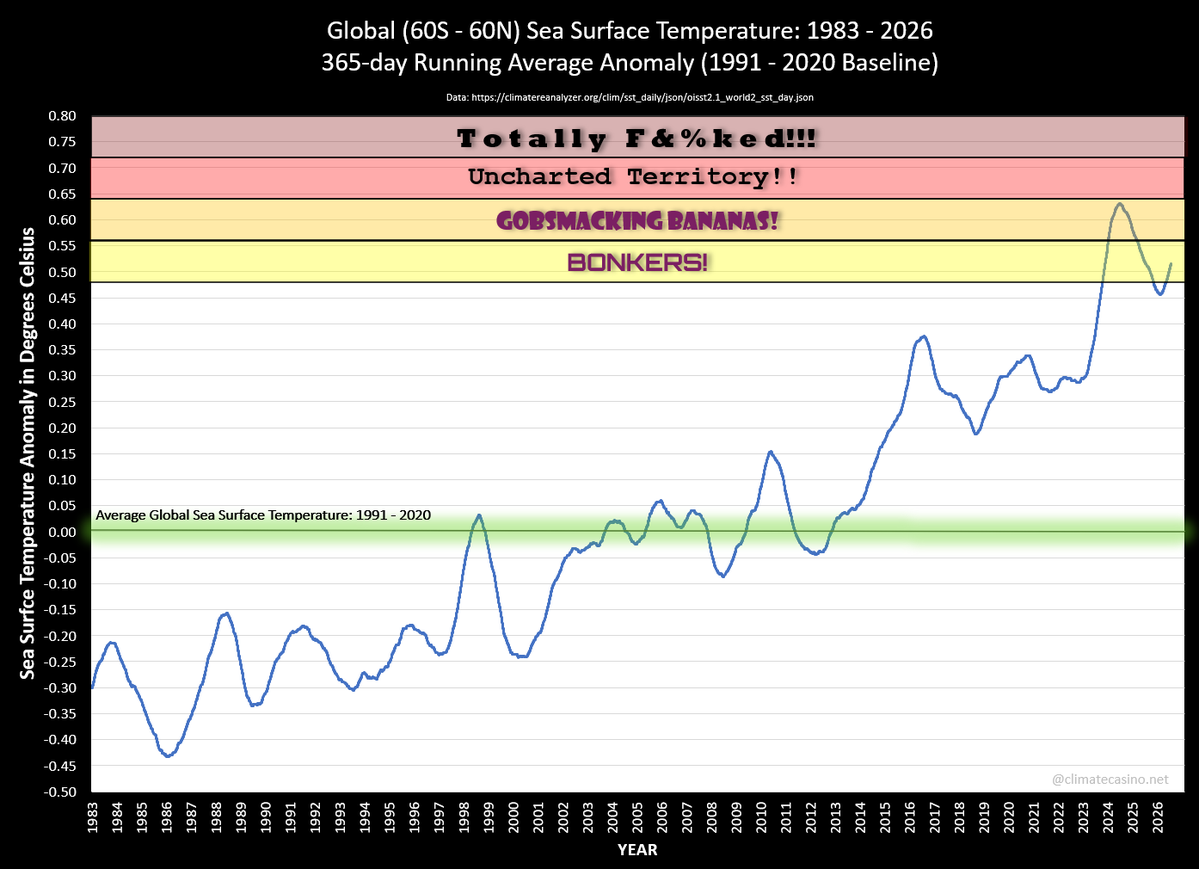
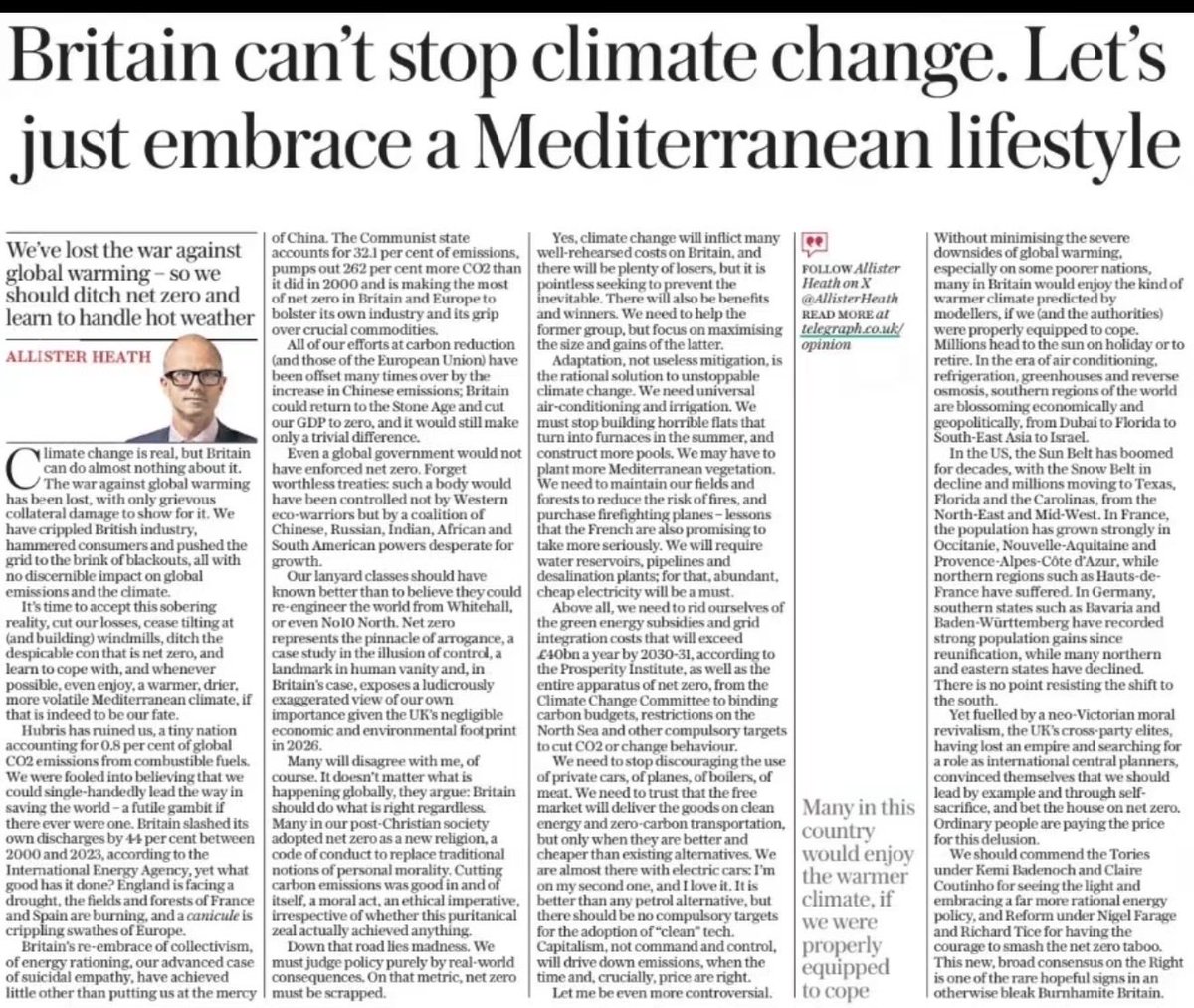
Just to be clear, using the most current scientific terminology, global sea-surface temperatures are currently 'bonkers'.
Will temperatures make it to 'uncharted territory' by the end of 2027? The Climate Casino is taking the Over.
This is why more CO2 = more green is not a long term, positive thing.
Yes, there is more “plant food”, but plants can’t survive if extreme heat and droughts become more frequent & more severe.
The increase in “plant food” isn’t going to offset the increasingly severe weather conditions.
Flora and fauna are severely struggling this summer, yet again.
@raezen_dawn_ Until recently I thought that the UK re-joining the EU could be a good thing, but this new surveillance stuff gives me doubts. It's reminiscent of Orwell's 1984
@ortegadry@MarkCranfield_ Yeah that's what I was thinking, but I'm asking if there's a source for +6C specifically. Paleoclimate tends to lean more towards a +2-3C increase
The exceptional El Niño brings the UK into uncharted territory in terms of winter weather.
They tend to bring stormy/mild early winters, and settled/cold late winters, but the unprecedented amplitude of this event could make these patterns far more likely, or unpredictable
@AlexAlarga@MrMatthewTodd The combination of anthropogenic global warming and an Gulf Stream slowdown would contribute to our hot/dry summers unfortunately.
This graph shows the connection between hot European summers and lower salinity/temperatures in the North Atlantic, associated with AMOC weakening
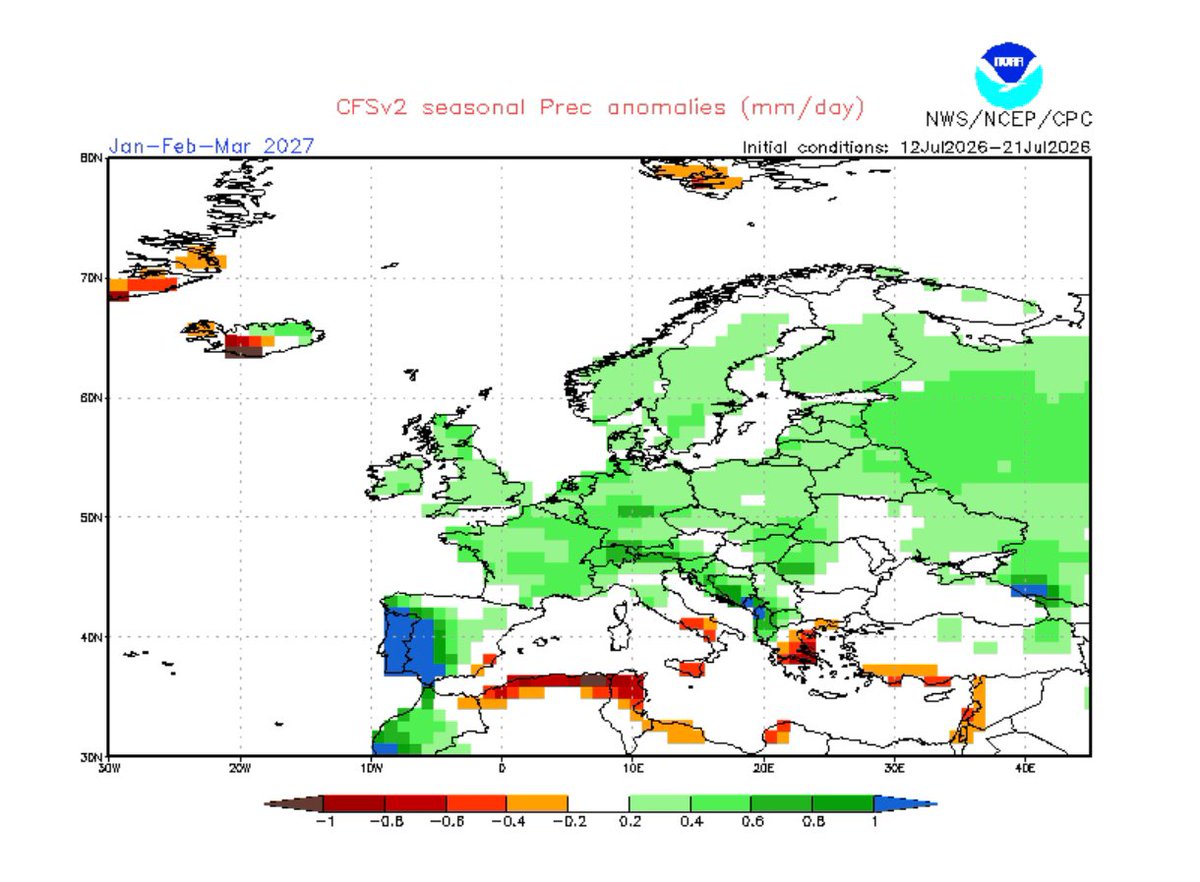
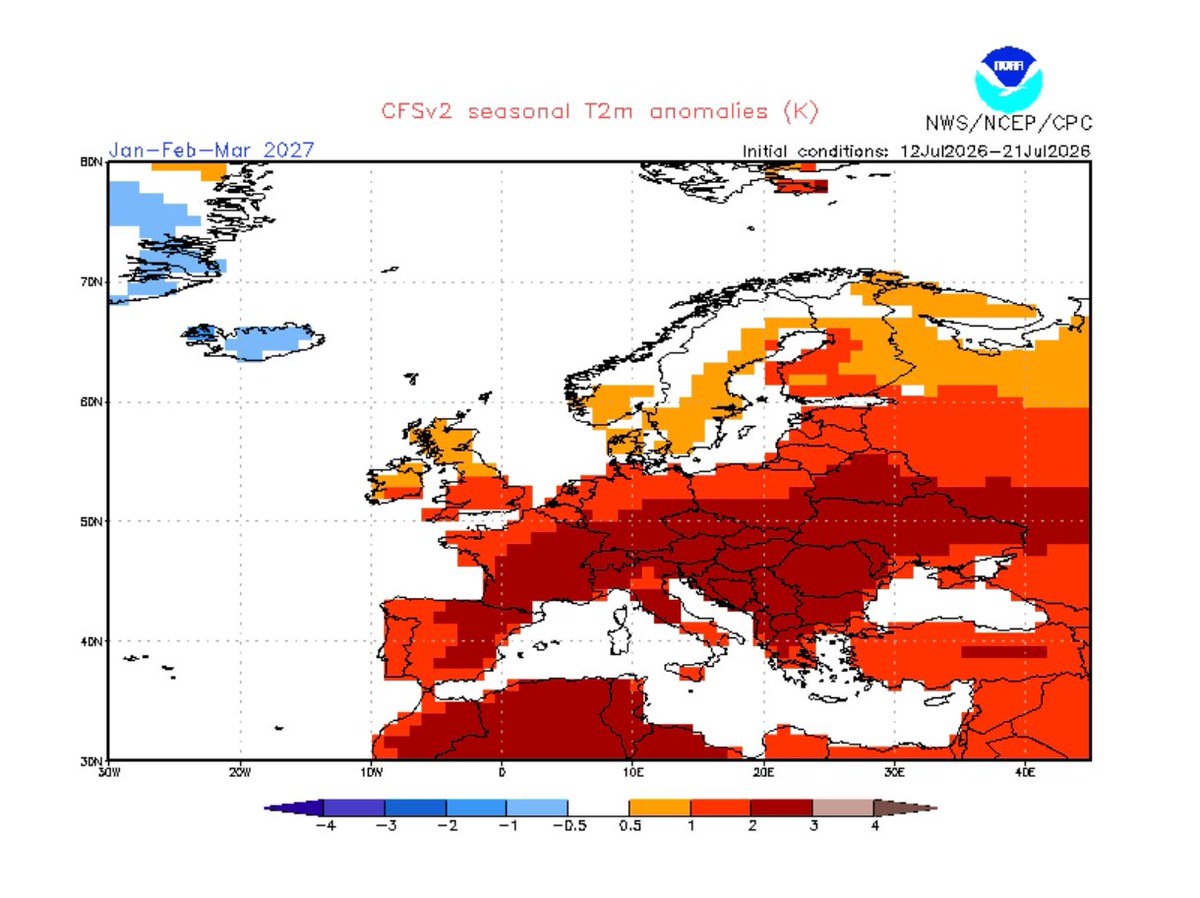
❄️🌨️ #Hiver 2026-2027 : face à un super #ElNino record, l'hiver prochain pourrait être marqué par une circulation zonale particulièrement importante.
Nous devrions donc être confrontés à un flux d'ouest doux et humide récurrent entre l'automne et l'hiver prochains.
Cela dit, un épisode d'El Nino tel que nous l'attendons (+4°C ?!) ne s'est jamais produit auparavant, et devrait dépasser possiblement celui de 1877, qui était jusque-là le plus intense jamais observé. Nous ne connaissons donc pas réellement les conséquences possibles et inattendues sur les téléconnexions hivernales à l'échelle de la planète.
L'impact d'un tel El Nino sur le vortex polaire reste sans équivalent historique pour évaluer son impact de manière empirique.
En réalité, en dehors des simulations nous ne savons pas trop à quoi nous attendre.
Une circulation zonale marquée n'empêche pas des ondulations et des décrochages polaires bien entendu. Les modèles saisonniers ne peuvent pas anticiper ça. Mais il est possible que nous soyons confrontés à un scénario comparable à celui de la seconde partie du dernier hiver, avec d'abondantes pluies et des inondations.
🔸Ça restera bien entendu largement à vérifier. Les prévisions saisonnières pour l'hiver se font habituellement entre octobre et novembre.