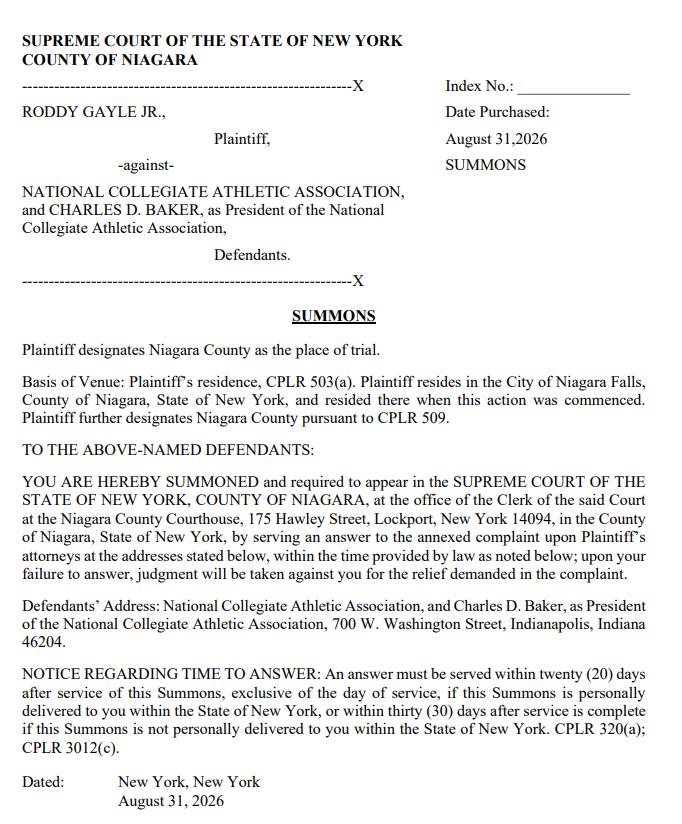
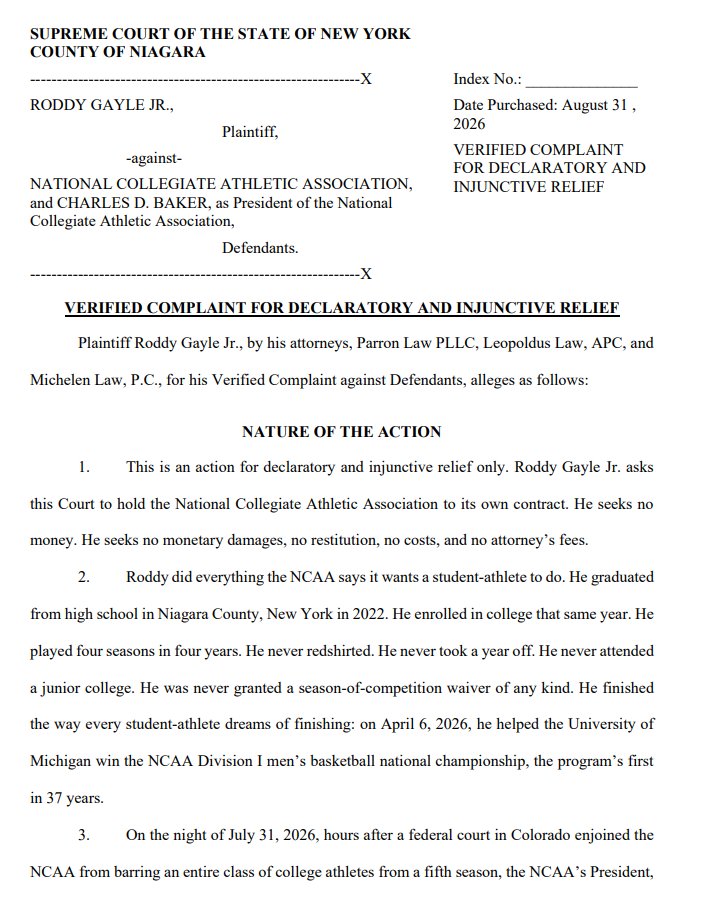
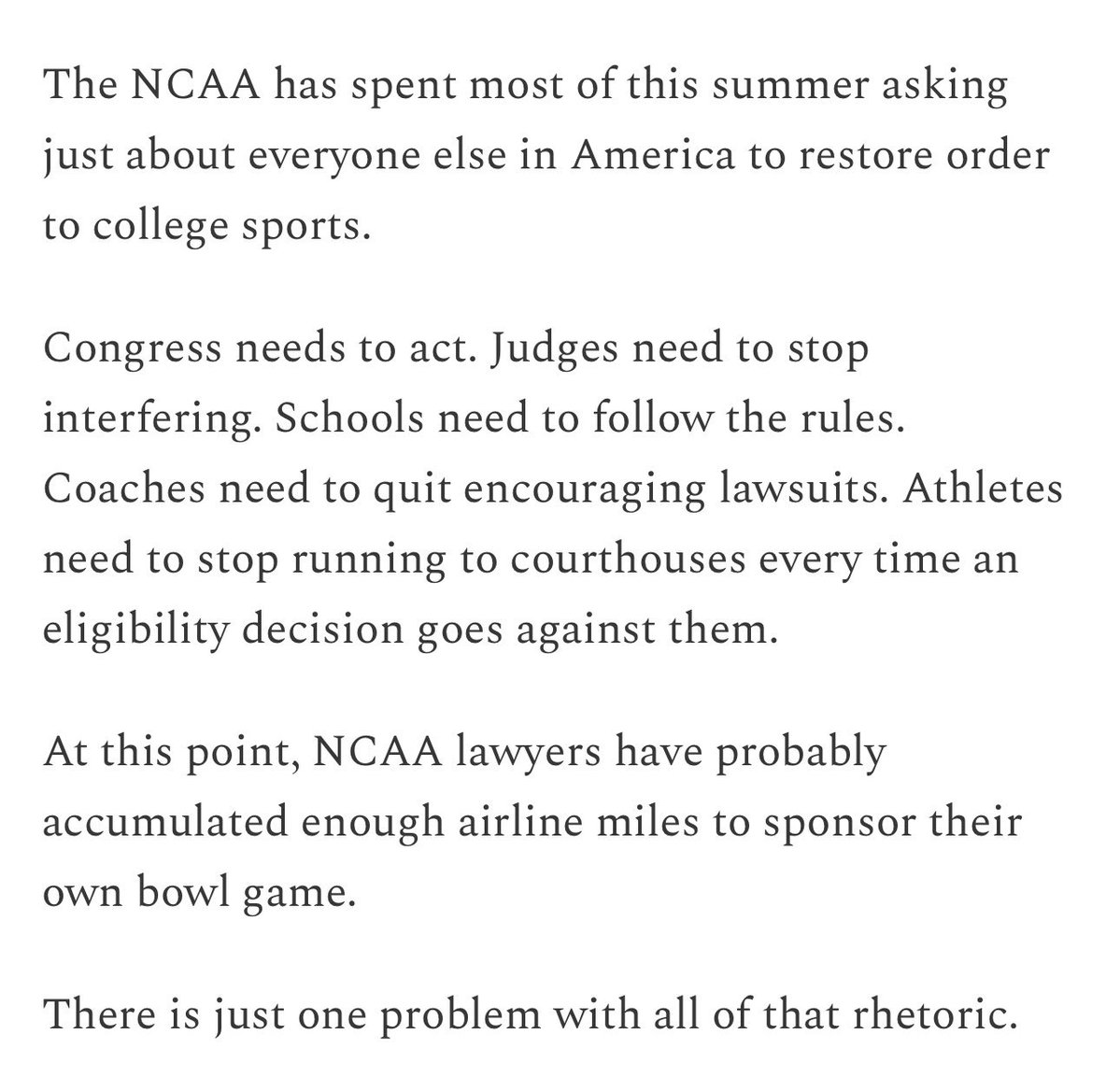
A judge says college eligibility rules aren’t legal. Rinse, repeat. Without an antitrust exemption it’s impossible to put any eligibility rules in place for college athletics.
Sorry, Greg Sankey. A Dallas court just granted a TRO against you, the NCAA, and the SEC. Any proposed SEC penalty against the athletes, the schools that roster them, or the schools that compete against them and any other ineligibility theory requires leave of court.
“To be clear, it is the Court’s intention to place Plaintiffs in the position they were in at the end of their last college sports season. As long as they would have been eligible to continue playing college sports in the following semester if they had a fifth year of eligibility, they are eligible today.”
Portal / SEC transfer-rule noncompliance is not a basis to sit players and post-2025-26 pro contracts, agent contracts, or pro appearances are not a basis to sit them if they terminate and repay before a college game.
NEW: The 10th Circuit has granted expedited briefing in the Wisne appeal.
NCAA opening brief + appendix: Sept. 1
Plaintiffs’ response: Sept. 8
Optional NCAA reply: Sept. 11
The court is still considering expedited oral argument. The Aug. 21 stay remains in place.
SARK ON CULTURE
"It's not a sign in your building. It's not a t-shirt you wear. It's not breaking the team down & saying Culture on 3 ... Who you are some of the time is who you are all of the time."
Culture is lived out on a daily basis.
📹via @BobBallouSports
For the hundredth time, all this chaos could've been easily avoided if the NCAA did the right thing and grandfathered in the Class of 2022. It never made sense not to include them. And NCAA is refusing to budge. Just do the right thing.
The lead story has changed going forward. State courts are running the board now.
August 22 update
𝗞𝗲𝗻𝘁𝘂𝗰𝗸𝘆 𝗦𝘁𝗮𝘁𝗲 𝗖𝗮𝘀𝗲
Status. 13 athletes granted temporary relief
Why it matters. Strongest new roadmap so far and includes a baseball plaintiff
𝗟𝗼𝘂𝗶𝘀𝗶𝗮𝗻𝗮 𝗦𝘁𝗮𝘁𝗲 𝗖𝗮𝘀𝗲
Status. TRO operative for 16 athletes
Why it matters. Players are already using the order to sign with new schools
𝗧𝗲𝗻𝗻𝗲𝘀𝘀𝗲𝗲 𝗦𝘁𝗮𝘁𝗲 𝗖𝗮𝘀𝗲
Status. Athlete injunction remains operative
Why it matters. Important state-law precedent and includes Rule of Restitution protection
𝗢𝗵𝗶𝗼
Status. Trial-court relief stayed on appeal
Why it matters. Shows how quickly the NCAA can neutralize a state-court win
𝗢𝘁𝗵𝗲𝗿 / 𝗡𝗲𝘄 𝗦𝘁𝗮𝘁𝗲 𝗙𝗶𝗹𝗶𝗻𝗴𝘀
Status. Likely next wave
Why it matters. This is where the action should migrate now
𝗪𝗶𝘀𝗻𝗲
Status. Stayed pending appeal
Why it matters. Now secondary unless there is new federal action
𝗞𝗲𝗻𝘁𝘂𝗰𝗸𝘆
13 Class of 2022 athletes received temporary relief from Jefferson Circuit Judge Brian Edwards. The order provides fifth-year eligibility and transfer-portal access. It also provides Rule of Restitution protection. That means schools and coaches relying on the order are protected from NCAA enforcement.
Kentucky is materially different from Wisne. Wisne is primarily a federal antitrust case. Kentucky relies on state-law theories including contract, good faith and fair dealing, and consumer protection. That matters because the state cases do not necessarily rise or fall with whatever ultimately happens in Wisne on appeal.
Kentucky also includes a baseball plaintiff. That may be one of the most important developments in this entire fight for baseball specifically. We now have an actual Class of 2022 baseball player obtaining state-court protection on the fifth-year issue.
Mark Mitchell is probably the cleanest practical example of what these orders can do. He received relief, entered the portal, and committed to Kentucky. The court order immediately turned into a real roster move.
𝗟𝗼𝘂𝗶𝘀𝗶𝗮𝗻𝗮
16 football players are protected by the Louisiana TRO. Some of those players had already signed professional contracts. Players are already using the order to move to new schools. August 31 is the next important Louisiana date.
𝗢𝗵𝗶𝗼
Ohio is the warning. The athletes won relief at the trial-court level. Then the appellate court stayed it. Getting the injunction is only half the battle. Keeping it in place long enough to actually compete may be just as important.
𝗧𝗲𝗻𝗻𝗲𝘀𝘀𝗲𝗲
Tennessee still provides another example of operative state-court relief. It also includes Rule of Restitution protection. That protects not only the athlete, but also the school relying on the court order.
𝗧𝗵𝗲 𝗣𝗮𝘁𝗰𝗵𝘄𝗼𝗿𝗸
This is all the same class, the same NCAA eligibility rule, and the same basic issue. But one athlete can play because he has a state-court order. Another athlete cannot because he relied only on Wisne. That may now be the strongest practical criticism of the NCAA's position.
The NCAA says it intends to appeal these adverse state-court rulings quickly. So every state case now has two separate races. Can the athlete get an injunction, and can the NCAA get that injunction stayed before the athlete actually plays.
𝗪𝗶𝘀𝗻𝗲
The nationwide federal injunction is stayed. Athletes relying only on Wisne currently do not have protection. We should keep watching the Tenth Circuit, but absent something new, Wisne belongs near the bottom of the nightly update.
𝗕𝗶𝗴 𝗣𝗶𝗰𝘁𝘂𝗿𝗲
The NCAA has argued that allowing the Class of 2022 another year would create roster disruption and instability. But the system we have now may be even more chaotic. Eligibility can depend on what state you are in, whether you filed a lawsuit, which judge hears the case, and whether an appellate court acts before game day.
This is no longer primarily one national federal injunction. It is becoming a series of state-law fights. The question now is whether the NCAA can maintain one uniform national eligibility rule while state courts continue creating individual exceptions.
What if Judge Sweeney issues a preliminary injunction in another case that again makes all four year class of 2022 athletes eligible this season?
Could happen in the Campbell case.
The roster-disruption argument has receipts against it.
August 20 update
𝗪𝗶𝘀𝗻𝗲 𝘃. 𝗡𝗖𝗔𝗔
Sweeney stay. DENIED (Aug 10)
Sweeney enforcement motion. FULLY BRIEFED, PENDING
10th Circuit stay. FULLY BRIEFED, PENDING
10th Circuit administrative stay. NOT GRANTED
Nationwide injunction. ON
New 10th Circuit order today. NONE VERIFIED
Change to scope of Wisne. NONE
NCAA class-wide waiver or policy change. NONE
Thursday night. Every federal line on the board is unchanged. The Tenth Circuit was silent again. Nothing new on orders, scheduling, or briefing. Sweeney enforcement still pending. Injunction still on.
The Kentucky state case produced the real development tonight.
The roster disruption excuse.
Major conference commissioners have backed the NCAA's position in the Kentucky state case. Their argument. Letting the 2022 class return creates roster instability, displaces younger athletes, and causes playing-time harm that cannot be undone.
Important caveat up front. The Kentucky case is separate from Wisne. Different court, different causes of action, broader relief that includes transfer rights. Nothing filed in Kentucky is part of the Wisne record. But the roster-disruption argument the commissioners are making deserves scrutiny on its own terms, because it is the same logic the NCAA needs the Tenth Circuit to accept.
The past tells an inconvenient story.
The NCAA and conferences have faced this exact problem before and solved it. Here is the timeline.
𝗠𝗮𝗿𝗰𝗵 𝟯𝟬, 𝟮𝟬𝟮𝟬. The NCAA granted spring-sport athletes an extra year of eligibility after COVID canceled their seasons. The same day, the NCAA changed its financial-aid rules so returning seniors were exempt from team scholarship limits. Baseball seniors were exempt from the 35-man roster cap. The NCAA saw the roster crunch coming and built relief into the rule on day one.
𝗝𝗮𝗻𝘂𝗮𝗿𝘆 𝟭𝟭, 𝟮𝟬𝟮𝟭. Sports Illustrated asked SEC Commissioner Greg Sankey directly about COVID seniors squeezing younger athletes off rosters. His answer. Do not reduce future opportunities because of pandemic management. Exempt the returnees from scholarship limits. He pointed to baseball and softball roster increases as the model that other sports should follow.
𝗙𝗲𝗯𝗿𝘂𝗮𝗿𝘆 𝟮𝟬𝟮𝟭. Tulane Athletic Director Troy Dannen warned publicly that if the 25-scholarship cap did not change, there would be a "huge issue in 2022-23 and beyond." That is the exact academic year the 2022 class entered college. The system knew the roster crunch was coming before these kids ever stepped on campus.
𝗟𝗮𝘁𝗲𝗿 𝟮𝟬𝟮𝟭. The SEC pushed the NCAA to exempt all COVID-relief athletes from scholarship limits, not just the oldest seniors. Without the exemption, coaches would cut athletes or stop recruiting to stay under the cap. The conference saw the downstream harm and asked for a rule change to prevent it.
𝗔𝗽𝗿𝗶𝗹 𝟭𝟱, 𝟮𝟬𝟮𝟭. The NCAA approved a universal one-time transfer exception with immediate eligibility. 𝗝𝘂𝗻𝗲 𝟯, 𝟮𝟬𝟮𝟭. The SEC killed its intra-conference transfer sit-out rule. The transfer market that the commissioners now frame as part of the disruption was opened by the NCAA and the conferences themselves.
Every receipt points the same direction. When COVID created a roster crunch, the NCAA and conferences changed the rules and mitigated the harm through waiver authority, rulemaking authority, and enforcement discretion.
Now, facing the same category of problem with the 2022 class, the argument is that roster disruption is irreparable harm that only stripping eligibility can fix. In my view, that framing is hard to maintain when you have a documented track record of fixing this exact problem with the tools you already have.
The NCAA has four levers available tonight. Waiver authority, rulemaking authority, enforcement discretion, and a prior track record of using all three when the situation demanded it. They used them for COVID, and the question of why they will not use them now is one the Tenth Circuit will have to consider.
Judge Sweeney's original injunction flagged the contradiction directly. The 2022 plaintiffs spent their entire college careers competing against fifth-, sixth-, and seventh-year athletes who were there because of COVID eligibility extensions. The NCAA's sudden concern for younger athletes being displaced by returning players is hard to square with the fact that it created the very environment these plaintiffs competed in for four years.
The playing-time argument is the weakest leg. Competition for playing time is part of sports. It was true through COVID seniors returning, grad transfers arriving, and the transfer portal opening. No athlete has ever been guaranteed a roster spot or minutes because a senior above them aged out. That was true before the injunction and it is true now.
So for now this is where we stand.
Wisne injunction is on. Class is protected tonight. Federal board unchanged. The roster-disruption argument in Kentucky runs headfirst into the NCAA's own COVID precedent. They had the tools, they used them, and the receipts are dated. Two federal rulings still pending with no deadline. Roster pressure from returning or transferring athletes is not new. Pretending the only fix is stripping eligibility from a class is.
A perfect example of why coaches should not prescribe conditioning. I might go so far as to say that 6 - 300’s under one minute is nearly impossible for most female soccer players.
Julius Peppers said, "Whatever it is that you do, do it with respect, integrity, passion, resilience, dedication, and gratitude. That alone will make you a HOF person."
Your character is what you do.
• It's your decisions.
• It's your actions.
🎥@NFL
PLAYERS: There will come a time when your season asks you what you did all summer. Every day is a chance to get better. You don't have to tell anyone how committed you are - just show them!.
This is the annual winter reminder to hockey and basketball coaches. The best conditioning is a good practice. If you’re a basketball coach don’t finish with suicides, if you’re a hockey coach, don’t “bag them” at the end. Don’t be an “ injury creation dummy”. Thanks @ZEvenEsh
Unilateral Training Updates already has 350 views (basically overnight). Whether you like unilateral training, dislike unilateral training, or are on the fence, I think you'll like this. https://t.co/ZE5vhRUG0U