🚨New report from @rpondiscio's The Practice Project: "Should Students Learn Science Through Inquiry?"
In this report, @adamboxer1 breaks down why explicit instruction, which promotes the acquisition of new knowledge, beats inquiry-based methods for novice science learners https://t.co/qHqM2PAPbB
My first lesson:
How do I start off with new classes? It's taken me a while, but this is now my routine 👇👇
First, make sure
1. A new exercise book is on everyone's seat
2. All chairs are down
3. Work is on the board
4. I have a seating plan
>
September is an opportunity to tweak a handful of classroom practices. What could have the *biggest* impact on creating a positive culture with genuinely high expectations? Crucially, how can we go beyond ‘tips’ & deeply understand the ‘why’ behind these tips? THREAD below! 🧵 1/
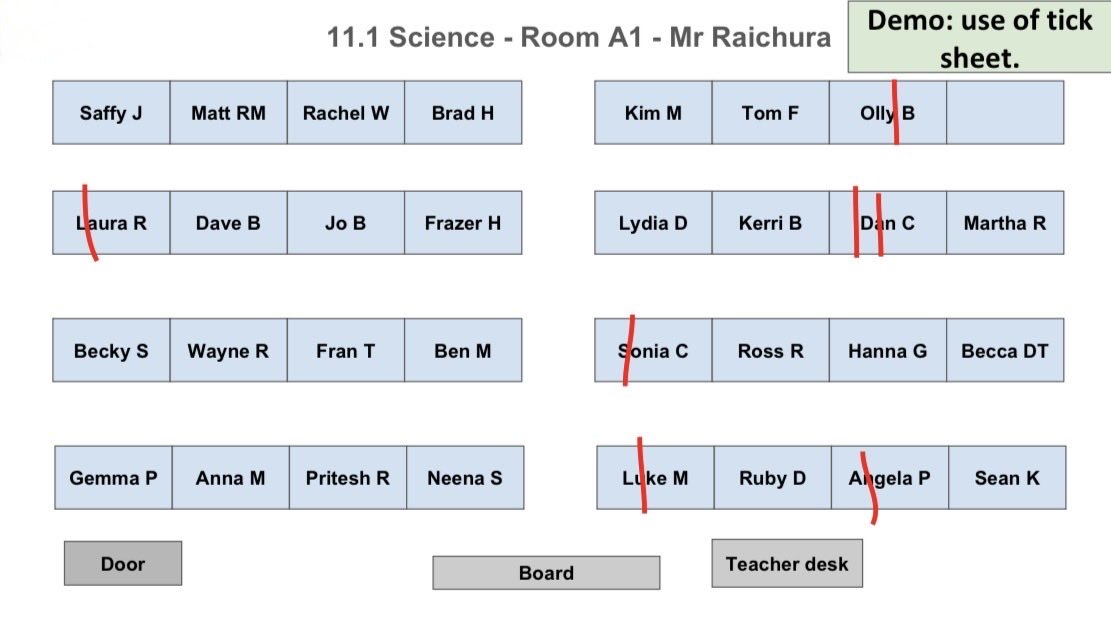
Here’s an example of a ‘seating plan tick sheet’ as discussed in Ep3 of Operation Education. Each time you give ‘warm, specific, named praise’ add a tally to the name. Aim: 30-50 per lesson. Keep it on a clipboard. Print fresh for each lesson to allow for updates to seating plan
The new EEF Guide to Inclusive Teaching is published today.
It's worth checking out. It contains guidance, summaries, myth busting & scenario based training plus more.
https://t.co/ugPZKi5NMN
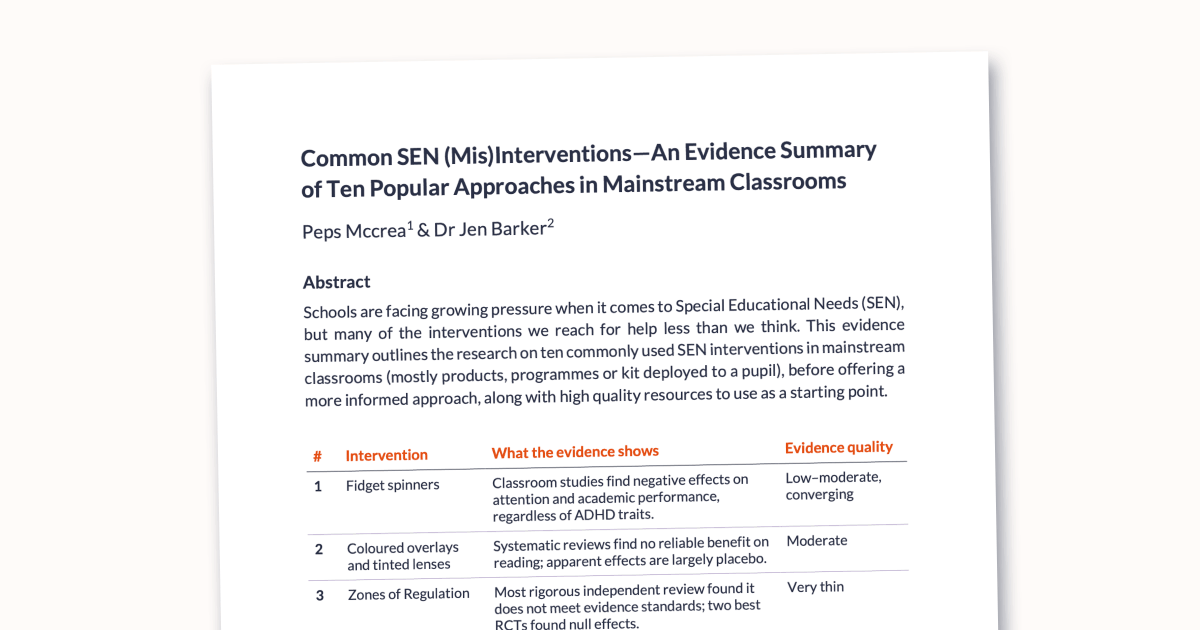
🚨New paper released today:
10 Common SEN Mis(Interventions)—An Evidence Summary
https://t.co/8lQNH00Co4
Supporting students with Special Educational Needs (SEN) is a vital and growing challenge for schools. But it’s not straightforward. Learning is complex, marketing claims are confident, and the evidence is often hard to access. As a result, we can sometimes end up adopting approaches which are less effective than we initially think.
For some, this may well be uncomfortable reading. As a profession, many of us have put time, effort and belief into these things, and lots will have seen students who looked like they were getting something from it. However, it’s essential that we temper our intuition with evidence, because ultimately: our most vulnerable students deserve it.
This new paper co-authored with @Barker_J is an attempt to raise the visibility of the best available evidence around several commonly used SEN interventions. For each, we provide an overview of what the research says, offer a more informed approach, and provide a suite of rigorous links to help you get started.
We hope it will serve as a useful resource and over time: push us to be even more 'evidence demanding' as a profession.
As ever, let me know what you think. If you have pushes or suggestions for how this paper could be better, hit reply and give it to me straight.
👊
The first edition of the Deans' for Impact "Science of Learning" document was hugely influential on me. Very excited to see a second edition published - all teachers should read this!
H/T @New_Old_Paul
https://t.co/Me2uJ9TBkK
**ACTIONABLE ASSESSMENT***
We’re not short of data in schools.
We’re short of data that actually improves learning.
Over the past few years, I’ve worked with countless assessment systems.
They produce detailed reports.
And yet…
They rarely change what happens in the classroom.
Here’s the uncomfortable truth:
A student can achieve a high score and still not have learned anything meaningful.
Because performance is not the same as learning.
In many cases, assessment has drifted from its original purpose.
Instead of helping teachers understand what students know (and don’t know), it has become:
•a reporting tool
•a data collection process
But what if we thought about assessment differently?
In my new book, The Assessment Bridge, I explore a simple idea:
Assessment should act as a bridge between teaching and learning.
Not something we do after learning, but something that actively builds it.
From research and practice, a few things matter most:
Diagnostic questioning that reveals student thinking
Responsive teaching that adapts in real time
Feedback that leads to action
Student involvement in the process
The shift is subtle, but powerful:
Stop asking:
What did they score?
Start asking:
What do they understand?
If we get assessment right, everything else becomes easier.
Teaching becomes more precise.
Students become more confident.
Learning becomes more durable.
I’d be interested to hear your thoughts:
What’s the biggest challenge with assessment in your context right now?
#actionableassessment
We're going around the Moon. Come watch with us. Artemis II's four-astronaut crew is lifting off from @NASAKennedy on an approximately 10-day mission that will bring us closer to living on the Moon and Mars. The launch window opens at 6:24pm ET (2224 UTC). https://t.co/X27QJejNDt
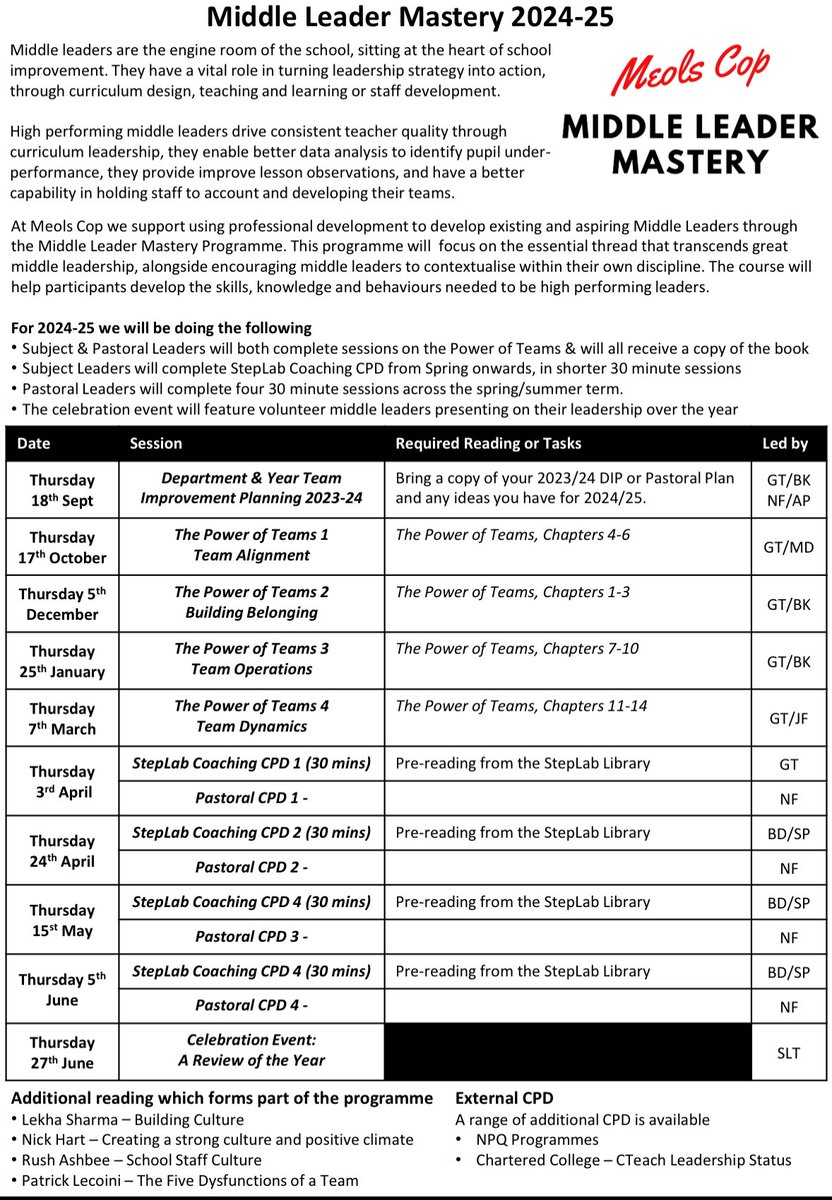
Apologies if anyone is trying to buy @Mr_Crome Power of Teams, I may have purchased around 30 copies from Amazon*
It’s a core text in 2 programmes for us next year
1) Leaders are Readers for SLT
2) Our 4th(!!) year of Middle Leader Mastery
Alongside @Caroline_Alice_ 😂
This is actually a brilliant blog by @msrebeccabirch - and gives language to something I've thought for a while: in education we tend to prioritise "nice things" over "critical problems", and systems thereby fail to improve. Excellent stuff.
https://t.co/kZPyn2MHy1
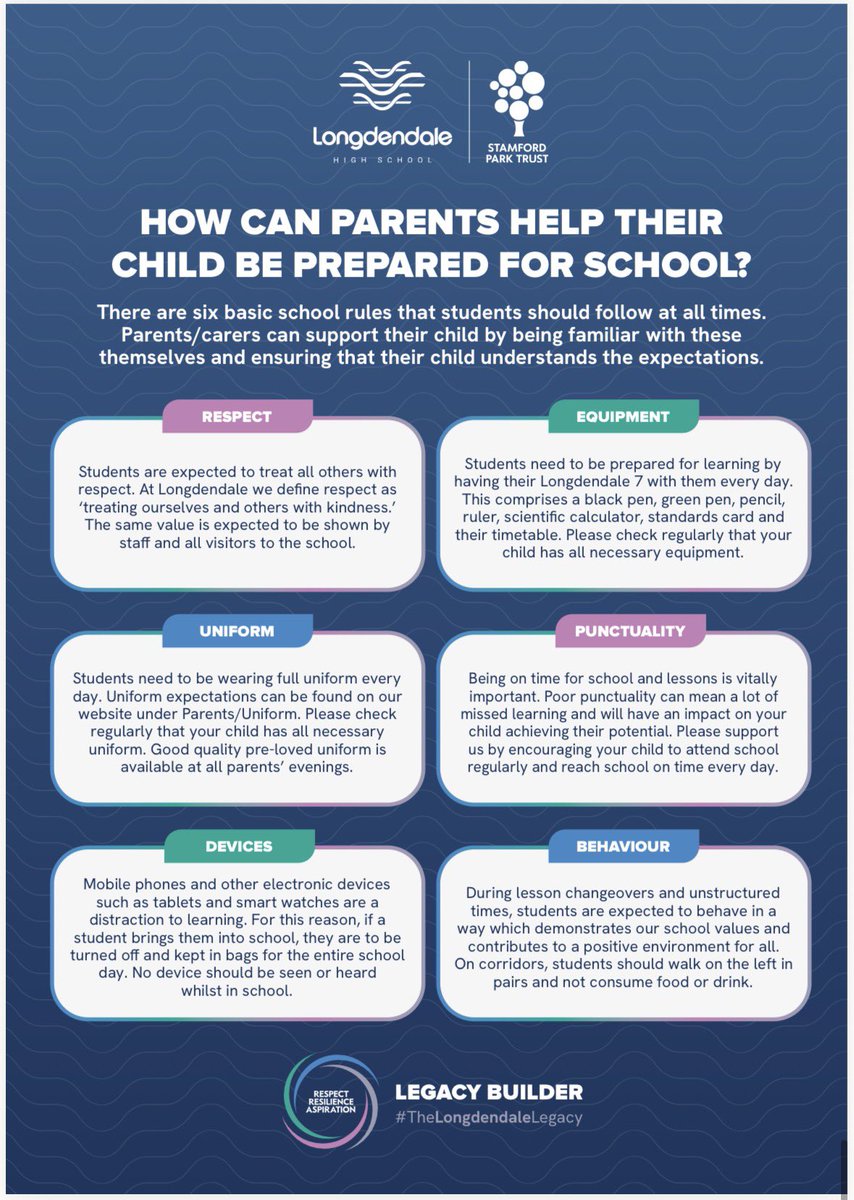
***FAMILY GUIDE***
We have been working on a booklet for parents and carers to provide guidance on how to support their child with learning 😊
#TheLongdendaleLegacy
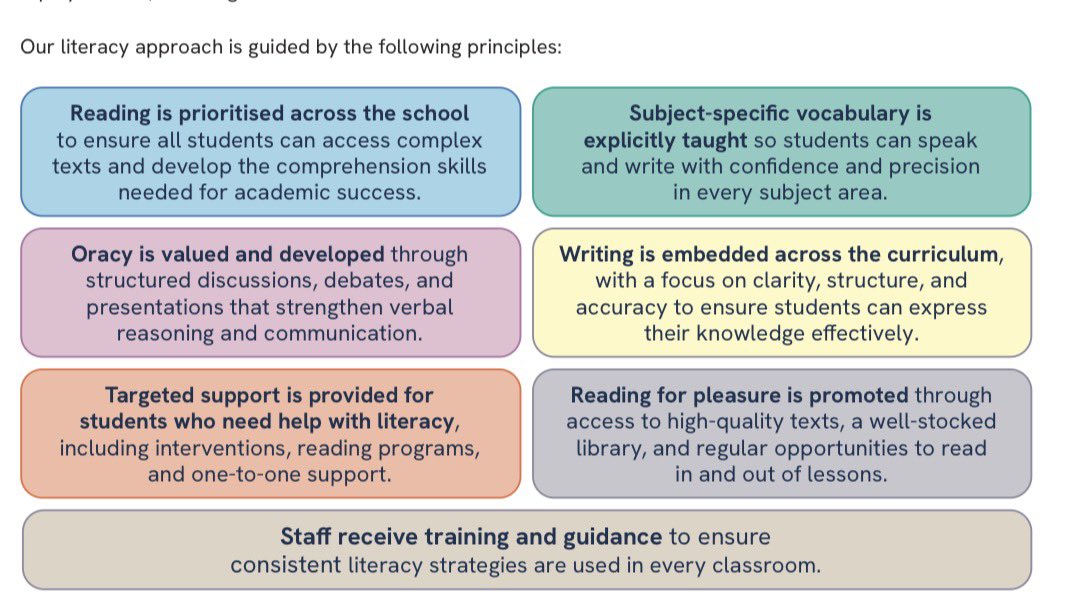
***LITERACY STANDARDS***
Literacy lies at the heart of everything we do.
We know that strong reading, writing, and speaking skills are essential for students to fully engage with our ambitious, knowledge-rich curriculum and to succeed in all areas of life. That’s why we prioritise developing high levels of literacy across all subjects.
@MissCole279 has worked hard with our literacy lead to bring our strategy to life throughout school.
@Doug_Lemov@WALKTHRUs_5 @teacherhead @olicav
#TheLongdendaleLegacy
***ASSESSMENT***
Assessment is the bridge between teaching and learning. When effective it provides rich information to determine how much and how well students have learnt the intended curriculum.
In classrooms, assessment is an integral part of teaching. All interactions with students during a lesson are a potential opportunity to gather information to monitor students success against the intended curriculum aims.
What are we doing Longdendale High School?
Thread
/1
The best teachers I've seen don't use a wide range of activities.
They do a few things, and they do them well. They hone them, practise them, and know exactly when each one should be used and why. The students become habituated to them, and learning goes through the roof.
I love KS3! Stories i read with my scientists this week
Scurvy on slave trade ships
Egypt and Ethiopian conflict over hydroelectric dam
Robert Hooke's discovery of cells
Zacharias Janssen and the discovery of the microscope
NEW BLOG
Why are teachers so hard to develop?
This blog outlines three of the key reasons I explore and offers some solutions link below
If you have received bad CPD or find it frustrating when staff revert back to old habits, then share this post to spread the word 🙏