We gave AI one week to build a giant drone
It helped design it, order the parts, and do final assembly
Then we delivered its first payload to @jimbelosic
@i2cjak It's funny, I didn't see this one coming. Not because I didn't think AI could do it, I just didn't understand the massive interest people had in making their own boards. I assumed only people who already laid out boards would be interested. But this huge push is from newcomers.
@electrotelecast I like the option. Of course it's not as good as gold, but not every board needs precious metals. Better than HASL for QFN's. And 1 less process.
There IS a coating on it. Organic & water based so it burns off. Just doesn't last for years. But HASL will oxidize after a yr too.
A better example with these instructions from the start. This looks pretty close to what I would have placed and routed by hand (though it is a simple board).
@FPGAX_ This happened during the 2021 shortage with TI's power supply regulators. Then Chinese companies just started copying them outright, pin compatible. You could even buy them on Digikey.
IDK why TI has shortages. They have their own US fabs (and they brought more online after).
I recommend that all companies using Texas Instruments (TI) chips, especially automotive-grade parts, stock up now.
Huaqiangbei traders are buying up large quantities of spot inventory, and speculation has already begun. A small number of part numbers have already skyrocketed from just over $1 to more than $200 an outrageous increase.
Based on the information I’ve received, the market for TI’s automotive-grade parts is set to explode in Q1 next year.
Fable 5.2 wrote a CPU. Real FPGA tools clock it at up to 34 MHz.
To get it off the screen and onto a board, Fable wrote a wrapper around it: memory, a serial port and LEDs.
Yosys turned it into real FPGA cells for a Lattice ECP5: 2,379 logic cells, 104 flip-flops and 3 blocks of RAM.
Then nextpnr gave every cell a real spot on the chip and routed every connection. The whole CPU takes 10% of the chip.
Timing analysis traced the slowest path: 14.5 ns out of 20 allowed. It passes at 25 MHz with room to spare.
The exact netlist that goes into the bitstream then booted in simulation, printed text through its serial pin and ran Game of Life from its own RAM. 420,000 clock cycles, zero mismatches.
The bitstream is ready. It just hasn’t been flashed to a physical board yet.
Directed Energy Division
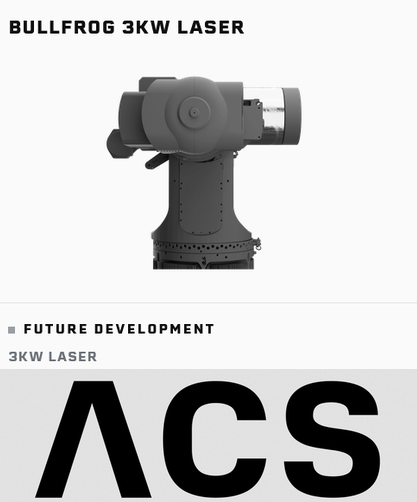
🇺🇸 Allen Control Systems (ACS)(@allencontrol) has established a Directed Energy Division and appointed Amanda Clark as Vice President, Directed Energy and John Mason as Program Director, High Energy Laser to lead the division.
According to ACS, Clark and Mason join the company from U.S. Army Space and Missile Defense Command (SMDC).
"The defense industry has invested heavily in directed energy, but generating a powerful beam is only part of the challenge. You still have to find a fast-moving threat, stay on target, and engage it with precision. ACS has already demonstrated those capabilities with our Bullfrog autonomous weapon station, and applying that expertise to directed energy is a powerful combination" - Joe Bingold, President and CEO, ACS
Learn more >> https://t.co/gznuYAJrcS