“While spacewalking I realized something, I used to think I was scared of heights but now I know I was just scared of gravity.”
― Artemis II Astronaut Reid Wiseman
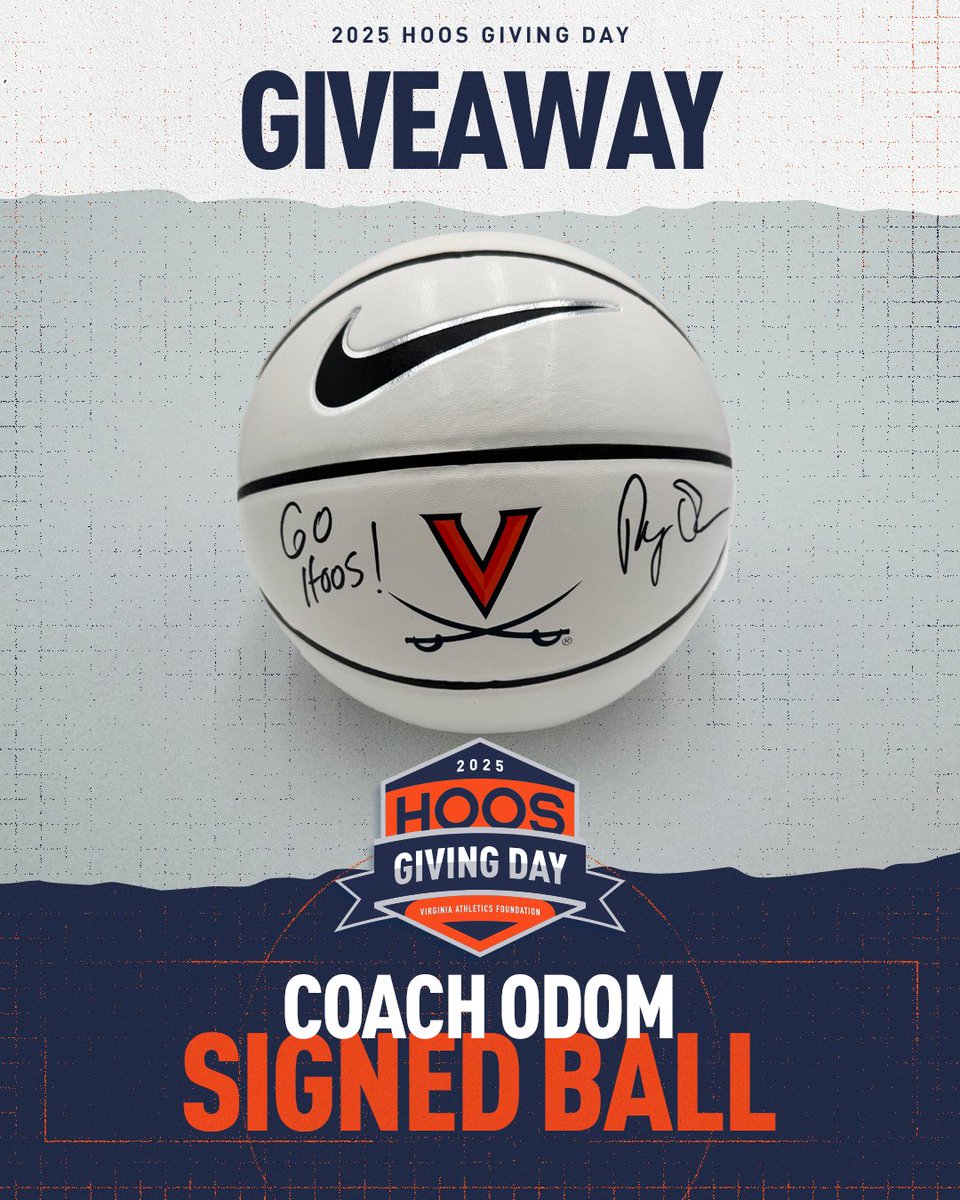
The shot clock is winding down… perfect time to announce our next giveaway of a Dean and Markel Families Men’s Head Basketball Coach Ryan Odom signed basketball!
For your chance to win be sure to do the following:
1. Follow @UVA_VAF
2. Like this post
3. Reshare this post
@GretchenAMcC@johngreen “The Code Book” Simon Singh, ‘’99. Despite being 25 years old, holds up extremely well as accessible look at cryptography. Despite feeling like we’re on verge of another large swing with quantum computing. ⭐️⭐️⭐️ #TweetLengthBookReview
“The Kingdom of Speech” Tom Wolfe - Wolfe explores the history of his own greatest weapon, language. While tweaking Darwin & Chomsky for good measure. ⭐️ ⭐️ ⭐️ #TweetLengthBookReview
@GretchenAMcC@johngreen “Absolute Monarchs” John Julius Norwich 2011, an EXTREMELY well-researched and comprehensive history of the Papacy. Could have also used an effective editor.
⭐️⭐️ #TweetLengthBookReview
Stanford paid 35,000 people to quit social media.
This was the largest study on emotional health in history.
The results were so shocking, scientists called it "comparable to therapy."
Here's what happens when you break free from the algorithm:
🧵
Aurora seen today from @Space_Station while orbit was passing between Australia and Antartrica; photographer @astro_jannicke now on the private FRAM2 space mission will be having an even better view in their polar orbit.
A few years ago, direct-to-consumer brands were everywhere. They all had a sleek aesthetic, a compelling brand story, and—more often than not—the same product sourced from the same supply chains. Their differentiation lay more in their customer acquisition strategies. The best DTC brands weren’t product companies; they were customer acquisition machines, built on arbitrage opportunities in Facebook and Instagram ads.
The newsletter economy is starting to look a lot like that.
At a newsletter conference recently, I noticed something: many of the most successful operators don’t think of themselves as publishers. They’re entrepreneurs first, content creators second. Their goal isn’t to build an editorial brand—it’s to master acquisition, churn prevention, and lifetime value. They take a unit economics approach to publishing that isn't nearly as pronounced in institutional media.
And the risk, just like in DTC, is this model works until the arbitrage disappears. In DTC, ad costs skyrocketed, and many brands collapsed when they had to compete on product, not just marketing. In newsletters, AI-generated content and inbox algorithms could make traditional acquisition strategies obsolete. The playbook of buying cheap attention and flipping it into high-value subscriptions has a shelf life.
The newsletters that survive will be the ones that go beyond audience hacking and build actual brands with real differentiation. Because at some point, every industry—whether it’s skincare, mattresses, or newsletters—has to stop relying on growth hacks and start competing on substance.
The @NASAVoyager 1 spacecraft took one of the most iconic photographs of our home planet 35 years ago today. The "Pale Blue Dot" image shows Earth as a pixel-sized point of light, highlighting our vulnerability—how small we are on a cosmic scale.
When you coach, you don’t need to be the expert. You don’t need to be the smartest person in the room. And you don’t need to have all the solutions. https://t.co/popzQlthF7