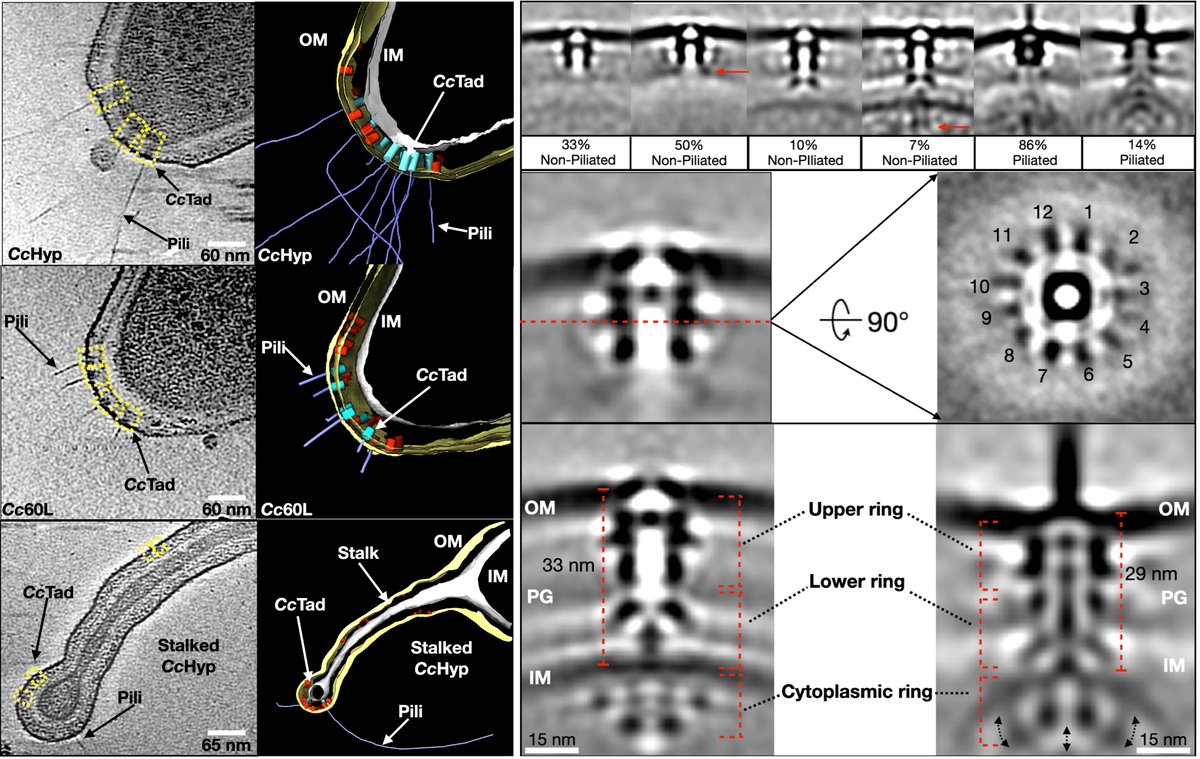
Fantastic collaboration with @PhilGuo1 and his team to determine the in situ structure of Tad pili. Great work from Greg Whitfield for our part of the work!
Great collaboration with @BrunLabCaulo for resolving the Tad pilus machine structure by cryo-electron tomography. Beautiful work by graduate students James Iarocci and Ryu Williston from our lab!
https://t.co/vfCW6UABXU
We're currently looking for a PostDoc position at @UMontreal and @Mila_Quebec to work on a multi-modal bacteria representation for anti-biotic discovery, including multiple modalities:
- Phenomics
- Transcriptiomics
- Structural bio
- Viability curves
- ADME
The work will be done alongside biologists from https://t.co/7Xgq70eWpg
DM me for more info
🚨 Call for a POSTDOC in machine learning for drug discovery at @UMontreal 💊
The position will be part of a large collaboration with @BrunLabCaulo Audrey Durand @dom_beaini Anne Marinier @IRIC_umontreal@Mila_Quebec.
All details here: https://t.co/ST7Zu85NSI
Please RT 💜
Please repost: Postdoc position in AI for drug discovery in a large collaboration with Dominique Beaini, Audrey Durand, Alex Hernández-García, Anne Marinier @UMontreal@med_umontreal@IRIC_umontreal@Mila_Quebec. https://t.co/3NMaAvt0JO
2 days left. Asst/Assoc Prof position in bacteriology, Université de Montréal. Deadline ***Nov. 15*** come join our growing community of bacteriologists. BTW, à propos of nothing, Canada is the USA’s Bluesky!
Please RT: Nov. 15 deadline! We are building a strong bacteriology community @UMontreal@med_umontreal, including recent hires @S_vanTeeffelen @FredoLeRoux & myself. Moving to Montréal in 2018 is one of the best career decisions I made. Come join us! https://t.co/mFSwP4Xb2p
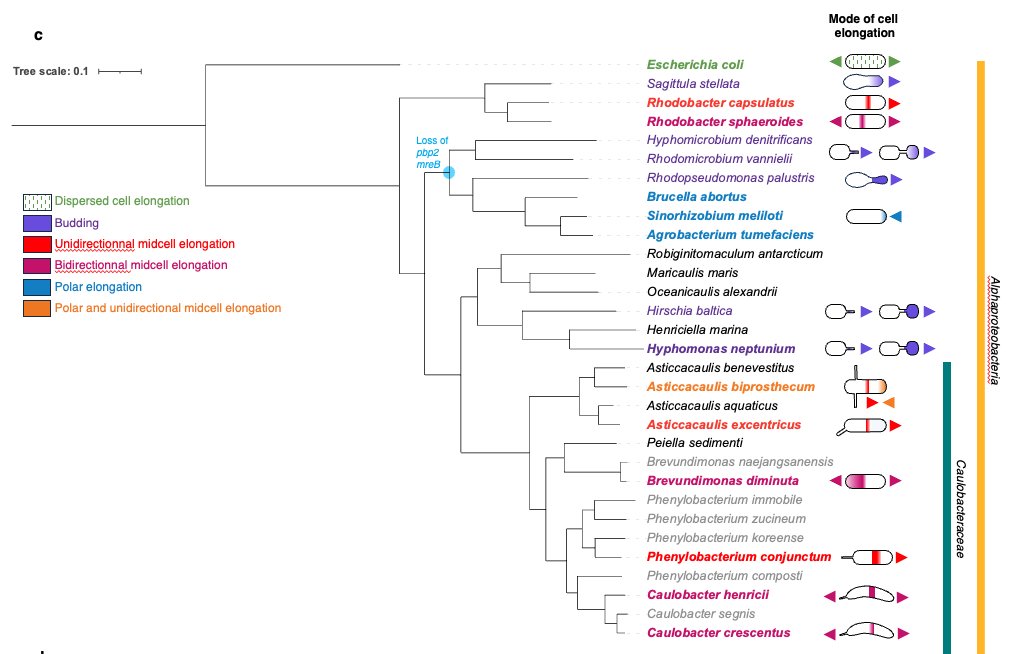
Expanding our analysis, we find a distribution of elongation modes, suggesting their evolution is shaped by multiple, independent events, implying a high degree of phenotypic plasticity in the regulation of localized elongation modes. How does your favorite species elongate?
How does your favorite species elongate?🧵"Phenotypic plasticity in bacterial elongation among closely related species" by @mariedelaby, @liuyang1125 et al https://t.co/7hZOs8O7Bd. How do cells elongate, all over, poles, middle? Close species do it the same way right? Not quite!
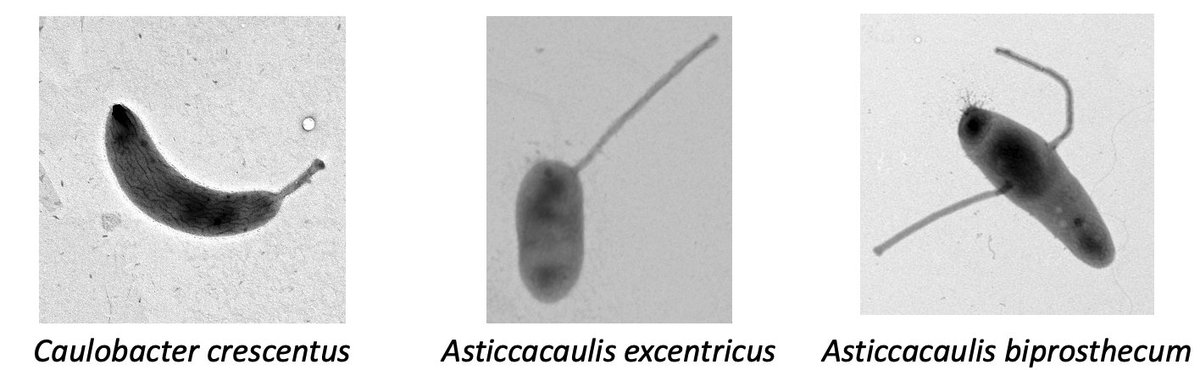
Not only do these three closely related species have different modes of cell elongation but they also have different morphologies. Could the elongation mechanisms in these species influence their morphology or vice versa?