@NIH It always seemed problematic that some of the wealthiest institutions got the highest overheads, but I suspect they’re still reasonable compared with what a lot of consultants charge the government!
@DrDzenitaM Nice, I was pretty surprised when we started doing microbiology how 'old school' a lot of the methods are! Like my undergrad labs from longer ago than I'd like to admit were actually relevant
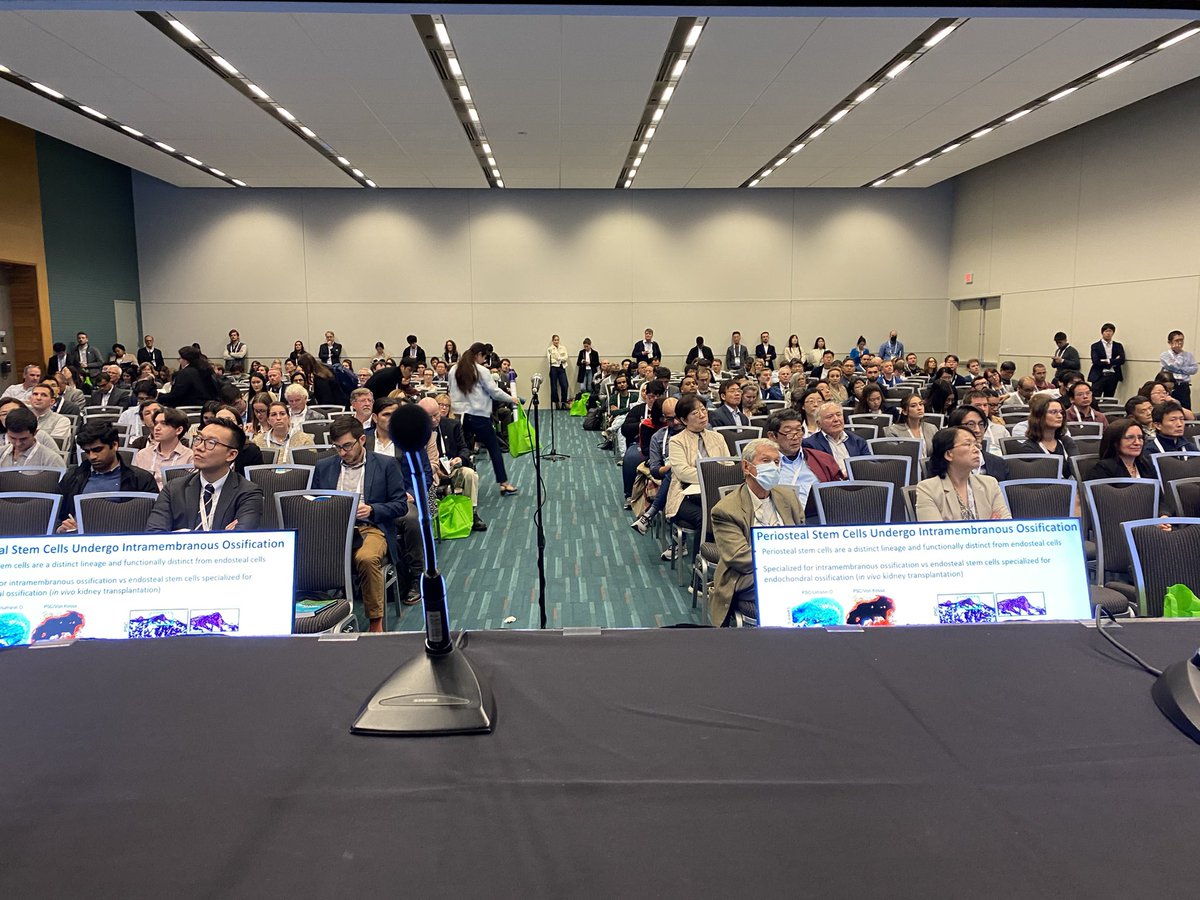
Great talk @NatalieASims. I have a question. Mice are clearly not ideal for studying coupling. What sort of models would you like to see used to better elucidate the role of these putative coupling factors in the BMU?
Our paper looking at skeletal cell populations in adult human tissue, particularly the periosteum is out in Bone! https://t.co/iHHyXzTu5V
We did a large spectral flow panel on matched samples from 21 patients and find that the periosteum looks very different overall from the BM
Congratulations to @Ye_Cao_ for doing most of the work (and defending your thesis!!!). Thanks to @AnnaBoss100 and @DrAnnaNZ for helping get the flow panel and analysis going, and Scott, Nicola, Raewyn and the surgeons for making sure we could get plenty of hips.
We think this population needs to be refined further, but looks like a good starting point for enriching for periosteal stem/progenitors in adult humans
We also found that the CD90+CD34+ population in periosteum is enriched for cells with in vitro stem/progenitor properties (CFU-F formation, clonal trilineage differentiation, tertiary colony formation)
@rhbloomer Interesting, although I feel like there are definitely situations where people ‘sponsor’ others with diversity in mind. I think I’ve been invited to be on editorial boards by overseas colleagues in part because someone from NZ adds diversity
Excited that this work we were involved with is out in Nature Aging. This drug extends lifespan and healthspan in male and female mice. Bones didn't look so good, so more research to be done!
It’s been a long time coming but our paper showing long term beneficial effects of inhibitors targeting PIK3CA is out today. Awesome effort by Chris Hedges who did most of work and lead by @TMerry_NZ with input from many other NZ researchers. https://t.co/c82Z9RP7pj