1/3 It's important to note that most mApple-based biosensors exhibit blue light-illuminated photoactivation, and proper controls (e.g. mutant-sensor or biosensor-only controls) should be included in combined use with blue-light optogenetics or dual-color recording.
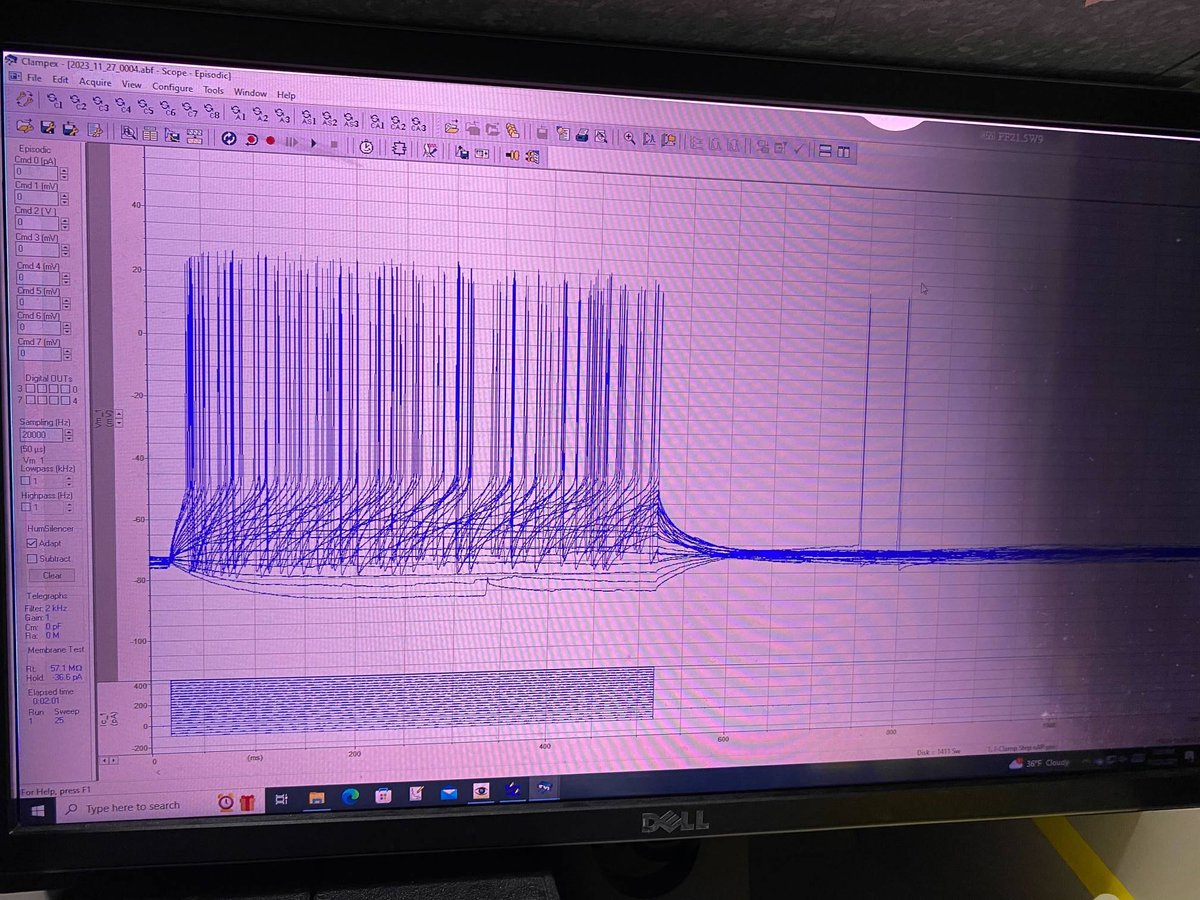
a little human spinal cord physiology to brighten your feed. Recording by @JunNanLi5, assist by @BryanCopits and outstanding tissue recovery team (it takes a village) this afternoon. Thanks to @NIHendaddiction for funding this exciting work.
📜 Preprint alert! Our latest work on #ephys analyses of human DRG & hiPSC-derived sensory neurons is now online @biorxivpreprint Thanks to the incredible team that made this possible! We hope this will be a useful resource to #pain researchers
https://t.co/7FPR3VYM6B
We're really excited about this project! To piggyback off of @NeuroTejeda's tweet, we're also hiring. Please reach out if you're interested in protein engineering, slice electrophysiology, and/or high throughout screening.
My lab is hiring a postdoc to work on a BRAIN Initiative funded position in collaboration with Bryan Copits and Patrick O'Neill to develop novel optogenetic tools to selectively manipulate user defined afferent inputs onto user defined post-synaptic neurons. DM or email
If you’re collaborating with Israeli PIs, think about whether you could invite one of their international trainees for a short stay so that they can get some work done while they are unable to return to their home lab.
🎉Today our paper on single vector CRISPR/Cas9 gene editing 🧠🧬 and marker gene expression is available on @biorxivpreprint! This is my 1st lead author paper in @BryanCopits lab, and was a collaboration with @Meaghan_Creed's lab! Check out the tweetorial!
https://t.co/HC8zGJG3d0
Featured in August issue: @JudyYoo and team (@UCincyMedicine) characterize the impact of early life iron deficiency on nociception development.
- Perinatal iron deficiency exacerbates post-surgical pain in adulthood
Full access for 30 days: https://t.co/86VNHr8G1k
@achamess In our experience, overgrowth of non-neuronal cells can result in sheeting off of the entire coverslip during ICC. It's generally not an issue until after 4-5 DIV. Treating with 2 uM AraC at 1 DIV and growing on diluted Matrigel coated coverslips has completely prevented this.
Congrats to co-first authors @shamsChronicles, @MengyiXu4 and all our @NIHendaddiction U19 collaborators @UTDPainLab @robgereau et al. for building such a useful resource - https://t.co/hHGUU3bdUN - for studying sensory ganglia cell types across species! https://t.co/6pM0C1deJl
Excited to share my first postdoc study, titled “Harmonized cross-species cell atlases of trigeminal and dorsal root ganglia”. https://t.co/p1JGo2mjZ5 1/n
New preprint from the lab! We conducted a systematic analysis of bistable optoGPCRs for presynaptic inhibition, which led to the characterization of PdCO: a bistable inhibitory OptoGPCR for multiplexed optogenetic control of neural circuits
https://t.co/pNpEHwtVPW
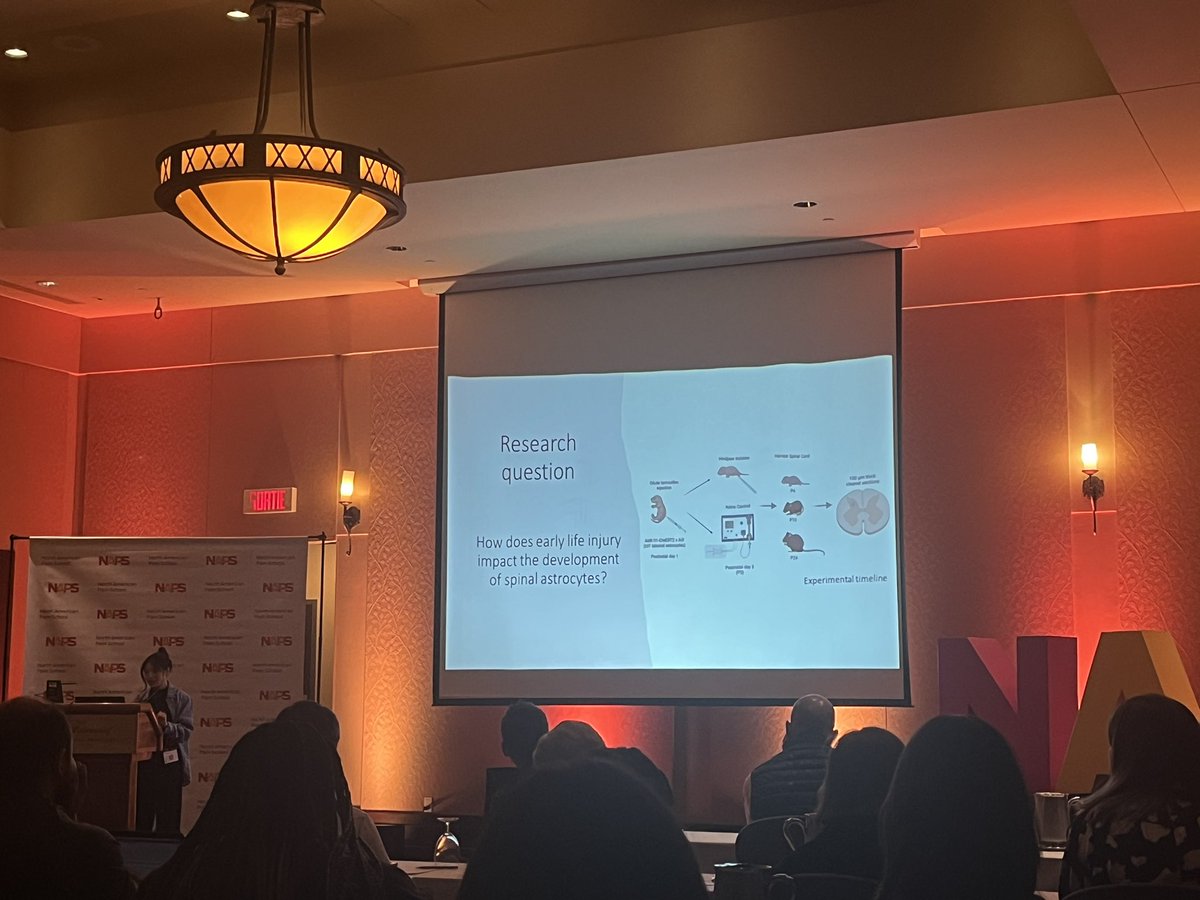
Day 2 @NAPainSchool: Great presentation @JudyYoo! Her research focuses on how early life injury could impact the development of spinal astrocytes. #NAPainSchool
🚨Paper Alert🚨 Very happy to share my first postdoctoral work from the Gereau Lab @robgereau . This collaborative work, co-led by former member Lisa McIlvried, show that homeostatic plasticity is engaged in mouse and human DRG neurons.
https://t.co/MYF3B1DWgY
We’re hiring! Projects combine genomics, in vivo ephys and synaptic physiology to understand how plasticity in basal ganglia circuits give rise to maladaptive decision making- with a focus on models of substance use disorder and chronic pain! (1/n)
Very excited to share the first paper from the lab on bioRxiv!😊Here, we establish that ketamine rescues stress-induced anhedonia via cell-type-specific adaptations as well as information integration in the NAc via discrete excitatory synapses.
https://t.co/BWtwfC1nQ3