The Gowrishankar lab will be opening its doors @neuro_MUSC on Dec 1, 2025! We will be hiring at all levels. I will also be at @SfNtweets presenting my lab's vision on Wednesday, Nov 19, 8AM-12PM at poster board GG7. If you're interested, please reach out!
https://t.co/ZlG2P66UAK
First Castro Lab paper, brought to you by the hard work of Dr. Kathryn Braden @katybraden In this manuscript we investigate the role of endogenous enkephalin or dorsal raphe nucleus. We find that it is incredibly important for buffering negative affect 😱 https://t.co/b26BBDUcqi
🎉 🎉 🎉 Very happy to share that the Neuropixels Opto paper, on which I am a co-first author, is finally out today! @naturemethods !!! https://t.co/tIPTm0Eqyi
This work with @HelenMaybergMD, @RussBEneuro & team aimed to figure out how DBS for depression works. We found it changes functional network (expected) but also remodels white matter (unexpected). These results have implications for both treatment and understanding of depression
#gpcr Dimers!
Here, we demonstrate stable κOR dimer formation in living cells and present cryo-electron microscopy structures of salvinorin A-bound κOR dimer complexed with two Gi proteins, revealing a parallel assembly distinct from previously characterized GPCR dimers that engage only single G protein.
https://t.co/66Q0RS66rg
So I built a small tool that merges Allen CCFv3 with the traditional bregma-relative coordinate system (calibrated with Paxinos & Franklin's Atlas). Click any coronal or sagittal section, and get coordinates instantly.
https://t.co/k2BYgLyKCx
Hope it saves someone a headache 🐭
Behind this podcast and publication is an outstanding student, Jarryd Ramborger, who poured incredible effort into trying to identify some of the earliest behavioral markers of addiction-like behaviors.
If you are interested in his approach using 60 cameras recording behavior simultaneously and a data pipeline using supercomputer clusters throughout the US, he’s your man!
*Are neurons simple??*
This is a cool paper, elegant. But unless I'm getting something wrong it doesn't really test what it intends to because the binning implies that there's not temporal information below 667 ms (for cortex). But that's where a lot of the action is!
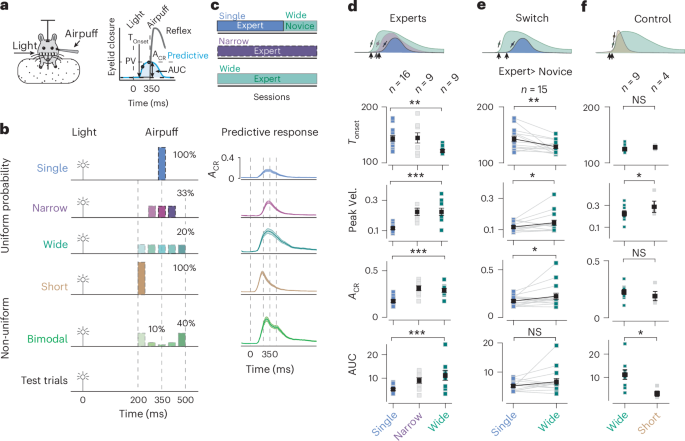
Neural circuits encode prior knowledge of temporal statistics, revealing how the brain infers external world states despite sensory uncertainty by relying on accumulated experience with environmental regularities.
https://t.co/5CnZfs4ng8
Neural Attractors!
In neuroscience, attractor dynamics are a core language for how recurrent circuits build cognition. Memory, perception, and decision-making: all can be framed as states finding attractors.
What surprises me: deep learning still treats this as a niche. It shouldn’t.