So Trump knew the Democrats were going to take over AI.
Two months ago Obama said to start writing regulation for AI.
It’s also why Thune didn’t do a damn thing. He knew too.
Sounds just like what is happening with the price of diesel and gasoline. Wall Street and the globalists fingerprints all over this.
Eric Swalwell actually slept with a Chinese SPY.
Democrats appointed him to the House Permanent Select Committee on INTELLIGENCE. No investigations.
I'm a spine surgeon. You asked a fair question, so here's the plain-English answer.
Before 2012 you could buy an individual plan online for about $200 a month, pick from six or seven insurers, and choose your own deductible: $500 if you wanted to pay more up front, $5,000 if you didn't. If you were healthy, that is. If you were sick, they could turn you down, and that part was real and had to be fixed.
Obamacare fixed it by requiring every plan to cover everyone for everything. Good. But that made the real price of a plan jump, and the only way to keep the monthly number from looking insane was to push the cost onto the back end. That's your $6,500 deductible. You're paying comprehensive prices for catastrophic coverage.
Then the quiet part. The law caps what insurers can keep at 20% of premiums. So the only way an insurer makes more money is if the total bill gets bigger. 20% of $10,000 beats 20% of $5,000. They have no reason to fight the hospital's price. They pass it through, take their cut, and send you the premium.
And the hospital's price went up. Hospitals bought the independent doctors, and the same visit & surgery under the hospital's name now costs 3-10 times more. Hospital prices are up 281% since 2000.
The number of insurers you can choose from fell to one in half the counties in America by 2018. Meanwhile, six in ten adults now have a chronic disease, so the pool is sicker.
So: sicker patients, pricier hospitals, an insurer that profits from a bigger bill, and a law that moved the cost to your deductible. That's what you're paying for.
Nobody in that chain gets paid more if you get better. That's the part to fix.
Major banking play from @telcoin 🏦 A state-chartered bank, its own dollar stablecoin and onchain bank accounts, all inside one wallet.
Here's how the three parts fit together, and the mainnet date $TEL holders should circle.
See why ⬇️
https://t.co/thXWenuj8z
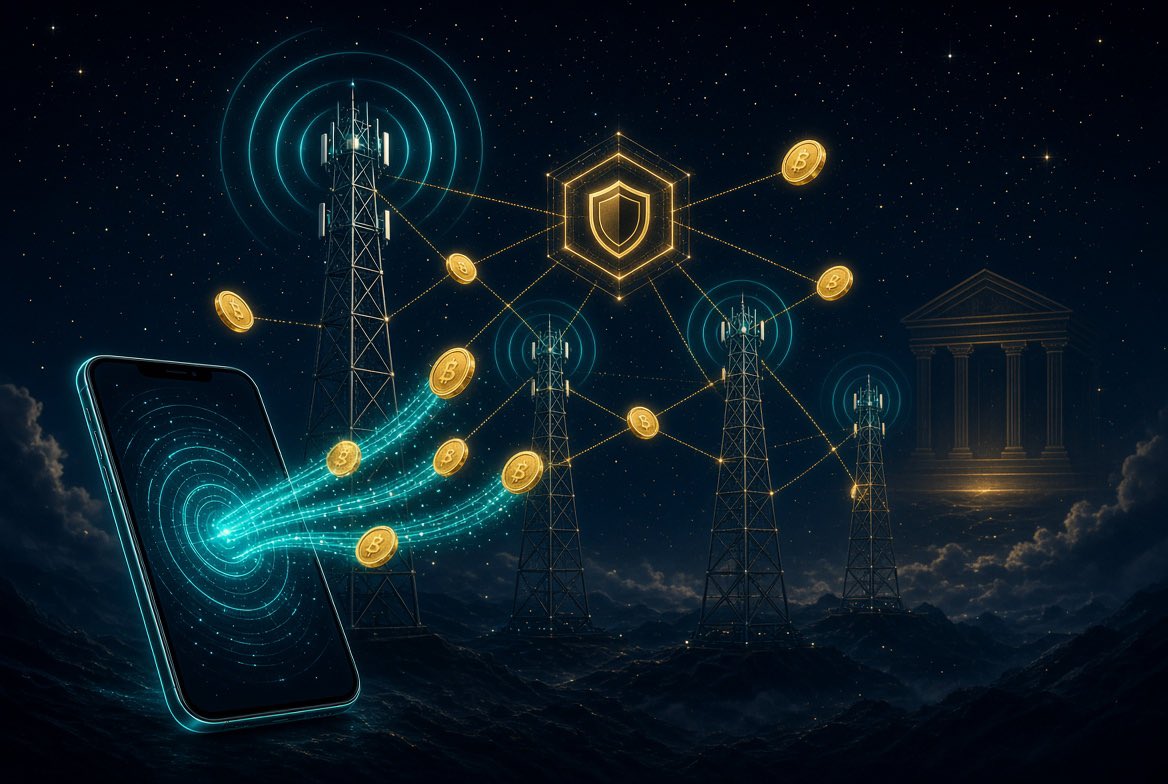
⚠️ In 10 days, $TEL will launch a layer-1 validated only by mobile carriers.
Telcoin Network (@telcoin) goes live on December 2, when its genesis block starts the chain. Code freeze completed on November 17, and the public launch follows in mid-December.
Only GSMA mobile carriers can run validators. They stake TEL, collect fees in it, and the first batch goes live at launch. TEL pays for every transaction.
Telcoin already runs a wallet and remittance service in over 20 countries. The new chain becomes the rail for it.
Here's what happens between genesis and the public launch 👇
https://t.co/6H3T6jMK2a
This should be required viewing in America
For every Democrat voter who thinks Donald Trump is taking away your rights and voting Blue, you need need to see this
THIS is what you’re voting for when you vote Democrat. Maybe not right now, but it’s coming. Muslims are using the Democrat Party and once they’ve gained enough power and imported enough Muslims, THIS is how women will be living
This is as serious as it gets
Nobody in the WORLD could convince me that the Texas Governor’s Race wasn’t absolutely RIGGED
2018
- 🟥 Greg Abbot: 4.6 Million Votes
- 🟦 Lupe Valdez: 3.5 Million Votes
2022
- 🟥 Greg Abbot: 4.4 Million Votes
- 🟦 Beto O’Rourke: 3.5 Million Votes
2026
- 🟥 Greg Abbot: 4.5 Million Votes
- 🟦 Gina HinoJosa: 5.2 Million Votes
Hmmm…. 🤔
A million TEL looks small today. That is the point.
Telcoin Network only allows GSMA mobile operators to validate. To join, an approved operator receives an initial 3 million TEL allocation and must stake 1 million TEL per node. Right now that stake is worth roughly fourteen or fifteen hundred dollars. For a global mobile carrier that already runs data centers, spectrum licenses, and millions of subscribers, the cash outlay is almost trivial.
They are not doing it for the current dollar value of the stake. They are locking TEL because the design of the network assumes the token will not stay priced like a pure speculative asset.
Validators earn in two ways: a share of the annual TEL issuance pool (200 million TEL in year one, distributed pro-rata by blocks secured) and the gas fees users pay to move value on the network. Both streams scale with actual usage. The more settlements, vendor payments, remittances, and on-chain bank activity that flow through Telcoin Network, the more the operators earn. Their weight in governance also scales with the amount of TEL they have staked.
This is the same logic David Schwartz applied to XRP years ago: a token used to move real value cannot stay dirt cheap forever or the system becomes inefficient. When large volumes move, either you need a very large number of cheap tokens or a much smaller number of expensive ones. The math ends up in the same place.
Here the pressure is structural. The operators already control the most widely distributed, regulated identity and connectivity layer on earth. They are being given exclusive rights to secure the settlement layer that sits on top of it, and they are being paid in the native token for doing so. At the same time, Telcoin Digital Asset Bank is already chartered, already issuing eUSD, and already offering on-chain bank accounts. The volume that can eventually flow across the network is not theoretical.
A carrier does not put its name and its validators on a network for a $1,500 stake if it expects that stake to remain $1,500. The low current dollar cost is the entry ticket. The long-term earning power, the governance weight, and the position inside a regulated banking-plus-telecom stack are the reasons they are willing to take the seat.
These companies do not move lightly. When they agree to run nodes, stake the required TEL, and put their infrastructure behind a settlement network, they are signaling that they expect the token that pays them and secures the chain to carry substantially more value once real volume arrives. The million-TEL stake looks small only if you price it in today’s dollars. The operators appear to be pricing it in the future utility of the network they are helping to build.
The towers are already up. The bank already has a charter. The validators are the same companies that already connect the planet. The only variable left is how much value actually moves across the rails they are now securing.
#Telcoin #TEL #TelcoinNetwork #GSMA #Fintech #MobileMoney
base:0x09be1692ca16e06f536f0038ff11d1da8524adb1 | Platform & Treasury Council Meeting #51 Recap (11/19/26)
For those who missed yesterday's meeting, here's a breakdown of what was discussed. There were quite a few interesting details, especially regarding the MNOs, card payments and what comes after mainnet.
🌐 MAINNET
• Code freeze officially completed November 16.
• Dedicated mainnet branch created on GitHub.
• Subsecond finality is live on testnet.
• Genesis remains on schedule for December 2.
• Public access expected by mid December.
• Broader ecosystem rollout continues into Q1 2027.
The protocol team is now focused on stress testing, security assessments and finding any potential issues before launch.
Validators will be set up and operational days before Genesis, essentially sitting dormant until a predetermined timestamp when the network begins operating.
When asked about another potential delay, @9rantkee jokingly said that barring an alien invasion or nuclear warfare, they're pretty committed to December 2.
📱 MNOs & VALIDATORS
• 10 validators at Genesis.
• Initial validator group is lined up and being finalized.
• First MNO application expected on the forum ANY DAY NOW.
• Genesis operators will submit their applications before December 2.
• Compliance Council will verify each operator's eligibility.
• Genesis validators will initially utilize cloud infrastructure to prioritize performance, security and reliability.
• Further geographic decentralization will take place in 2027.
@JamesTELtx also explained that announcing these companies involves dealing with corporate legal departments, communications agencies, branding permissions and legal documents that have been exchanged and rewritten multiple times.
📡 WHAT ABOUT THE 50 MNOs?
This was one of the more interesting parts of the meeting.
Several of the telecom groups they're working with have numerous subsidiaries operating in different countries. Some could potentially bring 20 operators onto the network themselves.
The concern is that allowing one telecom group to onboard that many subsidiaries too early could give them disproportionate voting power over the network.
Grant pushed for limiting each operator group to one or two validators at Genesis.
James confirmed they have plenty of operators to choose from, multiple operators with numerous subsidiaries, and even described 50 as a low number in that context.
Parker also explained that some of the larger telecoms may want to see the network operational before participating.
The long term objective remains onboarding all 750+ GSMA mobile network operators.
⚡ NETWORK PERFORMANCE
The latest benchmark ran for approximately 45 minutes using 10 geographically dispersed validators, some of which were intentionally shut down during testing.
• Peak TPS: Nearly 11,000
• Sustained TPS: Over 9,000
• Average execution under heavy load: 2.2 seconds
• Execution under lighter loads: Less than 1 second
• 95% of transactions executed in under 8 seconds
A few things worth pointing out:
These numbers were achieved using only ONE transaction lane. The protocol already has parallel fee lanes built into it, with further optimization planned after mainnet.
@TelcoinTAO also only counts actual user transactions. Internal consensus messages between validators aren't included. Grant explained that counting those messages could inflate their TPS figures anywhere from two to six times.
Grant also gave Steve credit for developing a specialized database layer specifically optimized for Telcoin Network, addressing disk read and write speeds, which have been a primary bottleneck.
Genesis validators will be geographically closer together than those used during benchmarking, which should also improve performance.
https://t.co/ZeGGHimFRh
💳 CARD PAYMENTS
Grant brought up card payments multiple times throughout the meeting.
Payment processors generally have around 3 seconds to approve or deny a card transaction. Getting Telcoin Network below that threshold was an important internal objective.
The ability to submit a transaction, reach consensus and finalize it within that timeframe could allow payment processors to actually confirm transactions on chain before approving a purchase at a checkout terminal.
Grant acknowledged that they've already seen considerable interest and exploration in this area.
Something worth keeping in mind as we're waiting to hear more about Telcoin Bank's upcoming products.
🏦 TELCOIN BANK
No specific new banking products were announced.
The team acknowledged the mutual benefits between @TelcoinDAB and Telcoin Network, particularly when it comes to facilitating real world financial services.
It was also confirmed that @TelcoinPaul will join a future council meeting to discuss the bank.
🔄 EXCHANGES & TEL3
• @Kraken officially supporting the TEL upgrade.
• Migration scheduled for December 1 through December 4.
• Trading will remain uninterrupted.
• Deposits and withdrawals will temporarily pause.
• @UpholdInc has already signed an agreement.
• @kucoincom, @Bybit_Official, @BitGo and @Anchorage are in discussions.
• Australian exchanges are also being discussed.
• No new update on Kraken OTC support.
• Additional listings, including @Coinbase and @Binance, remain areas of focus.
Nothing new was officially confirmed regarding those additional listings.
The TEL upgrade portal will eventually be incorporated into the unified Telcoin website.
For those unaware, the upgrade portal also has a bridge feature allowing TEL3 holders to easily move between supported blockchains.
Moving TEL to and from Base previously took approximately seven days. That process is now essentially instantaneous, according to @tyakemi.
https://t.co/9VAGDBLznt
💰 VALIDATOR INCENTIVES
Parker confirmed that validators will receive an initial issuance of 3 million TEL each.
• 1 million TEL for staking.
• 2 million TEL for operational and capital expenses.
This allows telecom operators to begin participating without having to purchase their initial stake on the open market.
💧 TELx & DeFi
• @merkl_xyz integration funding proposal is live on Snapshot.
• Merkl has been successfully distributing TELx rewards for several months.
• New TELx website provides better reward tracking.
• Merkl integration on Telcoin Network expected in early Q1 2027.
• Lending and borrowing protocols are actively being worked on.
More information regarding lending and borrowing will be released when the team is ready.
🤝 PARKER & DAVID PALMER
@P4Cap discussed his recent presentation alongside @Metaversebizz at the Telecom Council event in San Francisco.
According to Parker, Telcoin was the first crypto company ever invited to this private telecom executive event.
The audience included senior telecom decision makers, subsidiaries, innovation departments and companies throughout the telecom supply chain.
David actively participated in the presentation and even stepped in to answer questions directed at Parker. Many of these executives have known and worked with David for 25 to 30 years.
Most questions from telecom executives revolved around understanding Telcoin's model, how it differs from other blockchain networks and why it makes sense for the telecom industry.
🌍 COMPETITION
Parker broke the competition into three categories:
• Open access blockchains like Ethereum and Bitcoin.
• Enterprise chains like Base and Robinhood.
• Institutional consortium blockchains.
His biggest point was that telecom operators already operate networks for a living. They have the infrastructure, customers, global distribution and local payment connectivity.
Rather than selling telecoms a blockchain service, Telcoin has built something they can collectively operate, generate revenue from and build their own financial services on top of.
📊 TOKEN PRICE & ADOPTION
When asked about the price of TEL, Parker reiterated that the focus remains on driving demand through utility, onboarding telecom operators and bringing existing fintech and mobile money services on chain.
The team's initial success metrics following mainnet will include:
• Network reliability and security.
• Number of telecom validators.
• Number of application developers.
• Real world use cases.
• Number of currencies tokenized.
• Infrastructure for developers and liquidity providers.
Parker specifically said that chasing TVL and transaction volume in the first month through excessive incentives would essentially be chasing vanity metrics.
There is no fixed monthly target for onboarding additional MNOs.
An updated public roadmap covering the first 90 days following mainnet and extending further into 2027 is also being finalized.
📅 UPCOMING MEETINGS
• December 3
• December 17
• January 7
Now we wait for those MNO applications to start hitting the forum.
12 days until Genesis.
Watch the full meeting here: https://t.co/0nzkHFfS89
base:0x09be1692ca16e06f536f0038ff11d1da8524adb1
🚨 WOW. Data confirms that a whopping 700 BILLS are STALLED OUT in the US Senate, passed by the US House, including:
- SAVE America Act
- Ban on Congressional stock trading
TRUMP: "[People] were protesting [in the midterms] because the Congress hasn't sent them bills! SAVE AMERICA ACT...my people, MILLIONS of them...love Trump, but were very angry with the legislation that I said get passed wasn't happening!" 🎯
The problem wasn't we're "TOO MAGA" or "TOO CONSERVATIVE"
It's that Congress didn't DELIVER *ENOUGH*
Time for Senate Republicans to get reconciliation, the affordability bill and more done before Dems take power!
REPORT: New data shows the House GOP sent the Senate over 1,000 bills. About 700 stalled there, including the stock trading ban and the SAVE America Act.
Telcoin (@telcoin) $TEL is building more than a crypto wallet. It is bringing banking, stablecoins and blockchain payments together.
Here's how the pieces fit together and what comes next. 👇
https://t.co/rftSM2W6Jm
@Fleety10 Telcoin set up its own regulated bank, Telcoin Digital Asset Bank. Nebraska gave it the first US digital asset bank charter in Nov 2025.
The bank is what got approved. $TEL is the network token.
🚨 🔥 AWESOME! El Salvador President Nayib Bukele said he DESTROYED Soros influence in his country — USA needs to do the same
"Who elected Soros to dictate policy and laws? Why does he feel entitled to impose his agenda? Soros and his cronies hit a BRICK WALL in El Salvador. Thank God...Salvadorans are now IMMUNE to his influence. No one believes his lies anymore over there!"
@NayibBukele is a pure masterclass for Latin America. 👏🏻
Impeach the judges, rule crime with an iron fist, and BLOCK SOROS' ASSETS AND INFLUENCE! 🇺🇸🇸🇻