The 1000 Farms Initiative is demonstrating how our food system is one of our most powerful tools for solving planetary scale problems. It is pretty tough to out-think nature.
https://t.co/rKWa6RFQ5x
More recently, we discovered that honey bees raised on regenerative rangelands perform better and have drastically fewer Varroa mite pests. https://t.co/7XbXXrousC The answer to the bee problem isn't another pesticide. It is reforming our food system.
The EPA just approved RNAi-based pesticides for use in bee hives. They silence gene function of pests. But they also could silence genes in honey bees. And risk assessments would struggle to detect the effects. https://t.co/oBlOaVsojS Silencing human genes?
“It’s a—an impact tremor is what it is, it, uh—” BOOM. BOOM. Ian Malcolm; Jurassic Park
The first flagship paper from the 1000 Farms Initiative was just published.
It changes....what most people think they know about farming.
https://t.co/2P6jLpSeJn
Why do we need Science in Regenerative Agriculture?
Quite a few people in regen space have recently asked me why we need science. If we have already seen regen work, what does applying the scientific method contribute? Please read here : https://t.co/ddwS2Ut2nB
@CanaanRunMedia Yes, the peer review process is a bit obnoxious. I have a few thoughts on that. And it does feel a bit like gate keeping where the few are guarding the knowledge. In the regulatory space, Good Lab Practice has become a tool to smother any anti-industry studies.
@smarth2oman Personally? I have to make many snap decisions on the farm. I take the best information I have at the time, and pull the trigger. Then I seek more input and experience from others to help get better.
Cows are a crucial part of saving the bees. New research shows that regeneratively managed cattle promote flowers and plants on rangelands, which leads to stronger hives that resist pests like varroa. https://t.co/ndTX3Su1bP
New science shows that regenerative grazing is as effective as parasiticides for controlling internal parasites in cattle. Let’s keep the money in ranchers’ pockets instead of the chem companies https://t.co/hN8BJyrp1q
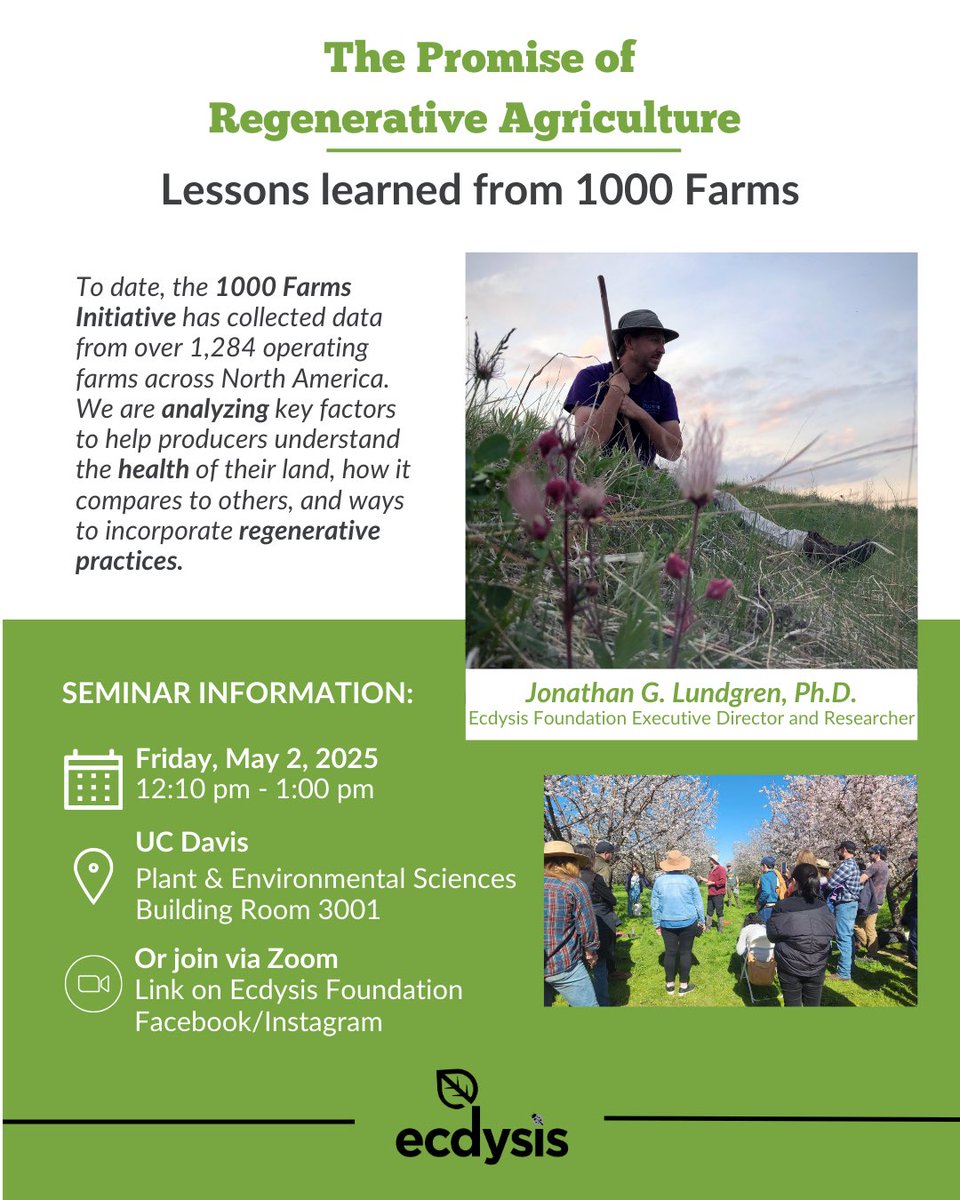
Calling all CA farmers and those interested in the potential of our food system to affect planetary problems, while putting money back in farmers’ pockets. Please come to UC Davis on May 2!
Calling all CA farmers and those interested in the potential of our food system to affect planetary problems, while putting money back in farmers’ pockets. Please come to UC Davis on May 2!
TED talk, Ecdysis Foundation shows Grow life on your farm, and the carbon takes care of itself. The water takes care of itself. Regenerative agriculture is a celebration of life. https://t.co/F66ppXJvDs
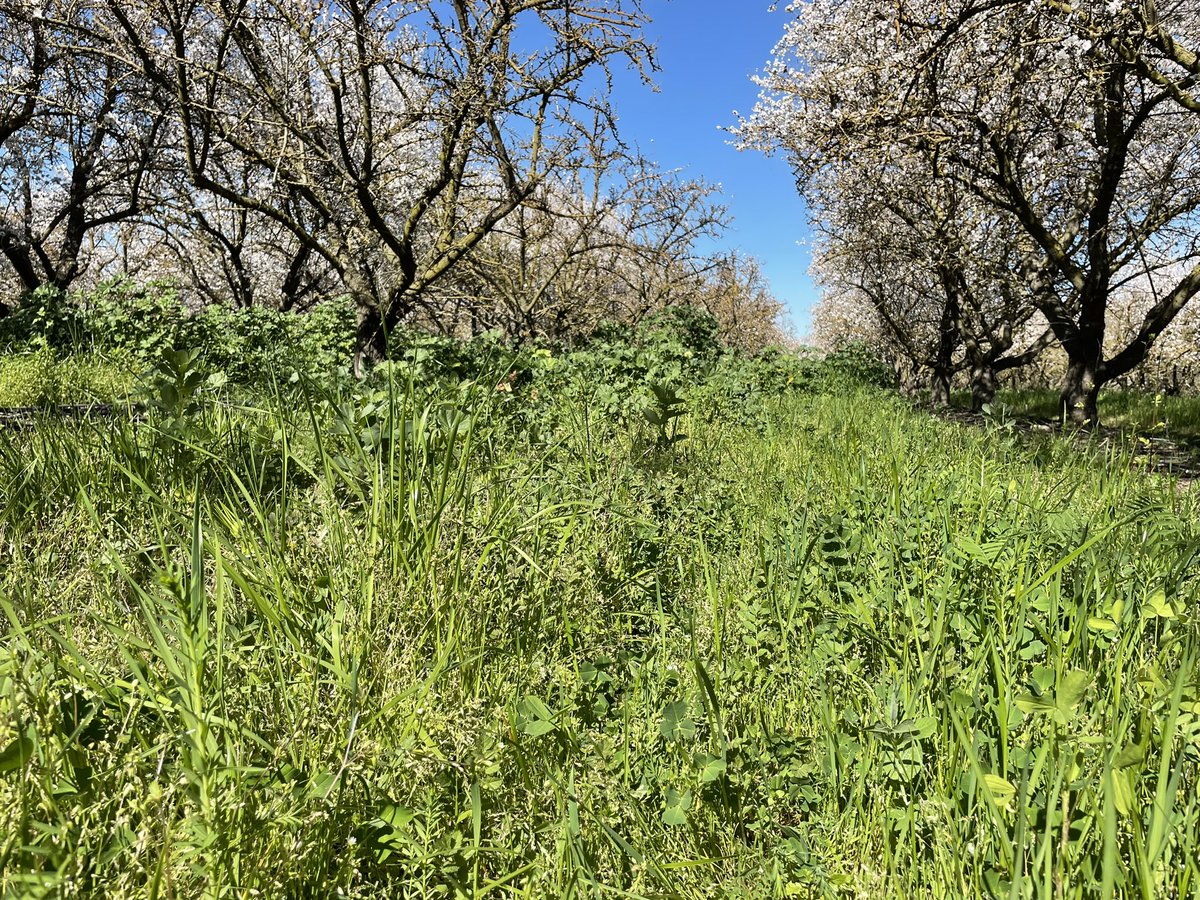
Studying regenerative almond orchards in CA
This orchard uses 30% of the water it did 5 years ago.
No pesticides
Input costs are minimal.
Yields haven't declined.
Every 1% increase in organic matter can hold 20,000 gallons of water.
You don't have to believe me. It just is.