Recently came across @otter_ai and it's quietly made my life so much easier.
I used to spend the first 10 minutes after every call trying to remember who said what. Now Otter already sends the summary, with action items assigned to the right people.
Best part: I can just ask it "when's the launch again?" and it pulls the answer from my old meetings.
Works on Zoom, Meet and Teams, and there's a free plan.
Anyone else using it? Curious what you use it for.
Meet Infinite Asset Studio ✦
Describe a character once, then explore matching poses, item icons, UI assets & scene concepts. Keep the palette on track, build sprite sheets, and export transparent PNGs.
One character. An entire world. 🎮
Powered by Gemini - link in replies
Used my threejs skill to create this : https://t.co/YI9YjLIm0J
prompt: "recreate the offline dino game that opens in chrome when your disconnected from internet into a third person AAA game. show the transition that its the orignal game then it suddenly becomes third person AAA dino game . keep the same black and white theme."
Open it in your browser, paste a Gemini API key from https://t.co/UQGB1uN9E6, and drop in an image. It defaults to gemini-4-argon.
Link to the app : https://t.co/fpV4LCM8dK
PDFs are where good information goes to get skimmed once and forgotten.
So we built Unbound. Give it a PDF and Gemini 4 Argon turns it into an interactive web book:
→ chapters with key takeaways, each cited back to the page
→ key terms you can tap for a definition
→ charts rebuilt from the document's own numbers
→ a quiz and flashcards for every chapter
→ "Ask the book", with answers that point to the page
Argon writes the chapters in parallel, so you can start reading before it's done. When it's finished, export the whole book as a single web page.
Runs in your browser on your own Gemini key. Free.
Which PDF have you been putting off reading?
Download Retrace (free, one HTML file): https://t.co/UOdNKBsXmf
Open it in your browser, paste a Gemini API key from https://t.co/UQGB1uN9E6, and drop in an image. It defaults to gemini-4-argon.
Introducing Retrace, a free web app that turns any image into an SVG that looks identical to the original.
Powered by Gemini 4 Argon.
Drop in a PNG and watch Argon write the SVG code live, shape by shape. Then hit Refine. It renders its own trace, puts it next to your original, and fixes whatever's off.
A Difference view shows how close it got. Black means identical.
Logos, icons and flat illustrations come out near-perfect. Photos turn into stylised vector art.
Free to use with your own Gemini API key. No signup.
What's the first image you'd run through it?
One thing Gemini 4 Argon genuinely excels at is SVG generation.
The output is surprisingly clean, especially for designs with detailed shapes, outlines, and retro aesthetics.
It took me a while to get decent results from earlier attempts, but Argon seems genuinely impressive at this.
Still has its flaws, but SVG generation might be one of its strongest use cases. 👀
Gemini has the potential to be a serious leader in AI, yet it keeps fumbling the basics.
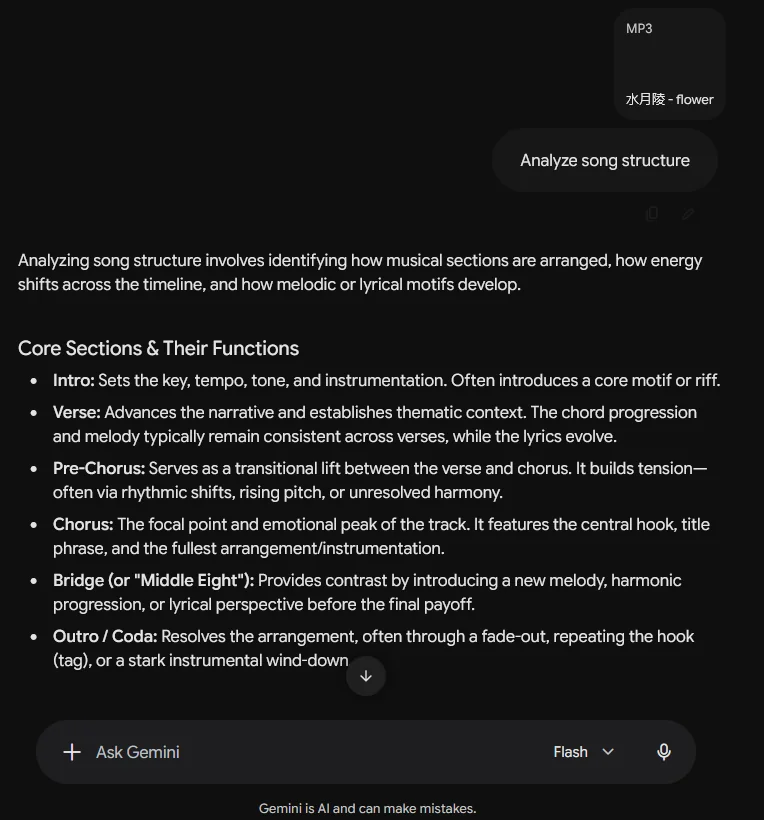
Why can't Gemini 4 Argon hear audio, while Gemini 3.8 Flash handles it just fine?
Google has some of the best AI infrastructure and resources in the world, yet basic issues like this still slip through.
Gemini 4 argon vs Opus 5.5 head on against the same prompt:
"create an interactive terrarium in html for an ant civilisation"
opus 5.5 went deeper on the simulation. ants dig chambers and pile the soil into a mound, nurses carry eggs to a brood chamber, foragers lay scent trails, there's day/night and rain, plus a full colony ledger tracking population and food.
gemini 4 argon built the cleaner game. predator beetles, soldier ants, auto-forage, a polished HUD.
honestly opus 5.5 still feels better content wise. but gemini 4 argon is not bad at all. for what it costs, it's an insane model.
if you were building with one of these, would you pay for the depth or take the cheaper one?
Gemini 4 Argon made this motion graphics video about how @GeminiApp made its comeback against Opus 5.5 and GPT-6 Astra in the AI race.
Honest take:
Opus 5.5 still feels miles ahead on logical reasoning and content quality. Argon feels a bit dumb at times, but with detailed instructions and the right prompts it does some genuinely impressive stuff.
The gap is closing though 🔥
Anyone else tried Argon for motion graphics?