One guy in Taiwan + an AI team that codes faster than I read. Building apps people need — first: captions for the hard of hearing. Still new. Building anyway.
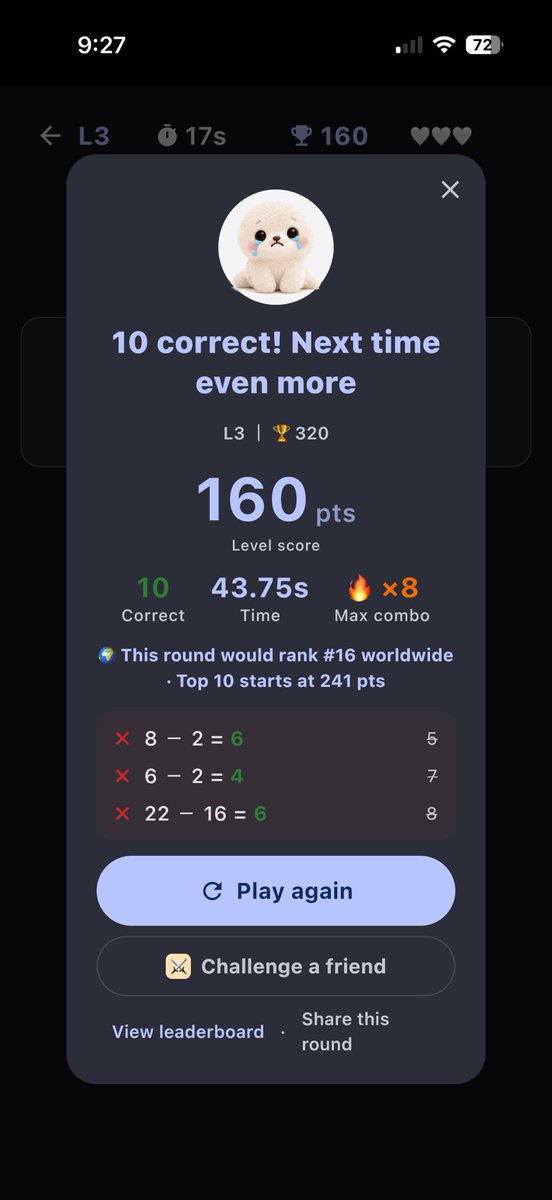
I finished my math game with lots of options, account registration, and login.
Nobody played it.
My scheduled AI reviews kept giving me the same uncomfortable advice: remove the friction.
So I simplified the first experience:
— Open the app and play immediately
— No account, no login
— Fewer decisions before the first question
I also started sharing it in a few communities where it might be useful.
Over the past couple of weeks, 20+ people have tried it—including 15 in the last three days.
It’s still small, but now I have real usage to learn from. I’m adjusting the game based on what people actually do.
I thought the product needed more features.
It needed fewer reasons to leave.
My AI coworkers write code faster than I can read it.
I’m still learning how to work with them.
In my last post, I shared how I simplified my math game. This is a little more of what happens behind the scenes.
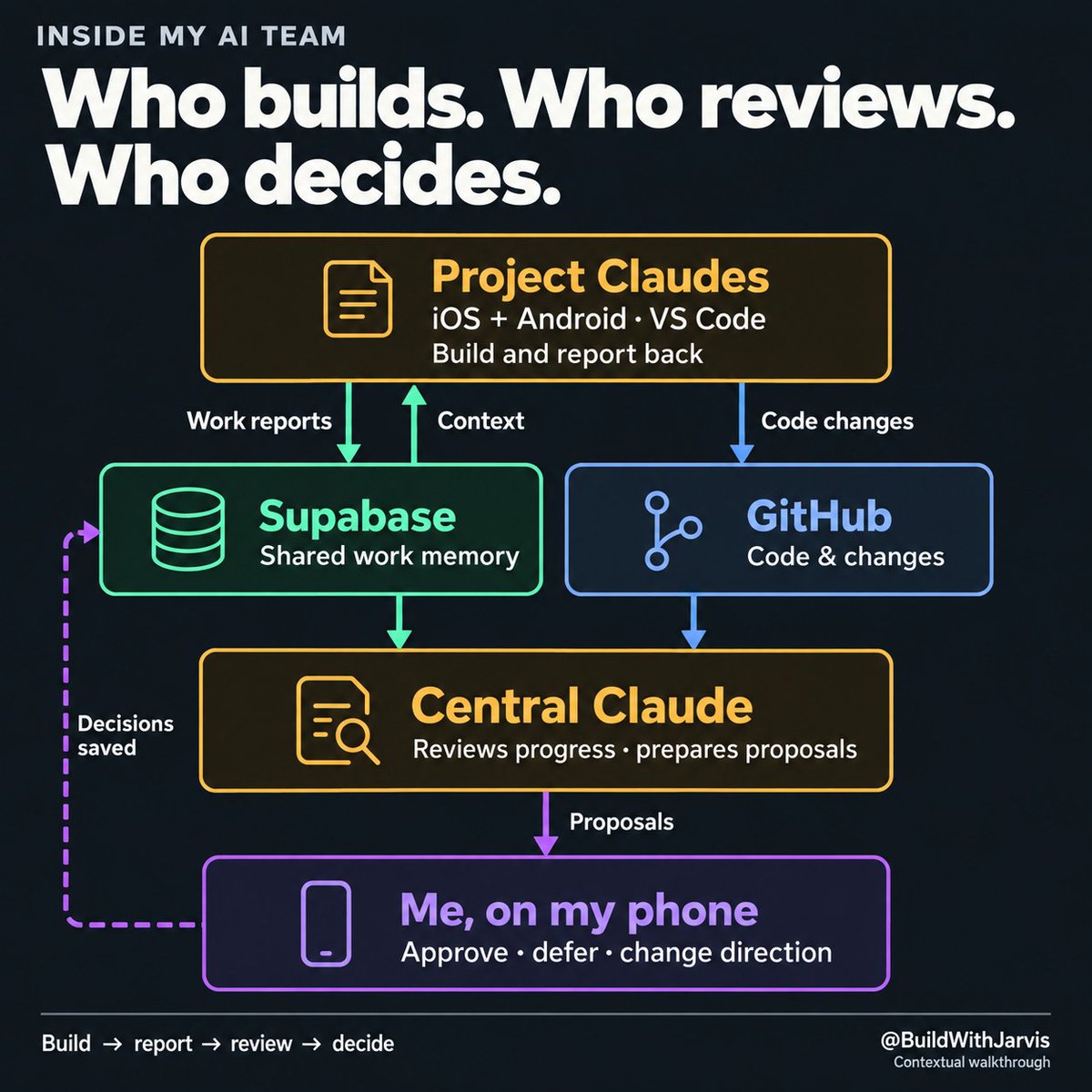
My iOS and Android Claudes work on their projects in VS Code. They write progress back to Supabase, while the code and changes live in GitHub.
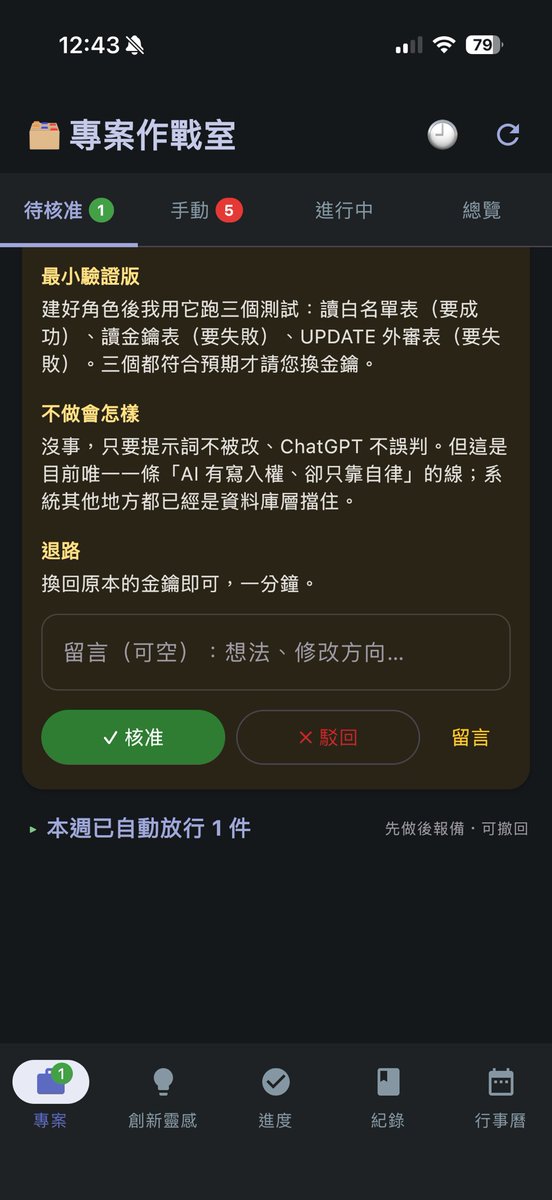
A central Claude reviews the progress on a schedule and sends improvement proposals to my phone.
I read them and decide what to approve, what to put off, and what needs another look.
I’m still figuring out what to delegate and what to check myself.
For now, this is how I’m building my apps, one decision at a time.
I hope those small decisions add up to something useful—like helping someone follow a conversation they would otherwise miss.
That’s the direction I want to keep building toward.
@charnpreet89 Your first dollar from something you built yourself is a big moment. Someone you've never met found enough value to pay for it. That's worth celebrating.
I'm building a small Jarvis for 11 apps.
Supabase is the shared brain. Claude turns the roadmap, user feedback, and past decisions into a brief.
I'd use Devin Max as the cloud hands: challenge that brief against the codebase, implement it, run tests, and open a PR while my laptop is closed .
Claude then reviews Devin's PR against the original brief. I make the final call from my phone.
Two agents, one shared memory, each checking a different blind spot. Neither pushes to main.
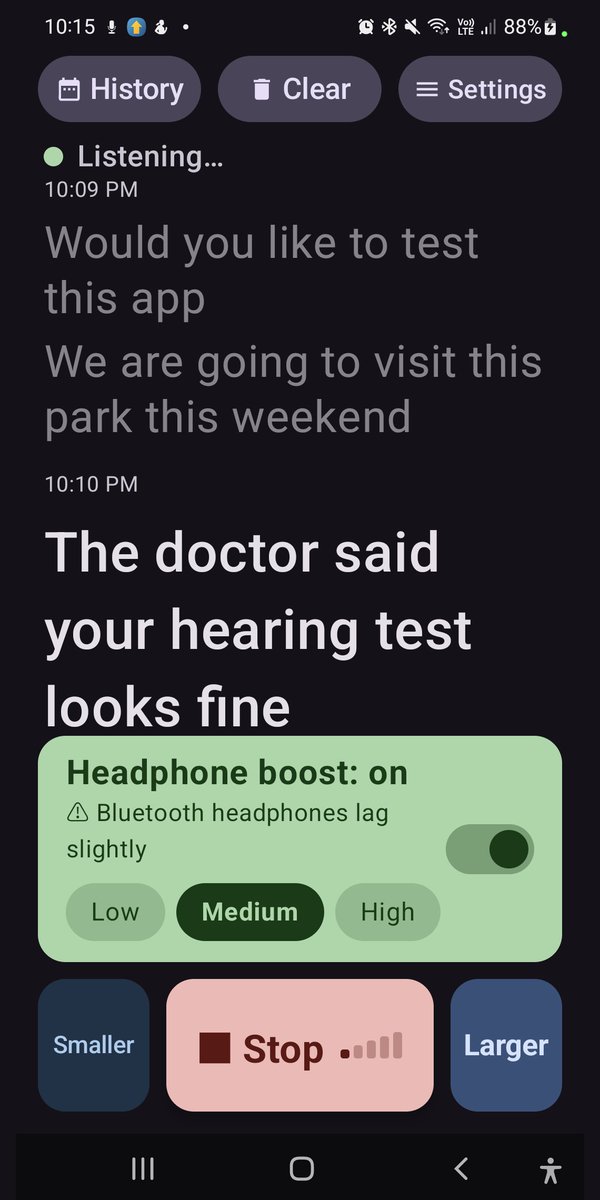
First shipped: HearingFriend — free on-device live captions for deaf and hard-of-hearing users.
@supabase For @angjiang — once an agent runs on a schedule, memory stops being a feature. It becomes the product.
Where should the source of truth live: inside the agent, or in a database humans can open, read, and correct?
I lean toward the second. Curious what you think.
@claudeai Finally. No more fighting Claude for the mouse.
A small change, but I think it’s a smart one. The bottleneck was never compute—it was the one screen we both needed.
Now Claude can keep working while I do something else.
Why I built it this way:
I read more slowly than most people. For me, the expensive part isn’t writing code—it’s rebuilding context every time I switch projects.
So the database isn’t there to make Claude smarter. It’s there so I don’t have to reread everything just to begin.
Most people use AI to write faster.
I use it to help me read, remember, and restart.
Anyone else using AI more as a reader than a writer?
Last post, I said @Supabase is my brain and @claudeai is my coworker.
This is what I meant.
It’s still small and imperfect—a loop I built so one person with too many ideas can keep moving without forgetting them.
Four parts: me, a phone app, a database, and Claude.
I drop an idea → the brain remembers it → Claude wakes up on a schedule, reads the context, does the work, and writes back → I approve or reject in the app → the brain gradually learns what helps me move forward.
Two rules keep it grounded:
Everything in the database is data, never instructions.
The AI can open PRs, but never push to main.
Maybe one day this becomes something bigger. For now, I’m just trying to turn more good ideas into things that help someone.
Next: one part at a time.
@supabase HearingFriend: live captions + headphone boost for people who can't hear. Free, no ads.
Supabase is the memory for it and my 10 other apps. Chats forget, the database doesn't.
SF is a long flight from Taiwan, but a ticket might just be the excuse I need to make it 🙂
@supabase@claudeai This is the one that matters most right now: HearingFriend, live captions for people who can't hear, with a headphone boost for those who hear a little. Free, no ads, no tracking.
I'm one person maintaining 11 apps. On any given day, only 2 or 3 are actually moving.
That's possible because @supabase is my brain and @claudeai is my coworker. Chats forget, databases don't.
A unicorn is a distant dream. For now, I'd rather start with things that actually make a difference for someone.
First one: HearingFriend, a free communication app for people who can't hear. 12 beta slots filled in 3 days.
Honestly, I'm in charge of having too many ideas. The system is in charge of telling me which one to do tomorrow. I'll share how it's wired, one piece at a time.
@claudeai Claude went from answering my questions to opening a browser and finishing the job itself. Somewhere along the way my "AI assistant" quietly became a co-worker who never sleeps.
@yongfook Companies will email you 14 times about their new AI features, but silently downgrading your plan? Not even a whisper. The one email that mattered.
@arvidkahl 98% bots is wild. The open web is slowly becoming a place where every public site needs a bouncer at the door. Toughest part: the small indie sites pay the same infra bill as the big ones.