Meaningful economic output is driven by knowledge, execution, or coordination. Value creation comes from increasing the capability, reducing the cost, or improving the speed of one of these three functions.
Within 6 to 12 months, every software product will need an API, MCP, and CLI. More and more, people expect to be able to interact with your product through automation, AI and agents. Historically, platform was a later stage of maturity play. Going forward, you won't really thrive in this new world without a platform.
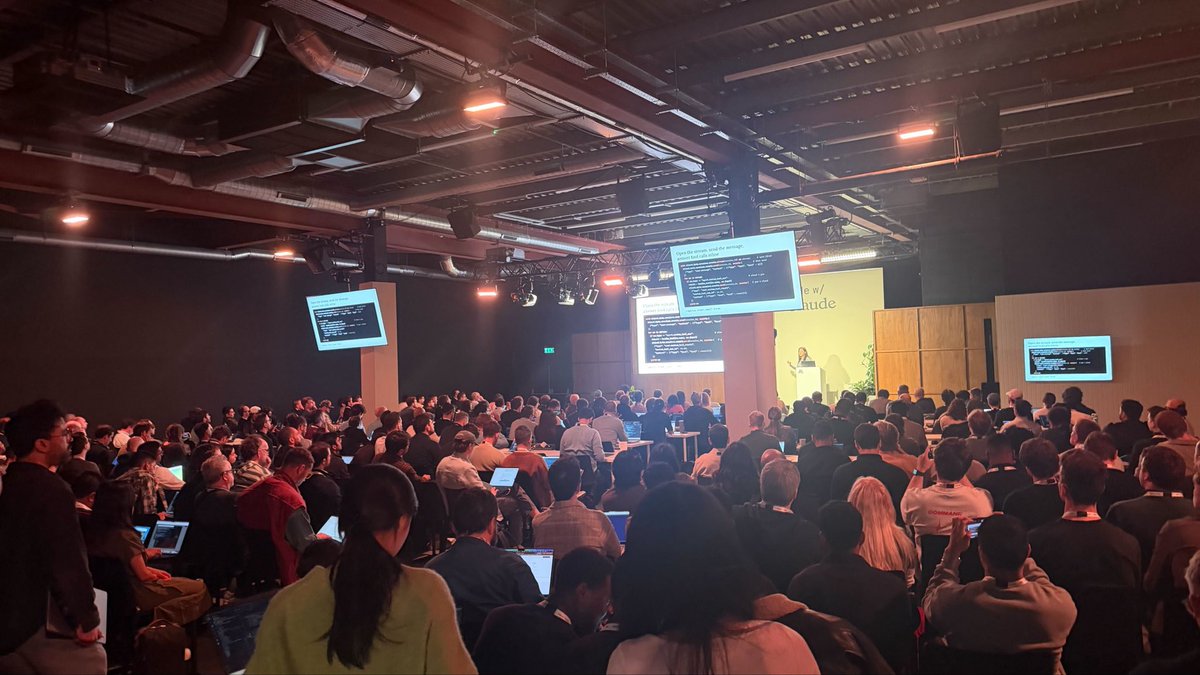
Live from Code with Claude London: we're launching self-hosted sandboxes (public beta) and MCP tunnels (research preview) in Claude Managed Agents.
Run agents inside your own perimeter, with your security controls applied by default.
today, the @StainlessAPI team is joining @AnthropicAI !
we're bringing together experts in SDKs, CLIs, and MCP servers with the creators of MCP to make agents built on the Claude Platform even more connected & powerful.
https://t.co/LXl20Ly72y
Krishna on how Anthropic thinks about the platform vs. application layer, and when they decide to build their own products like Claude Code.
It’s the question every investor and founder is thinking about:
“Most of what we're building is platform. There's so many examples of where a platform can accrue a lot of value, but the customers who are building on that platform actually accrue even more value.
We will build our own applications on that same platform where a couple of things are true.
Number one, if we feel like we have a vision into where the models are going and we can demonstrate that and create customer value in that, that might be something like Claude Code.
The second is thinking about ways to demonstrate value for the ecosystem that others might emulate. If you think about Claude for financial services or Claude for life sciences, these are ways in which we've composed the platform.
We're building on the same platform as our customers. That creates a level playing field. We also think that there's so much value that's going to accrue in these areas that our customers can win and we can win as well.
So I think of our strategy as mostly horizontal. A lot of the value is going to accrue to the customers that are building on top of it.
Our goal is build the best models and then build the products and tools and services that allow that intelligence to proliferate within customers."
The Claude Platform on AWS is now generally available.
AWS customers get the full set of Claude API features, with AWS authentication, billing, and commitment retirement.
In the future, you’ll be able to accomplish a goal by just giving Claude an outcome and a budget.
That’s the direction Anthropic is building in with its new Managed Agents features, announced at this week’s Code with Claude developer event. The basic idea: Claude, wrapped in a computer in the cloud, that you can spin up, scale, and manage as needed. Anthropic is taking on the infrastructure that kills most agent products, and making sure that it scales to meet the needs of agents running 24/7.
On this week’s AI & I from @every, I talk with Angela Jiang (@angjiang), head of product for the Claude platform, and Katelyn Lesse (@katelyn_lesse), head of engineering for the Claude platform, about what Anthropic is building and what it takes to make agents reliable in production.
We get into:
- Why the "build a generic harness, hot-swap any model behind it" playbook is already outdated. Angela points to eval data on Memory where the same task across different harnesses performed drastically differently.
- The infrastructure wall every team hits in production—and why Katelyn thinks “my sandbox died and took the agent with it” is the real reason internal agents don't ship.
- Why Anthropic is so bullish on using file systems and skills within Claude, including Angela's argument that those early design choices can compound for years.
This is a must-watch for anyone trying to take an agent past the demo and into production.
Watch below!
Timestamps:
How the Claude platform evolved from API to agents: 00:01:48
The primitives that make up Claude Managed Agents: 00:04:09
Why the harness and the model are becoming a single unit: 00:10:37
The infrastructure wall that kills most agent projects in production: 00:18:49
Why team agents need a different shape than individual productivity tools: 00:24:49
How Anthropic's legal team uses an agent to review marketing copy: 00:26:36
Using multi-agent orchestration for advisor strategies, adversarial pairs, and swarms: 00:34:24
How to measure agent success with outcome and budget as the end state: 00:35:50
What the platform looks like a year from now, when Claude writes its own harness: 00:39:11
Live from Code with Claude: we're launching dreaming in Claude Managed Agents as a research preview.
Outcomes, multiagent orchestration, and webhooks are now in public beta.
New for financial services: ready-to-run Claude agent templates for building pitches, conducting valuation reviews, closing the books at month-end, and more.
Install them as plugins in Cowork and Claude Code, or use our cookbooks to run them in production as Managed Agents.
There’s a category of advice called fake leverage. The worst one of this category I ever got was to stop executing and to scale myself through sheer management.