🚨 INDIA’S ECONOMIC PRESSURE IS REACHING CRISIS LEVELS.
The war is hurting economies around the world, but some countries are getting hit much harder than others.
India is now one of them.
Start with the rupee.
It is having its worst year against the US dollar since 2022, down around 6% so far in 2026.
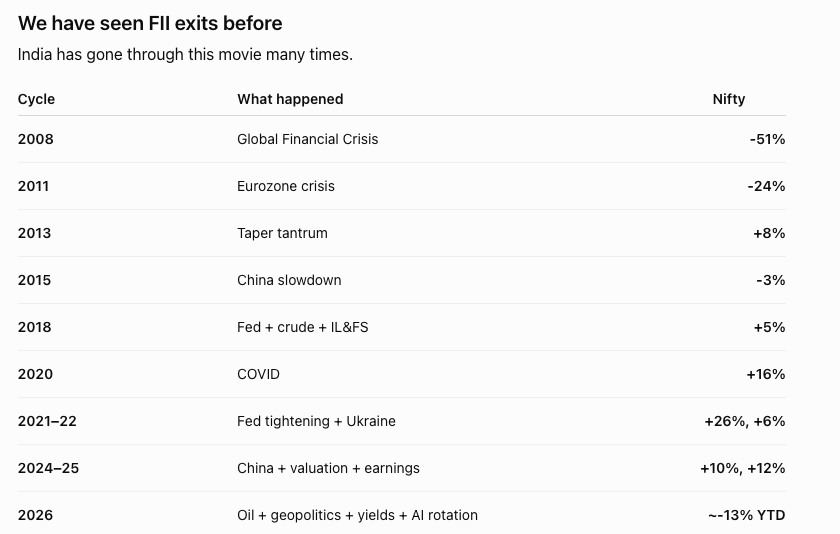
At the same time, Indian stocks have fallen for 8 straight weeks, the longest losing streak since the dot-com bubble burst.
Indian stocks have also dropped to a record low relative to global equities.
And foreign investors are selling aggressively.
FIIs sold around $12.8 billion in March, followed by roughly $7.3 billion in April, $5.8 billion in May, $5.1 billion in June, and $4.6 billion in September.
From January through September, foreign investors sold roughly $42 billion worth of Indian equities in the cash market.
And now the bond market is getting hit too.
India’s 10-year government bond yield has crossed 7.20%, a 2.5-year high.
Then comes inflation.
Retail inflation jumped from 4.45% to an 8-month high of 4.82% in August.
Wholesale inflation has climbed to 9.92%.
And oil could make all of this even worse.
India’s average crude purchase price reached $116.04/barrel in September, the highest since the US-Iran war began.
The Indian crude basket even crossed $120/barrel in late September.
India imports around 85-90% of its crude, and every sustained $10 rise in oil can add roughly $12-15 billion to its annual import bill.
In August alone, India’s crude import bill jumped 18% to $11.7 billion, even though import volumes actually fell 3%.
Oil companies are already estimated to be losing around ₹530 crore every day.
That includes roughly ₹8/litre on petrol, ₹9/litre on diesel, and ₹300 per LPG cylinder.
India has also already seen around 4 rounds of petrol and diesel price hikes since February, taking prices up by roughly 7-8%.
And getting cheaper oil is becoming harder too.
India had been buying discounted Russian crude, but the new US sanctions law gives the president authority to impose tariffs of up to 100% on major buyers of Russian oil.
Venezuelan supply is falling as well.
Shipments to India dropped from roughly 297,000 bpd to 253,000 bpd in September.
Now add food to the problem.
India’s monsoon rainfall came in 12.6% below normal, the fourth-lowest since 2001.
That matters because agriculture still contributes around 16-18% of GDP, supports roughly 42-46% of the workforce, and around 50-55% of arable land still depends heavily on monsoon rainfall.
India’s foreign minister has already warned about a possible major food crisis in the coming months because of wars, grain disruptions, fertilizer shortages, and climate pressure.
So look at what is happening at the same time:
Rupee: worst year since 2022.
Stocks: the longest losing streak since the dot-com crash.
FIIs: roughly $42 billion sold.
Indian stocks vs. global stocks: record low.
10Y yield: 2.5-year high.
Retail inflation: 8-month high.
Crude: $116.04/barrel.
Oil companies: losing ₹530 crore a day.
Cheap Russian oil: under threat.
Monsoon: fourth-worst since 2001.
Food crisis risk: rising.
One of these problems alone is manageable.
The scary part is that India is now dealing with almost all of them at once, and each one can make the next one worse.
@Geckoandfly@RajeshwariRW VPN is a barrier, you can use tiktok in India with VPN how many people use it? Your only option would be to build these platforms, either be cost effective like Zoho or have better monetisation rules so that creators get migrated to Indian platforms.
@Asan_research They have data, you can’t make algorithms without data. We need to build our platforms sideways, with better monetisation plans than these apps, and government intervention is required very much here.