Bursar pays a small company's invoices without ever handing the AI a key.
• The AI reads
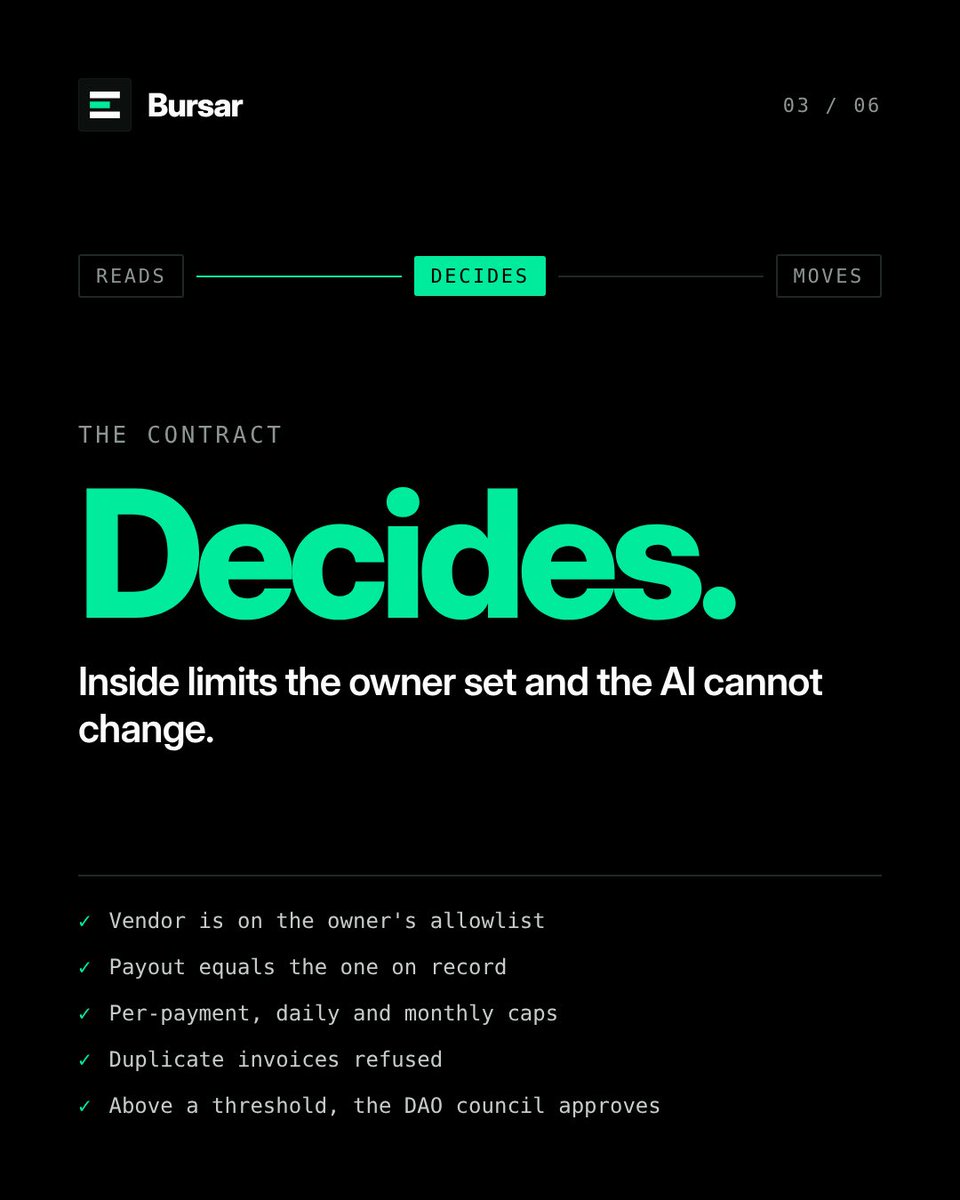
• The contract decides
• A dumb executor moves the money.
Live on @NEARProtocol testnet → https://t.co/2B2i6NmI8a
Fake "new bank details" invoices get paid because whoever pays can be fooled.
Give the job to an AI holding the keys and it gets fooled faster.
Bursar splits the job in 3, on NEAR:
1st: An AI reads the invoice inside a NEAR AI Cloud TEE and signs what it read
2nd: The company's own NEAR contract decides, within limits the AI cannot change
3rd: NEAR Intents pays vendors on other chains, on a quote the contract verifies
Done on mainnet with real USDC.
If you pay invoices:
what would you want the contract to check before it lets a payment through?
Built at NEAR HACKATHON @NEARProtocol #NEARHackathon @NearLegion@NearBuilders
Same invoice. Two outcomes.
Without Bursar, someone checks the bank details by eye.
With Bursar, the contract checks them against the record.
Only one of them gets tired on a Friday afternoon.
An invoice with new bank details tries to get paid.
Gate 1: the AI reads it inside an enclave
Gate 2: the contract checks the payout against the record.
It never reaches gate 3.
https://t.co/2B2i6NnfXI
Small companies don't get robbed by hackers.
They get robbed by an invoice that looks exactly like their supplier's, with one line changed: the bank details.
When AI agents came to finance, most of them got a wallet.
The part easiest to fool was handed the keys.
If the AI is fooled, the worst it can do is ask.
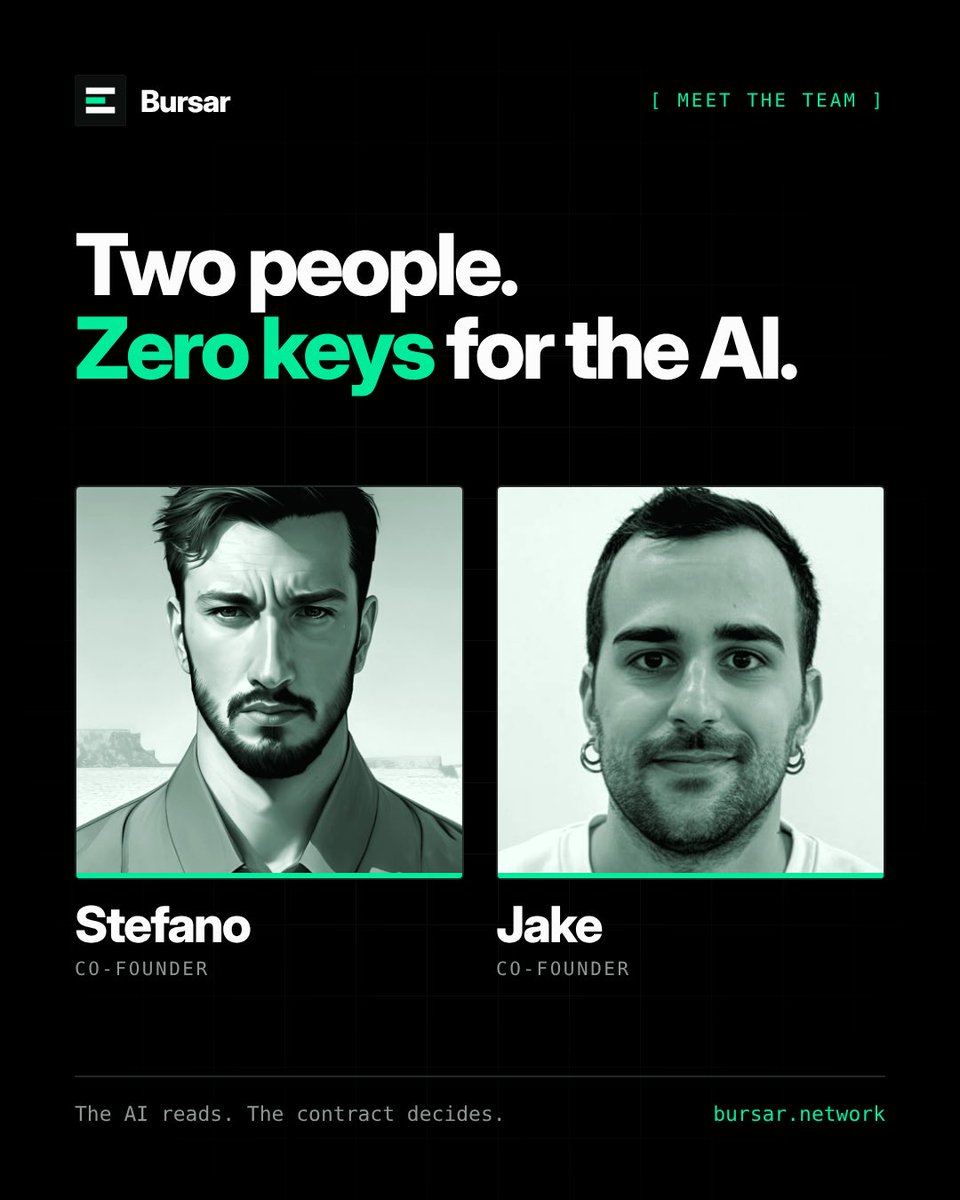
Built by Stefano & Jake.
Live on NEAR testnet: https://t.co/SX9Aw7773o
I need your opinion cause
I’ve built my first game
Underroot is a 2D platformer about Lume, a tiny flame crossing four seasons beneath the roots.
In the darkness you can find the light, but first you must walk through it.
My entry for @loadoutprotocol event
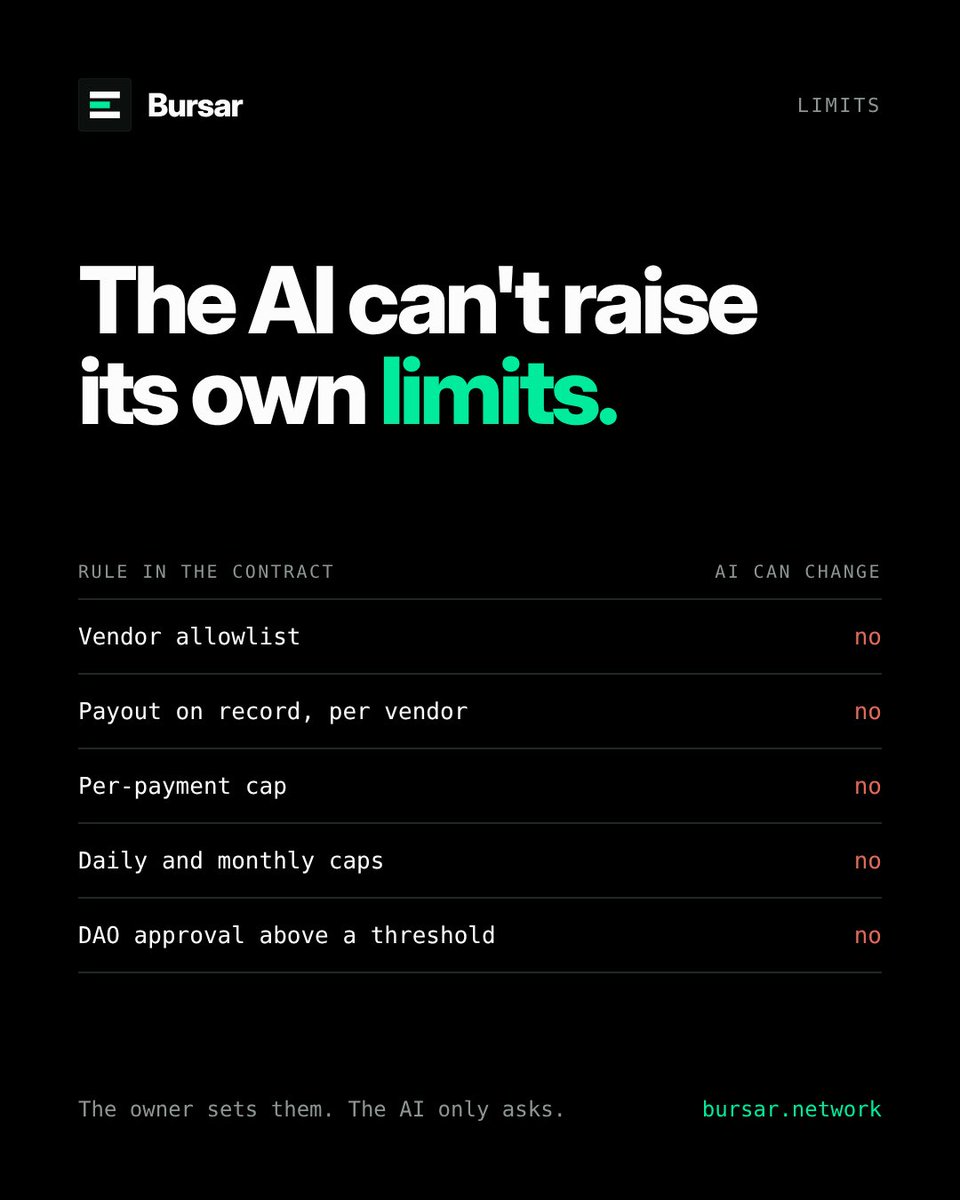
The AI can't raise its own limits.
The owner sets them in the contract:
a vendor allowlist, a payout on record per vendor, per-payment, daily and monthly caps.
Above a threshold, the payment waits for DAO approval.
The AI's key can't touch any of it.
Every Bursar payment carries a receipt
Anyone can check, without our API key.
It holds the exact request and response bytes, the enclave's signature, and the TDX attestation with the nonce the agent chose.
Change one byte and the signature fails.
Step 6 of the README walks you through it:
https://t.co/DXL8TB1RYR
Three roles, one key each.
Swipe to see why nobody in Bursar's loop can both decide and move money.
Live on @NEARProtocol testnet
https://t.co/2B2i6NmI8a
The most expensive invoice a small company pays is often a real one with fake bank details.
A supplier's email gets compromised, a "we changed banks" note arrives, and the next payment goes to the attacker.
Bursar registers each vendor's payout once, set by the owner.
If an invoice asks to be paid anywhere else, the contract refuses it.
The AI can't override that, and neither can a convincing email.
https://t.co/SX9Aw7773o
5/ If the AI is fooled the worst it can do is ask.
The contract says no.
Every decision is an on-chain event.
There is no database.
https://t.co/NfQ5Rg2RzU
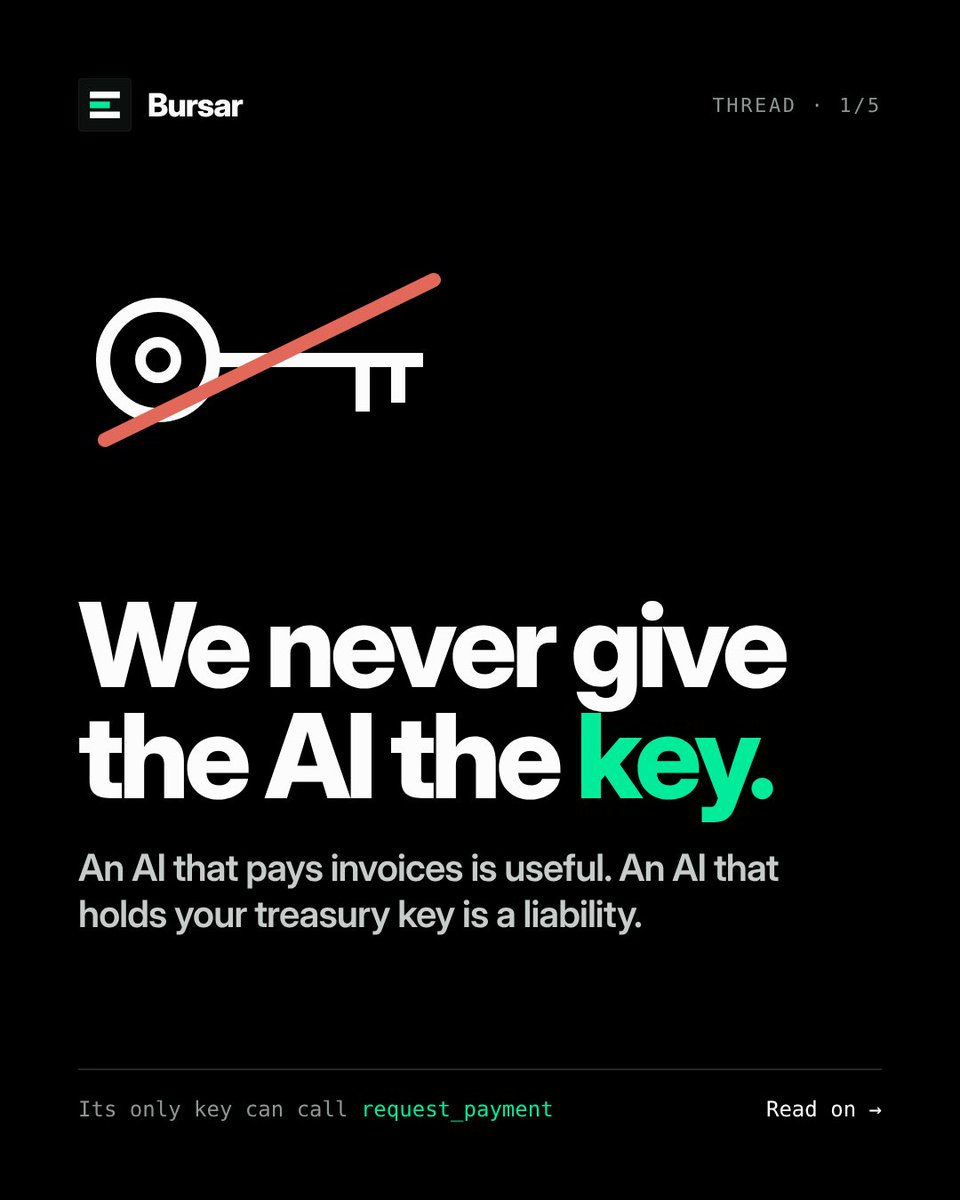
Why the AI has not the keys?
An AI that can pay invoices is useful.
An AI that holds the key to your treasury is a liability.
Here's how Bursar splits the job so nobody in the loop can both decide and move money.
A thread:
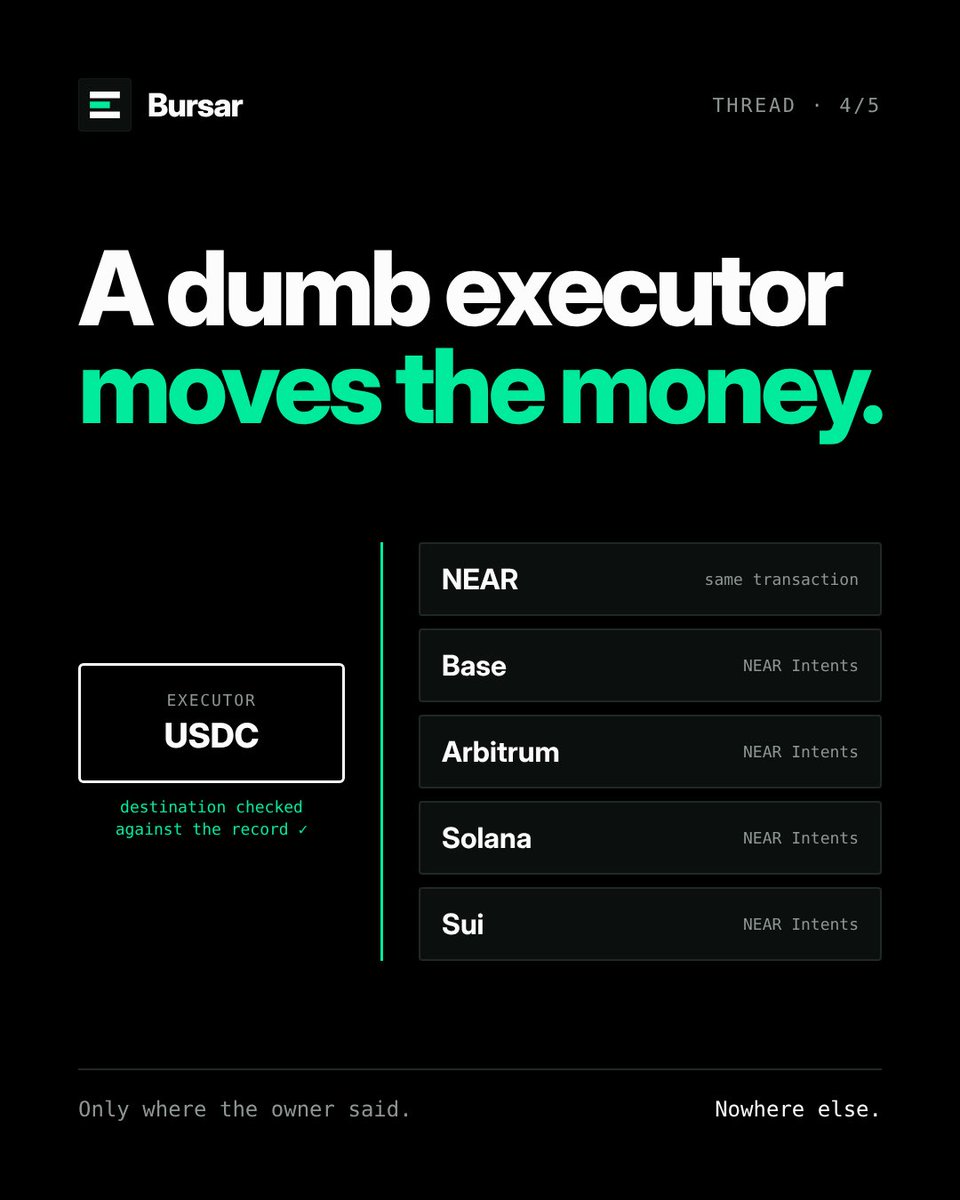
4/ A dumb executor moves the money.
Only where the owner said.
NEAR vendors are paid in the same transaction.
Base, Arbitrum, Solana and Sui go through NEAR Intents, with the destination checked against the record first.