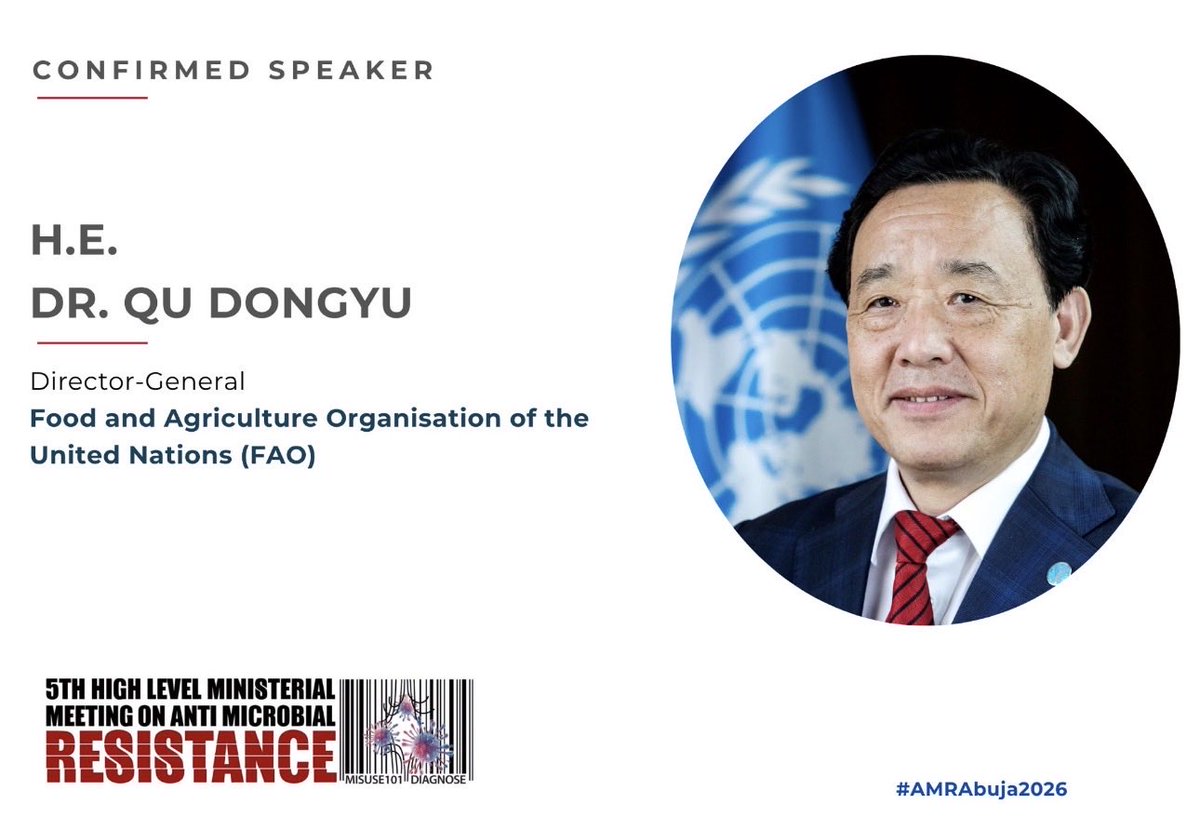
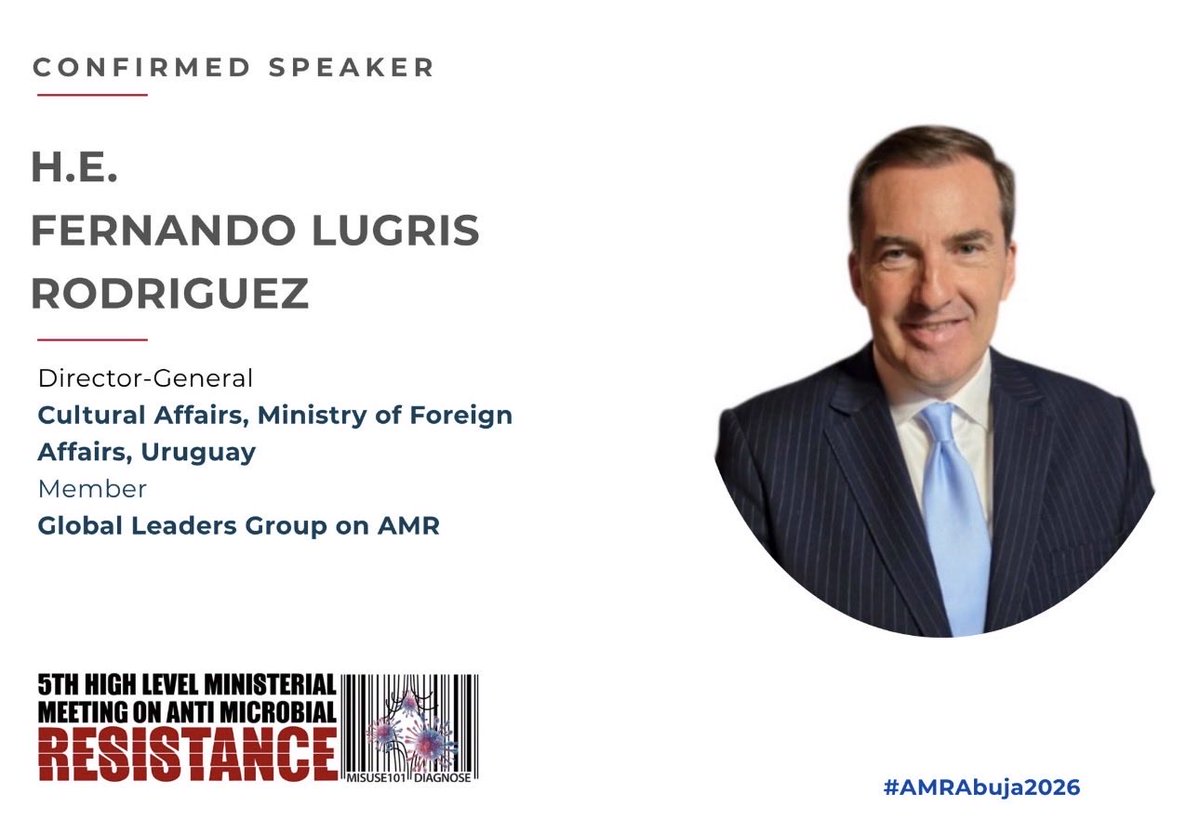
Briefing 194 Member States @FAO on Nigeria’s 5th High-Level Ministerial Ministerial on AMR. Big focus on agriculture and livestock. For the first time, Ministers of Agriculture /Livestock will be in the room alongside Health & Environment. That's the shift we need. #AbujaAMR2026
A big one from @jwgale@jessicanix_ & the team: The world’s outbreak defenses were rebuilt after the 2014 Ebola epidemic. Now a new crisis in Congo is testing what remains after deep aid cuts & health program rollbacks https://t.co/faPvBCixOp
NOW‼️ I’m now in the Global Coordination Meeting on this, we continue to hear about vaccines and treatments but yet there are no RDTs 17 years after this specie of Ebola was discovered - it is not NEW. Yet we still have no tools, because the people are poor and lives undervalued.
Resistance to antibiotics is a major threat to human health. We do we continue then to use them routinely to promote the growth of intensively farmed livestock? https://t.co/DjLLUIgAM2
Abuja is hosting the first ever High-Level Meeting on AMR in Africa, and it is also bringing together leaders in agriculture, trade, foreign affairs, as well as health, which is absolutely critical considering the challenge facing the world. @AMRAbuja2026
Productive meeting w Nigeria's Global Envoy on #AMR, Dr. Ayoade Alakija. We discussed advancing #OneHealth agenda & translating global commitments into transformative action ahead of 5th Ministerial Meeting on AMR in Abuja.
@yodifiji@FAONigeria#AMRAbuja2026@AMRAbuja2026
📢 Call to diagnostic developers! FIND & @IPPS are mapping the diagnostic landscape for the Ebola outbreak caused by Bundibugyo virus.
If you have existing or pipeline technologies for decentralized testing & outbreak response, we want to hear from you.
Submit your Expression of Interest: https://t.co/NXaqgfXDGS
#DiagnosisForAll #Ebola
Congo is seeking access to an experimental antibody treatment targeting multiple #Ebola strains as confirmed infections and deaths continue climbing. DRC confirmed 121 cases and 17 deaths; suspected cases climbed to 1,077 and suspected deaths reached 238 https://t.co/khZDUIV5Xf
I’d never heard of preeclampsia before Aleks was told she may develop it.
It’s onset, so quick yet silent, makes me grateful for the care we had in Switzerland but motivated to demand that all women (and babies) have access to quality care.
Proud of your advocacy, Aleks.❤️
At 36 weeks 🤰, a sudden spike in blood pressure sent me to the hospital with #preeclampsia within hours.
What stays with me most is how fast it happened & how many 🤰 face this without access to timely care.
Know the symptoms. Trust yourself. Take action. #WorldPreeclampsiaDay
The most important thing to know about the Ebola epidemic in DRC is this: bringing it under control will rely almost entirely on health workers winning the TRUST of local communities.
This may sound dull, even woke, when compared to talk of experimental vaccines etc. But it’s true, not to mention hugely difficult, resource intensive and dangerous.
The logic is this: you have one of the most frightening infectious diseases spreading in a huge uneducated population that has been subjected to horrific poverty and violence for many years. Yet there are no vaccines or special treatments. The only way to stop it is to break the chains of transmission and this requires the full cooperation of the population.
Winning trust won’t be easy.
More than 2m have been displaced by a conflict that has frequently been marked with mass rapes and village massacres — violence that seemingly occurs without rhyme or reason. There is no understanding of science or politics, and superstition and paranoia understandably fill the gap.
This is what hundreds of local health workers employed by the Red Cross, WHO, MSF and others are walking into.
To slow and eventually end the outbreak they must convince people with symptoms to come forward so they can be isolated away from their families and treated by people clad head to toe in PPE.
Even in death, of which there will be much, they must explain that victims must be separated from their loved ones and forego burial and grieving rites that are central to their faith and understanding.
When we think about the Ebola outbreak in DRC we should think about what we would do in such a situation. How we would win the trust of terrified families were we charged with doing so.
We should think too about the resources that are needed to pay for and support those putting their lives on the line on our behalf.
As things stand, the money needed for the emergency response is only about 40% funded and yet it must last for many months, probably years, if the epidemic is to be successfully brought under control.
The AMR High Level Ministerial Troika meets at #WHA79 in Geneva. With Minister Alexandre Padilha of Brazil 🇧🇷 and his team - we have reviewed the near final agenda and the Abuja Accord outcome document. Now for external consultations. #AMRAbuja2026#5thHLMM
Selamat datang, Pak Bonanza! 🌏We're delighted to welcome Mr Taihitu P. Bonanza to the FIND Board. His decades of global health diplomacy and leadership at Indonesia's Ministry of Health will help us build the partnerships we need to expand equitable access to diagnostics, for everyone, everywhere. https://t.co/PYshcbon39
In case you don't read to the bottom, thought Paul's last line was critical:
"Look again at that map and consider where we would be if the virus was more infectious, or had mutated to become so. It is why the World Health Organization and pandemic planning is so important."
One of the clear lessons of the hantavirus outbreak is that *chance* makes a huge difference to how a disease can spread.
The Andes strain of the virus causes 100s of human infections every year, but most burn out almost immediately.
Occasionally, there is a bigger outbreak fueled by human-to-human transmission but these are rare.
The pattern is a feature of almost all zoonotic spillover events, millions of which happen each year involving thousands of different pathogens.
Mercifully, most go nowhere. They flare then vanish.
Now enter *chance* – a series of unforeseen but often predictable environmental circumstances or events.
A wet market, a trunk road, a game of beer-pong … or in this case, a hop-on-hop-off international cruise with connecting flights.
The map below shows the 12 countries that passengers flew to after disembarking one leg of the cruise in St Helena in late April.
30 passengers disembarked there, one dead, but no one knew then about the disease to which they had been exposed.
The outbreak has been serious, with three dead and at least five suspected cases so far.
About 150 remain on the ship, while hundreds of potential secondary contacts are being traced and asked to isolate around the world.
Nevertheless, the chances are that *this* outbreak will die out too.
The virus does not appear to spread efficiently enough to sustain itself, even with the circumstances it has been handed.
But here’s the thing: it’s a numbers game.
Look again at that map and consider where we would be if the virus was more infectious, or had mutated to become so.
It is why the World Health Organization and pandemic planning is so important.
The outbreak of Hentavirus on a cruise ship is a stress test and is exposing the diagnostic gaps we @FINDdx have been warning about for years.
#Hantavirus hasn’t respected borders. Neither can our response. Diagnostics are the missing infrastructure for global health security.
Thirty-one African countries have now ratified the African Medicines Agency Treaty. In @Telegraph, I explain why the AMA is the missing link in global health security and what it will take to get the rest of the way: https://t.co/yuf9hIrbzL
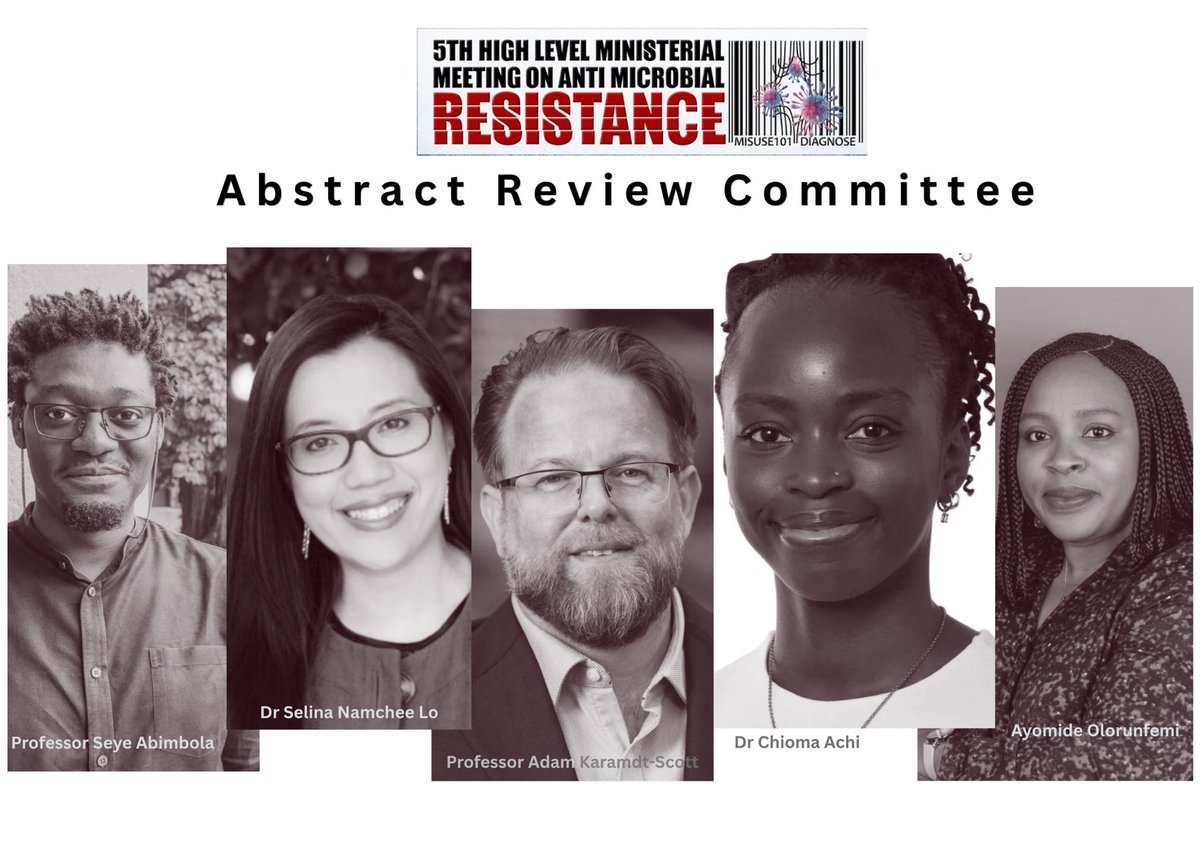
The Abstract Review Committee will carry out a double peer review of dozens of abstracts received from across the globe, spanning the Pacific to the Middle East. The 5th High-Level Ministerial Meeting will combine both scientific and political dimensions
#AMRAbuja2026#5HLMMNG
From Pontefract New College, I worked in India when they ended polio and have been part of polio eradication efforts in Nigeria, Pakistan and Afghanistan.
Pleased the Yorkshire Post featured an op-ed calling on @YvetteCooperMP to reinstate polio funding. https://t.co/KXvzRdT6Ep
“We are one step from eradicating polio. Britain must not walk away,” writes @BobBlackman, Conservative MP, in our latest op-ed
We will regret it if we let a generation of progress, and the chance to end this disease forever, slip away
Full story here🔗
https://t.co/KonWzx4ZkF