In the late 1950s, funding dried up for the building of the USS Arizona Memorial.
By 1960, less than half of the roughly $500K needed had been raised & the project that would honor the 1,177 sailors & Marines killed on board was in real danger of never being built.
Enter The King, Elvis Presley.
Fresh out of the Army & looking for a meaningful way to reconnect with the public, Elvis heard about the stalled effort.
His manager, Colonel Tom Parker, saw an opportunity, but Elvis didn’t need much convincing because the cause hit close to home for the patriotic star who had served his country.
He agreed to headline a benefit concert at Bloch Arena at Pearl Harbor.
On March 25, 1961, Elvis took the stage before a packed house of 4,000 fans. Tickets ranged from $3 to a whopping $100 for ringside seats.
There were no free tickets, not even for the performers. The show featured Elvis alongside other entertainers, & every penny went straight to the memorial fund.
The night was a smash. Gross ticket sales alone topped $52K, surpassing the original $50K goal.
With additional donations, concessions, & a personal contribution from Elvis & the Colonel, the total raised that single evening pushed over $60K. That is roughly $567K in today’s dollars.
Also important, the publicity reignited national interest. Donations began pouring in from across the country.
Thanks in large part to that one concert, the USS Arizona Memorial was completed and dedicated on Memorial Day 1962.
Elvis didn’t just sing that night. He helped turn a stalled tribute into a lasting national shrine.
All hail the King. 👑🎸🇺🇸
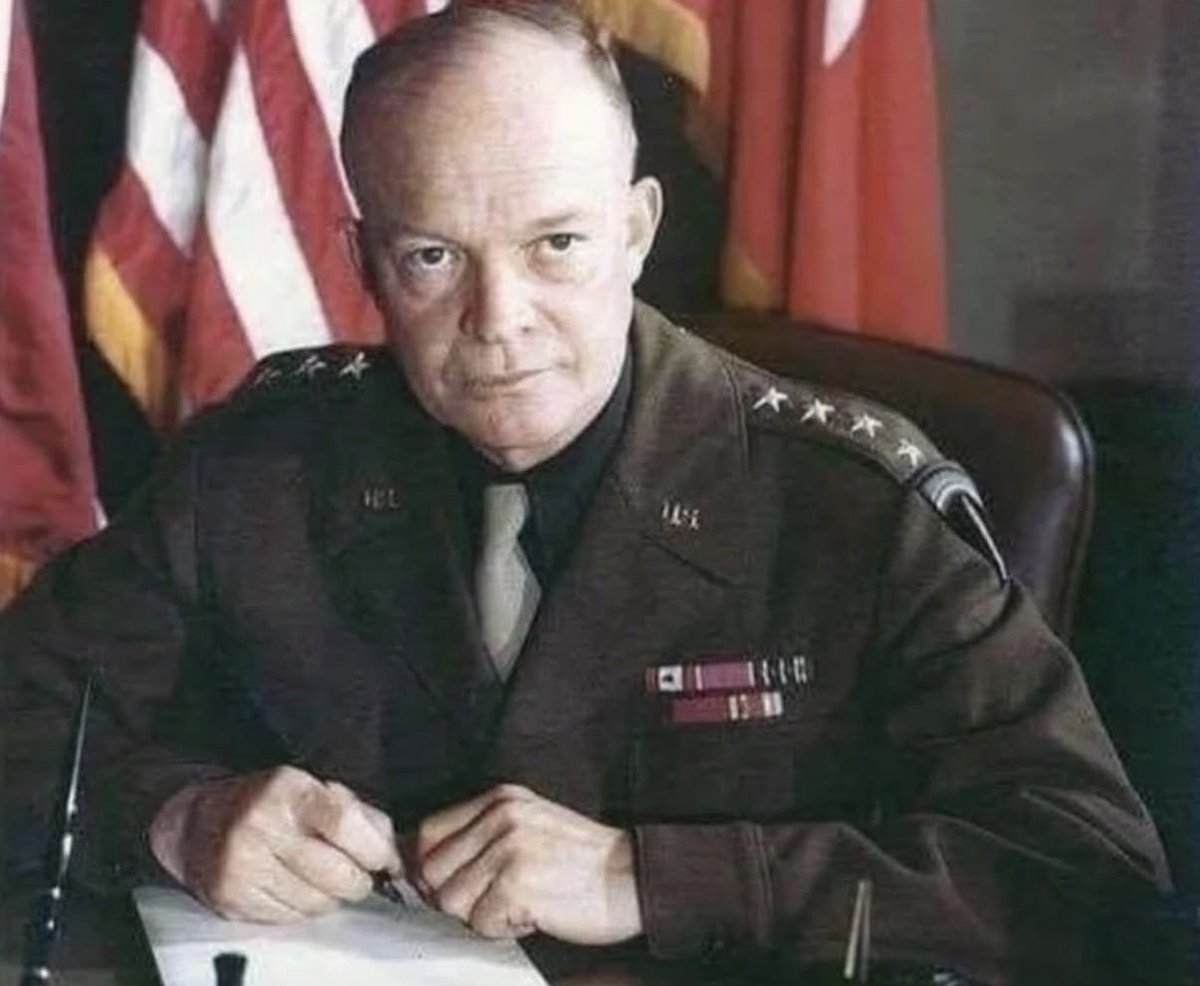
When the idea of a military parade to showcase American power was raised, President Eisenhower gave a blunt response:
“Absolutely not. We are the pre-eminent power on Earth. For us to try and imitate what the Soviets are doing in Red Square would make us look weak.”
🏆 2026 DIAA Baseball State Championship Set
#3 Caesar Rodney High School vs. #5 Caravel Academy
7:00PM at Daniel S Frawley Stadium
🎟️ Purchase tickets through GoFan:https://t.co/ejdWmtByX6
📺 Watch live on the NFHS Network: https://t.co/mxGSjbDVQj
⚠️ Fans attending are encouraged to review the Frawley Stadium bag policy and list of prohibited items before arriving. Visit the DIAA Baseball webpage for information. https://t.co/zNBX81X2UG
#DIAA #DelawareInterscholasticAthleticAssociation #EducationThroughAthletics #DIAAChampionships #HighSchoolSports #Baseball
Caesar Rodney will go for their first baseball championship since 1975 tomorrow.
0-4 in state championship games since that point, and have played in just two finals since 1984. #DelHS#NetDE
When the President of France visited the United States in April 1960, he asked the FBI to help him find a man.
The man he was looking for was an American citizen. He was sixty-four years old. He had been awarded fifteen French military decorations and — six months earlier, in a ceremony in Paris — had been made a Knight of the Légion d'honneur, the highest civilian honor France can give. The medal had been pinned to his chest by the President himself, who had publicly called him un véritable héros français. A true French hero.
The FBI located the man within a few days.
He was operating an elevator at Rockefeller Center in New York City.
The elevator operator's name was Eugene Bullard. He had been born in Columbus, Georgia, in 1895, the son of a man whose own father had been a slave.
He had run away from Columbus at the age of eleven, after watching a white mob nearly lynch his father.
He spent the next several years drifting through the American South. At sixteen, he stowed away on a German freighter at Norfolk, Virginia. He landed in Aberdeen, Scotland. From there he made his way to London, where he learned to box. By 1913, at eighteen, he was prizefighting in Paris.
When Germany invaded France in August 1914, Bullard was nineteen years old. He had no legal obligation to fight. He had no French citizenship.
He went to the recruiting office on October 19, 1914, and signed up for the French Foreign Legion.
He spent the next eighteen months as an infantryman in some of the worst fighting of the war — at the Somme, at Champagne, at Verdun. He was wounded three times. The third wound, on March 5, 1916, tore open his thigh and left him with permanent damage to his leg.
He was twenty years old. The doctors told him he would not return to the infantry.
He decided he wanted to fly.
In a Paris café in the spring of 1916, while he was recovering, Bullard mentioned to three white American friends that he was thinking of joining the French air service. A Mississippian named Jeff Dickson laughed.
Gene, Dickson said, you know damn well there aren't any Negroes in aviation.
Bullard answered: Sure do. That's why I want to get into it. There has to be a first to everything, and I'm going to be the first.
Dickson bet him two thousand dollars he would not make it.
Bullard took the bet. He earned his pilot's license on May 5, 1917. He won the bet.
He reported to the front in August 1917 and flew approximately twenty combat missions over the next three months in a SPAD VII. The fuselage was painted with a bleeding heart pierced by a knife and the French phrase Tout le Sang qui Coule est Rouge — All Blood that Flows is Red.
He carried, on every combat flight, a small capuchin monkey named Jimmy in the front of his flight jacket.
The French press began calling him L'Hirondelle Noire — the Black Swallow.
When the United States entered the war in 1917, Bullard immediately applied to transfer to the U.S. Army Air Service.
His application was rejected.
The U.S. Army Air Service had a policy, in 1917, of not accepting Black pilots. The other American pilots flying for France in his unit, all of them white, were transferred to the U.S. Air Service.
He was the only one who was not.
For the next twenty years, he was one of the most familiar faces in the Montmartre nightlife of Paris between the wars. He owned a nightclub called L'Escadrille. He spoke fluent French, English, and German. Hemingway drank there. Fitzgerald drank there. Langston Hughes drank there. Josephine Baker performed there. Louis Armstrong was a personal friend.
When Germany invaded Poland in 1939, Bullard was forty-four. His fluent German and his ownership of a nightclub frequented by German officers made him useful to the French Resistance. He became an intelligence agent — eavesdropping in his own bar on conversations between German officers who did not know he understood every word.
When France fell in June 1940, friends in the Resistance smuggled him across the Spanish border before the Gestapo could arrest him.
He came back to the United States for the first time in twenty-eight years.
He arrived in New York with thirty dollars in his pocket and a permanent limp.
He did not return to a hero's welcome. He returned to a country that had no idea who he was.
He worked at a perfume counter. He worked as a security guard. He worked at the Staten Island shipyards. By the late 1940s, he had taken the job that he would hold for most of the rest of his life.
He operated the elevator at Rockefeller Center.
He was wearing the elevator uniform on the day a producer from NBC came down from the studios upstairs to ask if he was the man Charles de Gaulle had been looking for.
A few weeks later, NBC sent a film crew to interview him in the lobby. The studios where NBC produced The Today Show were on the floors above. He had operated the elevator that took the network executives up to those studios every morning for nearly ten years. He had not been recognized as he did it.
He went back to operating the elevator the following Monday.
He died of stomach cancer on October 12, 1961, three days after his sixty-sixth birthday.
He was buried in the French War Veterans' section of Flushing Cemetery, in Queens, in the uniform of the French Foreign Legion. The casket was draped with the French flag.
In 1994 — thirty-three years after his death — the United States Air Force formally commissioned Eugene Jacques Bullard as a Second Lieutenant, posthumously.
It was the first commission the U.S. military had ever offered him.
He had been the first Black combat pilot in American history.
The French had been calling him a hero since 1917.
The Americans got around to it in 1994.
“It was one of the most monumentally unselfish things one group of people did for another.”
-#DDay veteran Andy Rooney on the young 🇺🇸 🇨🇦 🇬🇧 soldiers who stormed the beaches of Normandy 82 years ago.
Required watching for every young person today!
Where Saving Private Ryan happened today, and where 19 Bedford Boys died. It's getting dark now in Normandy. D Day, my favorite day in history, is drawing to a close. Please follow me on Substack. https://t.co/y6G2nmqJbu
82 years ago this morning, before a single American boot touched the sand at Omaha Beach, the plan was already falling apart.
The night before, Allied bombers had dropped 13,000 bombs on the German fortifications above the beach. Every single one missed. Most by miles, detonating in French farmland kilometers inland. The beach defenses were completely untouched.
Then came the tanks. 64 amphibious Sherman tanks were supposed to lead the men ashore and give them cover. Commanders launched 29 of them miles out at sea in rough conditions. 27 sank within minutes. The English Channel swallowed them whole, crews trapped inside. The infantry below would hit the beach with almost no armor support.
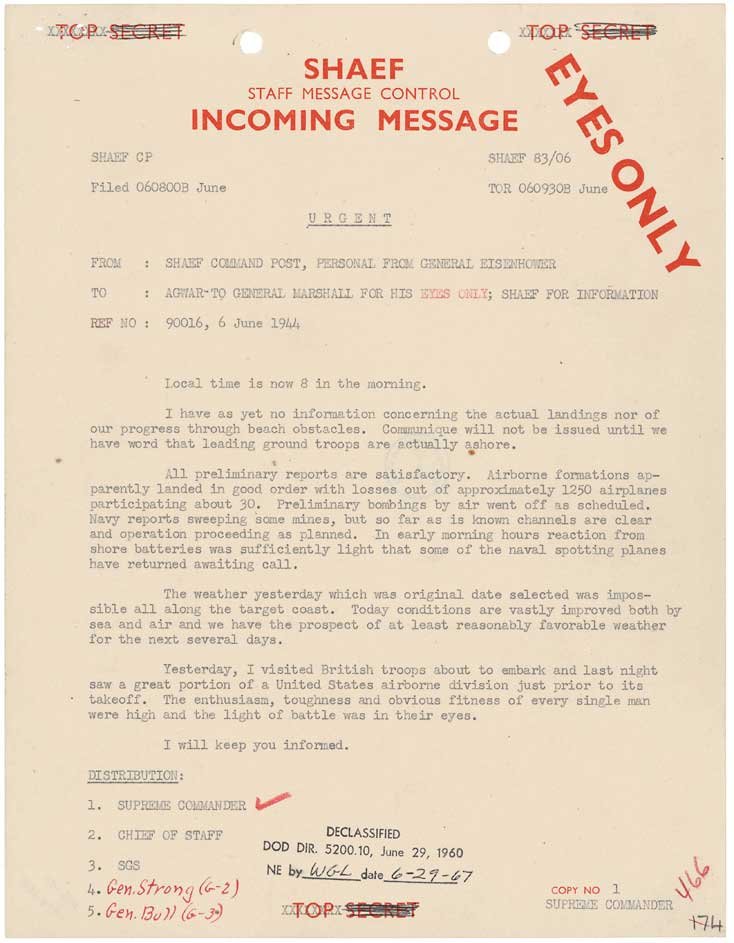
General Eisenhower had spent the night before writing two letters. One announcing the invasion. One accepting full blame if it failed: "Our landings have failed to gain a satisfactory foothold and I have withdrawn the troops. If any blame or fault attaches to the attempt it is mine alone." He kept it folded in his pocket. He did not know yet if he would need it.
At 6:30 AM, the ramps dropped.
Company A, 116th Infantry. 230 men. Dog Green sector. They had been warned their survival chances were "very slim." They could hear it before they could even see it: machine gun rounds punching clean through the steel ramp in front of them as the boats approached shore. The Germans had pre-zeroed every gun barrel on the waterline. Bullets and shrapnel hit the ocean so thick that the water itself appeared to be boiling.
Within 10 minutes, Company A had ceased to exist as a functional military unit. Within 15 minutes, 120 men were dead or wounded. By end of day, 212 of the original 230 were casualties. Survival rate: under 8%.
Captain Lawrence Madill had his left arm nearly torn off in the opening minutes. He stayed upright. He kept screaming at his men to move forward. He was shot dead sprinting across open sand to grab ammunition for the soldiers around him. His last words were for them.
Army medic Ray Lambert dragged wounded men out of the surf under constant fire. When he stopped to help a fallen soldier, a loose landing craft ramp swung and slammed into him, crushing him and breaking his back. He kept treating men anyway.
Combat medic Charles Shay was 19 years old. When he described what the water looked like after the ramps first dropped, he said only this: "The seas were red with blood."
Bedford, Virginia. Population 3,200. The town had sent 34 of its sons in the first wave. 19 never came home, including two brothers from the same family. The highest per capita D-Day loss of any community in the United States. A town that small does not recover from a morning like that.
Sergeant Hamlett, walking wounded back across the sand hours later, described what surrounded him in every direction: "Thousands of parts of bodies lined the beach. There were floating heads, arms, legs."
By nightfall, the Allies held Omaha. Just barely. At a cost of 2,400 American casualties in a single day, most of them in the first hour, many of them in the first ten minutes.
Eisenhower crumpled his failure letter and threw it in the trash. His secretary quietly retrieved it. That crumpled piece of paper still exists today, sitting in an archive.
These men were 19, 22, 26 years old. Most had never left their home state before shipping out across the Atlantic.
Today is June 6th.
Remember them.