🚨New paper🚨
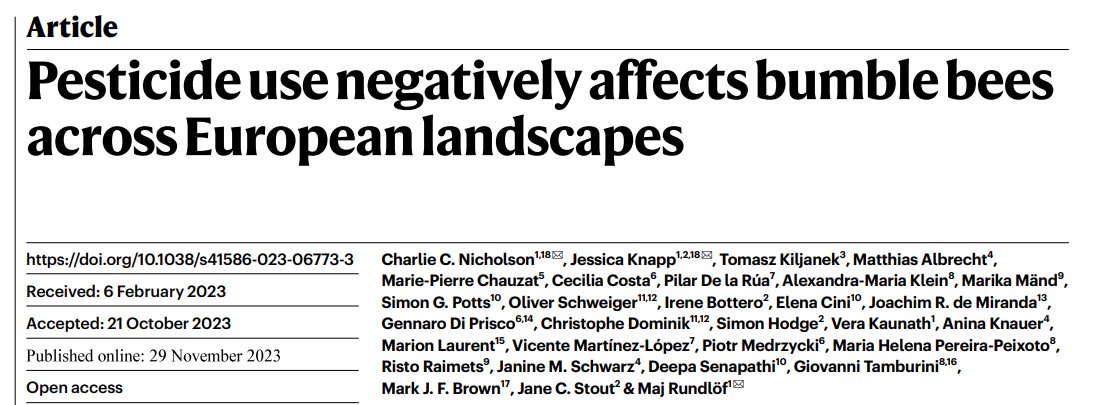
So excited our research into the impacts of landscape-scale pesticide exposure on bee health is published in @Nature. Huge thanks to my co-1st author @JessKnapp24 and @MajRundlof and all in @poshbee_eu
The paper: https://t.co/tea52zXVqf
What’s this all about? 🧵
Hey #ESA2024@ESA_org ! Anyone have any cool “synthesis” projects they’re looking for an awesome place to publish!?! Try @Ecology_Letters!
Let me know if you have something or see something. Would be delighted to consider it.
https://t.co/ocFdvvlLR6
Smallholder farmers increase reliance on honeybees (in place of diverse wild pollinators) when they shift from subsistence agriculture to cash crops = major implications for the resilience of livelihoods & nutrition. More in our @JAppliedEcology paper: https://t.co/1ISwgnJ3wR
Join us & help protect pollinators from pesticides!🌾🦋
Job Title: Pesticide Program Specialist (Integrated Pest and Pollinator Management, Eastern US)
Location: Remote
Compensation: $5,085/mo, approx. $61,027/yr
Deadline: July 22
Learn more and apply➡️https://t.co/u6ypFDX1Bz
🔥off the press! Our new paper in @RSocPublishing:
“Extreme heat exposure of host plants indirectly reduces solitary bee fecundity and survival”
We tested whether pollen from heat stressed host plants has negative effects on wild bees. 🧵1/11
https://t.co/YJg2fJkh3w
Abstract submission for the @RoyEntSoc annual conference #Ento24 is open!
Opportunities to present (in person and online) your work to the entomological community.
Abstract deadline: 17:00 (BST), Friday 14 June
https://t.co/vni3J6XTV2
Pesticides can be sustainably reduced, but this requires an approach that reconciles the seemingly conflicting goals of food production, environmental protection, biodiversity and human health. https://t.co/0Z2Z3mbQYi
Pesticide risk during commercial apple pollination is greater for honeybees than other managed & wild bees 🐝
Suggests limiting orchard sprays, while reducing on-farm exposures, won't protect far-foraging bees from off-farm exposures like thiamethoxam
🔗https://t.co/8nQuoUevBj
Attending #SETACSeville and interested in behavioural responses? Make sure to check out the behaviour session (1.04) on Tuesday, 9:30am to 12:55pm!
I'll be presenting #EthoCRED, a new framework for assessing the relevance and reliability of behavioural ecotoxicity studies🐟🐸🧪
🌱 From the upcoming #AJB#Polyploidy special issue 🌱
Rethinking pathways to the dioecy–polyploidy association: Genera with many dioecious species have fewer polyploids
By @WilOsterman, Adrian Hill, James Hagan et al.
https://t.co/N7rkuon01c #botany @wileyplantsci
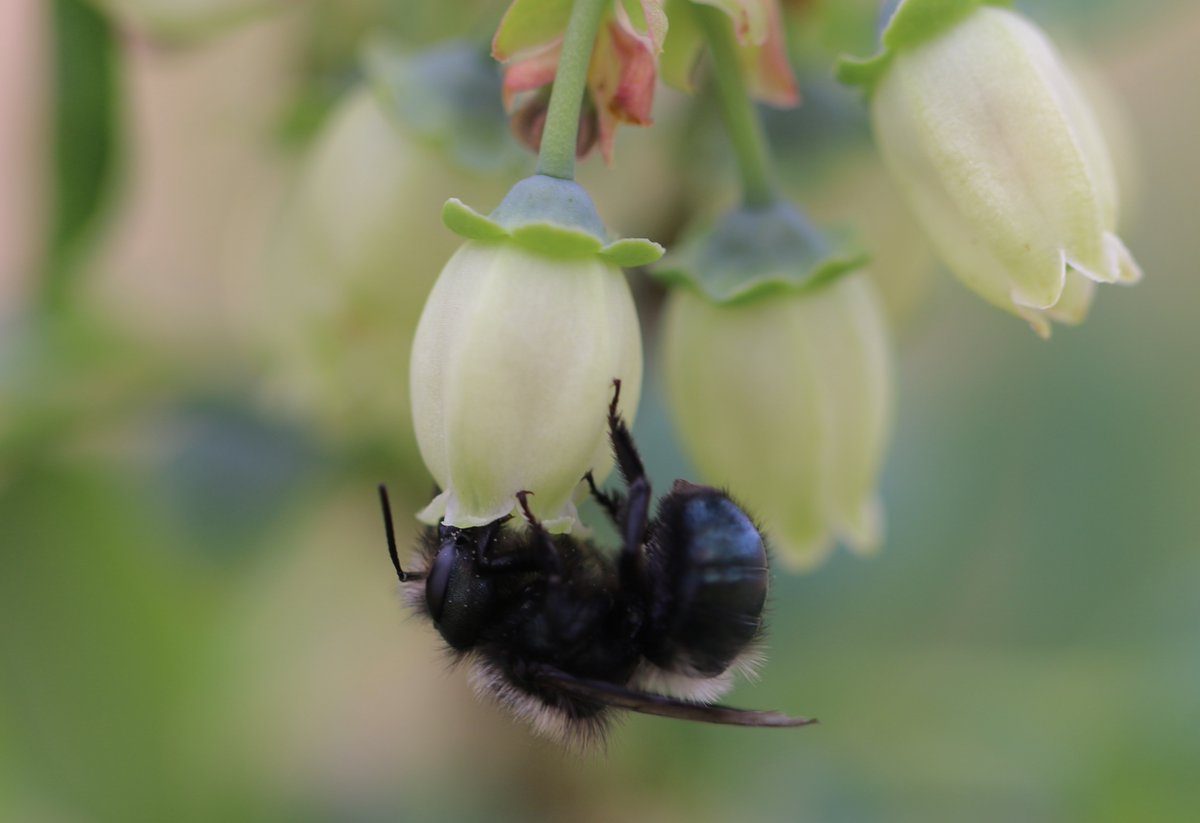
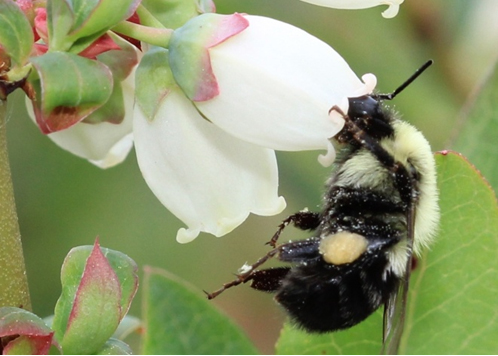
Our new paper, led by Dr. @EeraertsMaxime, examines how #pollination deficits & their relation with insect #pollinator visitation are cultivar-dependent in an entomophilous crop (#Blueberry) in Agriculture, Ecosystems & Environment: https://t.co/qQ5O6p0DFQ (🐝📸Jason Gibbs)
Our work on how bumble bee colonies are affected by landscape pesticide exposure is out in the current issue along with other interesting paper on related “Insects at risk” topics, though the bumble bee on the cover is really weird looking… https://t.co/YyeiffKWij