CAMTS Global Air Medical Workshop’s “Preparing for Accreditation” was successfully attended by over 80 participants on Saturday, June 15, 2024, prior to the Asia Pacific ITIC conference in Bangkok. #helicopter#airmedical@stefanwbecker@HelicopterAssoc
Congratulations to Rick Kenin for your new position on the HAI Board. Rick is a driving force in safe Air Medical operations and will represent our sector of the industry at HAI.. Rick Kenin is an executive in an accredited program and a member of several of our committees.
@HeliAssoc election of Board this week. Rick Kenin is a 20-year #helicopter#pilot “It is an honor to be nominated.” says Kenin. “I am willing to roll up my sleeves & find solutions. I know what it takes to keep the rotors turning. @bostonmedflight https://t.co/vejfB2jPpl
In a new article for @IAFC iChiefs, Member Homendy reminds EMS operators about their role in improving flight safety. Improving the Safety of Part 135 Flight Operations is on our #NTSBmwl: https://t.co/eTj4T7aKZU #NTSBmwl#MWLMonday
HAI CEO James Viola w/ AVweb’s Paul Bertorelli & NTSB Vice Chair Bruce Landsberg on preventing accidents in degraded visual environment (DVE). Landsberg talks value of helmet mounted simulation devices for training. #helicopter
https://t.co/H9oZA0sHhy
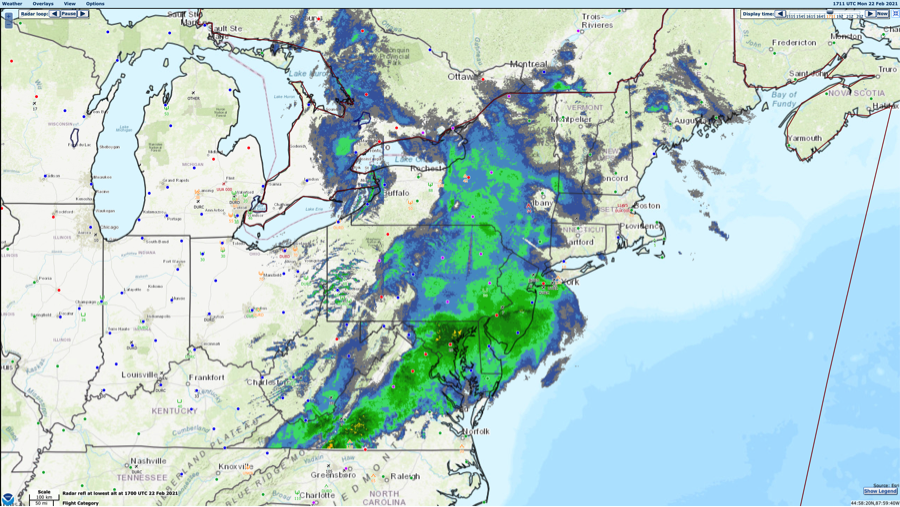
Flight into DVE requires IFR Proficiency & Aircraft IFR equipped. #Proficiency is perishable skill requiring initial & ongoing recurrent training in IFR skills & ability to recognize & recover from SD. #trainingworks#helicopter https://t.co/WHQpVYxiqu https://t.co/yapUSXwI9A
Have you packed your bag? Electronic flight bags – the realities of standards, regulations, and innovations. Find out more on this topic here https://t.co/TZOCLiyCpq
CAMTS site surveyors come from many areas of expertise in our industry. Jeff Guzzetti discusses recent accidents involving engine failure on commercial aircraft in an NBC news report.
#UA328
This is 4th fan blade out (FBO)event in past 5 years involving separation of engine cowl & inlet. Two were CFM56 engines (Southwest 737s), and 2 were P&W4000 engines) on United 777-200s). Not “uncontained” technically. Nacelle Structural integrity issue. https://t.co/qDdW8U9LTV
Spatial Disorientation can affect any pilot. Training is critical to understand how, why and when it can happen and most importantly how to avoid it. NTSB, USHST, HAI and most other industry experts recommend TRAINING #spatialdisorientation https://t.co/WHQpVYfHyW
According to NTSB, 184 deadly aircraft crashes—including 20 deadly #helicopter crashes—involved spacial disorientation (SD) in the time period between 2010 and 2019. @popsci Popular Science explains. #trainingworks https://t.co/WHQpVYfHyW
https://t.co/3NVc8rlnGO
How does a helicopter rescue mission take place in the middle of a city? We focus on the challenges aircraft crew face when surrounded by high rise buildings and how they overcome them. https://t.co/Aj4fLNQpZH
We spoke to RACQ LifeFlight Rescue Rotary Wing, @FAI_rentajet and @taloncopters about their experiences with electronic flight bag applications and the development of this new technology. https://t.co/TZOCLiyCpq
The US Helicopter Safety Team developed a new Recommended Practices document and offers training and decision-making solutions. https://t.co/vOrZ3GxfUV #aviation#avionics#helicopter#safety#pilots#flight
USHST summary: Here is a summary of the NEW document on spatial disorientation – “A Blueprint for Confronting IIMC and #Helicopter Pilot Spatial Disorientation.”
https://t.co/n9P8SZaJKI
Spatial disorientation SD frequently has fatal consequences. Training is effective with new technology being evaluated by NTSB & US Army for effective SD scenario-based training. https://t.co/XV0wKyGRR4 #helicopter#trainingworks#KobeBryant
Sumwalt: The recommendations that we reiterated, and those that we reclassified, if acted upon, would result in safety management systems and flight data monitoring programs throughout Part 135 aviation, including installation of the devices that would make FDM possible.