If you follow @JohnsHopkins, you know that university research is about more than data—it’s about people. Research saves lives by bringing new treatments, cures, and hope to families everywhere. From transformative medical breakthroughs to innovations that shape tomorrow, the impact is real. Every future discovery starts with the work happening now. Share to show your support. Share so we all understand what’s at stake. Share because research saves lives.
My heart hurts for the DMV right now. Sending prayers to all the federal workers who were laid off. Let me know if I can do anything, even if it's just a RT or share ❤️
February 1, 1960: At 4:30pm Four African-American students initiated the sit-in movement by sitting down at Woolworth's lunch counter at 132 South Elm Street in Greensboro, North Carolina.
The four freshmen from the North Carolina Agricultural and Technical State University– Joseph McNeil, Franklin McCain, Ezell Blair, Jr. (later known as Jibreel Khazan), and David Richmond – stayed until the store closed.
The men, later known as the A&T Four or the Greensboro Four, went to Woolworth's Store, bought toothpaste and other products from a desegregated counter at the store with no problems, and then were refused service from the segregated lunch counter, at the same store. Following store policy, the lunch counter staff refused to serve the black men at the "whites only" counter and store manager Clarence Harris asked them to leave.
LEGACY:
◾️Despite sometimes violent reaction to the sit-ins, these demonstrations eventually led to positive results:
✊🏿For example, the sit-ins received significant media and government attention. When the Woolworth sit-in began, the Greensboro newspaper published daily articles on the growth and impact of the demonstration. The sit-ins made headlines in other cities as well, as the demonstrations spread throughout the Southern states. A Charlotte newspaper published an article on February 9, 1960, describing the state-wide sit-ins and the resulting closures of dozens of lunch counters.
✊🏿On March 16, 1960, President Eisenhower expressed his concern for those who were fighting for their human and civil rights, saying that he was:
"Deeply sympathetic with the efforts of any group to enjoy the rights of equality that they are guaranteed by the Constitution."
✊🏿In many towns, the sit-ins were successful in achieving the desegregation of lunch counters and other public places. Nashville's students attained desegregation of the downtown department store lunch counters in May, 1960.
✊🏿The media picked up this issue and covered it nationwide, beginning with lunch counters and spreading to other forms of public accommodation, including transport facilities, art galleries, beaches, parks, swimming pools, libraries, and even museums around the South.
✊🏿The Civil Rights Act of 1964 mandated desegregation in public accommodations.
✊🏿In 1993, a portion of the lunch counter was acquired by the Smithsonian Institution.
✊🏿The International Civil Rights Center & Museum in Greensboro, North Carolina, contains four chairs from the Woolworth counter along with photos of the original four protesters, a timeline of the events, and headlines from the media.
✊🏿The street south of the site was renamed February One Place, in commemoration of the date of the first Greensboro sit-in.
✊🏿February One (also referred to as the A&T Four Monument) is the name of the 2002 monument dedicated to Ezell Blair, Jr.,Franklin McCain, Joseph McNeil and David Richmond who were collectively known as the Greensboro Four.
On this day in 1960, four black college students staged a sit-in at a whites-only lunch counter at Woolworth's in Greensboro, NC.
They sparked a national movement across the country. Instructions were simple: sit quietly and wait to be served. #BlackHistoryMonth
There are so many thoughts, but for now, please just take care of yourselves and lean on each other. I will be doing the same and remembering that God will cover us #Jeremiah29:11
There are so many thoughts, but for now, please just take care of yourselves and lean on each other. I will be doing the same and remembering that God will cover us #Jeremiah29:11
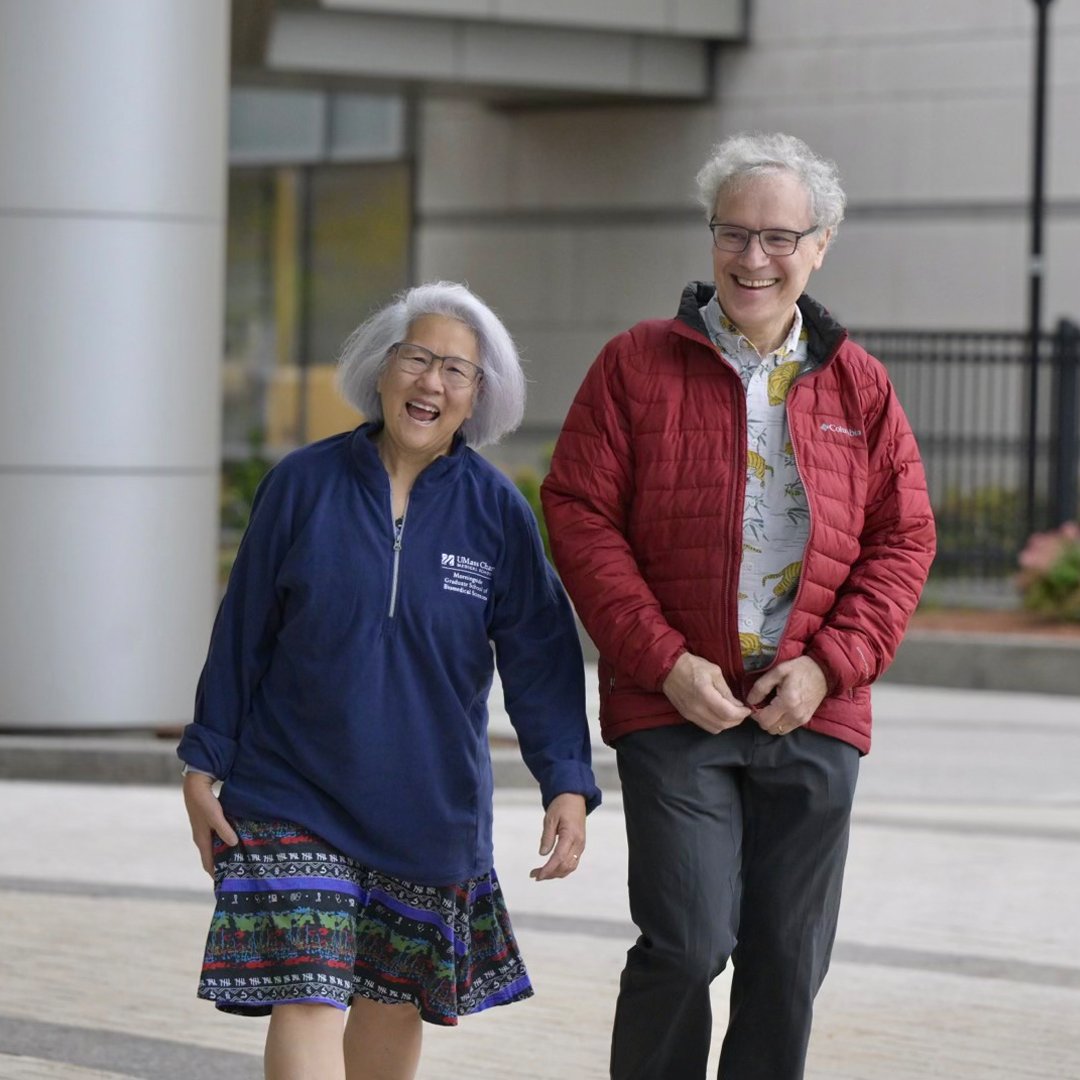
UMass Chan Medical School researcher Victor R. Ambros, PhD, arrives on the @UMassChan campus with his wife, Rosalind "Candy" Lee, after learning he is sharing the 2024 @NobelPrize in Physiology or Medicine. WATCH news conference at 10 a.m. EST: https://t.co/KC66QUHQrW #NobelPrize
Does the brain change during pregnancy? You bet it does. How about doing 26 MRI scans on a single person pre-conception to 2 years post-partum. WOW! Laura Pritschet and colleagues nailed it with their new paper in @NatureNeuro.
Key Points:
- The authors point out that pregnancy is a period of profound hormonal and physiological changes.
- The authors did something incredible by mapping neuroanatomical changes in an individual from preconception through two years postpartum.
- Boom! There were pronounced decreases in gray matter volume and cortical thickness.
- There were increases in white matter microstructural integrity, ventricle volume and cerebrospinal fluid.
- There were few regions untouched by the 'transition to motherhood.'
My take: This study shows us how a single brain in a single person can be a powerful resource when scanned serially over time. This method is hard to pull off, however what it has the potential to teach us about neuroscience is mind-blowing. Though this paper is only a single subject, the data provides a comprehensive map of the human brain across gestation. It will be interesting to add to the dataset, so we can understand changes across multiple persons and multiple conditions. The convergence of evidence is revealing that pregnancy as associated with dramatic neuroplasticity. How about a shout out to this 38-year-old woman who underwent 26 MRI scans along with blood draws from 3 weeks preconception through 2 years postpartum!
https://t.co/LEnPHzKCcl #pregnancy #brain @ndosenbach@andreashorn_@EMiddlebrooksMD
Hire my good friend @coryjwhite !! He is a top-tier scientist, mentor, and person! Any department would be grateful to have him as a tenure-track faculty member!!
This past weekend I recruited for Hopkins Krieger School of Arts & Sciences at the SAEOPP McNair Conference in ATL! Definitely a Conference like no other. So honored to represent Hopkins, create opportunities and access, and inspire the next generation of scholars! #HigherEd