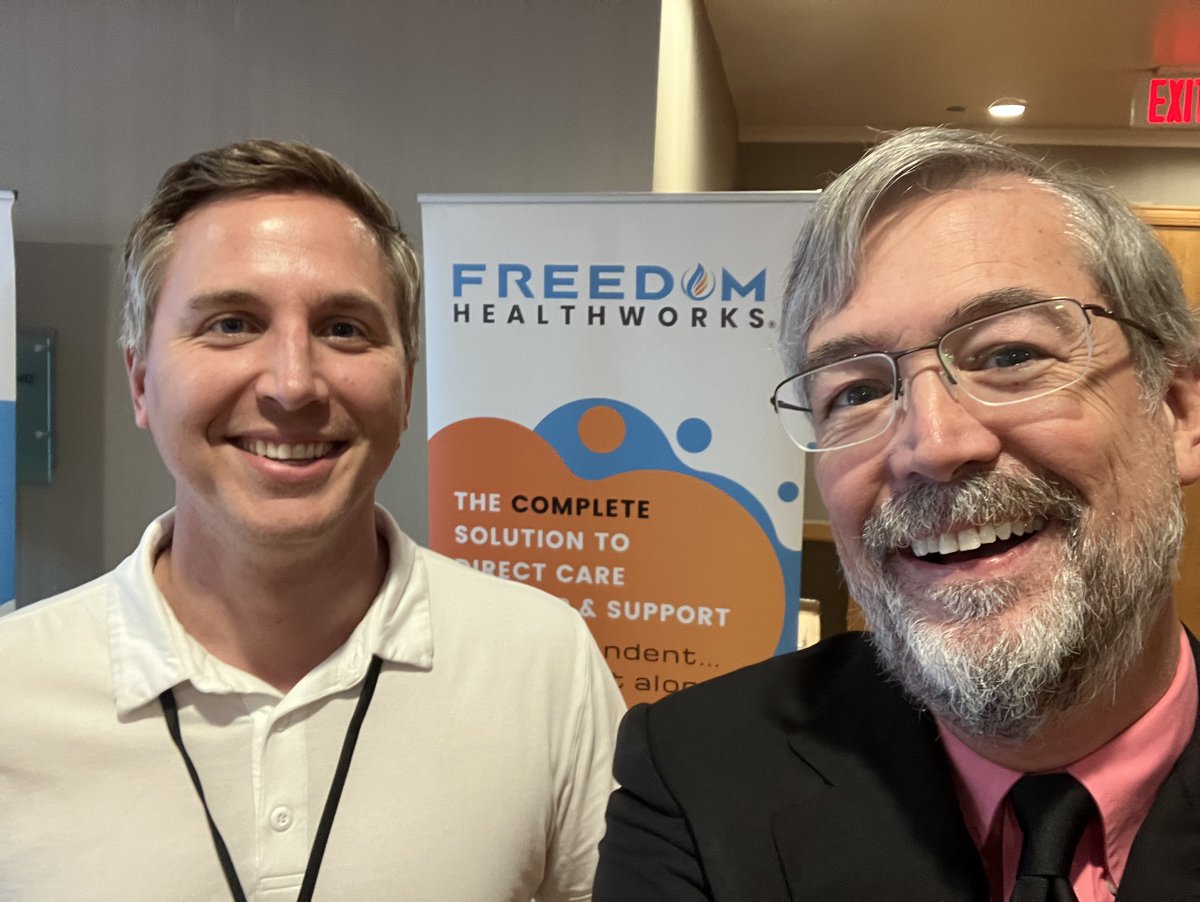
Take the money from insurers and give it back to patients to encourage solutions like Direct Primary Care, urges @SecKennedy at House Ways and Means committee hearing today.
If Senate Democrats oppose a simple bill to require proof of citizenship to vote, they should have to go on record and explain why
It’s time to put the SAVE Act on the Senate floor
If Dems want to filibuster, we should make them speak
We should then “call the question” and pass it with a simple majority the moment they stop speaking
No more Zombie Filibuster
This sort of “gotcha” is so exhausting.
Of course most Medicaid patients can’t afford a $400 intervention. They also typically can’t afford the $300/mo it takes to feed a family.
Which is why we have cash equivalent subsidies.
We give poor people a direct subsidy to fund the purchase of the food they want.
Every time I advocate for more free markets in healthcare, I qualify it by saying we should pair them with cash-equivalent subsidies for the poor.
It works so well for food that we have a caloric surplus amongst poor people in the US.
The average Medicaid Expansion beneficiary, a working-age adult without disability, costs about $7k a year under Medicaid. If we took that money and transformed their benefit to a catastrophic backstop and put the rest into an HSA, they would be able to afford that $400 procedure.
Not only that, they’d be able to shop around the same as any other individual could.
This is why food stamps work so well.
We need to be giving funds directly to patients rather than institutions. Let them participate in the market so we can restore price signals and actually get them more access to care.
Of course, most critics won’t make it this far. They’ll just assume I forgot that poor people have no money.
Health systems don’t compete, they consolidate.
Buy out physicians, control referrals, dictate prices.
Independent physicians are the last free market in healthcare.
Medicaid: so cost effective that the clinical outcomes are the same as being uninsured. https://t.co/gbuHuQFB0B
Medicaid: so cost effective that fewer than 10% of primary care doctors will give you an appointment. https://t.co/tpaGMpfjzd
Medicaid: so cost effective that mental health care is essentially unavailable. https://t.co/IuQYZMYs0G
Medicaid: so cost effective that patients have to use the ER because they can't get primary care appointments. https://t.co/8IollC7fPa
Can we ever trust our healthcare system again?
Big question. In this episode, we dig into WHY people have lost trust in American healthcare and what we can do to fix it.
🎧 Listen here: https://t.co/old2qdbKwy
#HealthcareReform#MedicalTransparency#PatientTrust
The myth that "universal healthcare works in every Western country" is just that—a myth.
Every country with socialized medicine has created a two-tiered system where those who can afford it opt out of public care due to inefficiency, long wait times, or rationing.
🔹 Denmark: ~40% buy private insurance despite high taxes
🔹 UK & Sweden: 10-20% pay for private care
🔹 Canada: Bans private care—so the wealthy come to the U.S.
This is the case in every single country.
This isn’t a flaw—it’s inevitable. Healthcare is an elastic good: when people are dissatisfied with a public system, those who can will pay more for better, faster care. But since resources aren’t infinite and government bureaucracy adds inefficiency, many are left with a public system where care is delayed or rationed—while those with money get seen right away.
Short wait times for those who can pay; long lines for everyone else.
So why would the U.S. try to copy these broken models? Instead, we should aim for more private care, a Swiss or Singaporean model: most citizens covered by private insurance (with subsidies for those in need), while the government system serves as a true safety net for the most vulnerable.
The U.S. already leads the world in outcomes when people interact with our healthcare system—whether for heart attacks, strokes, cancer, or trauma.
Let’s build on that with more private sector innovation, not destroy it with more government control.