Take a look at @CarnegieTechProgram's February newsletter, Global Tech, Debugged. This month's edition discusses worldwide cable network, #data centers in the Global South, and #digital currencies. Check it out here and subscribe! https://t.co/6yp185Gdgy
New piece from me in the wake of new White House EO on AI. It looks at a seeming paradox:
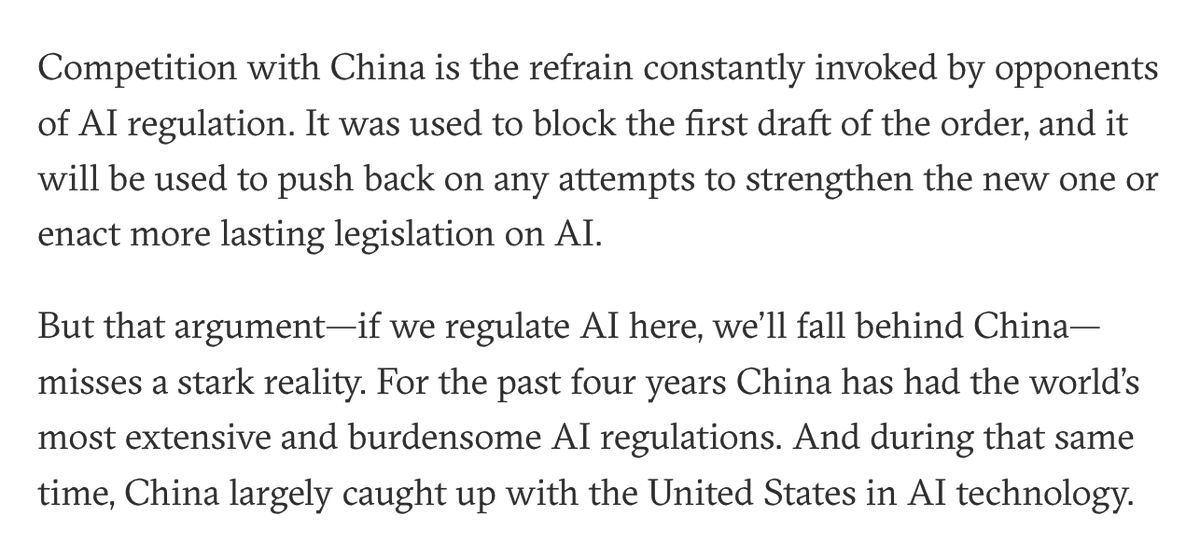
- For the past 4 years, 🇨🇳 has had the world's most extensive and burdensome AI regulations.
- During that same period, Chinese AI companies largely caught up w/ their 🇺🇸 peers.
Link below
Congress is trying to close a longstanding loophole that allows Chinese customers to remotely access restricted U.S. chips. @noahhtan discusses the logic behind these "cloud controls" and why they're more complicated than they seem. https://t.co/6giOcDVb4B
New piece in @lawfare with @JakeASteckler, on how Ukraine has turned a weak hand into a degree of leverage in the AI race. Other middle powers, dependent on the US and China for access to critical AI capabilities, should take note.
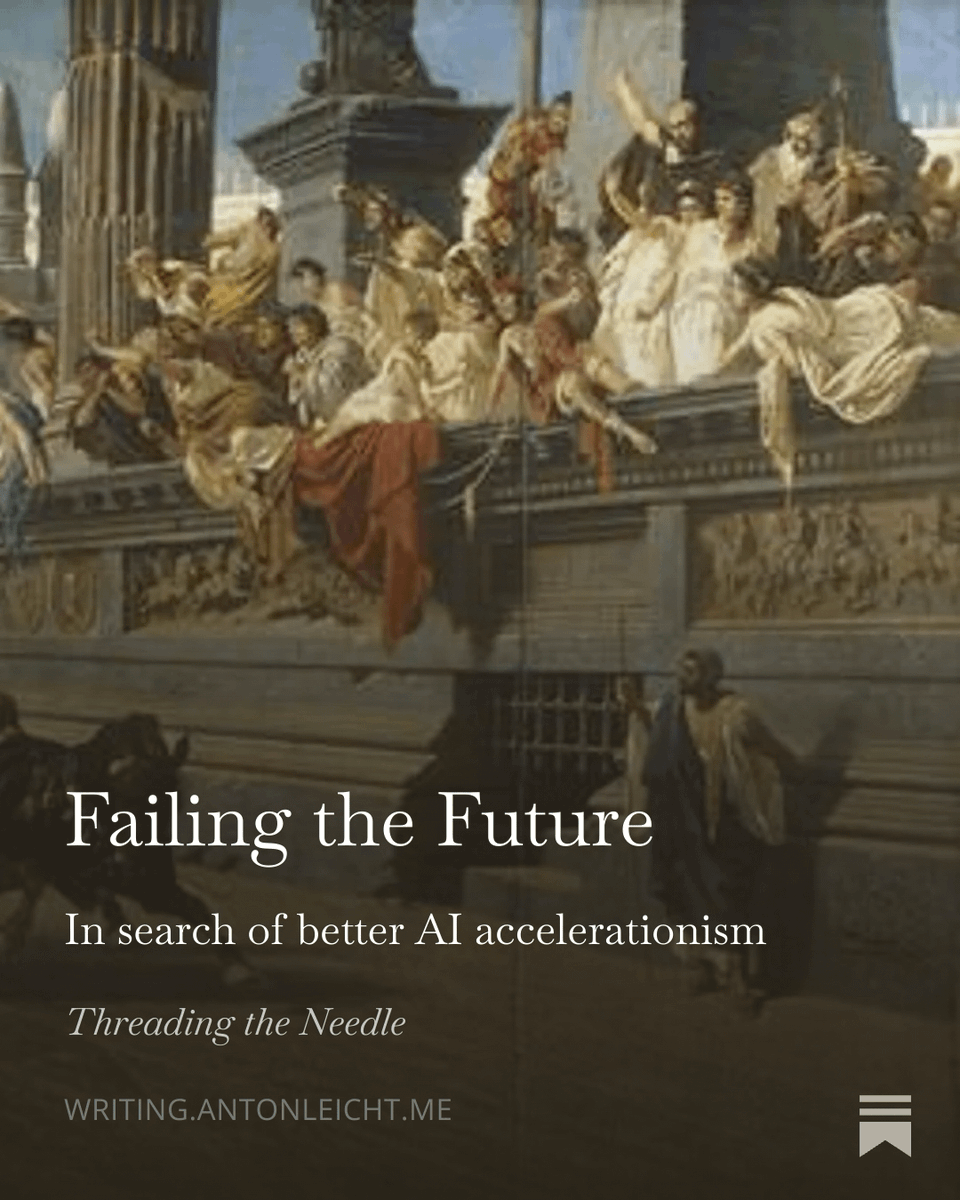
Accelerationist AI policy is losing ground, and the current strategy does not give moderates a pro-AI case for 2028. Without it, they'll get pulled apart by anti-AI sentiment.
Today, I argue accelerationism needs to change, or its defeat will make AI policy worse for everyone.
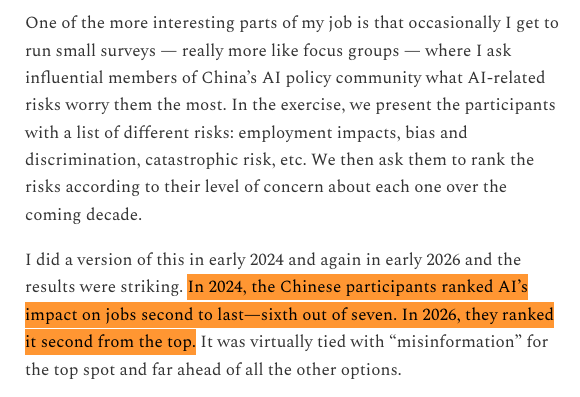
I wrote about the biggest change in 🇨🇳 AI policy over the past year: growing worry about AI's impact on jobs.
Covers:
- the surprising spark that ignited the shift
- different ministries competing to lead on AI
- China's ~5 part plan for dealing w/ labor impacts
Link below!
📢Announcing a major update of the Africa Technology Policy Tracker: AfTech 2.0!📢
AfTech—Africa’s premier technology policy repository—now encompasses over 1000 digital economy laws, policies, & regulations from 54 African countries & @_AfricanUnion.
https://t.co/VIhVw3YvZ5
As the two dominant powers in transformative AI, Washington and Beijing will determine whether it creates widely shared benefits or generates dangerous new risks. An AI model from either country could potentially be used to engineer a pathogen, launch cyberattacks, or create and disseminate realistic deepfakes — from anywhere in the world.
In @ForeignAffairs, @cqknight_ and I argue that a prudent U.S. risk mitigation strategy does not mean slowing down innovation. Instead, it means working with Beijing to come to an understanding of safety research priorities, to coordinate testing for vulnerabilities and implementing safeguards, and to jointly establish best practices to contain truly global risks.
Working together is necessary, and with the right approach, it is feasible. By focusing on how to look for risks rather than the specifics of what they find, Washington and Beijing can compete fiercely on AI while still mitigating the most extreme dangers it presents to the world.
In his latest piece for @lawfare, @noahhtan explores what the Nexperia crisis reveals about the need for allied coordination on export controls.
Check it out here 👇
https://t.co/gKbhUgsEQY
We recently co-organized a panel discussion on AI for Sustainable Development with @Cc_HUB and @UNDP.
This discussion highlighted 3 crucial insights from AI applications already in use to accelerate development.
Check them out here:
https://t.co/oneiDtEDNn
While Silicon Valley races toward AGI, a parallel contest is unfolding: the race to deploy AI systems across the globe and thereby secure market share, technological influence, and political leverage.
New from @SamWinterLevy and Marianne Lu 👇
https://t.co/n3qyUpd3Yb
@Scott_R_Singer, @kelmgren, and @OliverEGuest's latest paper provides the first detailed analysis of CnAISDA, China's self-described AI Safety Institute counterpart.
Learn about what CnAISDA signals about the direction of Chinese AI policy more broadly 👇https://t.co/1Tl1U4lFpG
@Scott_R_Singer, @kelmgren, and @Olivereguest's latest paper provides the first detailed analysis of CnAISA, China's self-described AI Safety Institute counterpart.
Learn about what CnAISDA signals about the direction of Chinese AI policy more broadly 👇 https://t.co/1Tl1U4l7A8
The West has a closing window to win on AI. In our @JoinFAI article, @saroshnagar, @scott_r_singer and I argue that our leadership in AI requires "full-stack diffusion" to promote our entire AI stack globally. 1/6
What would it take to measure changes caused by GenAI? Carnegie scholars identified four key questions to support such research -
https://t.co/AjSNWA895X
In @Scott_R_Singer's latest article for @just_security he argues that relationship between the U.S. and China remains the greatest obstacle and the greatest opportunity for Trump to shape AI’s future.
Check it out below👇
https://t.co/CMGs9ApdDC
Africa's role in shaping AI governance must be grounded in localized priorities across Africa.
@aubra_anthony, @jane_munga, & @SharmistaAppaya explore Africa's key role in shaping the future of AI and more in their latest blog post for @WorldBank
https://t.co/ue8IQzjSPu
The myriad of initiatives attempting to keep pace with AI’s development may fail to coordinate and reach the scale required to tackle AI.
In the @OECD AI blog @PougetHadrien explores how the global community can come together to understand AI’s risks.
https://t.co/Jq30kO34BQ
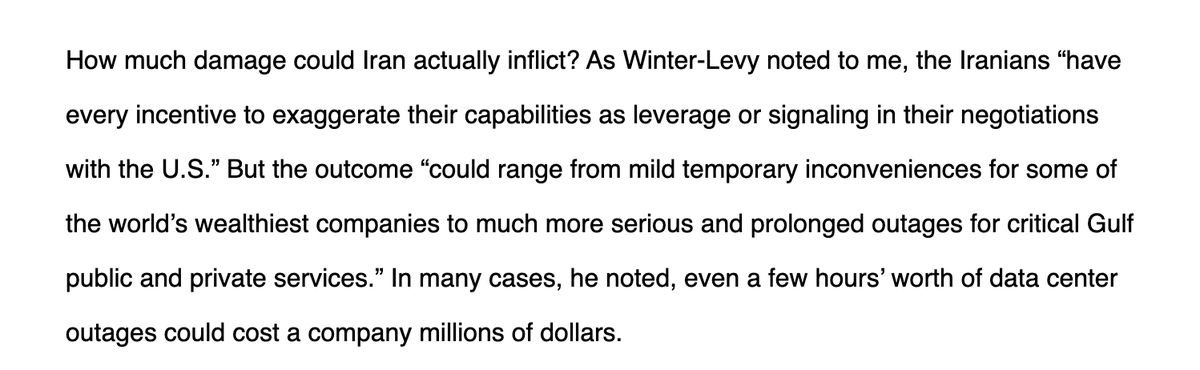
U.S. AI companies and the Gulf states are forming increasingly close relationships—raising difficult questions for U.S. policymakers.
In @ForeignAffairs, @SamWinterLevy explores how the U.S. and its tech companies should cooperate with the Gulf on AI.
https://t.co/FVVRcabmHX