Happy to see our study using dry immersion to investigate the impact of microgravity on circulating T cells published @ScienceAdvances! Very thankful to @ClaudiaKutter, Sergey Ponomarev & Lisa Westerberg for this opportunity. Special thanks to all volunteers & everyone involved.
Using dry immersion experiments to simulate the effects of microgravity, scientists have captured how living in low gravity conditions impacts the body’s immune system. https://t.co/riK9goNzqu
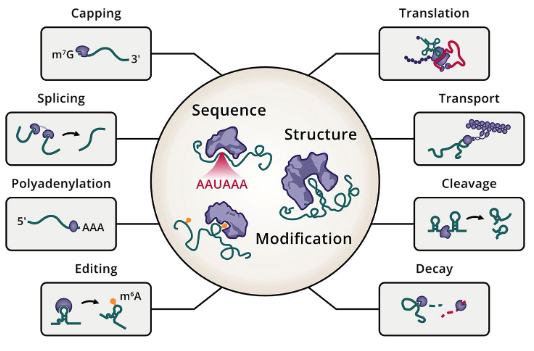
Pleased to see our review "The regulatory landscape of interacting RNA and protein pools in cellular homeostasis and cancer" published https://t.co/weUiCRdsY9
🚨New paper alert!🚨
We all know that microscope lasers cause undesired reactions in our samples, such as photobleaching. Here, we investigated photoblueing, a light-induced reaction that changes the emission colour of a dye.
https://t.co/f4P2lpdxde
Organic dyes can photoconvert, having unexpected effects on quantitative microscopy. Check out this lovely paper from the Carravilla and Eggeling labs on how photoblueing impacts confocal, STED, and FLIM experiments, and how exchangeable probes can help! https://t.co/GD3qXBSzLC
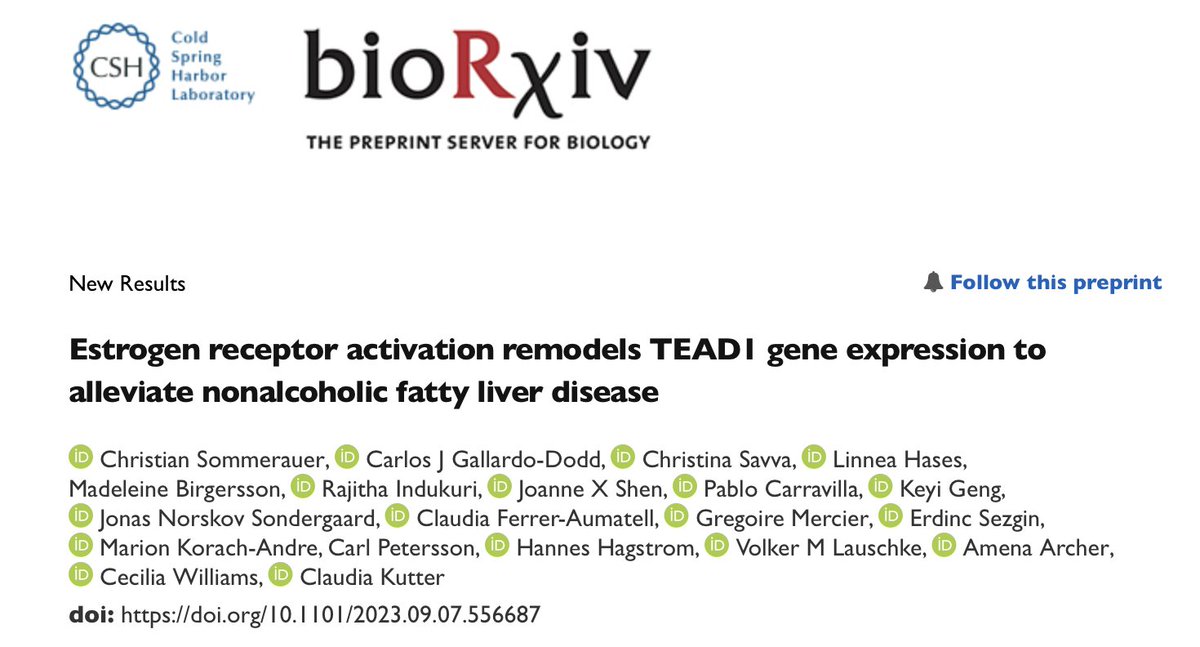
Very pleased to see our study investigating the protective role of ER signaling in MASLD finally published. It has been a great journey working together on this project!
Incredibly happy to see one of my main PhD projects published in Molecular Systems Biology, and grateful to be featured in the Karolinska Institutet news letter!
https://t.co/RQRrPUvaIo
Two of our recently developed tools to simplify bioinformatics are now published
ffq for metadata retrieval from sequence databases (@agalvezmerchan, @lioscro, @sinabooeshaghi): https://t.co/X40xnENtiM
gget for querying genomic databases (@NeuroLuebbert) https://t.co/ZtAXeiz4pW
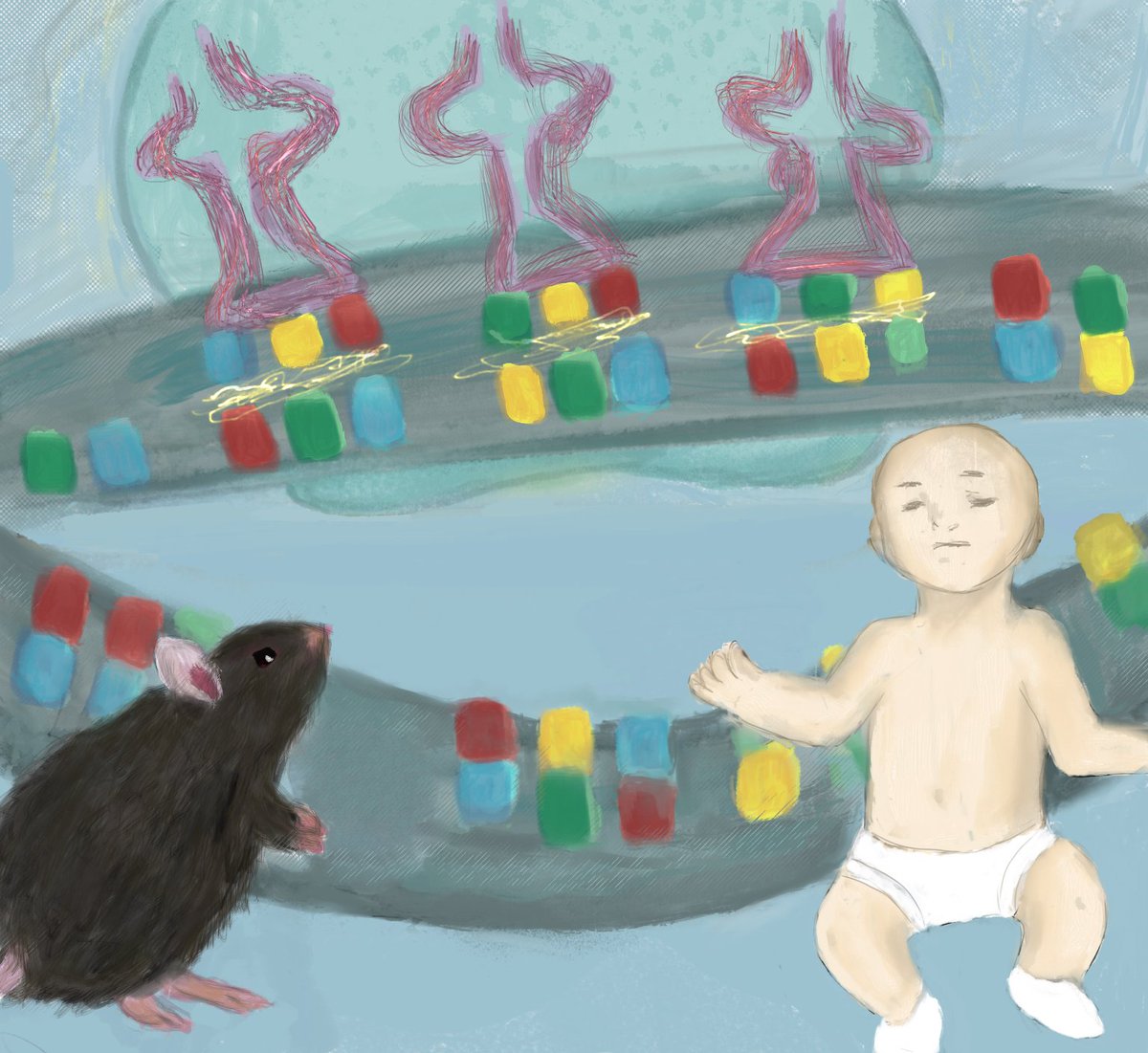
Our work on the interdependencies of codon and anticodon pools in mammalian cell types finally out @genomeresearch and highlighted by @scilifelab news. Pleased to work with @FulbrightPrgrm fellow William Gao and @ClaudiaKutter (artwork by Sally Gao).
https://t.co/YU704qqUa8
@vishalsp10@ClaudiaKutter@FulbrightPrgrm@klmr @MTarbier @keyi_G Thanks for your interest in our work. The mouse scATAC-seq data does not include pancreas so we do not know about the anticodon usage there. Pancreatic anticodon usage is similar to other cell types in the fetal human dataset (we tested acinar, islet, stromal and ductal cells).
Venit, vidit, vicit. At the scientific speed of light @FulbrightPrgrm fellow William Gao and @cgallardododd discovered cell type-specific codon-anticodon dependencies! Very pleased to see our work published @genomeresearch https://t.co/1HopGzCm3M