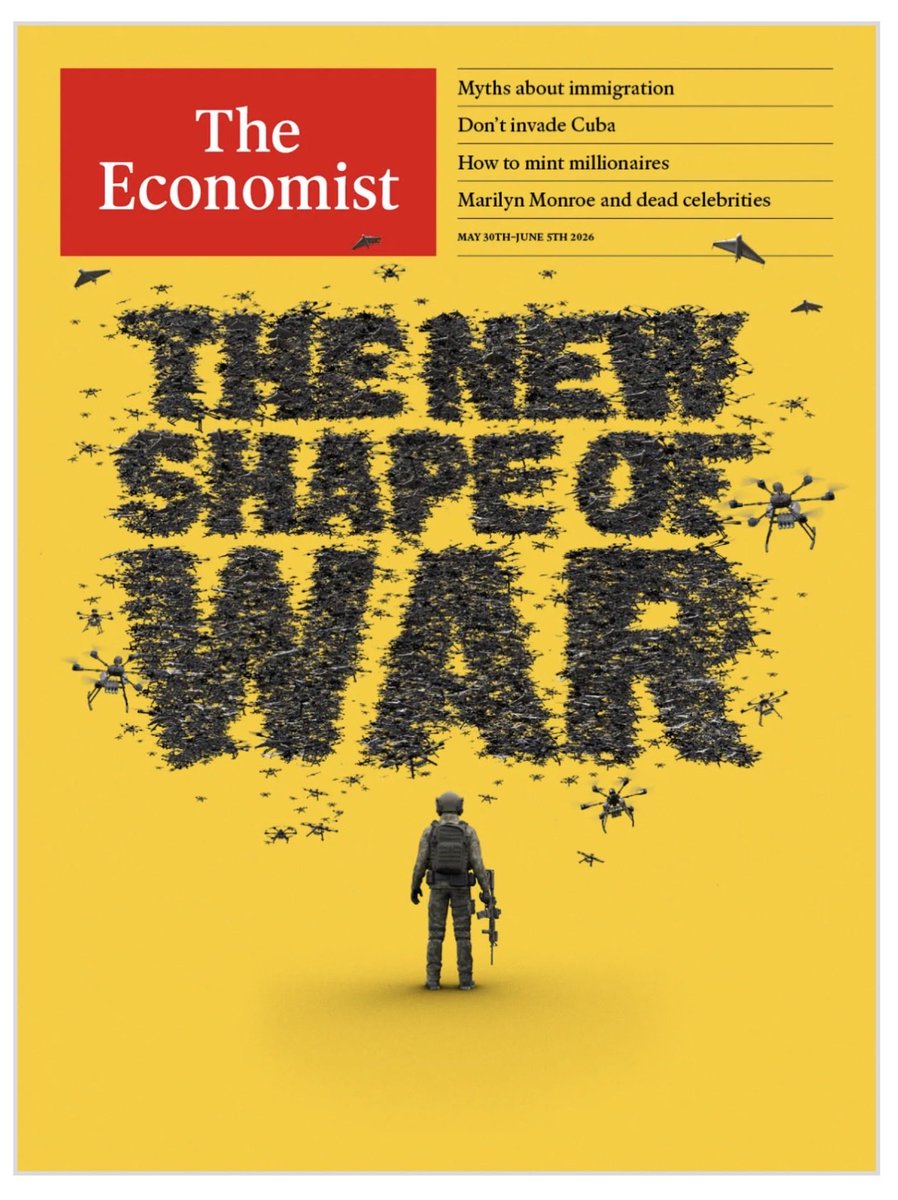
I wrote our cover story this week, a valedictory essay on the changes in war & warfare over my eight years as defence editor. It’s a reflection on the growth & limits of battlefield transparency, the lessons from different wars & the utility of force today https://t.co/5mBbcRGC3A
I know every generation has their class struggles, but let me tell you about the summer of 1990 when Supersoakers hit the market and only a few kids could afford them and the rest of us were hunted for sport.
Distilled key design and data visualisation principles from the foundational 3 books of E. Tufte into a Claude Code skill you can use with any content or dataset, you can set it up, fork it, star it...
https://t.co/ba3k5o4Xle
Singapore’s Foreign Minister, Dr Balakrishnan casually explaining how he built his own AI agent (a 2nd brain for diplomacy) using Claude & WhatsApp integration etc. on a Raspberry Pi
“You cannot govern a technology you have only been briefed on.” 🇸🇬
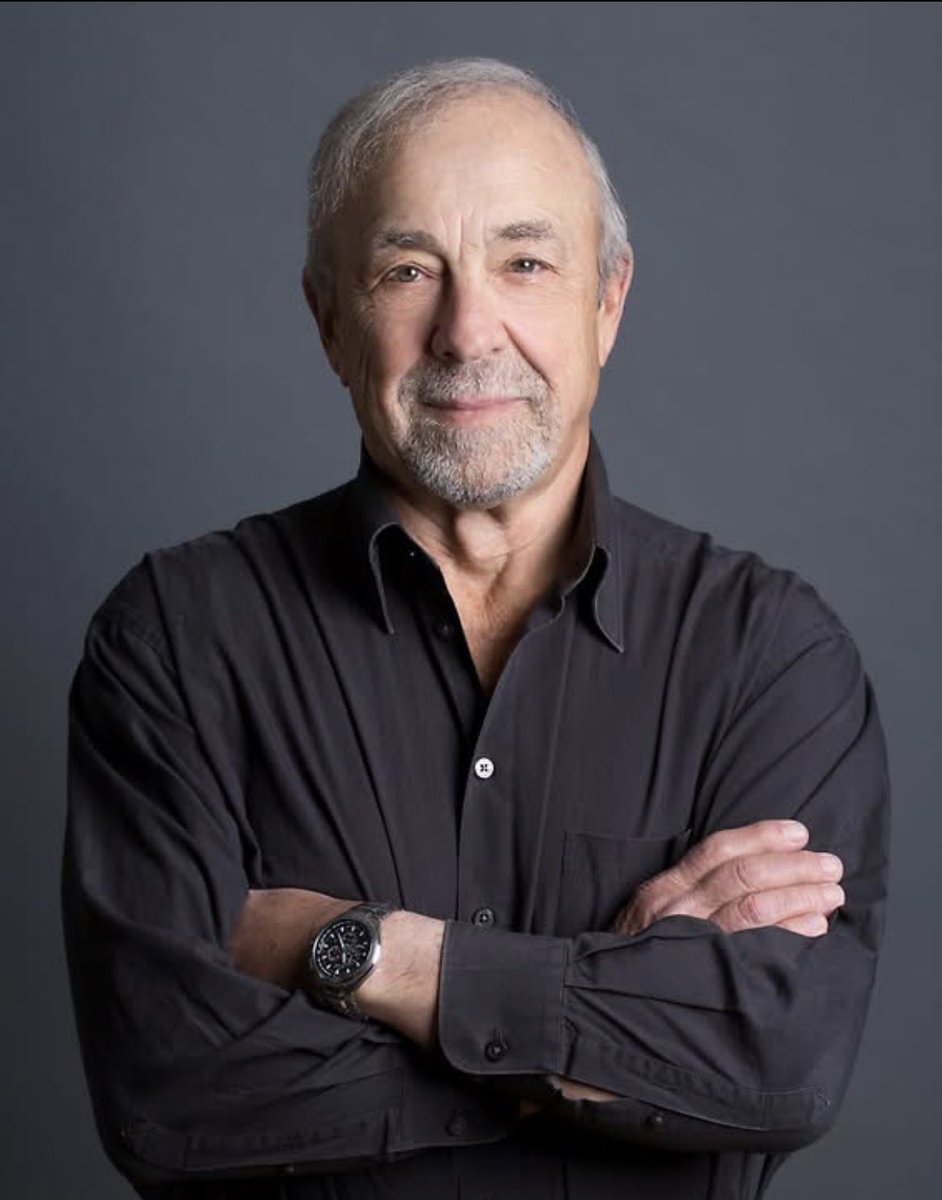
RiP Philip Caputo. A Rumor of War remains one of the most honest books about combat. The brutal reality of what war does to young men and the moral scars it leaves behind.
Marine officer, war correspondent & author. Reported in The Times.
UAE says a second pipeline to Fujairah, bypassing the Strait of Hormuz, will double the ADNOC oil export capacity once completed next year. https://t.co/HX6ph5ubWP
Fascinating piece on why the UAE really left OPEC.
The short: The country perceives its economy to have become so diversified and advanced, that oil supply management is no longer a particularly important policy priority. https://t.co/6FaECZguQ7 HT: @adam_tooze
The new issue of Popeye (a Japanese menswear magazine) is focused on made-in-USA products. The publication has been highlighting some of the best MiUSA products since 1975, although you have to be able to read Japanese. Available at Kinokuniya locations throughout the US.
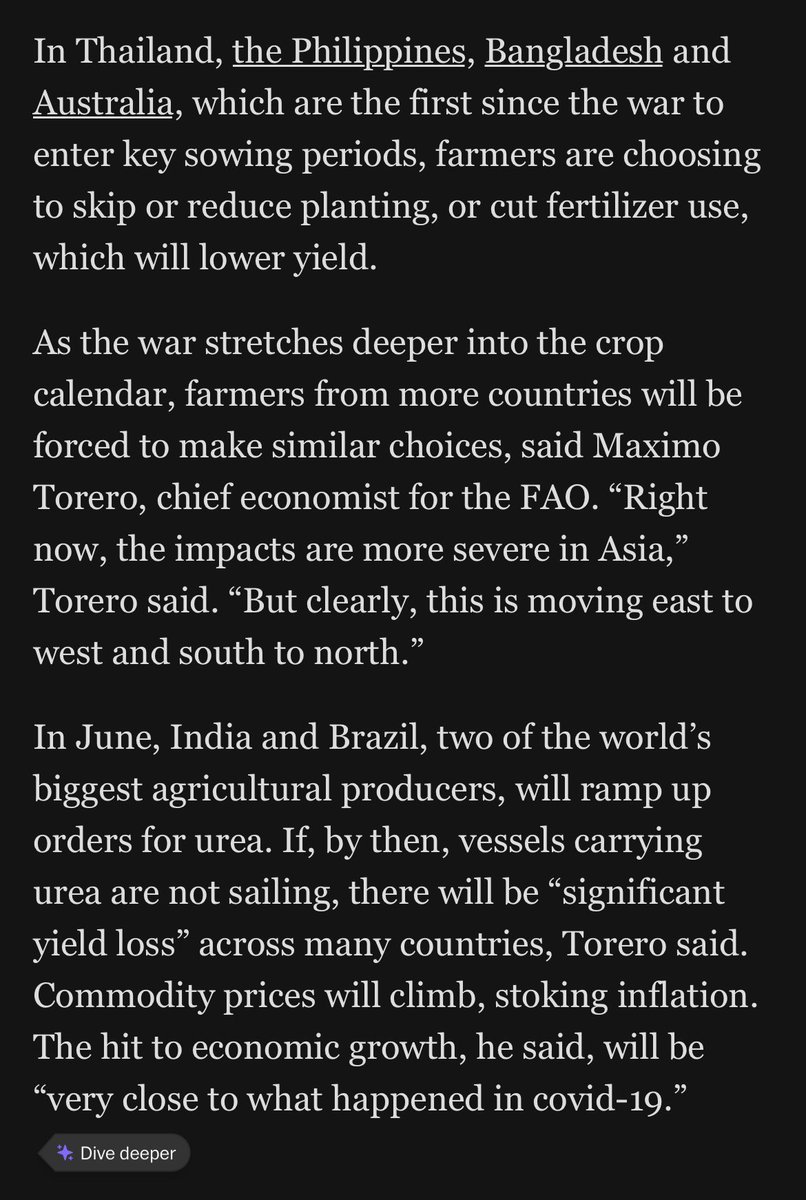
Thailand is one of the first ag countries to enter a planting season since the Iran war. We went to document the impact of supply shocks to fuel/fertilizer — It was worse than I anticipated.
Farmers are leaving huge tracts of land barren bc they can’t afford to plant.
Arabic has 14 words for love. Each one describes a different stage. And here's what got me. Each one comes from a root that has nothing to do with love. Until you see the connection. And then you can't unsee it.
All 14. Let me walk you through them.
Philip Caputo wrote a best-selling classic about Vietnam, shared a Pulitzer for uncovering Chicago’s voting fraud, was captured by militants in Lebanon & shot by others, covered wars in Afghanistan to Africa, hunted big game & caught bigger fish
RIP dad
https://t.co/BS5tmUzdbB
You are essentially asking why there is no arc that leads to redemption in the modern Arabic novel. That is an excellent question.
There are two established frameworks for answering it. The first is postcolonial: the darkness of the Arabic novel is the darkness of colonized peoples working through historical trauma. The second is civilizational: Arab and Muslim culture lacks a moral architecture for redemption and falls back on ruthlessness and darkness. Both are grand, sweeping, and, in my humble opinion, mostly wrong — or rather, mostly ideological. Each reproduces its own premise as its conclusion. You cannot accept the postcolonial answer without first accepting a Leninist analysis of imperialism and culture. You cannot accept the civilizational answer without first accepting a developmental schema in which the Arab world is measured by what it lacks relative to Europe. Neither explains; both presuppose.
What if the answer is simpler? What if, instead of reaching for macro-historical frameworks, we look at the men who actually wrote these novels? Given an understanding of how Western elites led their own society into a trajectory of kitsch and ugliness, one should be sympathetic to the idea of an elite-led cultural collapse, which is what I believe happened in the Middle East.
The major Arab novelists of the twentieth century belong, almost without exception, to a single class: the radically secularized cultural elite. Many are radical atheists. They passed through European or European-style education and emerged having internalized a very specific moment in European intellectual history — its most spiritually nihilistic moment, usually through France and Germany. They absorbed existentialist despair, naturalist determinism, and post-Enlightenment nihilism. They did not arrive at darkness through the pressure of their own civilizational or colonial experience, etc. They adopted it, consciously, from a European literary discourse that was itself already a symptom of spiritual crisis.
Here one must invoke René Girard's concept of mimetic contagion, because what happened next is textbook mimetic dynamics. The first generation were still imitating Europe directly. They had read their Flaubert, their Camus, their Dostoevsky-without-the-Christianity, and they wrote in conscious dialogue with those models. But the imitation did not remain at this level. What emerged very quickly was a self-referential, closed literary discourse in which Arab novelists began imitating each other. The model was no longer Europe itself but the image of Europe already internalized by the previous Arab novelist. Darkness became the mark of seriousness. Nihilism became the credential of literary authenticity. The bleaker the novel, the more "realistic" it was judged to be — where "realism" had long since ceased to describe any actual relation to reality and had become instead a term of prestige within the closed circle of the discourse itself. It became pure unreality. This, of course, applied to the modern history of European aesthetics as well. Realism means ugliness, for some degenerate reason.
This is mimetic rivalry in its purest form. Each new novelist must outdo his predecessor in despair in order to be recognized as serious. Rape, dismemberment, political torture, sexual degradation — these escalate not because Arab reality is uniquely brutal (it actually became so brutal largely as a result of this tradition, in my opinion) but because the internal logic of the literary discourse demands perpetual intensification. The audience for this literature is not the broad Arab public, which largely does not read these novels. The audience is the discourse itself: other novelists, critics, prize committees, translation editors in Paris and London who have their own mimetic investment in the image of the Arab world as a theater of darkness. The award-selection algorithm is the mechanism by which the mimetic cycle reproduces itself. The prizes reward the darkness, the darkness attracts the prizes, and the entire circuit operates at a comfortable distance from any lived reality — which contains, as all human reality does, suffering and joy, cruelty and tenderness, despair and faith. One must then ask: what is the expected result when such dispositions are crowned at the top of a semi-literate and developing society? One may even go deeper and suggest that later Arab real-world nihilism, political and religious, is related to this.
Dickens does not write humane novels because Victorian England was a kind or gentle place. It was monstrous. He writes humane novels because he writes from within a Christian moral structure that remained functional even as it was being secularized — a structure in which characters can change and redemption is a live possibility. The same holds for Tolstoy and George Eliot. The Arab novelists in question do not work within any equivalent — not because Arabic or Islamic civilization lacks one, but because these writers personally rejected the one available to them and replaced it with borrowed European despair.
They were writing a century after Dickens.
Dostoevsky was, of course, a revolutionary nihilist who became genuinely Christian, and that is why his works trace an arc through the deepest despair and onward to redemption. The last major European work that attempted to reach redemption at all was, I believe, Richard Wagner's Parsifal — which Friedrich Nietzsche hated profoundly, writing: "I despise everyone who does not experience Parsifal as an attempted assassination of basic ethics... an outrage upon morality." It is not an accident that the last work Roger Scruton wrote before he died was a monograph on Parsifal. I am here only right, of course, if we exclude redemptive works like Tolkien's Lord of the Rings — which was in many ways a response to Wagner and late Romanticism — from the canon of high culture, which the Western cultural elite indeed does exclude.
The darkness of the Arabic novel is the voice of a specific class of intellectuals who chose the most despairing available version of European modernity and made it the dominant register of serious Arabic literature. The redemption is absent because the men who write have decided, as a matter of intellectual conviction, that redemption is no longer a serious category. Nietzsche himself wrote that "redemption" is one of the most repulsive words.
The great partial exception is Naguib Mahfouz. His career begins in social realism — the Cairo Trilogy is a genuine attempt at the Dickensian novel, and it nearly succeeds. It then passes through crisis: Children of Gebelawi is the patricide, the allegory in which God is killed. But Mahfouz, unlike his contemporaries, could not rest in the nihilism. His late work represents a sustained effort to retrieve faith and redemption from within the wreckage. His oeuvre is really to be read as one man's journey out of post-Christian nihilism. He is the one major Arabic novelist who turned back. That is what makes him the greatest of them, and it is also what is most consistently missed in how he is read.
He began his career writing as his peers wrote. Then he separated from them, and spent the remainder of his life writing allegories about seeking the Father who had been murdered or forgotten.
Inside King Tubby's studio in Kingston, 1981. Scientist at the mixing desk, Kelvin from Musical Youth in the vocal booth. The bathroom where dub was born, the heir to Tubby's throne behind the board. From the BBC documentary Musical Roots.
North Korean troops deployed to Russia are returning home as instructors. In my new @ForeignAffairs piece, I explain why that knowledge transfer is arguably more dangerous than the munitions pipeline.
https://t.co/38RXgE6fQL