Infrared Uranus looks absolutely wild! Captured in stunning detail by the giant 10-meter W. M. Keck Observatory telescope in Hawaii, this infrared view reveals the ice giant in a whole new light — along with its delicate rings and a dazzling collection of moons.Seen in infrared wavelengths, Uranus glows with atmospheric features and thermal emissions that are invisible in normal light, giving us a rare, dramatic look deep into its dynamic system.The “monster” telescope once again proves why it’s one of the most powerful eyes on Earth. Short, punchy, and way more engaging!
Olympus Mons, located on the planet Mars, is the largest volcano in the Solar System, approximately 22 kilometers high—almost three times the height of Mount Everest.
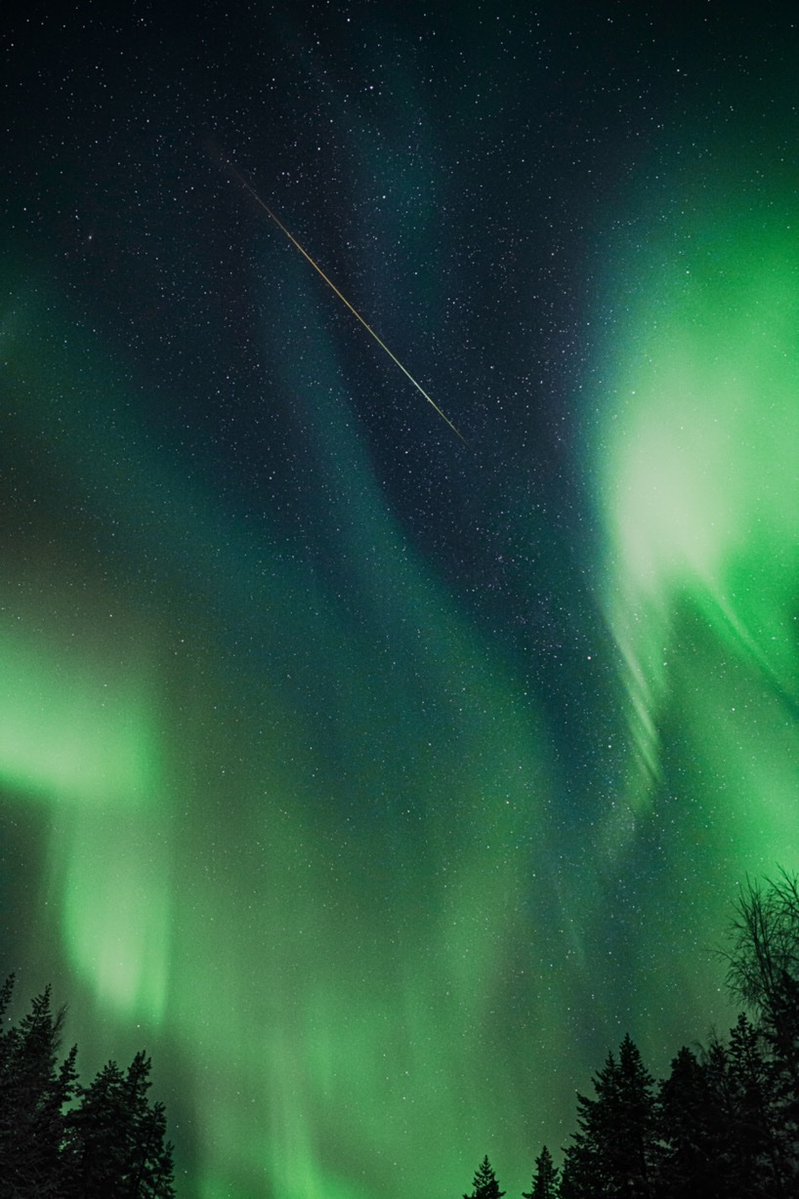
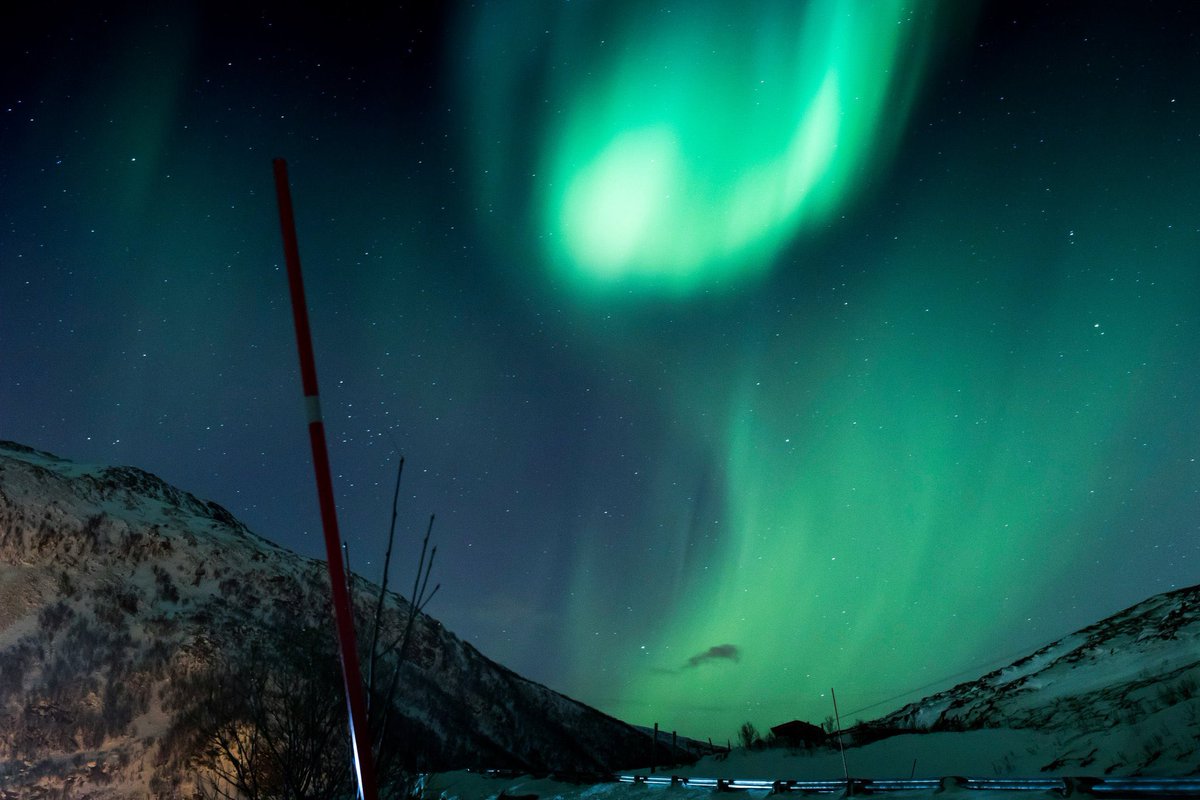
Scientists have confirmed that a powerful solar outburst is on course to reach Earth and potentially produce auroras on July 3.
A strong X1.1 class solar flare on Tuesday ejected a cloud of charged particles known as a coronal mass ejection or CME. This material is now traveling through space and is forecast to interact with Earth magnetic field on July 3.
Space weather experts anticipate G1 to G2 level geomagnetic storms. These conditions can lead to minor or moderate disturbances that sometimes allow the northern lights to appear at lower latitudes than normal.
The activity originated from sunspot region AR4479 a highly complex magnetic area on the Sun facing Earth. This region has generated the strongest category of solar flare along with multiple moderate M class events. In the past day alone the Sun produced 13 flares including eight of M class strength. A neighboring region AR4478 also released a powerful M8.5 flare.
The strength of the upcoming geomagnetic response will depend on how the incoming solar plasma aligns with Earth magnetic field. A favorable orientation could result in more intense and widespread auroras while a less direct connection might produce milder effects.
Although a late arrival remains possible and some activity could linger into July 4 the primary window for observations centers on July 3.
Aurora enthusiasts should prepare their cameras. Clear skies in parts of Canada Alaska northern Europe and the northern United States offer the best opportunities to witness the display.
This celestial event could provide a spectacular natural light show to complement upcoming Independence Day celebrations.
This galaxy, known as NGC 2442, is located approximately 50 million light-years away in the constellation Volans.
Astronomers believe that NGC 2442 acquired this shape as a result of a gravitational interaction with another galaxy.
🔭 Apparent magnitude: 10.4.
A Cosmic eye staring right back at us, from 16 million light-years away!
This spectacular image captures the spiral galaxy Messier 94, symbolically nicknamed the Crocodile's Eye galaxy, located in the constellation Canes Venatici. This isn't just a sinple photograph, but a composite masterpiece created by #NASA. It blends X-ray data gathered by the #Chandra X-ray Observatory with optical and infrared images.
Surrounding its brilliant core, you can see a massive inner ring. This is a starbust region, where new stars are being born at a dizzying and violent pace. Hot gas and extreme energy explode in electric shades of purple and pink.
Jour 139, orbite 2155 – Après les photos (disponibles en HD sur mon compte Flickr), je suis très heureuse de pouvoir enfin partager avec vous le timelapse de l’aurore la plus spectaculaire (jusqu’à présent !) de la mission εpsilon !
🤩 Difficile de ne pas céder à la magie de l’instant en regardant ce ruban de lumière verte onduler et danser sous nos yeux... Activez le son pour vivre pleinement l’expérience : la musique a été choisie avec soin pour évoquer les émotions que j’ai ressenties en admirant ce spectacle depuis l’espace 💚
🎥 @esa / @NASA
#εpsilon • @esaspaceflight • @Space_Station • @NASAJohnson • @ESA_fr • @CNES
JUST IN: Sun erupts an Earth-directed X1.11 solar flare
Earth facing sunspot region 4479 just erupted with an X1.1 solar flare at 20:50 UTC (June 30). The event is associated with a type II radio emission with an estimated velocity of 1496 km/s, along with a 10cm Radio Burst (TenFlare) measuring 409 solar flux units (sfu) and lasting 9 minutes.
Coronal dimming is now evident meaning the chances for an Earth directed coronal mass ejection (CME) will be at an increased level. More details to follow.
Credit: NOAA/GOES-19/SolarHam
The outer spiral arms of our Milky Way galaxy may reach wider than previously thought, according to data from @NASA's Chandra & ESA's XMM-Newton. This finding could lead us to adjust our understanding of our home galaxy's structure. 🌀More: https://t.co/x1cFmGpO07
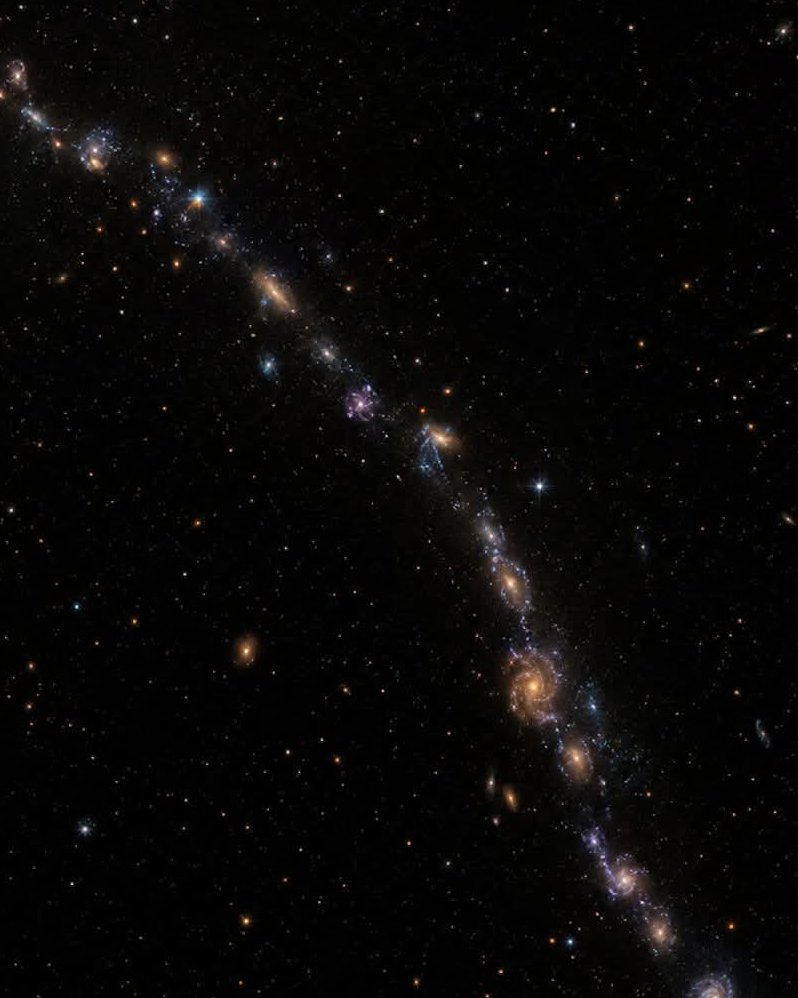
The Cosmic Vine: A Giant Chain of Baby Galaxies Using the powerful eyes of the James Webb Space Telescope, astronomers have discovered a remarkable structure in the early universe: the Cosmic Vine.Stretching across a staggering 13 million light-years, this cosmic chain consists of roughly 20 young galaxies linked together like pearls on a glowing necklace. It existed when the universe was still in its childhood — just a few billion years after the Big Bang.This discovery beautifully illustrates a fundamental truth: galaxies are not scattered randomly across space. Gravity has been sculpting matter for billions of years into vast filaments, walls, clusters, and superclusters — the grand cosmic web that forms the backbone of the universe.The Cosmic Vine is an extraordinary snapshot of this process in action. It shows how gas, dust, and dark matter flowed along these immense filaments, feeding the rapid growth of early galaxies. Some of these galaxies are already forming stars at an intense pace, while others are merging and evolving right before our eyes.More than just a line of distant galaxies, the Cosmic Vine is a living fossil — a rare glimpse of the universe actively learning how to organize itself on the largest https://t.co/FY2Sf5g52s’s a stunning reminder that the majestic large-scale structure we see today didn’t appear overnight. It was built, one cosmic vine at a time.
✨ Galileo: 415 years ago, he revolutionized our view of the cosmos
Today, we remember Galileo Galilei, who revolutionized science 415 years ago with the help of a telescope. He was the first to observe the Moon's rugged surface, proving that celestial bodies are not perfect.
His observations of Jupiter revealed four new worlds to us: the Galilean moons (Io, Europa, Ganymede, and Callisto). These discoveries marked a true breakthrough that changed our understanding of Earth's place in the Universe. 🌌