@ericnuttall The ”Machine” need this space IPO to land on the moon and not fall off it. Summoning all the forces to not get it to fail. Remember….”no one, outside a very few, like it when oil is up”.🤷🏼♂️
I valued SpaceX for its IPO a few weeks ago, with minimal information and a promise to revisit the valuation, when the prospectus was made public. The prospectus is public, the offering price has been set and my update is up and running. https://t.co/zRjpD1C0wv
My take on why oil futures are still sub $100 despite the scale of physical disruptions from the eyes of a paper trader as nicely summarized by @gulf_intel.
"We Created a Monster"
Iran’s reckless behavior over the last 24 hours, including its threat to attack Israel if Israel strikes Beirut, is a direct consequence of how the recent war ended.
Tehran now feels far more confident in its position, believing it successfully withstood military pressure from what it views as the two most powerful militaries in the world: the United States and Israel.
This is not a temporary spike in rhetoric. It is part of a broader and more dangerous trend. Iran increasingly sees itself as the patron and protector of its regional proxies, extending what amounts to an informal security umbrella over groups such as Hezbollah and other members of the so-called “Axis of Resistance.” The threat against Israel over Beirut reflects this growing sense of ownership and responsibility for its partners across the region.
More importantly, this is further evidence of a profound shift in Iran’s decision-making process following the death of Supreme Leader Ali Khamenei. For decades, Khamenei was fundamentally cautious when it came to the direct use of Iranian military power, particularly when the risk of confrontation with the United States was involved. That restraint appears to be fading.
We are entering a new era in which Tehran feels stronger, more secure, and increasingly confident in the credibility of its deterrence. Iranian leaders now appear to believe that their willingness to absorb military pressure and survive it, has enhanced rather than weakened their strategic position.
The result is a more assertive Iran, a more dangerous Middle East, and a growing risk that future crises will escalate faster and further than anyone anticipated.
#iran
#IranWar
xLight gets the funding to build their FEL EUV source in Albany, NY.
"These incentives will directly support the construction and demonstration of the company’s first free-electron laser (FEL), which will fundamentally transform how extreme-ultraviolet (EUV) light is delivered to semiconductor fabs."
”Oil co’s CEO’s are talking their book”
”China has billions of barrels to supply the markets with in storage and will wait for $60 to refill again”
”We are not even down to 2018s levels of storage yet”
”The world was awash in oil before Feb and still are”
”Operational minimums are lower than the market believes due to efficiency gains and AI models of recent times”
”Russia is in fact increasing production”
”Countries around Hormuz have circumvented the blockade more than anyone understand”
”We do not need The Hormuz”
”Paper markets dictates prices, not physical markets”
”No one wants oil prices to go up, so they don’t ”
”There is no correlation between storage and price, never has and never will be”
”There will be a glut when this is over, why buy now?”
Did I miss any?
@SvenNordenstam Såg någon nämna Peter Thiel i samband med detta bolag, då räcker det för att starta hype. Jänkarna kanske inte upplevt en ”Minesto” cykel ännu bara. Fascinerande stadie MrMarket är i just nu….🤪🥳🚀
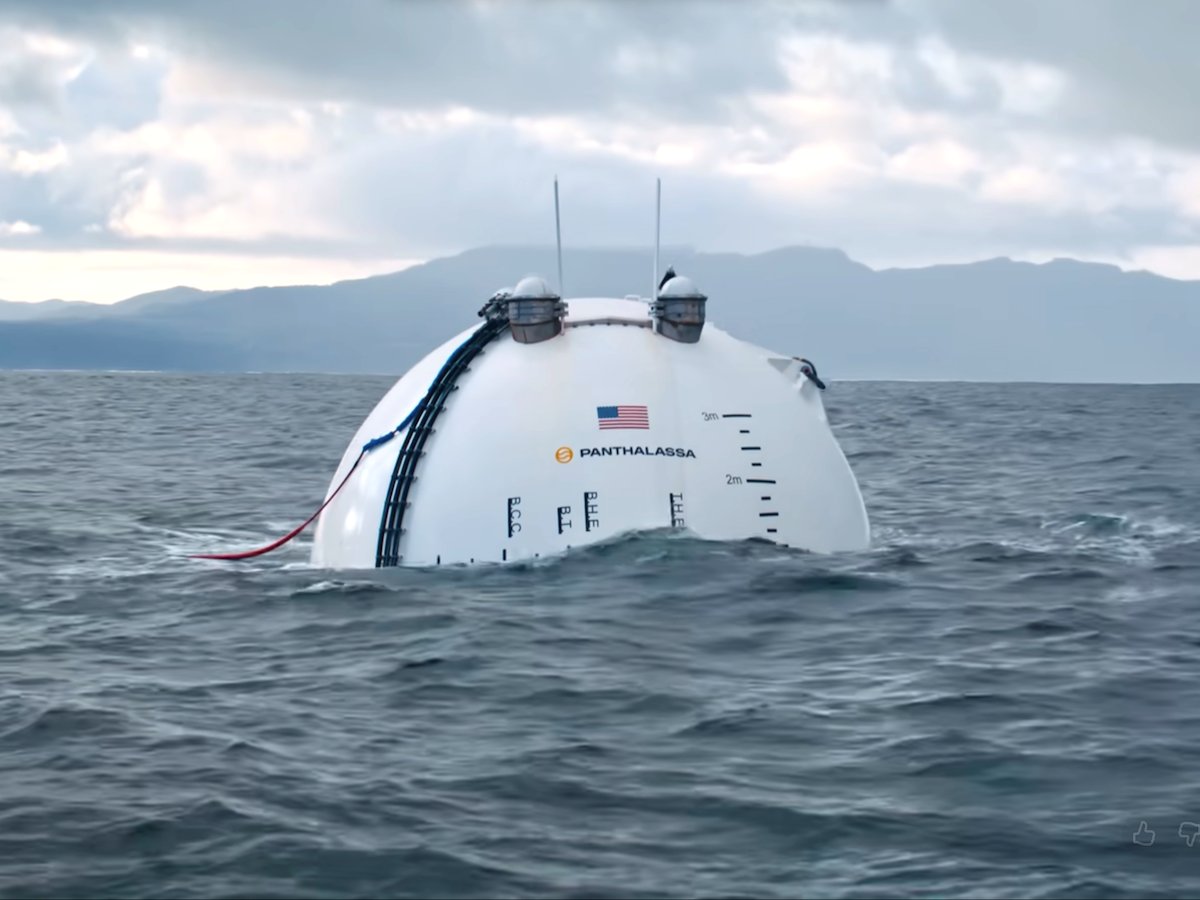
Panthalassa Raised $140 Million for Wave-Powered AI Data Centers: An Oregon startup raised $140M to build wave-powered AI computing systems at sea, aiming to meet rising data center energy demand with ocean-based clean power.… https://t.co/HhcWaO9rRx #ainews#panthalassa
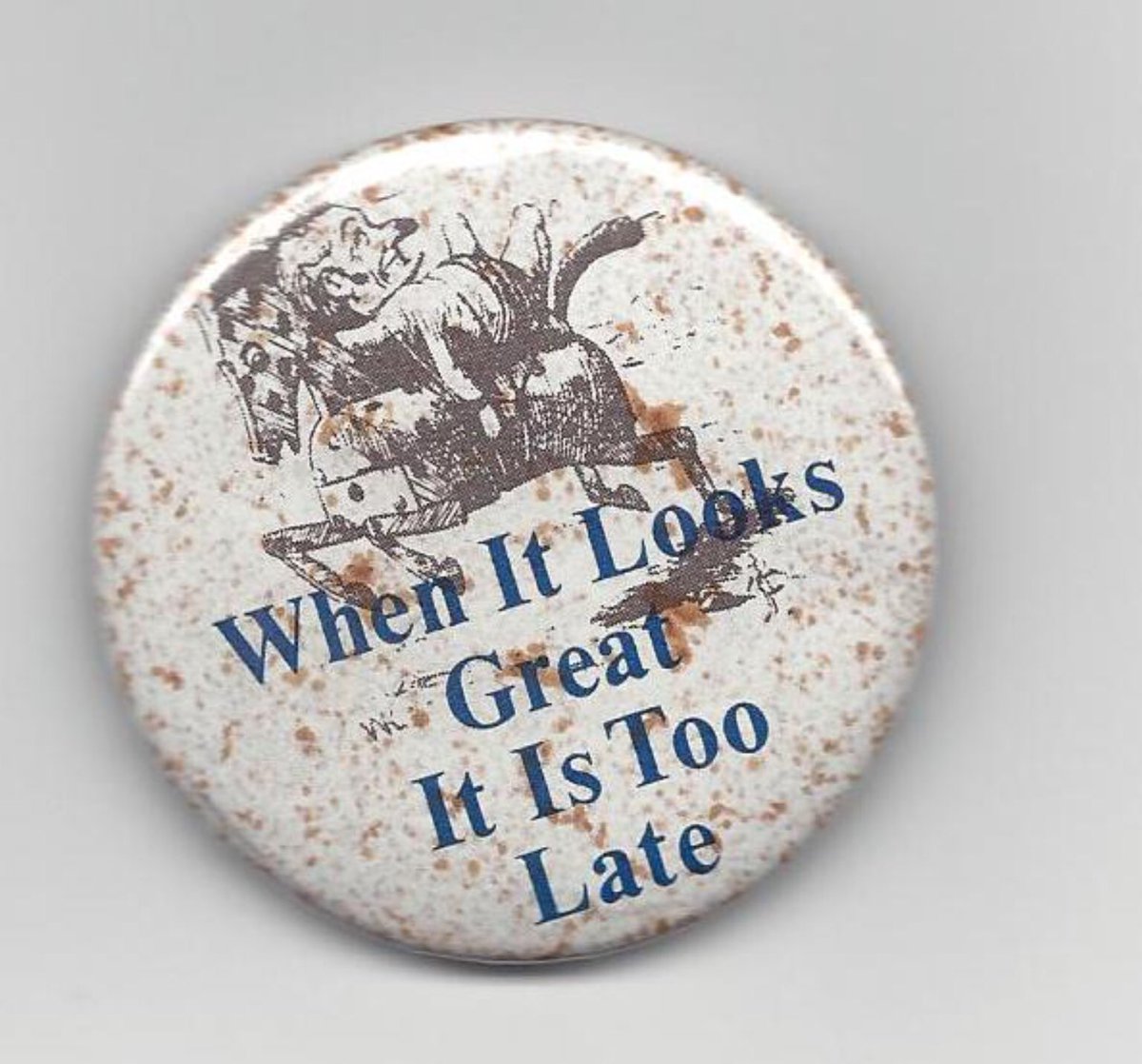
Back in the 1960s there was a company called National Video. They made color television picture tubes, and were the first to produce a 23-inch rectangular color TV picture tube. It quickly became the industry standard, and every major TV set producer scrambled to get their hands on National Video’s picture tubes. They literally couldn’t make them fast enough.
The stock went from a low of 15 in 1964 to a peak of 120 in October 1965. The final 70 points came in just the last few months.
Eventually, though, the Motorola’s and Zenith’s of the world produced their own color TV picture tubes. They didn’t need National Video’s any longer.
The stock went from 120 to a low of 40 in 1966, 15 in 1967, and then to zero in 1968 as the company went bankrupt. The poor thing couldn’t even make it to the Go-Go years.
In those days, Mueller and Company produced tick volume charts. National Video’s chart depicted the stock going from Northwest to Southeast in a straight line while the tick volume line went straight up.
The stock was a fundamental short. In those days, short sales could only be executed on an uptick. Which meant the whole world was always offered up an eighth.
Oh, National Video’s ticker symbol? NVD.A.
This story is true, but any resemblance to any other companies is purely coincidental.
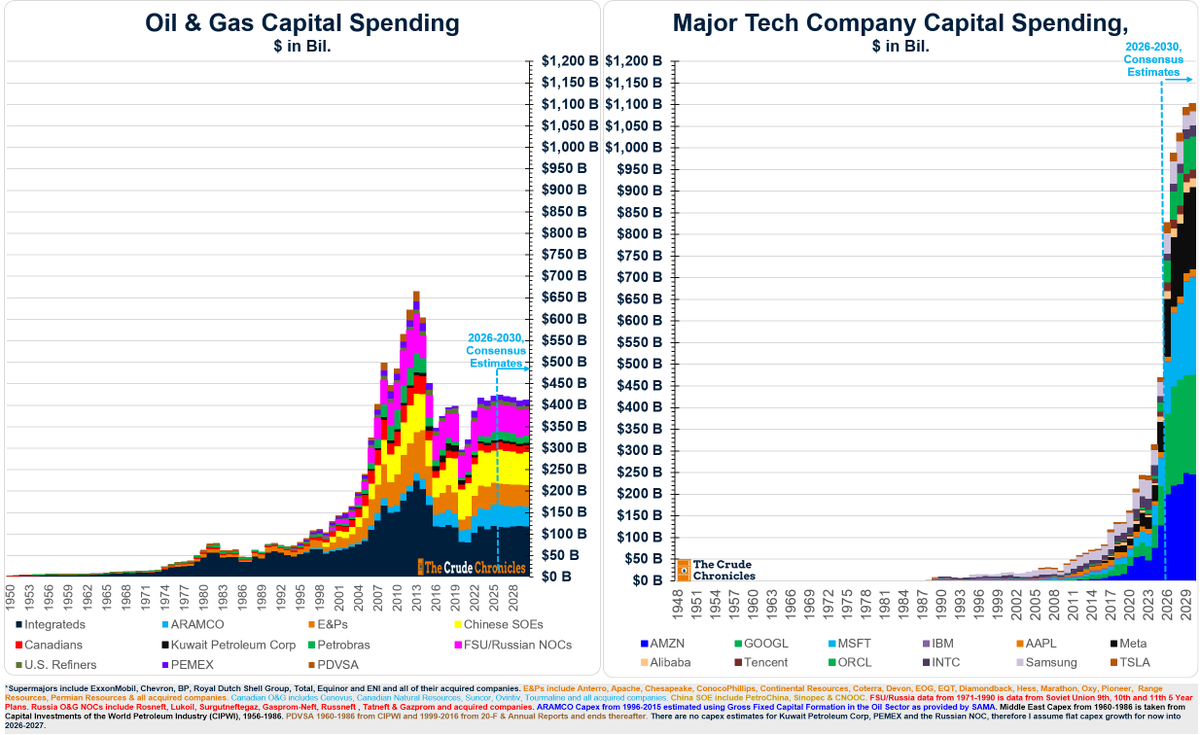
Welcome to the most asymmetric trade in modern financial history.
The thread below lays out why. The opportunity exists because capital has chased the AI trade while ignoring the physical assets AI requires to run — assets that have quietly become the best-performing asset class of the decade. Since October 2020 when we first called for the commodity super cycle: QCI Total Return +217%, GSCI Total Return +205%, Gold +140%. NASDAQ trails at +130%. S&P 500 at +85%. The top three are all commodities. Yet oil cannot get out of its own way while copper and the broader atom complex prints fresh highs . That is the dislocation. That is the trade.
Get long. Buckle in. Hang on for the ride.
Forgive the longer posts in this thread — attempting to mimic my old 10-bullet commodity takes. On to it.