What does Kenneth Waltz have to say about the Iran war? In a new CSEP blog, @ConstantinoX revisits Waltz's ideas on nuclear deterrence, regional stability, and realism to examine their relevance for understanding today's conflict in West Asia. Read more: https://t.co/NSmOpsOHMO
#GeopoliticsAndMarkets #IranWar
@CAPS_INDIA
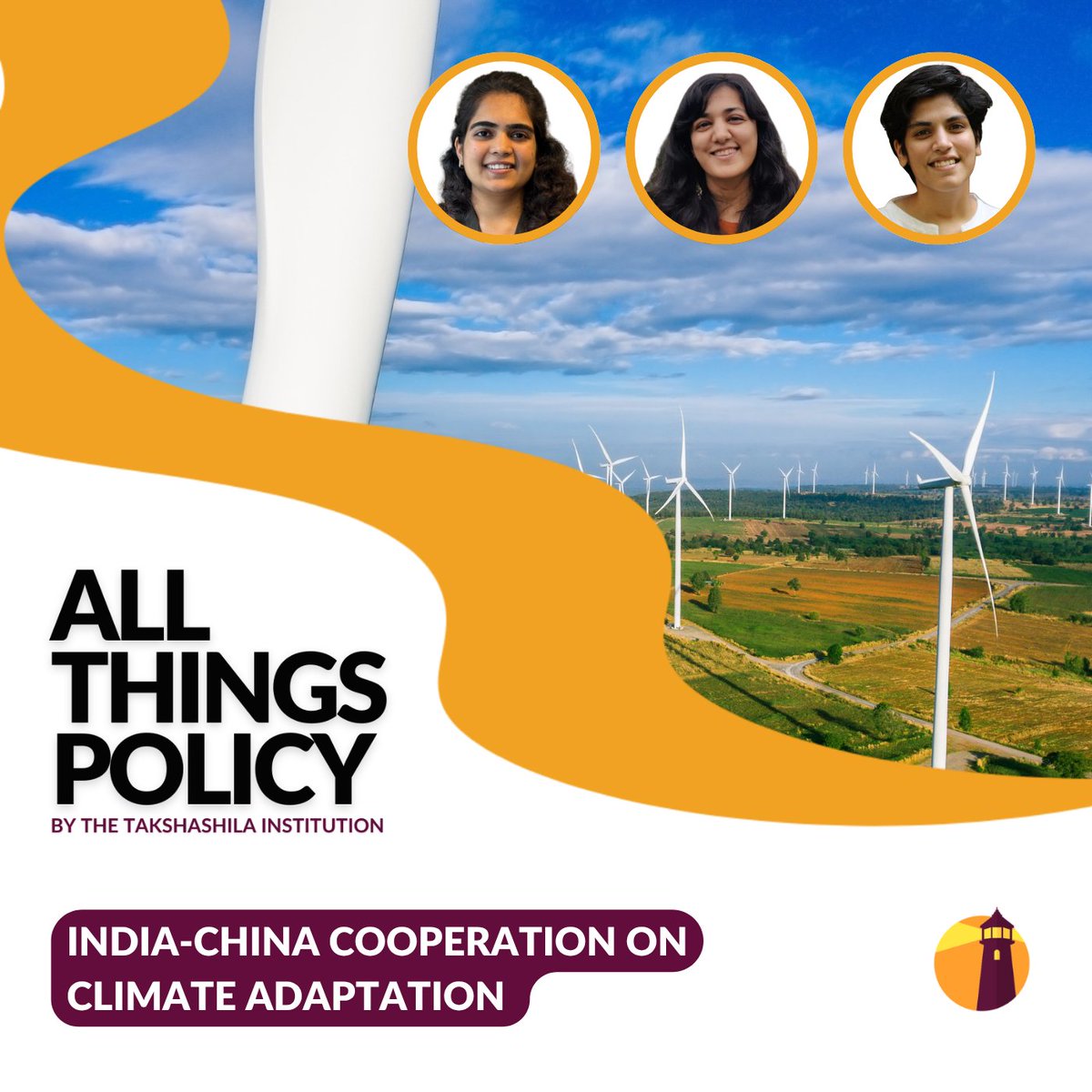
Can India and China cooperate on climate change despite ongoing geopolitical tensions? In this episode of All Things Policy, Bhumika Sevkani, Research Analyst at the Takshashila Institution, is joined by Pooja Ramamurthi (@pramamurthi1989) and Shruti Jargad from the Centre for Social and Economic Progress (@CSEP_Org), to explore the prospects for climate and clean energy cooperation between the world’s two largest developing economies and among the largest emitters. Tune in to the conversation, understand the countries' shared interests in climate adaptation, clean technology, and economic growth, the challenges posed by India's dependence on Chinese green supply chains, and what a pragmatic strategy for engagement could look like.
YouTube: https://t.co/UoPP6LOqX6
Spotify: https://t.co/W6DuCVESZN
Apple Podcasts: https://t.co/ZPN1dTDA06
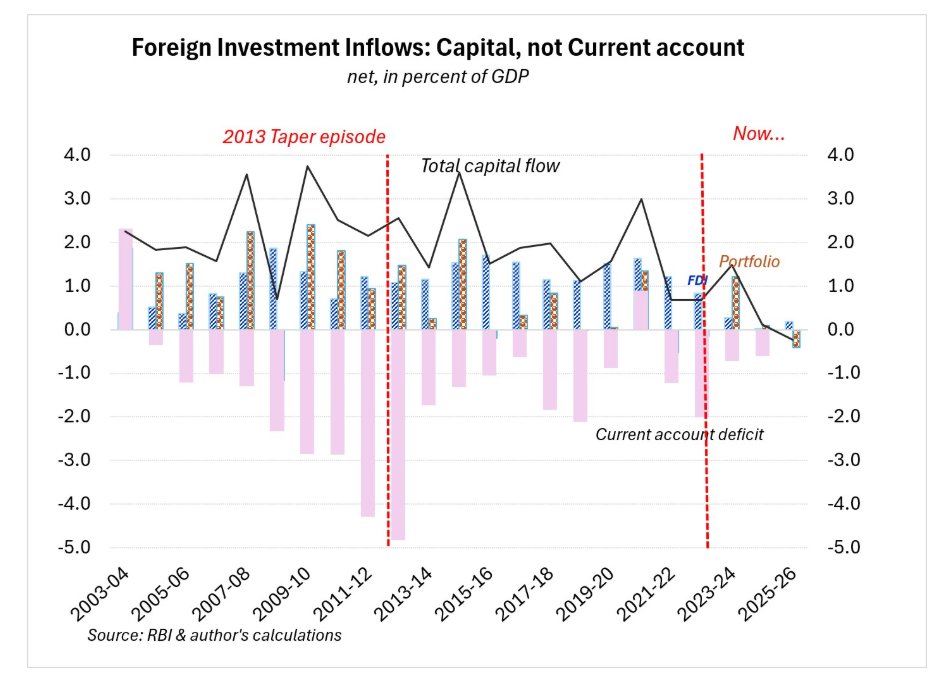
Is this 2013 all over again? A new MacroInsights note by CSEP Senior Fellow @renukohli_eco explains why current rupee pressures are different from the taper tantrum era & argues that today's challenge is rooted in deeper structural balance of payments concerns. Read more: https://t.co/6Esy8ISpuS
#indiancurrency
. @shyambesu, Fellow at CSEP, was quoted in @bsindia by @anjalywho on whether an all-electric ride-hailing model can work in India. The article explores EV adoption, charging infrastructure, business viability, & the future of sustainable urban mobility. https://t.co/pGtPqZ8VSg
TRAI hosted a technical workshop on “Evolution of Internet Policy and Regulation,” focusing on the journey of internet governance, policy frameworks, data protection, AI-led developments and the future of digital regulation.
Speaker: @dmcorpaffair
CSEP is looking for an Associate Fellow to join the Research Programme on Business–Society Relations. An opportunity to lead policy-relevant research on business, governance, regulation, sustainability & economic development. Apply here: https://t.co/rqM3Ep0BP7
. @shyambesu, Fellow at CSEP, was quoted in @livemint by @Moreorleshphil on the challenges of scaling electric bus adoption in India's smaller cities. Building cleaner mobility systems requires more than new vehicles, it also depends on planning, infrastructure, financing & effective public transport operations. https://t.co/T00mGBfWM7 @MoHUA_India@PMI_Electro@NITIAayog
How can India ensure that its green transition is also a just transition? @DrTongia, Senior Fellow at CSEP, was quoted in an @ecobusinesscom article examining the impact of the energy transition on informal workers & the importance of balancing climate goals with livelihood security. https://t.co/wOjyh6o2Na #EnergyStocks @DialogueEarth_
CSEP is looking for a Research Analyst to join the Research Programme on Business–Society Relations. If you're interested in public policy, economics, governance, regulation, and the interaction between business and society, apply now: https://t.co/aDF92ohdpC
Research by CSEP Fellow @PrernaPrabhaka3 was featured in a recent @Openthemag article by @MinhazMerchant on India's regulatory burden & the impact of Quality Control Orders (QCOs) on manufacturing supply chains & competitiveness. An important conversation on regulation, standards & industrial growth. https://t.co/zwfe0YZFHs @TataCompanies@CimGOI
Can India & China find common ground on climate action? CSEP Fellow @pramamurthi1989 discusses the future of India–China climate engagement, the role of clean energy cooperation & the opportunities & challenges shaping climate diplomacy today. #ClimateRefugees #GeopoliticsAndMarkets @MEAIndia@mnreindia@NITIAayog@BRICSinfo
For #Africa, #China is still a provider of alternatives — but there is a strong interest to diversify.
In our latest episode of #ATW, @vedavn of @CSEP_Org, discusses whether India-China competition in Africa resembles U.S.-China competition with @RachelRizzo and @d_jaishankar: https://t.co/AEAjurmAVw
🌍 Thrilled to share that my paper "Beyond GDP: Quantifying Heterogeneous Impact of Climate Change on Well-being and Social Progress" won the Best Paper Award at the CDE–IEDS International Conference 2026 at the Delhi School of Economics.
@CSEP_Org
What drives successful health & education reforms? A CSEP working paper on Rajasthan's experience (2014–2024) by @psingh_2016 explores the role of leadership, institutions, urban primary healthcare & collaborative governance in shaping public service delivery. The study highlights why stronger collaboration across government, communities & civil society matters for better outcomes. #HealthcareInnovation #education_system
At ABP's India at 2047 Conclave, CSEP Distinguished Fellow Montek Singh Ahluwalia discussed India's growth prospects, macroeconomic stability & the risks posed by fiscal & current account imbalances as the country pursues its long-term development ambitions. https://t.co/phatNrk9ff
@ABPNews
CSEP Fellow @shyambesu was quoted in @livemint by @Moreorleshphil on India's EV transition & the importance of ensuring that electric public transport systems are built around actual commuter demand. Electrification must go hand-in-hand with smarter route planning & integrated urban mobility. https://t.co/AFlcOJJsAC
As part of the conference Urban Health in India: Equity, Financing & Governance, CSEP researchers presented new work examining the political economy of urban health & education at the state level. In the panel "Urban Health: Selected Political Economy Aspects," @AnoushkaGupta delivered a presentation titled, "Unpacking Drivers for State-Level Initiatives for Urban Primary Care & Elementary Education in Karnataka, Rajasthan & Odisha (2014–2024)" co-developed with @psingh_2016, Fellow at CSEP. Drawing on evidence from the three states over the past decade, the presentation explored various drivers of state-level initiatives, bureaucratic leadership, political interest, CSO engagement. It argued that urban primary care has received limited state-level priority (though variation exists between the states) & that the initiatives undertaken have often been shaped more by the incentives of senior bureaucrats & considerations of political visibility & branding at the state level rather than the everyday needs & ground-level dynamics around health centres at the ground level. The channels that could translate between the two – civil society mobilisation, social movements, internal bureaucratic feedback loops have been weak.
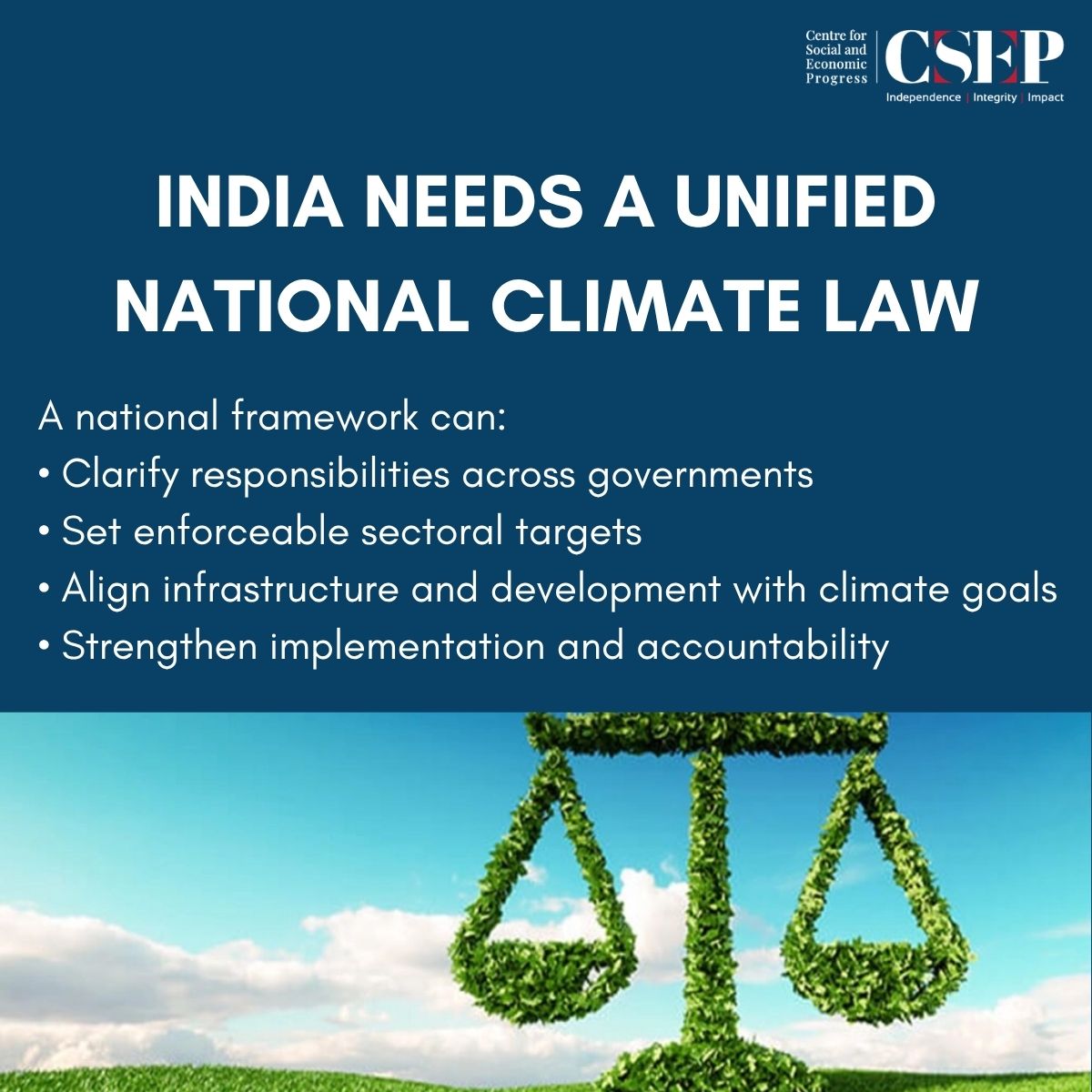
On #WorldEnvironmentDay, a reminder that India’s climate transition is about more than emissions.
It will require:
✅ Stronger climate governance
✅ Large-scale climate finance
✅ Localised & inclusive decision-making
CSEP research estimates that the power, road transport, steel & cement sectors alone will require US$467 billion in climate finance between 2022–2030. Explore CSEP’s research on climate governance & climate finance in India.
#ClimateCrisis #ClimateRefugees