The cultural arm of the @AAPRP featuring artists and speakers dedicated to the party's work of revolutionary Pan-Africanism. Peoples of African descent unite!
Happening this Wednesdays CWB speaker Comrade Imani Na Umoja (African Party for the Independence of Guinea & Cape Verde (PAIGC), Politburo of the Central Committee) in discussion with Comrade Gilbert Kouessi (Communist Party of Benin (PCB)
Register here https://t.co/16ovjzgKzu
"Western culture was, at its core, individualistic and democratic and liberty-minded and tolerant and progressive and rational and scientific. Never mind that pre-modern Europe was none of these things, and that until the past century democracy was the exception in Europe, something that few stalwarts of Western thought had anything good to say about. The idea that tolerance was constitutive of something called Western culture would have surprised Edward Burnett Tylor, who, as a Quaker, had been barred from attending England’s great universities. To be blunt: if Western culture were real, we wouldn’t spend so much time talking it up."
Kwame Anthony Appiah: "The lies that bind : rethinking identity : creed, country, colour, class, culture"
https://t.co/lw6VQEOmau
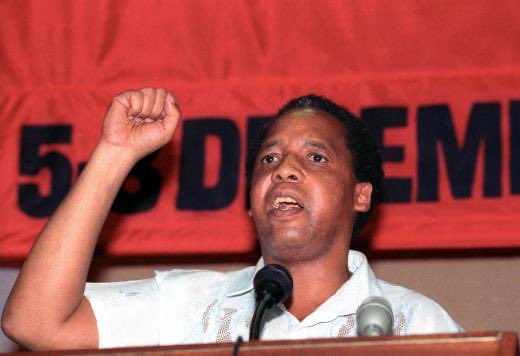
33 years ago today, April 10, 1993,
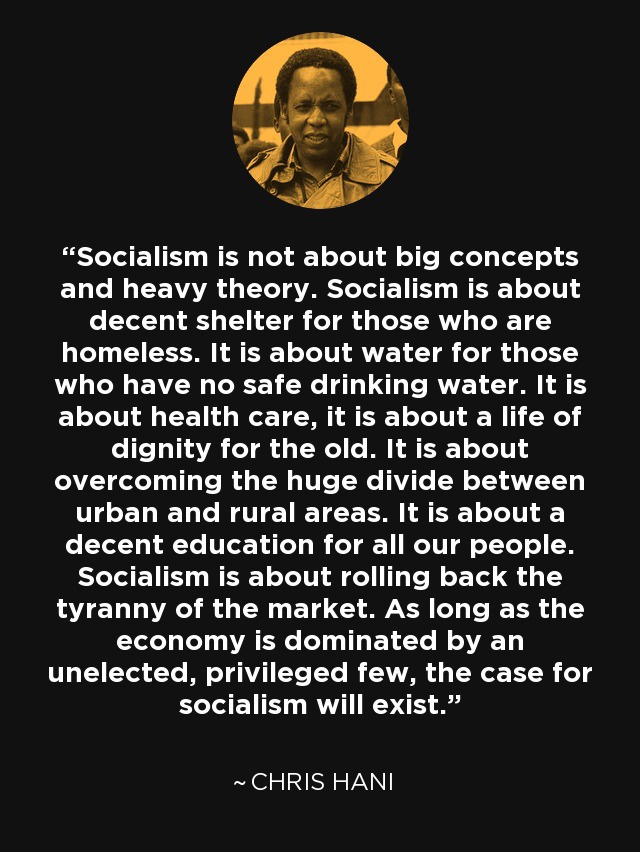
Chris Hani—leader of the ANC’s armed wing, veteran of the Zimbabwe liberation struggle, and SACP firebrand—was assassinated just as South Africa neared its transition. A frontline fighter whose radical vision never wavered.
#ChrisHani
THE UPC: CAMEROON'S TRAGIC INDEPENDENCE HEROES
On 10 April 1948, Cameroonian workers and trade union organisers came together at the Chez Sierra bar in Bassa to establish the Union of the Peoples of Cameroon (UPC), a movement dedicated to securing full independence.
From the beginning, its members were deeply committed to both national liberation and the broader goal of pan-African unity. The UPC waged a determined struggle for Cameroon’s freedom and unity, as well as that of the wider continent, but the cost of that fight was immense.
In 1955, after violent repression of protests triggered an anti-colonial uprising, the UPC was outlawed. This moment is often seen as the start of the Cameroon War. By 1960, President Ahmadou Ahidjo, backed by France, was overseeing a brutal campaign targeting not only the UPC but also the Bamiléké people, among the movement’s strongest supporters. Even under severe repression, the UPC continued to organise nationwide, advocating unity across linguistic and regional lines.
Since independence in 1960 and the suppression of the UPC, political power has remained concentrated, with only two leaders ruling the country: Ahmadou Ahidjo and Paul Biya.
The UPC also cultivated close relationships with key figures in the pan-African movement, including Kwame Nkrumah, Patrice Lumumba, and Ahmed Ben Bella. Although their vision of a fully united and liberated Africa remains unrealised, it continues to inspire.
As Cameroon reflects on its independence today, there is a growing need to revive the spirit of the UPC and the wider pan-African struggle.
Namibia's labor movements, historically central to anti-colonial resistance through mass strikes and worker solidarity, have operated with reduced influence and mobilization since the country gained independence in 1990. Available in AR, FR, IT and EN. https://t.co/620iDzsdPL
“We should not fear victimization. We must fight for freedom - for the right to call our souls our own. And we must pay the price.”- Mangaliso Robert Sobukwe
Nigeria once stood tall as a moral voice in Africa and the world. It was a country that claimed to defend the oppressed, to stand against apartheid, colonialism, and injustice wherever they appeared. From Southern Africa to Palestine, Nigeria projected itself as a champion of liberation and human dignity. Today, that proud legacy is being dragged through the mud. The reported pact between President Bola Ahmed Tinubu’s government and Israel is not just a diplomatic move; it is a betrayal of history, of principle, and of the African soul. https://t.co/1JtzEjA4gj
From the archive: Read Stephen Weissman’s 2014 essay on the history of U.S. covert action in Congo—and the lasting consequences of the CIA’s interventions.
https://t.co/9dzBbRcaSc
Walter Rodney was a decolonial Marxist academic and political activist. Although he was killed at 38 years old, his theoretical contribution has been one of the most important life giving arteries to our anti-colonial Marxist movement.
Walter Rodney continues to teach us every day by providing us with a theoretical framework that de-centres the European and Western worldview.
He teaches us that Marxism is only valid when we apply it to our own history and conditions. He also teaches us that it is not enough to engage in intellectual pursuits - but to use these to apply it to the concrete struggle against the capitalist imperialist system.
#walterrodney #walterrodney #history #economics #decolonialmarxism
"This struggle to defend the trees and forests is above all a struggle against imperialism. Because imperialism is the arsonist setting fire to our forests and our savannas."
— Thomas Sankara
“No country and no society can be said to have obtained full social liberation, if it has not broken and thrown away the chains of female slavery.” - Velupillai Prabhakaran
#InternationalWomensDay
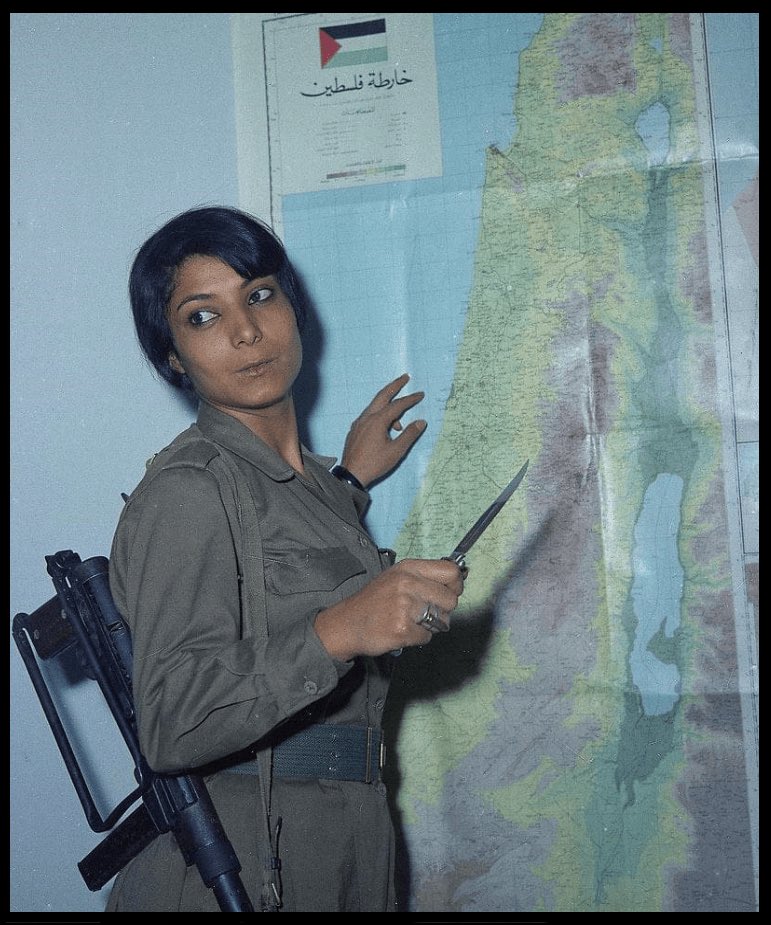
“I have learned that a woman can be a fighter, a freedom fighter, a political activist, and still fall in love and be loved. She can be married, have children, be a mother. Revolution must mean life in all its forms.”
-Leila Khaled, Palestinian liberation fighter
It’s international women’s day. Remember, no imperialist power has ever attacked a nation to save or help the women. The latter are often the first victims. These vile warmongers hate women, children, workers, and oppressed peoples.
HAPPY INTERNATIONAL WOMEN’S DAY! – MAMA ZEYNAB: A REVOLUTIONARY FORCE IN ERITREAN WOMEN’S HISTORY
Happy International Women’s Day!
Today, we celebrate the remarkable life and legacy of Mama Zeynab (Zeynab Yassin Suleiman), a revered Eritrean patriot and veteran fighter whose extraordinary contributions to the liberation struggle and the empowerment of Eritrean women remain unmatched.
… In 1977, Mama Zeynab joined the Eritrean People’s Liberation Front (EPLF), dedicating herself to the fight for national independence.
… Eritrean women, inspired by leaders like Mama Zeynab, fought equally with their male counterparts.
… Mama Zeynab embodies heroism, wisdom, and visionary leadership.
Read more: https://t.co/RvkqAWWA9L by David Yeh
#AfricanUnion #HornofAfrica #Eritrea #Ethiopia #Sudan #Somalia #Egypt @hawelti@shabait@EmbassyEritrea@hadnetkeleta@SirakBahlbi@Ghidewon@PMEthiopia@MFAEthiopia@MofaSudan@MOFASomalia@MfaEGYPT@_AfricanUnion@StateDept@AJEnglish@BBCWorld@AFP@TheEconomist@thenation@PressTV@Telegraph@nytimes@UN@dwnews@tesfanews@TheReporterET@gulf_news