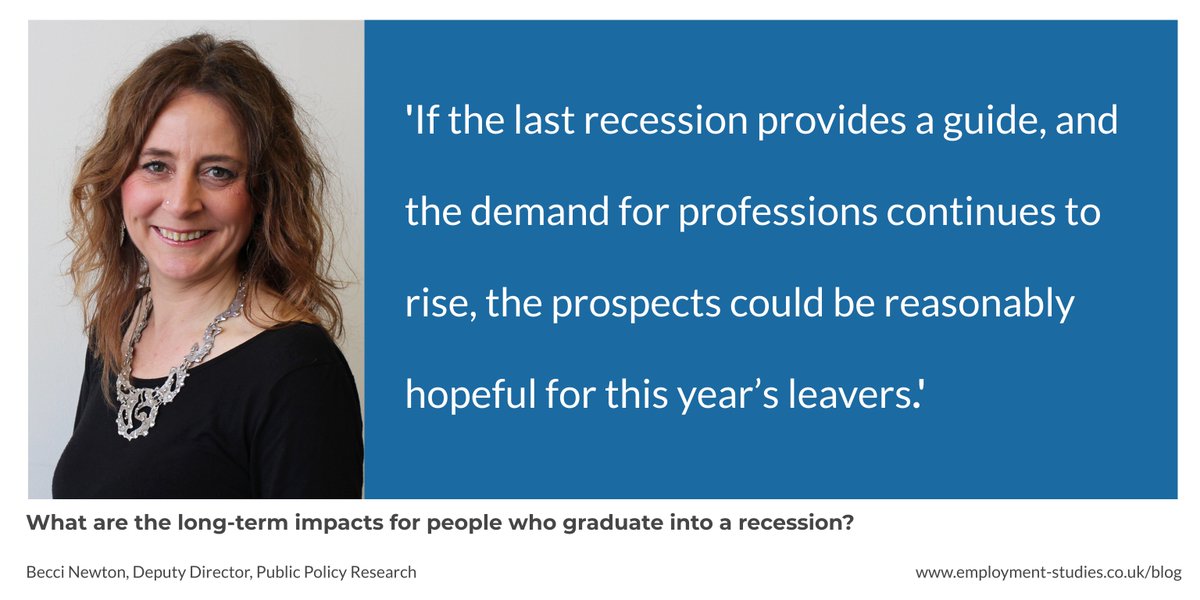
Tricky times for 2020 graduates. Some could choose to stay in education; the returns for higher degrees are decent in general. But these are not 'general' times and postgraduate qualifications aren't for everyone. Some may be better off in the labour market, even a slack one.
In her latest blog, @BecciNewton13 considers the career prospects for graduates entering the labour market in a #Covid_19#recession. https://t.co/R0ZyvUz6CM
Today's ONS labour market stats are unsurprising: we have been in lockdown, after all. Gvt intervention has for now, prevented a rise in Covid-related unemployment. But for how long? How many furloughed jobs still exist? Things will probably get worse before they get better.
76.4% of people aged 16 to 64 were in paid work in February to April 2020 – 0.1 percentage points lower than the previous quarter and 0.3 percentage points higher than a year earlier
The problem here is that an Apprenticeship is also a job: this can't be guaranteed. Plus, an Apprenticeship won't be the right option for lots of young people. Need to look at this carefully if we really want to support young people through this crisis.
Prime minister @BorisJohnson says it’s 'going to be vital we guarantee apprenticeships for young people' in his Covid-19 briefing today. Here's what he said on the idea last week after it was proposed by @halfon4harlowMP https://t.co/1PCg4PXo50
Really clear and informative blog by Anne. Young people are vulnerable as they are new labour market entrants, more likely to work in shut down sectors and more likely to stay in education in an uncertain labour market (is there capacity?). V. important they get the right help.
For my latest @CityREDI @WM_REDI blog on unemployment and labour market policy see https://t.co/3EWfbCMza4 - also see https://t.co/bwcPNqStHX from Jonathan Payne @dmuleicester with searching questions for future research on work #COVID19
An interesting article, but there's a difference between WFH and taking work home, which I'm not sure this picks up. Perhaps we'll all get fed up of WFH and rush back to our offices ASAP; or maybe we'll embrace it and see a step-change in working patterns. We'll see.
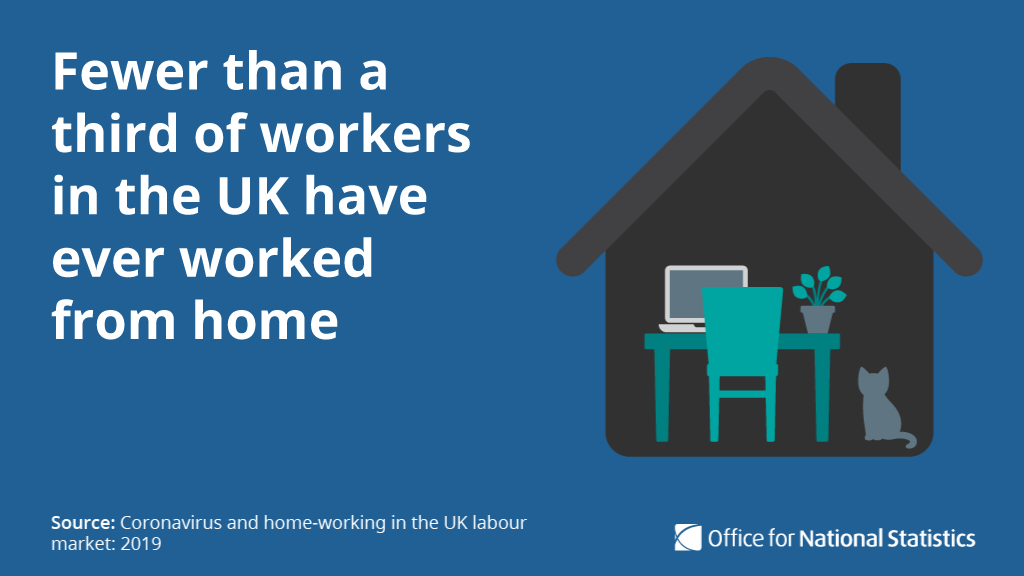
Due to #Coronavirus, the government has said people must work from home where possible.
There are 32.6 million people in employment in the UK, but only nine million (less than 30%) have ever worked from home in their current job #COVID19
https://t.co/gYS4L7EeVM
Good article by @nickhillman. A reminder that public funds are limited and the decision about whether to fund something publicly depends on more than the public benefit it provides.
As someone who used to work in childcare policy analysis and who now works in labour market analysis, I found this a very interesting article, for lots of reasons.
Record breaking labour market figures from @ONS this morning. Though they mostly are these days. The number of women in employment & aged 65+ seems to be creeping up: by 14% year on year. Great for many reasons, not so great if you thought you would be retired by now.
In some ways, I think the labour market is still a buyers’ market, with political and economic uncertainty increasing workers’ risk aversion and making them less likely to move jobs, which is important for pay growth. @CambridgeEcon
Interesting analysis from @ONS today on why earnings have remained subdued despite the tightening labour market. I’m going for self-employment & gig economy, lack of productivity growth & public sector pay restraint.
Traditional measures of underemployment don’t seem to help here. The % of employees working part-time is at pre-recession levels, as is (more or less) the % working part-time because they could not find a full-time job. Same for temp employees who could not find a perm job.
Good to see @ONS adding to the debate on job quality. 48 hours seems a lot, mind... Only part of the story of course: people may sacrifice other elements of job quality to get their desired hours for example, but still good stuff. @CambridgeEcon
As a researcher, a manager and a mentor of junior staff, I found this morning's discussion of workplace progression with @EmploymtStudies hugely inspiring. #progressinwork@CambridgeEcon
Interesting labour market stats from the @ONS this morning. Employment down on the quarter, driven by a fall in part-time employment. Temp employment down, particularly amongst those who don't want perm work. Employers shedding labour due to Brexit uncertainty? @CambridgeEcon