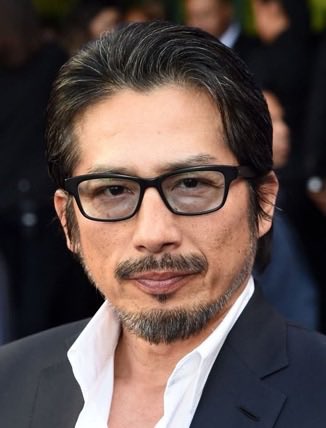
Japanese actor Hiroyuki Sanada spoke about the contradictions of human nature:
“Some people dream of having a swimming pool at home, while those who have one hardly ever use it. Those who have lost a loved one feel a profound sense of loss, while others often complain about their living relatives. Those without a partner long for one, while those who have one often don't appreciate it. The hungry would give anything for a meal, while the satiated complain about the taste of their food. Those without a car dream of owning one, while those who have a car are always looking for a better one.”
The key to happiness is gratitude: truly seeing and appreciating what we already have, and understanding that somewhere, someone would give anything for what we take for granted.
تمارين كيجل في المنزل
فوائد تمرين الكيجل باختصار:
• تقوية عضلات الحوض
• تحسين التحكم بالمثانة وتقليل سلس البول
• دعم الأعضاء الداخلية في الحوض
• تحسين الأداء الجنسي وزيادة الإحساس
• تقليل احتمالية هبوط أعضاء الحوض
• قد يفيد الرجال في تحسين التحكم بعد بعض مشاكل البروستاتا
In 2023, Stanford neuroscientist Robert Sapolsky revealed stress is the silent killer doctors ignore.
His 30-year research will change how you see stress.
His frameworks:
- Stress makes you selfish
- 3-minute crisis system
- It damages the brain
15 lessons on mastering stress:
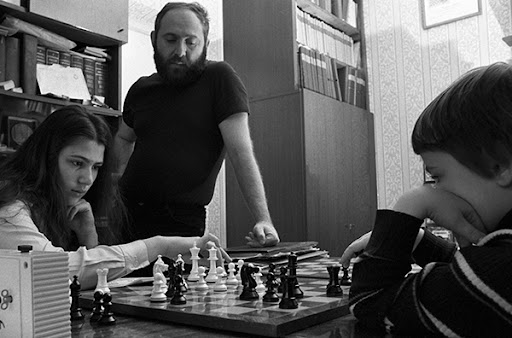
A Hungarian psychologist raised three daughters to prove that any child could become a chess grandmaster through early specialization. He succeeded. Two of them became grandmasters. One became the greatest female chess player who ever lived.
Then a sports scientist looked at the data and found something nobody wanted to hear.
His name is David Epstein. The book is called "Range."
The Polgar experiment is one of the most famous case studies in the history of deliberate practice. Laszlo Polgar wrote a book before his daughters were even born arguing that geniuses are made, not born. He homeschooled all three girls in chess from age four. By their teens, Susan, Sofia, and Judit were dominating tournaments against grown men. Judit became the youngest grandmaster in history at the time, breaking Bobby Fischer's record. The story became the gospel of early specialization. Pick a domain young, drill it hard, and you can manufacture excellence.
Epstein opens his book by telling that story honestly and then quietly demolishing the conclusion most people drew from it.
Chess works that way. Most things do not.
Here is the distinction that took him four years of research to articulate, and that almost nobody who quotes the 10,000 hour rule has ever read.
There are two kinds of environments in which humans develop expertise. Psychologists call them kind and wicked. A kind environment has clear rules, immediate feedback, and patterns that repeat reliably. Chess is the cleanest example. Every game ends with a winner and a loser. Every move is recorded. The board never changes shape. The pieces never invent new ways to move. A child who plays ten thousand games will see most of the patterns that exist in the game, and pattern recognition is exactly what chess mastery is built on.
A wicked environment is the opposite. Feedback is delayed or misleading. Rules shift. The patterns that worked yesterday may be exactly the wrong patterns to apply tomorrow. Most of the real world looks like this. Medicine is wicked. Investing is wicked. Building a company is wicked. Scientific research is wicked. Almost every job that involves a complex changing system with humans in it is wicked.
The Polgar sisters trained in the kindest environment any human can train in. Their success was real and the method was correct. The mistake was generalizing the method to fields where the underlying structure of the environment is completely different.
Epstein's research is what made the implication impossible to ignore.
He looked at the careers of elite athletes outside of chess and golf and found that the pattern was almost the inverse of what people assumed. The athletes who reached the very top of their sports were overwhelmingly people who had played multiple sports as children, specialized late, and often switched disciplines well into their teens. Roger Federer played squash, badminton, basketball, handball, tennis, table tennis, and soccer before tennis became his focus. The kids who specialized in tennis at age six and trained year-round for a decade mostly burned out, got injured, or topped out at lower levels of the sport.
The same pattern showed up everywhere he looked outside of kind environments. Inventors with the most patents had worked in multiple unrelated fields before their breakthrough work. Comic book creators with the longest careers had drawn for the most different genres before settling. Scientists who won Nobel Prizes were dramatically more likely than their peers to be serious amateur musicians, painters, sculptors, or writers.
The skill that mattered in wicked environments was not depth in one pattern. It was the ability to recognize when a pattern from one domain applied unexpectedly in another. That kind of thinking cannot be built by drilling a single subject. It can only be built by accumulating mental models from many subjects and learning to move between them.
The deeper finding is the one that should change how you think about your own career.
Specialists in wicked environments often get worse with experience, not better. Epstein cites studies of doctors, financial analysts, intelligence officers, and forecasters showing that years of experience in a narrow domain frequently produce more confident judgments without producing more accurate ones. The expert builds elaborate mental models that feel comprehensive and turn out to be increasingly disconnected from the actual structure of the problem. They stop noticing what does not fit their framework. They mistake fluency for understanding.
Generalists do better in wicked domains for a reason that sounds almost mystical until you understand the mechanism. They have less invested in any single mental model, so they abandon broken models faster. They are used to being a beginner, so they are not threatened by the discomfort of not knowing. They have seen enough different domains that they can usually find an analogy from one field that unlocks a problem in another. The technical name for this is analogical thinking, and the research on it is one of the most underrated bodies of work in cognitive science.
The single most useful sentence in the entire book is the one Epstein puts almost as a throwaway.
Match quality matters more than head start.
A person who tries six different fields in their twenties and finds the one that genuinely fits them will outperform a person who picked one field at fourteen and stuck to it on willpower alone. The lost years were not lost. They were the search process that produced the match. Every field they walked away from taught them something they later imported into the field they finally chose.
The reason this is so hard to accept is cultural, not empirical. We tell children to pick a path early. We reward the prodigy who knew at six. We treat the late bloomer as someone who failed to launch on time, when the data suggests they were running an entirely different and often more effective optimization process underneath.
The Polgar sisters were not wrong. The conclusion the world drew from them was.
If your environment is genuinely kind, specialize early and drill hard. If it is wicked, and almost every interesting human problem is, then the people who win are the ones who refused to specialize until they had seen enough to know what was actually worth specializing in.
You are not behind. You were running the right experiment all along.
80% of your thoughts are negative. 95% are the same ones you had yesterday.
Your brain is stuck on repeat, running scripts written years ago.
Here's how an alter ego bypasses that loop and reprograms your subconscious. 🧵
The reason comedians are some of the most intelligent people to ever exist is because they have the pattern recognition of scientists, they can delve into philosophical rants but what’s truly amazing is their ability to explain this into the simplest terms
While filming a movie in 2014, Jackie Chan sang "Rolling in the Deep" with a group of Mongolian locals after finding out that they knew the song by heart, even though they don’t speak English 😁
It was never part of the movie script.
This 2-hour Stanford lecture breaks down how models like ChatGPT and Claude are actually built, clearer than what many people in top AI roles ever get exposed to.
Save this and set aside two hours today. It might end up being the most valuable thing you learn all week.