‼️Claude Mythos just built a fully working macOS clone.
it was told to generate a macOS clone and it cooked!
- 50k tokens
- 3k lines of code
- working browser
- a music player with AI-generated songs and hella more features.
and this was on LOW btw.
High-paid tech workers are cutting life down to the basics so they can invest and retire by 30
One Meta engineer makes over $300K a year and still owns no car, couch or TV
More successful Gen Z are choosing calm life over career and money
New startup company will put ‘Mini Data Centers’ on the side of residential homes all over America
Companies Nvidia and PulteGroup are patterning with SPAN, “A major U.S home builder is now making small fractional data centers, or they call them nodes that can be put on the side of residential homes.”
“These could negate the need to build as many hyperscalers and AI cloud providers Just tap into the node network like a regular data center now SPAN, collaborated with NVIDIA using its technology in the system span claims it can install 8,000 of these units about six times faster and at five times lower cost than the construction of a typical centralized 100 megawatt data center of the same size.”
In return for letting this company put a mini data center on the side of your home, you’ll get a $150 credit on your electricity bill
In some locations you could get free electricity and internet
Your poor life is not always your fault.
According to Jiang Xueqin, the system trains your psychology from childhood — teaching you to obey rules, chase money, and fear risk.
The result? People spend their lives protecting a system that controls them.
Wow! New Study Reveals Lost Isolated Population 🚨
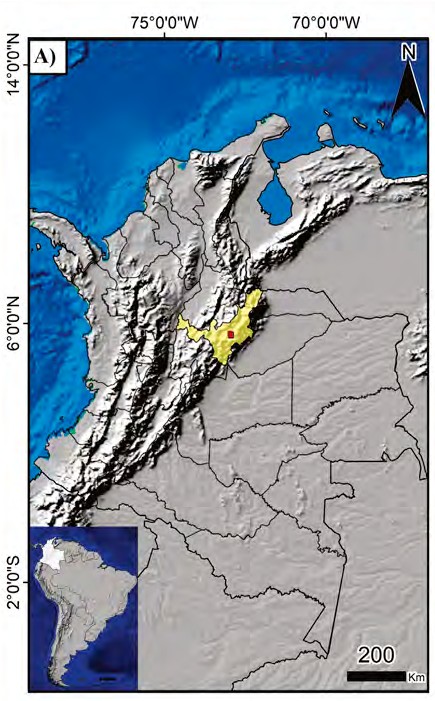
🧬A 6000‑Year‑Old Ghost Population in the Colombian Andes, was revealed through DNA extraction of 🦴's Discovered at an archeological site on the Bogotá Altiplano.
🏔️This group lived for 4,000 years High on the plateau above Bogotá in the Eastern Andes.
🧬They carried none of the known early ancestries in the Americas and show no special genetic link to any ancient or modern population.
The new study was published in Science Advances by Kim-Louise Krettek et al
Music helps to understand the mind and the brain. Throughout the history of science, metaphors have shaped how we understand complex phenomena. The brain-as-computer metaphor has guided decades of theories and research. We propose music as a scientific metaphor for understanding the mind and brain via triplicate interfaces (listener, performer, composer) and a compound set of predictions. Multiple domains of music can be mapped onto different neural, cognitive and intersubjective processes such as network coordination, prediction, emotion and meaning. Neurocognition is not static but a dynamic, embodied, and time-sensitive system, much like a self-organized orchestra in which multiple processes interact simultaneously. Drawing on synergetics, predictive processing, and embodied cognition, we outline musical principles illuminating cognitive and action integration across time, offering new conceptual frameworks and testable predictions for future research. I enjoyed writing this piece with these stellar authors: @Kaiameye, @acolverson1, Christopher Bailey, @brucemillerucsf, @dafneduron90, Nicholas Johnson, Olga Castaner, @PierLuigiSacco, Eoin Cotter and Lucia Melloni. Science, like music, advances through new ways of listening to complex systems: https://t.co/W3pJRyXJOH
A Chinese student built an interesting app using vibe coding that visualizes nearly 5,000 artifacts in the British Museum from 99 countries around the world.
The app shows:
• When these artifacts arrived
• Which country they came from
• And how the distribution would look if all artifacts were returned to their countries of origin.
Simile CEO Joon Sung Park wants to simulate all 8 billion humans.
Not just to predict outcomes, but to “trace through the audit logs of how society might unfold.”
To inspect the code beneath our collective decisions.