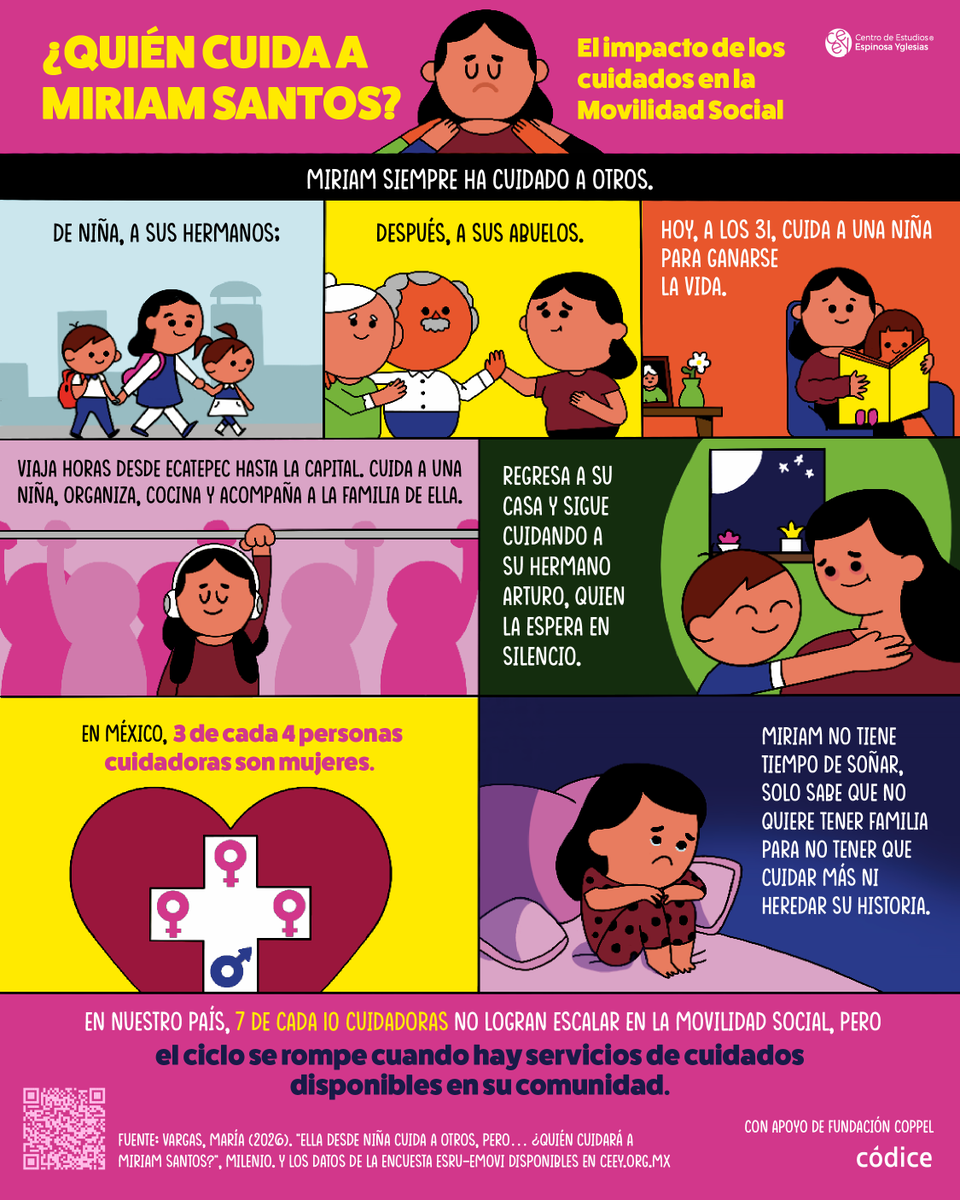
👩🏽🍼¿Quién cuida a quienes cuidan?
Miriam ha pasado su vida cuidando de otros. Su historia refleja la realidad de millones de mujeres en México, donde las tareas de cuidado siguen limitando las oportunidades y la movilidad social.
Conoce su historia
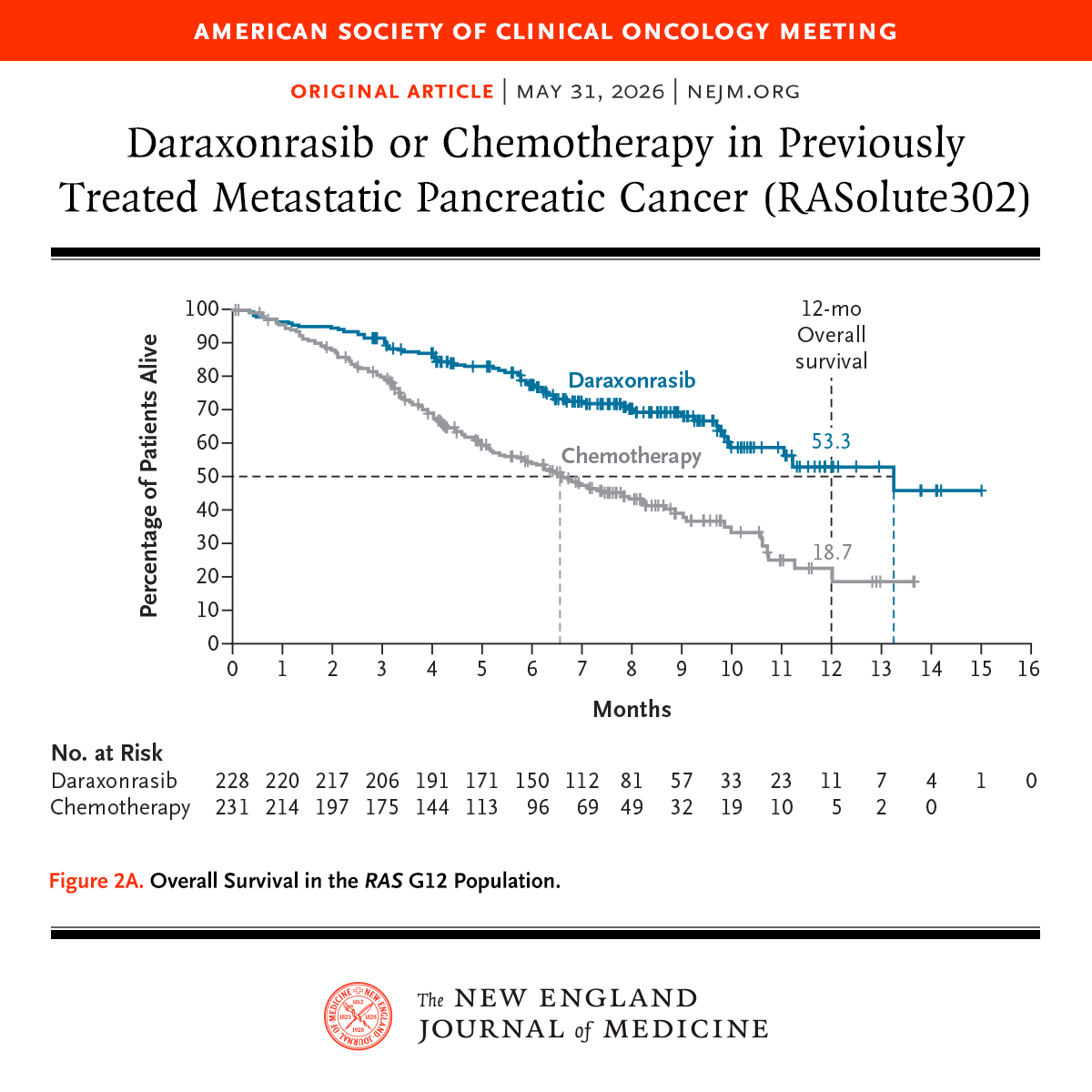
Presented at #ASCO26:
Among patients with previously treated metastatic pancreatic ductal adenocarcinoma, the RAS(ON) inhibitor daraxonrasib led to significantly longer overall survival and progression-free survival than chemotherapy. Full phase 3 RASolute 302 trial results: https://t.co/xwLWBZYRzq
@ASCO
Sleep is a non-negotiable necessity and a cornerstone of whole-body health. The physical, social, and lifestyle exposome disrupts human sleep and ecosystems. We propose an #OneSleep framework that demonstrates how environmental factors influence sleep today, incorporates the sleep capital concept, and adopts a transdisciplinary lens of neuroscience, medicine, environmental sciences, and public health. Delighted to publish this @CellRepMed work with @MasoudTahmasian , Vincent Kuppers, Sarah Genon, @INM7_ISN , & @DiegoGolombek : https://t.co/8Tttoiyhej
Multimodal frailty emerges as a scalable marker to distinguish healthy aging from dementia and capture widespread brain alterations, with novel evidence from Latin American populations. Subtype specificity (AD vs FTD) benefits from multimodal approaches. Congrats @joaquin_migeot , Olivia Wen and all authors! 👉https://t.co/MDqGejd2QQ
Parkinson’s disease is often recognised by its four cardinal motor symptoms: bradykinesia, muscular rigidity, resting tremor, and postural instability. However, nearly all individuals living with Parkinson’s will experience non-motor symptoms at some stage of the condition. Among these, psychiatric symptoms are the most prevalent - affecting approximately two-thirds of patients.
Understanding Parkinson’s means looking beyond only visible symptoms, and acknowledging the full spectrum of its impact.
Explore and learn more about Parkinson's disease at https://t.co/lIK2e1lLI4: https://t.co/DfgXHwz6FE
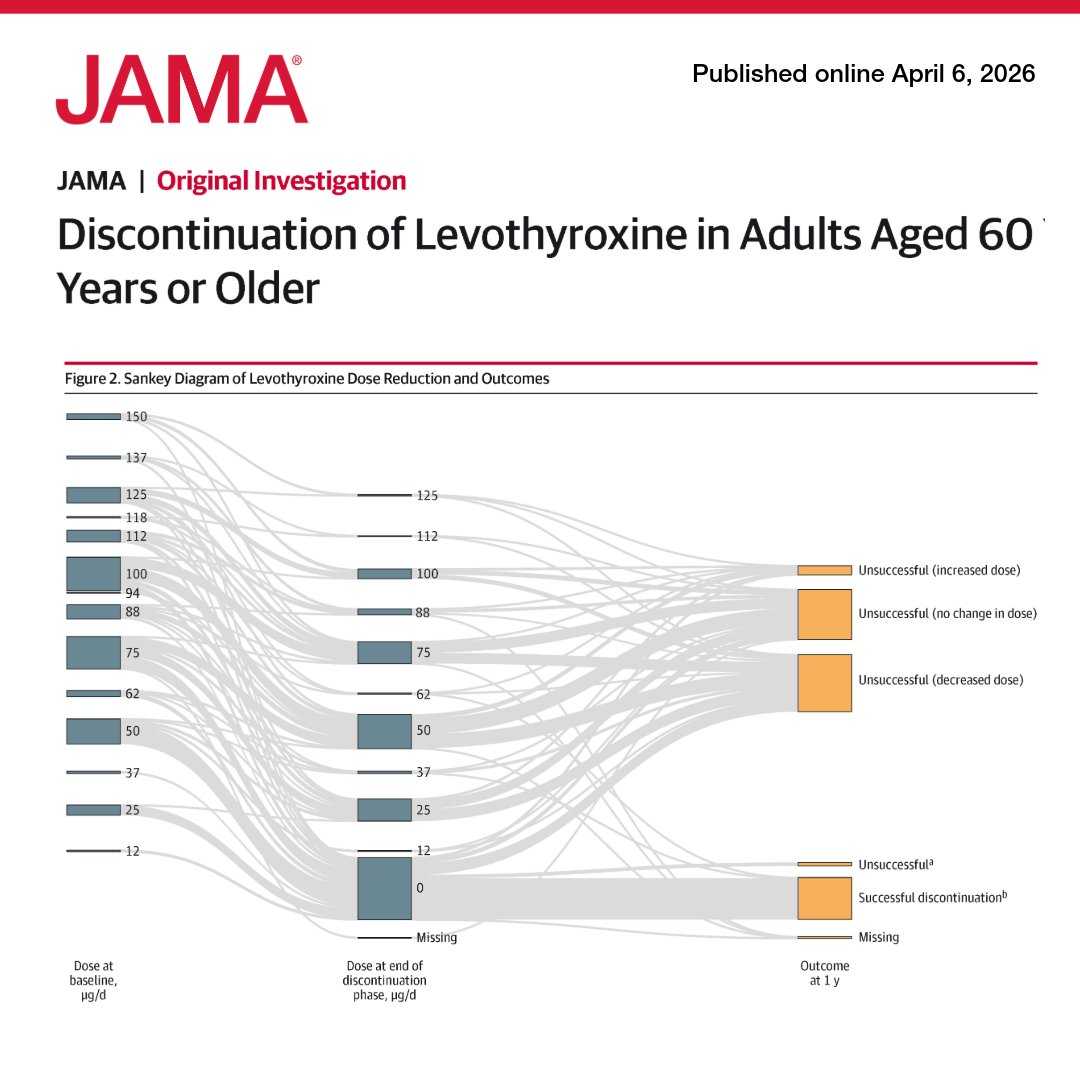
In adults ≥60 years, 26% discontinued levothyroxine while maintaining thyroid function, with 64% success for doses ≤50 μg/d, and no clinically important changes in thyroid-related symptoms. 🧵
https://t.co/3trWtP4WDu
En México, cuidar también limita oportunidades. 🖐🏾
7 de cada 10 personas que se dedican al cuidado no logran salir de la pobreza, lo que restringe su movilidad social.
El trabajo de cuidados no remunerado impacta el acceso a educación, empleo y bienestar.
¡Por primera vez en México, la Semana del Cerebro Creativo llega al INSP!
Un evento que promueve el vínculo entre salud cerebral y creatividad
Del 14 al 16 de octubre de 2026
Abierto al público que apuesta por la inclusión y la participación activa
ℹ️ https://t.co/bGWTHbMD16
Among individuals with severe, treatment-resistant #Schizophrenia, #dementia was common and showed a distinct clinical and genetic profile not explained by #Alzheimer disease, cardiovascular risk, or medication effects.
https://t.co/hkz7MoIENa
Aging clocks may be shaped by neurosyndemics, multiple interacting physical and social real-world environments jointly influencing brain health. Out in Nature Medicine (https://t.co/h6kbJntHRV), we assessed 18,701 participants from 34 countries, showing that the combined aggregate-level exposome (73 physical, social, and political factors measured at country-level) predicts multimodal brain aging far better than isolated exposures (up to 15-fold more variance). Moving beyond single risks, we provide evidence that synergistic, nonlinear exposome burden accelerates brain clocks across health and disease, with physical exposures linking more strongly to structural brain aging and social exposures to functional brain aging. Exposome burden increased the risk of accelerated brain aging by 3.3–9.1-fold, in some cases exceeding the effects associated with dementia, and these findings held in out-of-sample, longitudinal, individual-level variation, and sensitivity analyses. Thus, the pace at which the brain ages may be shaped by syndemic environmental and societal conditions, calling for much more intersectoral policies. Congrats @AgustinaLegaz Sebastian Moguilner @HernHdezL & all coauthors. 1/5👇 @GBHI_Fellows
🎙️Check out the final podcast in our new series on dementia!
IN THIS EPISODE, we rejoin our patient BREDA COMISKEY. Despite having Alzheimer’s, Breda is living life to the full. https://t.co/jlZ3fcmvAP
#themanyfacesofalzheimer's #TUHdementiaawareness
The @UN declaration on noncommunicable diseases (NCDs) has explicitly included dementia. At @LancetGH we discuss how countries can take real action to prevent dementia when it is treated like other major diseases. Preventing dementia needs to go beyond individual choices, with coordinated actions to improve education, health systems and living conditions. Led by @SimoneSalemmeMD & @seb_walsh. #PLADRR. https://t.co/MDU4dLA3NP
FDG-PET effectively differentiates vegetative state from minimally conscious state in chronic patients, although its diagnostic accuracy can be affected by etiology.
Read at 👉 https://t.co/lEQ2uWuExe
@NeuroBesta
La adaptación del sistema de salud para responder a las necesidades de las personas mayores de manera accesible, oportuna y con calidad es un reto enorme para el que no existe una única solución.
Documento completo ➡️ https://t.co/81UrJ6m15Y
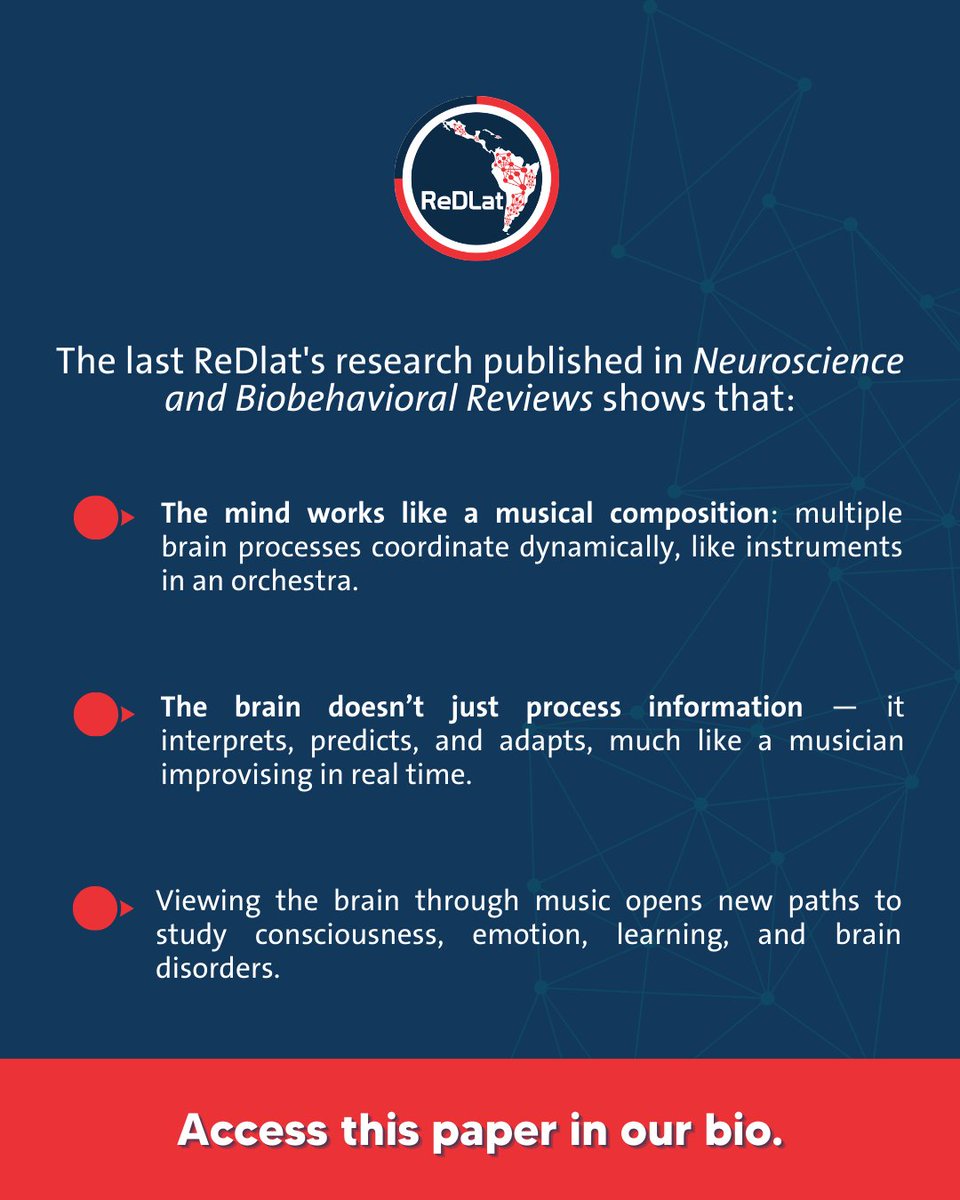
🎵 What if the mind works like a piece of music?
A new study proposes music as a scientific metaphor to explain the brain’s dynamic processes, with contributions from researchers involved in @ReDLat_Dementia
https://t.co/C7rw9Dmpez
Music helps to understand the mind and the brain. Throughout the history of science, metaphors have shaped how we understand complex phenomena. The brain-as-computer metaphor has guided decades of theories and research. We propose music as a scientific metaphor for understanding the mind and brain via triplicate interfaces (listener, performer, composer) and a compound set of predictions. Multiple domains of music can be mapped onto different neural, cognitive and intersubjective processes such as network coordination, prediction, emotion and meaning. Neurocognition is not static but a dynamic, embodied, and time-sensitive system, much like a self-organized orchestra in which multiple processes interact simultaneously. Drawing on synergetics, predictive processing, and embodied cognition, we outline musical principles illuminating cognitive and action integration across time, offering new conceptual frameworks and testable predictions for future research. I enjoyed writing this piece with these stellar authors: @Kaiameye, @acolverson1, Christopher Bailey, @brucemillerucsf, @dafneduron90, Nicholas Johnson, Olga Castaner, @PierLuigiSacco, Eoin Cotter and Lucia Melloni. Science, like music, advances through new ways of listening to complex systems: https://t.co/W3pJRyXJOH
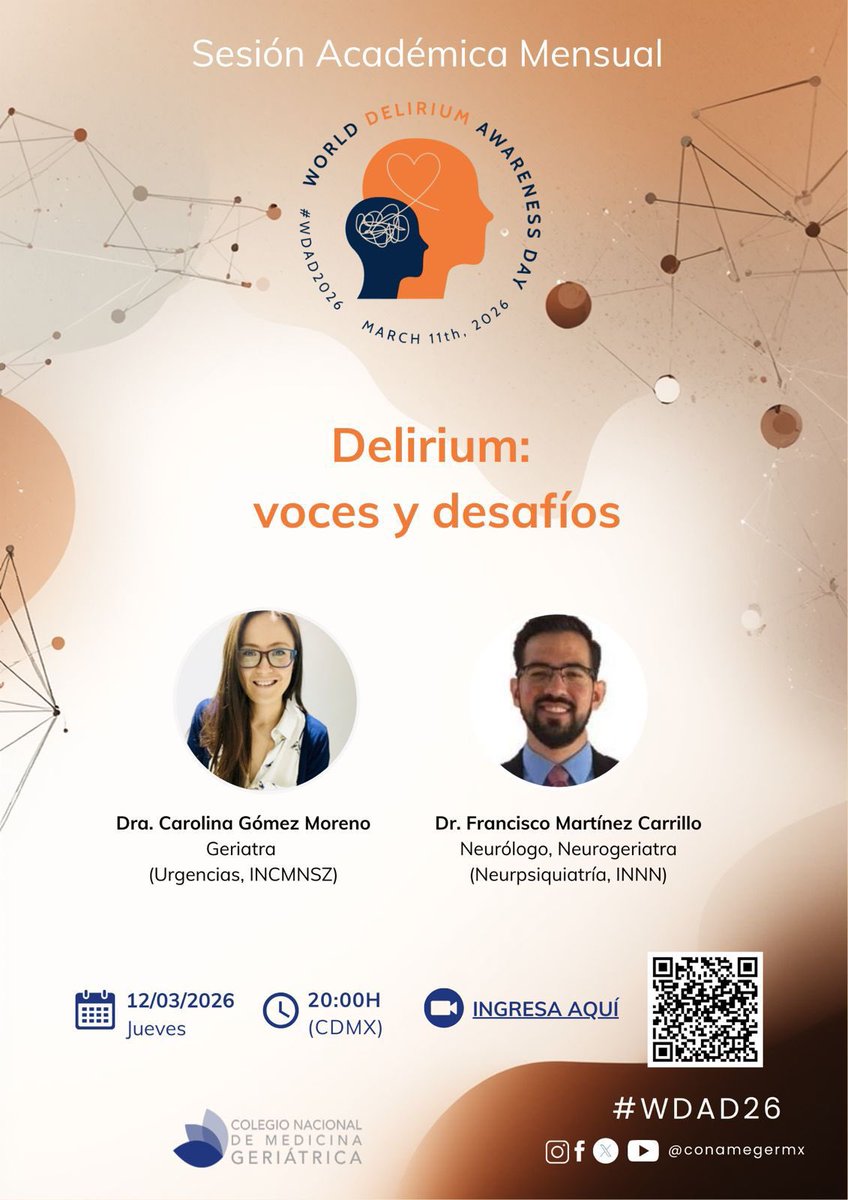
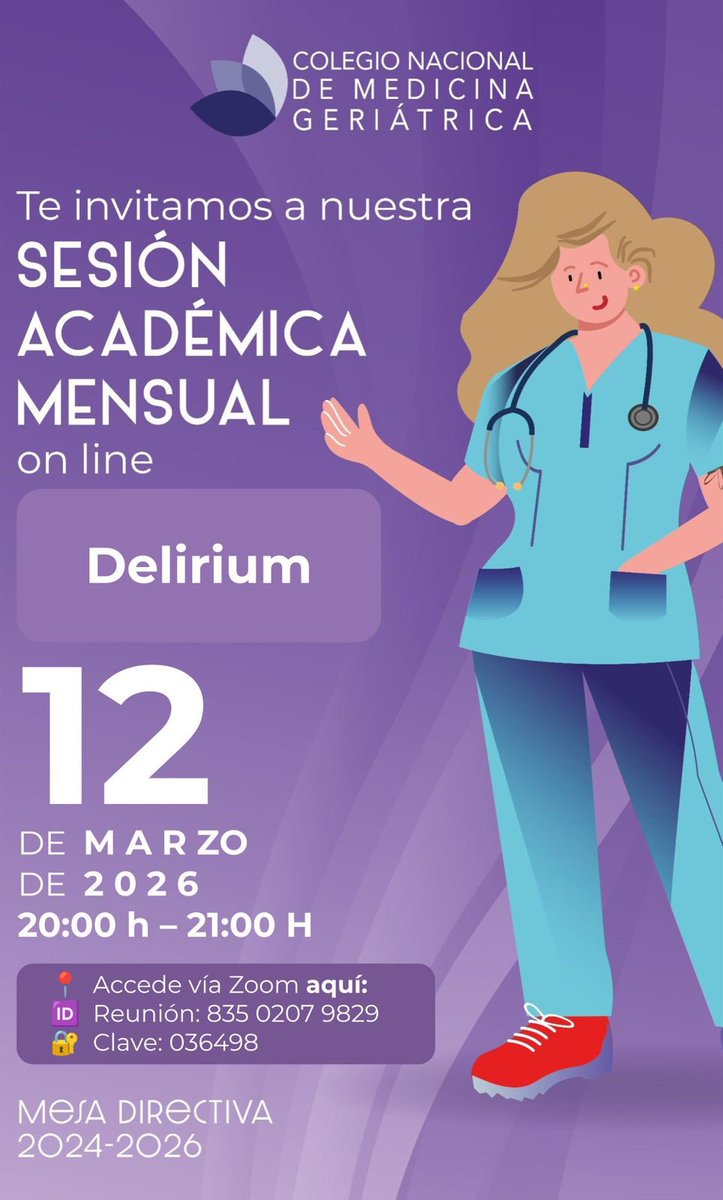
What is World Delirium Awareness Day? This annual event raises awareness about #delirium and its impact on patients, families, and healthcare systems.
Learn more and find out how to get involved with #WDAD2026: https://t.co/mC1UekciOo