@Caroline_Roux Chère Madame, si vous êtes prêt à y consacrer une heure, je pourrais vous montrer que Mme Haziza raconte des bétises dans chacune de ses interventions médiatiques.
Il est vraiment regretable, pour la réputation de votre émission, que vous lui donniez le micro.
Carl Icahn told Larry Fink to his face that BlackRock is "an extremely dangerous company" - then told Wall Street "the mafia has a better code of ethics than you guys"
this is him explaining why BlackRock is pushing the economy off a cliff, why Wall Street keeps selling junk to the middle class, and what 50 years on Wall Street taught him about what's coming next
"BlackRock is an extremely dangerous company. people are buying these bonds not understanding what they're buying"
"the mafia has a better code of ethics than you guys. you're selling this crap and you keep selling it and you're shorting some of it"
"they're all on this party, having a drink, having fun, pushing this thing toward a cliff. you know what's going to destroy it? they're going to hit a Black Rock"
"I've been around a long time. I saw it in '69, '74, '79, '87, 2000. I think a time is coming that might make some of those times look pretty good"
bookmark & watch the full conversation ↓
🔴 La taxe de deux euros sur les petits colis, mise en place le 1er mars, devait rapporter un peu plus de 33 millions d'euros par mois. Le résultat est nettement inférieur : seulement 2,3 millions d'euros par mois récoltés pour les finances publiques. #JT13H
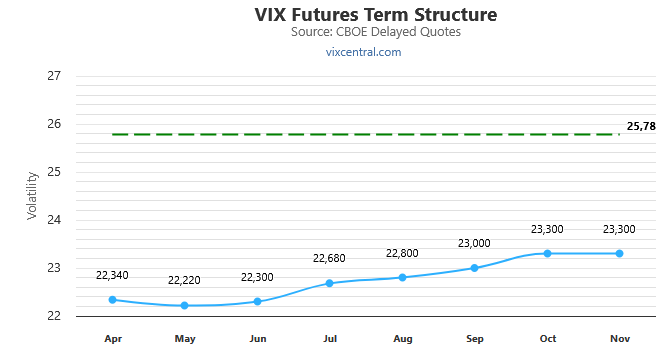
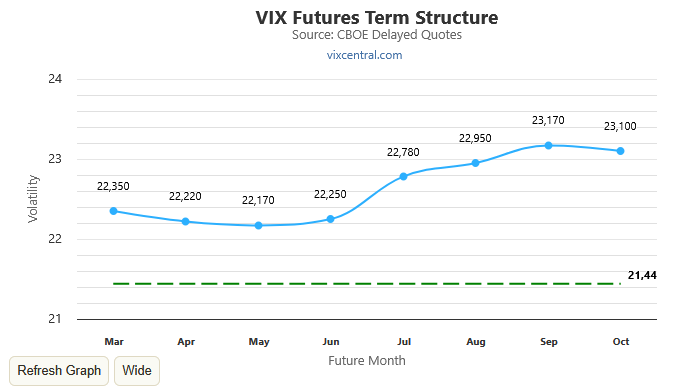
Just absolutely insane. If you are a derivatives TRADER, this continues to just be an unbelievable environment. Gamma is paying the most naive player in huge ways.
You are seeing 6M stuff with low teen vol on names moving 1-2% a day.
Don’t let your own preconceived views distort you from what the actual market is showing you.
The crisis narration is unfolding just as I outlined for you already a month ago: the systemic risk of physical scarcity started in oil & gas, spread to fertilizers, petrochemicals, sulphur, metals etc. & is arriving in food.
CB can‘t fight supply shock!
La startup 🇺🇸 Path Robotics, jusqu'ici spécialisée dans les bras robotisés de soudage pour usines, bascule dans la « mobilité » avec Rove, un petit robot quadrupède équipé d'un système de soudage pour les chantiers navals & les infrastructures.
https://t.co/B1bI4KdTgG
WTI is not trading at a premium to Brent. It's an artifact of futures roll dates. The front month Brent contract rolls earlier than front month WTI, so Brent front month is currently for *June* delivery whereas WTI front month is for *May* delivery.
The rolls are about three weeks out of sync - around 15th Apr the pattern will look "normal" again as WTI rolls to June, and then on 23rd Apr it will look "wrong" again as Brent rolls to July.
This creates a sawtooth offset to the true Brent/WTI premium. You can see it clearly in this chart of prices from 2005-06 where the blue line is the difference of the active contract, and the red line is corrected by interpolating to a constant 30 calendar day maturity.
I think this is a useful teaching moment, so I’ll try to expand on it a bit.
Over the last few weeks, I’ve heard a lot of statements like “most participants are short,” “everyone is hedged,” and “the pain trade is up.” But when you hear things like that, you really have to step back and ask: who exactly is doing what, and what evidence do I actually have to support it?
At a high level, markets can be broken down into a few key groups of participants:
Large tactical end users;
These are primarily hedge funds and active managers. They are trading to generate returns, and their flows are large, fast-moving, and opportunistic. Like the hedge funds listed in the original post below.
Small tactical end users;
This includes smaller RIAs and retail traders. The flows are smaller, but still active and reactive, often moving quickly in and out of positions.
Large passive end users;
These are large RIAs, retirement programs, insurance-linked mandates, and ETF issuers. They represent massive pools of capital, but their activity is slower and typically rules-based.
Small passive end users;
Your typical buy-and-hold retail accounts. Smaller in size individually, but collectively meaningful. Their behavior is generally steady and long-term oriented.
Non-tactical end users;
Sovereign wealth funds and very slow-moving pension or retirement programs that require 5 year long approval cycles. These are enormous in size but extremely slow to adjust positioning.
Now, if you think about how markets actually move, most short-term price action is driven by large and small tactical players, along with large passive flows. That is where the velocity comes from.
So if “everyone is short” and “the pain trade is up,” you have to reconcile that with reality. If that were true, why did so many of those players (like the hedge funds in the original post) lose money during a market decline? Why did large RIAs wealth programs lose money? Why did a broad set of passive products also take losses?
Once you look at actual performance across the street, the list of possible explanations narrows quickly.
Are pensions broadly positioned for equities to fall? No.
Are sovereign wealth funds leaning short equities? Also no.
Are buy-and-hold retail investors positioned for downside? Definitely not.
What people usually mean when they say “the pain trade” is that large and small tactical players are positioned in a way that would lose money if a certain outcome occurs. But when data objectively shows us the opposite, we have to accept that information.
It might sound elegant to frame things as some kind of 4D chess, but in reality, markets are often much simpler. Most of the time, when it comes to U.S. equities and larger drawdowns, the real pain trade is lower. It continues to seem like that is the case at this moment.
The insider trading scandal just got worse. It wasn't just oil. Someone also made a massive unexplained trade on the S&P 500 exactly 15 minutes before Trump's Iran war tweet. Hundreds of millions of dollars made in minutes. They knew exactly what he was going to say.